
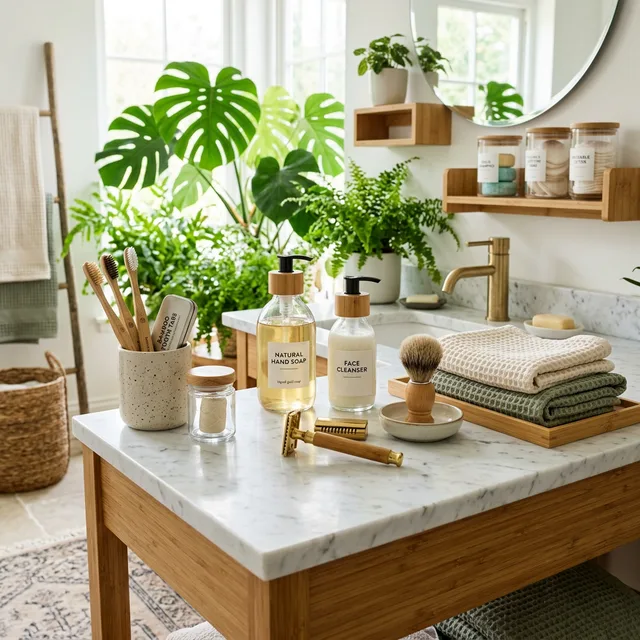
A standard urban apartment bathroom is an environmental catastrophe. Your shower caddy is overflowing with thick, brilliantly colored plastic bottles of shampoo, conditioner, body wash, and exfoliating scrubs. Your medicine cabinet is crammed with disposable plastic razors, synthetic loofahs, and massive plastic tubes of toothpaste. These items are designed for extreme, single-use convenience and almost none of them are municipally recyclable. According to the EPA, plastic waste in landfills is a rapidly growing crisis.
If you are serious about reducing your daily carbon footprint in a 25-square-meter studio without completely sacrificing personal hygiene or deep relaxation, you must radically audit your space. Building a high-performance low waste bathroom routine is entirely possible and often vastly cheaper than the endless cycle of plastic consumption. It relies on concentrated solids, durable metal, and compostable organics. Extend it to low-waste plant care.
In this detailed guide, we break down the 7 fundamental steps to strip the plastic out of your morning shower and construct a sustainable, low waste bathroom routine. If you’re just starting out, you can also review our zero waste starter kit guide.
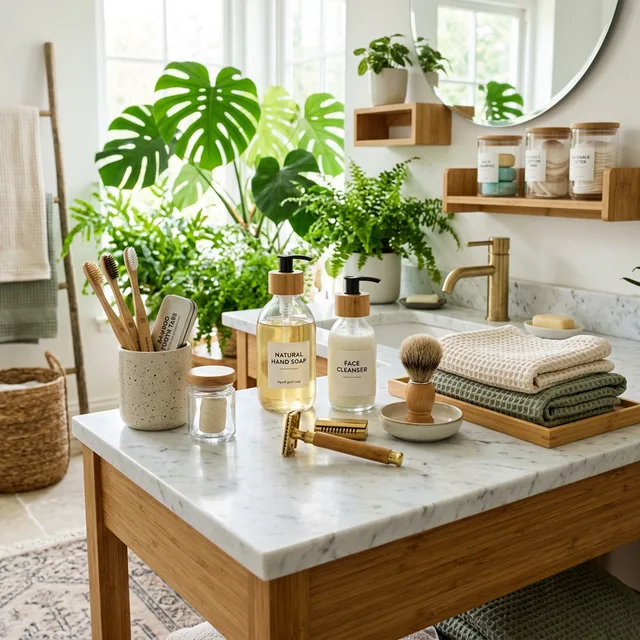
1. The Solid Shampoo and Conditioner Bar Pivot
Liquid shampoo is a massive scam. You are paying a corporation a massive premium to bottle and ship 80% water across the entire country in a heavy, unrecyclable plastic jug just so it foams easily on your scalp.
The absolute foundation of a low waste bathroom routine is switching to concentrated solid bars. High-quality shampoo and conditioner bars (like Ethique or HiBAR) arrive completely naked in compostable cardboard boxes. They contain identical, potent cleansing and detangling agents as expensive salon brands, simply with the water removed. You slide the bar down your wet hair three times to generate a luxurious lather. Because there is zero water weight, a single $15 bar outlasts three plastic bottles of liquid shampoo, saving money and space in your tiny shower.
2. The Return of the Safety Razor
Disposable plastic razors are an engineering abomination. They are designed to intentionally go dull after three shaves, forcing you to throw a complex, multi-blade plastic head directly into the landfill because the rubber grips and metal blades cannot be separated by recycling facilities.
You must embrace the solid heavy metal safety razor. Stop buying pink or blue plastic wands. Invest roughly $30 in a solid chrome, double-edge safety razor (like the Merkur Mk34c). The heavy metal handle will literally outlast your entire human lifespan. When the blade goes dull, you simply unscrew the top and drop in a single, naked, razor-sharp steel blade that costs three cents in bulk. You achieve a close, barbershop-quality shave devoid of plastic waste.
3. Composting the Bamboo Toothbrush
Every single plastic toothbrush you have ever deeply scrubbed your molars with since your childhood still exists in a landfill today, and it will remain there for the next 400 years, slowly leaching microplastics into the groundwater.
Instantly upgrade to a sustainably harvested, 100% bamboo toothbrush. When the bristles severely fray after three months, you simply snap the head entirely off the handle with pliers (throwing the nylon bristles in the trash) and throw the massive, solid bamboo handle directly into your apartment worm compost bin or trench-compost it on your balcony. It degrades organically back into dirt within months, achieving a cyclical, guilt-free low-waste bathroom routine. Add the best countertop compost bin.
4. Toothpaste Tablets (The End of the Plastic Tube)
It is mathematically impossible to cleanly extract the final 10% of toothpaste from a massive, multi-layered plastic and aluminum foil tube. Furthermore, these complex tubes are completely unrecyclable everywhere on earth.
Drop the messy, artificially colored paste. Buy a bulk, refillable glass mason jar of dry toothpaste tablets (like Bite). These tiny, white pills contain potent, concentrated cleaning agents (often with advanced Nano-hydroxyapatite to rebuild your enamel without fluoride). You pop a dry pill into your mouth, chew it twice, wet your bamboo brush, and instantly generate an explosion of foam. The glass jar sits beautifully on your minimalist vanity, completely eliminating the slimy ring of plastic tube mess. Reuse a mason jar garden.
5. The Synthetic Loofah Ban
Those brightly colored, fluffy mesh shower poufs hanging in your shower stall are massive biological hazards. Because they are constructed from cheap synthetic nylon, they cannot dry out completely. They aggressively trap dead skin cells and soap scum, forming deep, invisible colonies of mold and staph bacteria directly in the core of the plastic netting.
You must replace synthetic shower accessories. Switch immediately to an unbleached, 100% organic Agave Sisal cloth or a genuine, organically grown sea sponge. These natural materials exfoliate your dry skin, clean your pores, and dry completely between showers, eliminating all bacterial mold growth. When they finally physically disintegrate after six months, you literally toss them into your balcony compost.
6. The Refillable Natural Deodorant Strategy
Standard commercial antiperspirants are heavily packaged in dense plastic dials that you crank constantly until the gel runs out, invariably tossing the heavy, complicated plastic casing in the trash every 45 days.
You must transition to a completely refillable or fully biodegradable deodorant system (like Meow Meow Tweet or By Humankind). These companies sell a massive, heavy, permanent aluminum or paper-tube casing. When you completely empty the solid deodorant core, you simply mail-order a cheap, paper-wrapped refill stick and slide it into the heavy metal casing. You eliminate the single largest piece of routine plastic from your morning bathroom rotation while smelling aggressively fresh.
7. The Bidet Washdown Attachment
The sheer volume of virgin timber, massive quantities of chemical bleach, and staggering water consumption required to manufacture millions of rolls of toilet paper—which is then shrink-wrapped entirely in plastic—is the ultimate horror of modern sanitation.
While you cannot eliminate toilet paper entirely, you can slash your consumption by 80%. Install a high-pressure, $40 mechanical bidet attachment (like the Tushy or BioBidet) directly beneath your toilet seat. It requires exactly zero electricity and taps directly into your pure, cold water line. The precise jet of water thoroughly power-washes you clean in 10 seconds. You simply pat yourself fully dry with three squares of eco-friendly bamboo toilet paper, completing your ultimate low-waste bathroom routine and achieving high personal hygiene.
Evaluating Bathroom Plastic Swaps
Use this triage chart to prioritize eliminating the largest plastic offenders in your tiny apartment:
| Bathroom Waste | Low-Waste Alternative | Upfront Cost | Savings Over 1 Year |
| Plastic Razors | Chrome Safety Razor | Medium ($30) | Massive ($100+) |
| Liquid Shampoo | Solid Shampoo Bars | Equal ($15) | Low (Outlasts liquid) |
| Toothpaste Tubes | Glass Jar of Tablets | High ($30) | Zero (More expensive) |
| Toilet Paper Rolls | Bidet Attachment | Medium ($40) | Massive ($150+) |
Safety Disclaimer: While 100% natural, cold-pressed essential oils are standard in shampoo bars and toothpaste tablets, they can trigger allergic contact dermatitis on sensitive skin or eczema. Always patch-test a new solid bar heavily on your inner wrist 24 hours before using it across your entire scalp or face.
Conclusion
A minimalist, high-functioning bathroom does not require shelves stacked with brightly colored plastic. By forcing a strategic shift toward a thoughtful, deliberate low-waste bathroom routine, you completely eradicate the chemical slurry running down your apartment drain. You replace disposable garbage with the sleek, heavy permanence of chrome safety razors and the elegant simplicity of glass jars and bamboo.
Ready to stop producing trash before breakfast? Change your nylon mesh shower pouf tonight, order an exfoliating organic Agave cloth, and feel the upgrade in your skin quality tomorrow.
FAQ
Will my hair feel waxy or greasy if I switch from liquid to a solid shampoo bar?
Only if you buy a cheap, “soap-based” bar. True, high-quality solid shampoo bars (called syndet bars) are pH-balanced identically to expensive salon liquids. However, if you have heavily bleached or chemically treated hair, there is often a two-week “transition period” where your scalp rejects the lack of deep, synthetic silicone buildup before finally balancing its natural oil production.
Are safety razors actually safe to use, or will I constantly cut my legs up?
Because a safety razor has exactly one incredibly sharp, heavy blade (instead of five dull ones), you must entirely abandon the concept of “putting pressure” onto the blade. You let the massive weight of the metal handle drag the single blade across the skin at a 30-degree angle. By respecting the weight, you will experience significantly less razor burn or painful ingrown hairs.
Can I flush my bamboo toothbrush handle down the toilet?
No, absolutely under no circumstances should you ever flush anything besides human waste and toilet paper. Although bamboo is natural wood, it takes four months of high heat and bacteria in a compost pile to break down; it will instantly result in a catastrophic, thousands-of-dollars plumbing blockage in your apartment building pipes.
