
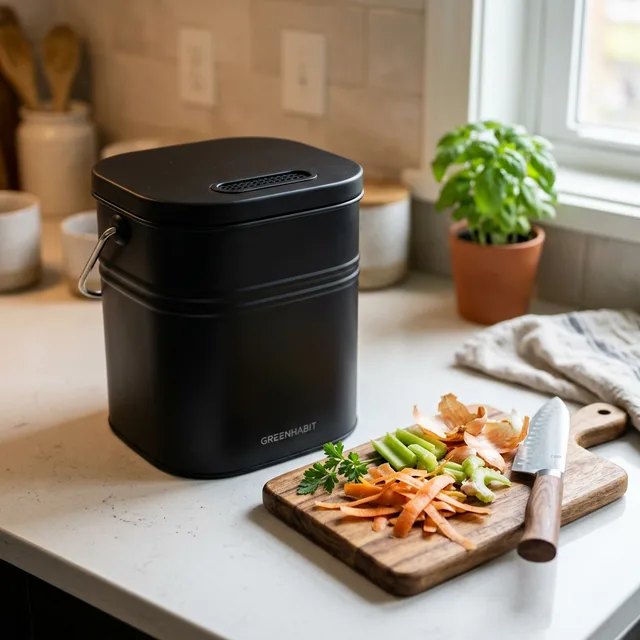
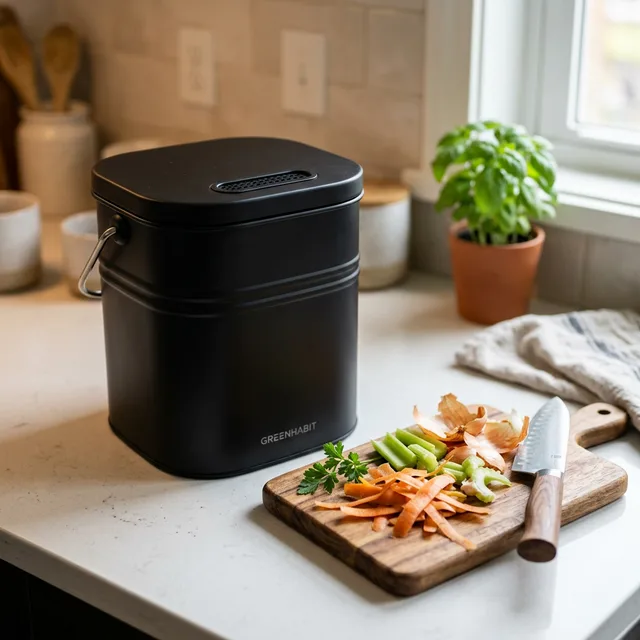
Finding the best countertop compost bin to prevent fruit flies becomes a desperate necessity the moment summer temperatures spike in a tiny apartment. If you have ever tried to maintain a zero-waste kitchen routine in a 300-square-foot studio, you know the drill. You leave melon rinds in a standard ceramic crock, the ambient temperature in your un-air-conditioned kitchen reaches 80 degrees, and within 48 hours, a localized swarm of gnats takes over your entire living space.
Fruit flies (Drosophila melanogaster) can smell fermenting fruit from impressive distances. Because micro-apartments lack enclosed, separated kitchens, that smell permeates directly into your sleeping and living zones. You cannot rely on bins with loose-fitting lids or cheap, gap-ridden hinges. You need an aggressively engineered, airtight seal combined with active charcoal filtration to neutralize odors and physically block insects. Control smells with odor-proof trash cans.
My Experience with Countertop Composting in a Studio
During my first attempt at urban composting in 2024, I bought a beautiful, rustic, painted metal bin with a loose lid handle. It looked great next to my espresso machine. Then June arrived. Because I only dropped off my compost at the community farmer’s market once a week on Saturdays, the food scraps sat on my counter for six days at a time. Pair with apartment composting without smell.
By Wednesday of the second week of a brutal heatwave, I lifted the lid to toss in coffee grounds and a literal cloud of fruit flies erupted into my face. They quickly spread to my indoor houseplants and hovered around my sink drain. Sticky traps were useless against the sheer volume.
The core issue? The metal lid did not have a silicone gasket. Fruit flies are roughly 1/8th of an inch long. They easily bypassed the metal-on-metal overlap. I immediately switched to a bin with a medical-grade silicone seal and a double-thick charcoal filter. The fly problem vanished overnight, and my apartment stopped smelling like a hot garbage can.
What Makes a Compost Bin “Fruit Fly Proof”?
Not all bins marketed as “sealed” actually work in high-heat summer conditions. When shopping, you must look for three specific mechanical features:
- The Silicone Gasket: A snug fit is not enough. The lid must have a compressible rubber or silicone ring that creates slight negative pressure when pushed down.
- Charcoal Filters (Plural): A single thin sheet does nothing. The best bins use a dual-filter system within the lid—one to absorb moisture, one to trap the volatile organic compounds (the smell) that attract the flies.
- Smooth Interior Walls: If the bin has awkward internal ridges, wet food scraps get stuck. Maggots and flies breed in those unwashed crevices. You need seamless stainless steel or high-density plastic that wipes perfectly clean.
The 5 Best Fruit Fly Proof Compost Bins
After testing multiple brands through sweltering, humid summers, these are the only five bins I trust to sit on a kitchen counter two feet away from where I sleep.
1. OXO Good Grips Easy-Clean Compost Bin (Best Overall)
OXO dominates apartment kitchen wares for a reason. This small 1.75-gallon bin is a masterclass in functional design. * The Seal: The lid sits flush inside the rim, creating a completely gapless physical barrier. * Cleaning: The interior is perfectly smooth, rounded plastic. Nothing sticks to it. * Why it Wins: It is perfectly sized for 3-4 days of scraps for a single person, meaning you are forced to empty it before heavy decomposition begins. Fits small apartment kitchen ideas.
2. Epica Stainless Steel Compost Bin (Best for Odor Control)
If aesthetics matter and you want a bin that matches your stainless steel appliances, Epica is the heavy-duty option. * The Filter: It uses a massive, double-layer activated charcoal filter housed securely in the lid. It traps 100% of odors. * The Material: Grade 304 stainless steel will not rust or absorb smells like cheap plastic can over time. * Drawback: It is slightly larger (1.3 gallons), meaning it takes up more precious counter space in a micro-kitchen.
3. All-Absorb Bamboo Fiber Kitchen Compost Bin (Best Eco-Friendly)
If you want your zero-waste routine to extend to the product itself, this bin is molded from biodegradable bamboo fibers. * The Seal: It features a tight-fitting vented lid that allows airflow (to prevent anaerobic rotting) while using a thick carbon filter to block flies from entering the vent holes. * Aesthetic: Matte finish, looks like high-end pottery. * Note: You must replace the filter every 2-3 months during the summer to maintain the fly barrier.
4. Joseph Joseph Intelligent Waste Caddy (Best for Tight Spaces)
If your counter space is literally non-existent, this bin is engineered to be tall and narrow, or to mount on the inside of an under-sink cabinet door. * Airflow Magic: It features adjustable air vents. Open them to let moisture escape (reducing rot), but the integrated filter stops any bugs from getting in. * Size: Only takes up roughly 6×6 inches of footprint.
5. FCMP Outdoor Half-Size Kitchen Composter (Best for Balcony Gardeners)
If you are moving scraps directly from your kitchen to a small tumbling composter on your Juliet balcony, this is a rugged intermediate bin. * The Seal: It features a latching lid. It physically locks shut, compressing a gasket. It is the most secure physical barrier on this list. * Utility: You can carry it by the heavy-duty handle without worrying about the lid popping off and spilling rotting vegetables on your floor.
Pro-Tips for Summer Composting in Micro-Apartments
Even with the best bin, extreme heat requires strategy. * The Freezer Hack: If your apartment is routinely above 80°F, stop using a counter bin for meat/dairy (if your municipal program accepts them). Put those highly volatile scraps in a paper bag directly in your freezer until drop-off day to completely halt decomposition. * Layering: Every time you add wet, sloppy scraps (like melon or tomatoes), toss a handful of dry shredded newspaper or torn cardboard on top. This absorbs the moisture that fruit flies need to breed. * Wash Weekly: Do not just dump the bin. Every time it is emptied, wash the interior aggressively with hot water and dish soap to remove bacterial slime.
Compare Fly-Proof Compost Bins
| Brand | Material | Seal Type | Capacity | Best Feature |
|---|---|---|---|---|
| OXO Good Grips | Smooth Plastic | Flush Fit | 1.75 Gal | Easiest to clean |
| Epica | Stainless Steel | Dual Charcoal | 1.3 Gal | Zero odor leakage |
| Joseph Joseph | Plastic | Vented + Filter | 1.0 Gal | Slim profile for tight counters |
| FCMP Latching | Heavy Plastic | Locking Gasket | 1.5 Gal | Indestructible latching lid |
Conclusion
You do not have to abandon your eco-friendly habits just because summer heat arrives. A cheap, unsealed bin will turn your small apartment into a fruit fly warzone in a matter of days. By investing $30 in a precision-engineered bin with a true silicone gasket and active charcoal filtration, you can safely store food scraps on your counter without ever seeing a single gnat. Upgrade your bin immediately and take your kitchen back.
Do charcoal filters in compost bins actually prevent fruit flies?
Yes, thick activated charcoal filters are highly effective at preventing fruit fly infestations in compost bins. Fruit flies rely entirely on their highly evolved olfactory sensors (sense of smell) to locate fermenting organic matter. A high-quality carbon filter chemically traps the volatile organic compounds and ethylene gas emitted by rotting food. If the flies cannot smell the rotting fruit, they will not swarm the bin. Additionally, if the filter is seated correctly in the lid vents, it acts as an impenetrable physical barrier that their tiny bodies cannot pass through.
Safety Disclaimer
Keep compost bins away from direct sunlight or heat sources (like ovens or radiators). Extreme heat inside a sealed plastic bin can cause rapid anaerobic decomposition, generating gases that may pop the lid off and create a massive mold/bacterial exposure hazard in your kitchen.
