
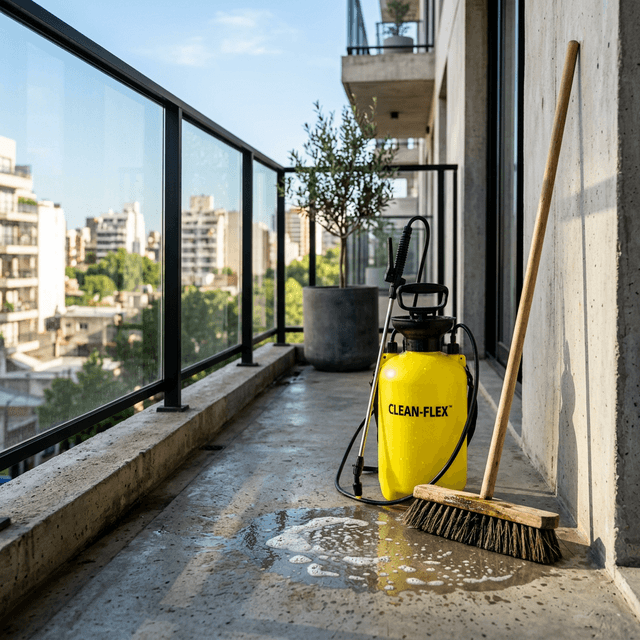
You can clean a balcony without a hose using a pump sprayer, enzyme cleaner, or wet-dry vacuum — no water connection needed, no flooding risk for neighbors below. The key is contained water: you control exactly where it goes, working in small sections and collecting dirty water before it reaches the balcony edge. For more balcony projects, see our balcony gardening hub.
Leasing a high-rise city apartment creates a massive outdoor cleaning problem: your balcony collects heavy black soot, dirt, and pigeon droppings, but you lack an outdoor water spigot. When your landlord bans pouring buckets of water over the railing, your cleaning options disappear. If you use a massive pressure washer or simply dump a bucket, dirty water cascades onto your downstairs neighbor’s laundry or the busy sidewalk below. To reclaim your sterile outdoor space without earning a lease violation, you must employ the best techniques to clean an apartment balcony without a hose.
Quick-Choice Matrix
| Cleaning Problem | Best Feature | Top Pick |
|---|---|---|
| Heavy Black City Soot | Pressurized Pump Sprayer | Chapin 1-Gallon Pump Sprayer |
| Stubborn Pigeon Poop | Stiff Outdoor Bristles | O-Cedar Heavy Duty Push Broom |
| Deep Concrete Stains | Biological Enzyme Cleaner | Simple Green Outdoor Cleaner |
| Sucking Up Dirty Water | Massive Suction Power | Stanley 3-Gallon Wet/Dry Shop Vac |
Best Rent-Friendly Balcony Cleaning Methods
1. The Pressurized Pump Sprayer Method
The absolute champion of controlled water delivery is a standard garden pump sprayer. It solves the physical problem of missing outdoor plumbing by delivering high-pressure, low-volume targeted water directly onto the grime without creating a tidal wave.
You fill the heavy plastic tank in your kitchen sink, pump the handle to build immense internal air pressure, and squeeze the wand trigger. The nozzle produces a sharp, focused stream to lift dirt or a wide mist to rinse soap, using only a tiny fraction of the water of a standard bucket.
- Real-World Application: Optimal for renters who need to lift heavy pollen and black dirt off their balcony deck without the dirty runoff spilling over the edge onto the neighbor below.
- ✅ Pros: Absolute total water control, provides high-pressure cleaning power, eliminates the need for endless heavy buckets.
- ❌ Cons/Limitations: It requires substantial physical effort to manually pump the pressure tank for a large 100-square-foot balcony.
2. Biological Enzyme Cleaners and a Stiff Broom
When your concrete balcony features hardened layers of bird droppings and sticky grease from an outdoor grill, standard dish soap fails entirely. A biological enzyme cleaner provides the essential chemical breakdown.
This safe formula utilizes targeted bacteria and enzymes to digest organic matter. You spray the solution onto the dry concrete, wait five minutes, and aggressively scrub with a heavy, stiff-bristled push broom.
- Real-World Application: Designed for urban renters dealing with heavy biological waste or tough grill grease that requires serious chemical lifting.
- ✅ Pros: Safe for potted plants and pets, digests terrible odors immediately, breaks the chemical bond of dried pigeon poop.
- ❌ Cons/Limitations: The enzymes stop working immediately if the concrete dries out during the five-minute soaking phase. You must scrub while it remains wet.
3. Wet/Dry Shop Vacuum Extraction
If your small balcony lacks any functional drainage hole, you demand an extreme method to remove the dirty, soapy water after scrubbing. A compact wet/dry shop vacuum serves as the ultimate extraction tool.
This machine uses massive suction physics to violently pull the black slurry of soap, dirt, and water off the concrete floor before it ever reaches the railing edge.
- ✅ Pros: Absolute zero risk of dripping water on downstairs neighbors, dries the concrete instantly, sucks up wet leaves and heavy dirt.
- ❌ Cons/Limitations: The vacuum emits a very loud noise, meaning you cannot clean your balcony early on a weekend morning.
How to Clean a Balcony Without a Hose: Step-by-Step
This five-step sequence works on any balcony surface — concrete, tile, or wood — and keeps all water contained within your floor area.
- Clear and dry-sweep first. Remove all furniture and pots. Sweep from the back wall toward the drain. Wet dust turns into mud — remove loose debris before any moisture is applied.
- Scrape dried deposits. Use a plastic scraper (not metal — it scratches concrete and tile) on hardened bird droppings and dried sap. A $6 plastic putty knife removes what a broom cannot reach.
- Apply cleaner in sections. Work in 3×3 ft squares — never wet the whole floor at once. Let enzyme cleaner sit for five minutes on organic stains before scrubbing.
- Scrub and collect immediately. After scrubbing each section, soak up dirty water with old towels or extract with a wet-dry vac before moving to the next section. This is the step that prevents runoff over the balcony edge.
- Final rinse pass. Use your pump sprayer with clean water — one tank (1 gallon) rinses most balconies up to 60 sq ft. Vacuum or towel-dry immediately after.
Total water used: 1–2 gallons versus a garden hose running 10 minutes (20–25 gallons). This method uses roughly 90% less water — and none of it reaches the building exterior.
Conclusion
By using a pressurized pump sprayer and a wet vacuum, you eradicate heavy concrete stains and thick soot without violating your lease or flooding the neighbor below.
The method works because it replaces volume with precision — 1–2 gallons of contained water does what a hose wastes 20+ gallons attempting. Start with the dry sweep, work in sections, collect before moving on. Your downstairs neighbors will never know you cleaned at all.
If your balcony has serious structural grime — layers of city soot built up over a full tenancy — start with the enzyme cleaner method and give it two passes before reaching for the vacuum. One afternoon of work and a $25–$40 tool kit is all it takes.
Are these methods strictly renter-friendly?
Yes, absolute ZERO structural drilling is required, fully protecting your security deposit.
How do you clean a balcony floor without water?
Dry-clean first: stiff broom sweep, then plastic scraper for dried bird droppings, then dry microfiber mop. This removes 70–80% of grime without any water. For embedded stains, a barely damp cloth wrung out tightly applies minimal moisture. Full dry cleaning works best on concrete and tile — wood decking still needs a damp scrub to prevent long-term staining.
[UPDATE 2026] Balcony Cleaning Method by Surface Type
The right cleaning method depends on your balcony surface and what is on it. Using the wrong approach wastes an hour. Here is the decision matrix:
| Surface | Best Method | Tools | Time |
|---|---|---|---|
| Concrete / pavers | Dry sweep then wet scrub with deck brush | Stiff brush, bucket, all-purpose cleaner | 20-30 min |
| Wood decking | Dry sweep then oxygen bleach scrub then dry immediately | Soft brush, oxygen bleach solution, towels | 30-45 min |
| Tile (smooth) | Dry sweep then spray cleaner plus mop | Microfiber mop, tile cleaner | 15-20 min |
| Rubber/composite | Dry sweep then soapy water scrub | Soft brush, dish soap, bucket | 15-25 min |
| Painted concrete | Dry sweep then pH-neutral cleaner only (avoid acid cleaners) | Soft mop, pH-neutral floor cleaner | 20 min |
The no-hose rule: the goal is contained water — you control where it goes. Use a spray bottle or a damp mop to wet the surface, scrub in sections, and collect dirty water with a wet-dry vac or soak it up with old towels before it reaches the drain or balcony edge. Neighbors below you and building management both care about water runoff from balconies in ways that do not apply to ground-floor patios.
How do you clean a balcony without getting it wet?
Dry cleaning handles most balcony grime: sweep with a stiff broom, then use a dry microfiber dust mop for the remaining fine dust. For bird droppings, let them dry completely then scrape with a plastic scraper before sweeping. A handheld vacuum with a floor attachment works for dry debris in tight corners. For light staining, a barely damp cloth (wrung out completely) cleans without creating standing water. True no-water cleaning gets you 70-80% clean — a damp scrub is needed for embedded grime.
What to use to clean balcony floor without a hose?
A bucket of warm water with a few drops of dish soap and a stiff deck brush covers most balcony floors. Work in 3×3 foot sections: apply, scrub, collect dirty water with a wet-dry vac or soak with old towels before moving to the next section. For grease or rust stains, oxalic acid on concrete or pavers. For mold/mildew, oxygen bleach solution works on wood and pavers. Always test a small area before full application on wood or painted surfaces.
How to clean balcony furniture without a hose?
Metal and plastic furniture: spray with an all-purpose cleaner, wipe with microfiber cloths. Wicker or rattan: soft brush to dislodge debris, damp cloth wipe, dry immediately to prevent mold. Cushions: check label — most outdoor cushions are spot-clean only. Mix dish soap with warm water, scrub with a soft brush, blot with a damp cloth (do not rinse), air dry fully before recovering.
How often should you clean an apartment balcony?
Light sweep weekly in spring and summer, monthly in fall and winter. Deep clean (wet scrub) twice a year: once after winter salt and debris, once before outdoor furniture season ends in fall. More frequent if you have pets on the balcony, nearby trees dropping pollen or sap, or a restaurant exhaust nearby (grease accumulates quickly). Bird-heavy locations may need bi-monthly droppings removal to prevent surface staining.
