
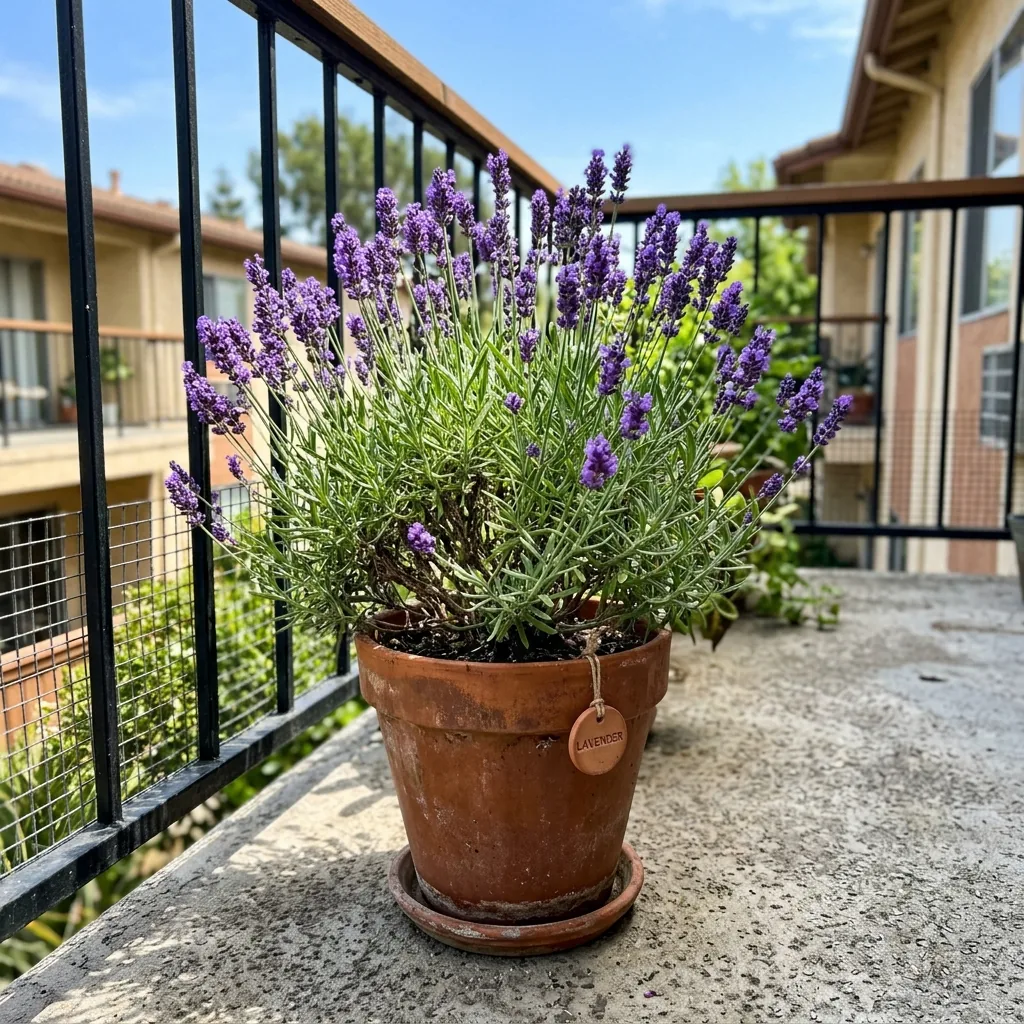
Drought tolerant balcony plants are not a consolation prize for forgetful gardeners — they’re the intelligent choice for anyone gardening above the ground floor. Containers dry out 3–5× faster than garden beds. High-rise wind accelerates evaporation further. A south-facing balcony in July can strip a standard pot dry in 18–24 hours. The plants that survive and thrive under these conditions are specifically adapted to intermittent water, heat, and stress — and most of them look better for it. See our complete balcony herb garden guide. Pot them in balcony containers with good drainage.
I killed a lot of basil before I accepted that my 8th-floor south-facing balcony was not a basil environment. The turning point was a lavender plant I bought as an afterthought — $4 from a discount rack, clearly stressed, barely alive. I shoved it in a terracotta pot and mostly ignored it. By August it had tripled in size, flowered prolifically, and outlasted every “premium” plant I’d carefully watered all summer. That’s when I stopped fighting my balcony’s conditions and started working with them.
Twelve plants below, tested in containers, confirmed drought-tolerant in real apartment conditions — not just in textbooks.
| Balcony Type | Best Picks | Why |
|---|---|---|
| South-facing, full sun | Lavender, rosemary, thyme, agave | Maximum drought tolerance, love heat |
| West-facing, afternoon sun | Salvia, sedum, nasturtiums | Handles heat spikes, tolerates dry spells |
| High-rise (6th floor+) | Thyme, sedum, ornamental grasses | Wind-resilient, low evaporation rate |
| North-facing | Mint, ajuga, hardy ferns | Shade-tolerant and low water once established |
| Small balcony (under 3 m²) | Lavender, thyme, sedum in single pots | Compact, productive, low maintenance |
How Drought Tolerant Plants Work in Containers
A plant’s drought tolerance is partly about roots — in the ground, drought-tolerant plants send roots deep to find water. In a container, that’s not possible. What saves them instead is physiological adaptation: waxy or silvery leaves that reflect heat, small leaf surface area that reduces transpiration, water stored in leaves or stems (succulents), and the ability to enter a semi-dormant state during stress without dying.
This means container drought tolerance differs from garden drought tolerance. A plant that survives 3 weeks without rain in a garden may still need water every 4–6 days in a container during a heatwave. The goal is plants that tolerate irregular watering and hot, dry conditions — not plants that genuinely never need water.
How to Choose Drought Tolerant Plants for a Balcony
Match to your sun hours first. True drought-tolerant Mediterranean plants (lavender, rosemary, thyme) need 4+ hours of direct sun to perform properly. In shade, they survive but won’t thrive. For shaded balconies, drought tolerance comes from different plant families.
Use the right soil. Even drought-tolerant plants struggle in waterlogged soil. A 60% potting compost / 30% perlite / 10% grit mix drains fast and mimics the free-draining conditions these plants evolved in. Standard potting mix holds too much water and can cause root rot in drought-tolerant species — paradoxically killing them through overwatering.
Choose terracotta or unglazed ceramic pots where possible. Terracotta breathes — it allows slight moisture evaporation through the pot walls, which suits drought-tolerant plants that dislike sitting in wet soil. Plastic pots hold moisture longer, which works against Mediterranean species in particular.
What Are the Best Drought Tolerant Plants for a Balcony Container?
The best drought tolerant balcony plants for containers in apartment conditions are lavender, thyme, sedum, trailing rosemary, and ornamental grasses. These species tolerate the specific stress combination of hot containers, intermittent watering, and high-rise wind exposure. In a south or west-facing container garden, lavender and thyme survive 5–7 days without water during summer without permanent damage. Sedum and succulents extend this to 10–14 days. All five require fast-draining soil (perlite blend), at least 3–4 hours of direct sun, and containers with drainage holes. Avoid saucers that retain standing water — these drought-tolerant species are more likely to die from overwatering than from drought.
12 Drought Tolerant Balcony Plants
1. Lavender (Lavandula angustifolia)
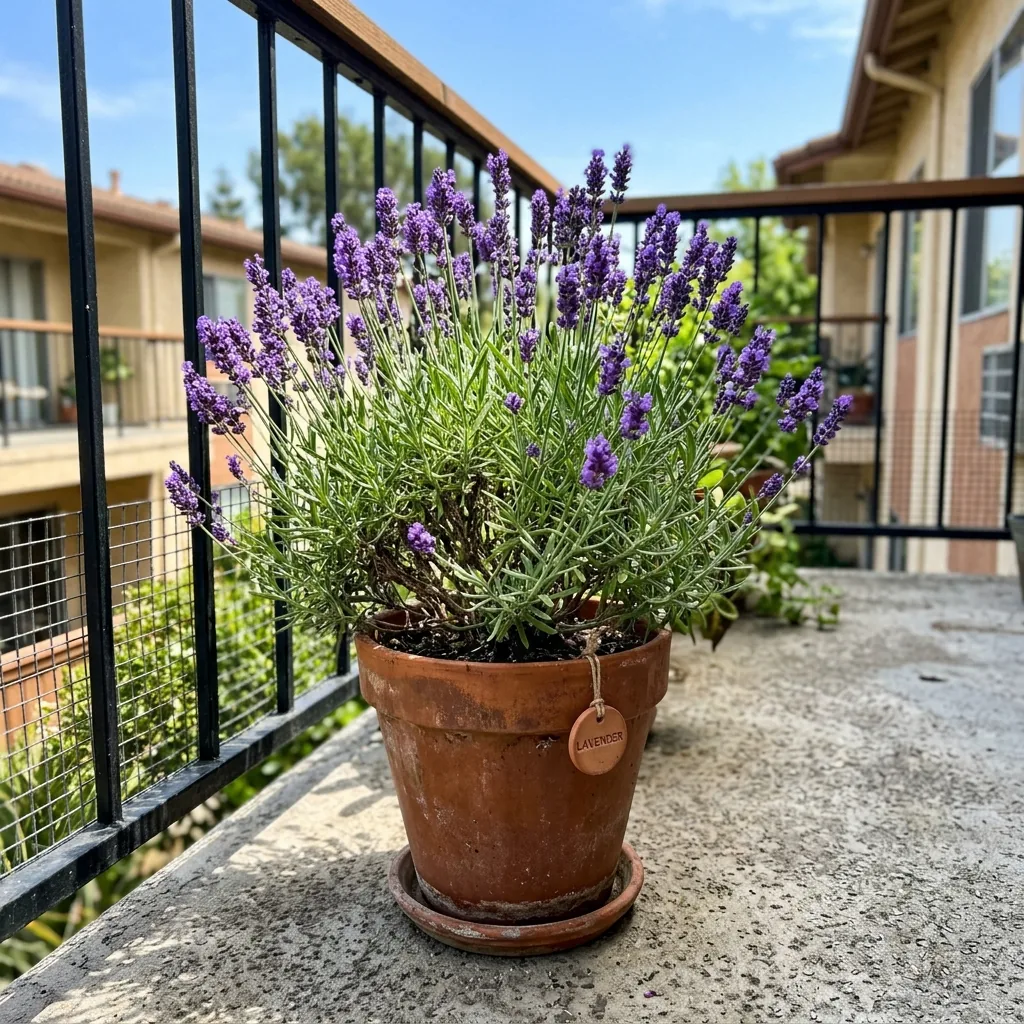
The gold standard of drought-tolerant balcony gardening. Lavender evolved on dry Mediterranean hillsides — it is specifically adapted to heat, drought, and rocky free-draining soil. In containers, it thrives on neglect plus sun.
Container size: Minimum 15cm diameter, preferably 20cm+ for a well-established plant. Watering: Every 7–10 days in summer, every 2–3 weeks in autumn, almost never in winter (just enough to prevent complete desiccation). Sun: Minimum 4 hours direct sun, performs best at 6+.
Best compact varieties for containers: Hidcote (compact, deep purple), Munstead (compact, early flowering), Little Lottie (pink, very dwarf).
- ✅ Pros: Fragrant; long-flowering (June–September); deters aphids and mosquitoes; edible flowers
- ❌ Cons: Dies in waterlogged soil; short-lived if overwatered; needs annual pruning after flowering
2. Thyme (Thymus vulgaris)
Thyme is simultaneously one of the most useful culinary herbs and one of the most drought-tolerant plants you can grow in a container. It originates from dry Mediterranean hillsides and genuinely prefers to dry out between waterings.
Container size: 10–15cm diameter — shallow-rooted, doesn’t need depth. Watering: Every 5–7 days in summer, less in autumn and winter. Sun: 4+ hours direct sun.
Use as a ground cover in larger containers — thyme spreads attractively and fills space between taller plants. Harvest by trimming tips, never cutting into woody stems.
- ✅ Pros: Culinary use; compact; drought-tolerant; bees love it; looks good year-round
- ❌ Cons: Becomes woody after 2–3 years — replace or hard prune in spring
3. Rosemary (Salvia rosmarinus)
Rosemary is one of the most forgiving container herbs in high heat and drought conditions. A 20cm pot of rosemary survives a 2-week heatwave with one watering at the start. It prefers being slightly dry to being wet.
Trailing varieties (Prostratus) look particularly good in railing planters or hanging from the edge of raised stands — the stems trail attractively downward while remaining fully functional.
Container size: Minimum 20cm for a productive plant; rosemary grows slowly in small pots. Watering: Every 7–10 days in summer, monthly in winter. Sun: Full sun preferred, tolerates 4 hours minimum.
- ✅ Pros: Long-lived (5+ years in containers); culinary use; architectural; resistant to most pests
- ❌ Cons: Slow to establish; dislikes being moved once settled; root rot if overwatered
4. Sedum (Stonecrop)
Sedums are succulents that specifically perform well in outdoor container conditions — unlike many indoor succulents that struggle with temperature fluctuation and rain. Hardy sedums survive frost, drought, and heat with equal indifference.
Varieties for balconies: Sedum spurium (ground cover, spreads attractively), Sedum rupestre ‘Angelina’ (golden-yellow, compact), Sedum ‘Autumn Joy’ (upright, flowers late summer).
Watering: Every 10–14 days in summer, monthly in autumn, almost never in winter.
Use sedum to fill gaps in mixed containers — they spread attractively among taller plants and require essentially no attention.
- ✅ Pros: Extreme drought tolerance (14+ days without water); frost hardy; spreads attractively
- ❌ Cons: Slow-growing; less visual drama than flowering plants; can look messy if not trimmed
5. Salvia (Ornamental types)
Ornamental salvias — Salvia nemorosa, Salvia caradonna, Salvia ‘May Night’ — combine drought tolerance with spectacular long-season flowering. Unlike culinary sage, these are grown for visual impact but have the same Mediterranean drought resistance.
Container size: 20–25cm minimum — salvias have significant root systems. Watering: Every 5–7 days in summer when establishing, every 10 days once established. Sun: Full sun, 5+ hours minimum. In partial shade, salvias produce fewer flowers and are more prone to legginess.
Bloom period: June–October, often with two distinct flushes if deadheaded after the first.
- ✅ Pros: Long flowering season; pollinators; visually dramatic; drought-tolerant once established
- ❌ Cons: First year needs more consistent watering; not edible (ornamental varieties); some grow large
6. Trailing Nasturtium (Tropaeolum majus)
Nasturtiums are aggressively drought-tolerant and specifically prefer poor, dry soil — rich, moist conditions produce lush foliage but few flowers. This makes them ideal for balcony containers where other plants struggle.
Sow directly into containers from April — they dislike transplanting. They’ll flower in 6–8 weeks from seed and continue until frost. Trailing varieties cascade beautifully from railing planters or hanging baskets.
Bonus: Both leaves and flowers are edible with a peppery flavour. An edible, drought-tolerant, self-seeding flowering plant for under $3 in seeds.
- ✅ Pros: Extremely cheap; edible; flowers June–October; deters blackfly from neighbouring plants
- ❌ Cons: Short-lived (annual); can look untidy if not trimmed; attracts caterpillars occasionally
7. Ornamental Grasses (Festuca, Stipa)
Compact ornamental grasses — Festuca glauca (blue fescue), Stipa tenuissima (Mexican feather grass) — combine structural interest, wind resilience, and drought tolerance in a single container. They sway elegantly in high-rise wind rather than breaking.
Festuca glauca stays compact (20–25cm), maintains its blue-grey colour year-round, and needs watering every 10–14 days in summer. Stipa tenuissima grows to 40–60cm, moves beautifully in wind, and tolerates drought periods of 2+ weeks.
- ✅ Pros: Year-round interest; wind-resilient; structural; very low maintenance
- ❌ Cons: Purely decorative — no edible value; can look bleached in very harsh sun
8. Compact Lavender Cotton (Santolina)
Santolina is an underrated balcony plant — silvery aromatic foliage, button-yellow flowers in summer, extreme drought and heat tolerance, and a compact mounded shape that works well in mixed containers or as a standalone pot plant.
It smells like a cross between lavender and rosemary (distinctly Mediterranean), deters moths and aphids, and requires watering once every 10–14 days in summer peak heat.
- ✅ Pros: Pest-deterring fragrance; drought-extreme tolerance; structural shape; very low care
- ❌ Cons: Yellow flowers aren’t to everyone’s taste; needs hard pruning in spring to stay compact
9. Sempervivum (Houseleeks)
Sempervivums are the most drought-tolerant of all container plants — they store water in thick rosette leaves and can survive weeks without water in summer. They’re frost-hardy to -20°C, making them true year-round balcony plants.
Use them to fill small gaps in mixed containers, as standalone clusters in shallow terracotta bowls, or in vertical pocket planters where drought is most extreme. They multiply by producing offsets — one plant becomes five within a season.
- ✅ Pros: Most drought-tolerant plant on this list; frost-hardy; multiplies free; visually interesting
- ❌ Cons: Slow growth; purely decorative; dies after flowering (but leaves multiple offsets)
10. Russian Sage (Perovskia atriplicifolia)
Russian sage looks like lavender, flowers like lavender, and is even more drought-tolerant than lavender. It produces tall spires of small blue-purple flowers from July to September, growing to 60–90cm in a season.
In a container it stays more compact — typically 40–60cm — and makes a strong vertical element in a mixed planting. It needs a 25–30cm pot and full sun to perform, but once established, goes 10–14 days without water in summer.
- ✅ Pros: Long flower season; tall architectural presence; more drought-tolerant than lavender; pollinators
- ❌ Cons: Dies back completely in winter (looks dead, then regrows); needs significant sun
11. Ice Plant (Delosperma)
Delosperma is a low-growing succulent that produces masses of daisy-like flowers in vivid magenta, orange, or yellow through summer. It spreads across the surface of containers and fills gaps attractively while requiring almost no care.
Hardy to -10°C in containers, though best in a sheltered spot in winter. Summer watering: every 10–14 days. In peak heat, once a week at most.
- ✅ Pros: Vivid colour; sprawling habit fills containers; flowers for months; very low water
- ❌ Cons: Limited availability; collapses in shade; can look sparse early in the season
12. Compact Agave (Agave parryi, Agave ‘Blue Glow’)
Agave in a container is the statement plant for a very sunny, very dry balcony. Agave parryi stays compact (40–60cm), tolerates high-rise heat and wind, and needs watering only every 2–3 weeks in summer, once a month in autumn, and essentially never in winter.
Use as a single-specimen statement pot — the architectural rosette shape is dramatic and works in both minimal and bohemian container arrangements. Pair with sedum and trailing thyme for a cohesive drought-tolerant grouping.
Safety note: Agave leaves have sharp terminal spines — position away from foot traffic and out of reach of children.
- ✅ Pros: Architectural statement; extreme drought tolerance; long-lived (years in a pot); year-round
- ❌ Cons: Sharp spines; slow-growing; expensive compared to other plants; cold-sensitive below -10°C
My Experience with Drought Tolerant Balcony Plants
My 8th-floor balcony is a drought testing ground whether I intend it to be or not. South-facing, exposed to afternoon wind, and with a schedule that sometimes takes me away for a week without warning — the plants that remain are the ones that earned their place.
Current survivors: two lavenders (three years old, still going), a large rosemary trained along the railing (four years old), a carpet of thyme spread across the front of the main container, three Festuca glauca in terracotta pots, and a sedum that has now occupied every gap in the main raised bed.
Everything on that list has survived at least one 10-day absence without watering in summer. The lavenders have survived three. The rosemary once went 16 days during a particularly bad August and looked mildly annoyed at best.
The single thing that made the biggest difference to water retention in these containers: switching from standard potting mix to a perlite-heavy blend (60% compost, 30% perlite, 10% coarse grit). Counterintuitively, the faster-draining mix caused the drought-tolerant plants to need less frequent watering — because roots weren’t sitting in moisture that encouraged shallow root development. Deep, free-draining roots handle drought better than shallow, wet-dependent ones.
For the full lightweight soil guide: lightweight soil for balcony containers.
Common Mistakes
Overwatering drought-tolerant plants. The most common way to kill lavender, rosemary, and sedum is too much water. These plants evolved in dry conditions — their roots are not adapted to sitting in moist soil. Water only when the top 3–4cm of soil is completely dry.
Placing Mediterranean plants in shade. Lavender, rosemary, and thyme need significant sun to activate their drought-tolerance mechanisms. In shade, they become stressed, leggy, and prone to fungal disease — and still need careful watering.
Using standard potting mix. Standard potting compost retains moisture — exactly what drought-tolerant plants don’t need. Always add 20–30% perlite or coarse grit to the mix for these species.
Not cutting back after flowering. Lavender becomes woody and less productive if not pruned annually. Cut back by one third immediately after the main flowering period, never into the woody base. This keeps the plant compact and extends its productive life by several years.
FAQ
What is the most drought tolerant plant for a balcony container? Sempervivum and sedum tolerate the longest periods without water (2+ weeks in summer). For a flowering plant, lavender and trailing rosemary are the most reliably drought-tolerant in container conditions.
Can I grow drought tolerant plants on a north-facing balcony? Most Mediterranean drought-tolerant plants (lavender, rosemary, thyme) need 4+ hours sun and won’t thrive on north-facing balconies. For north-facing drought tolerance, look at hardy ferns, ajuga, and certain sedums that tolerate shade.
How often should I water drought tolerant balcony plants in summer? Most Mediterranean species need water every 5–10 days in summer container conditions (not the 2–3 weeks they’d manage in the ground). Succulents and sedum can go 10–14 days. Always check the top 3–4cm of soil — water only when fully dry.
What soil is best for drought tolerant balcony plants? A mix of 60% peat-free potting compost, 30% perlite, 10% coarse grit. Fast-draining, mimics Mediterranean hillside conditions, and prevents root rot in species that dislike moisture.
Are drought tolerant plants good for high-rise balconies? Yes — particularly ornamental grasses (wind-resilient), sedum (low profile, resists wind), thyme (low-growing, compact), and lavender (flexible stems that handle gusts). Avoid tall, floppy plants that can’t anchor themselves in exposed conditions.
Safety Disclaimer
Agave and some ornamental grasses have sharp edges or terminal spines — position away from areas where people walk barefoot or where children play. Some ornamental salvias are toxic if ingested — check species before growing in households with pets or young children.
