
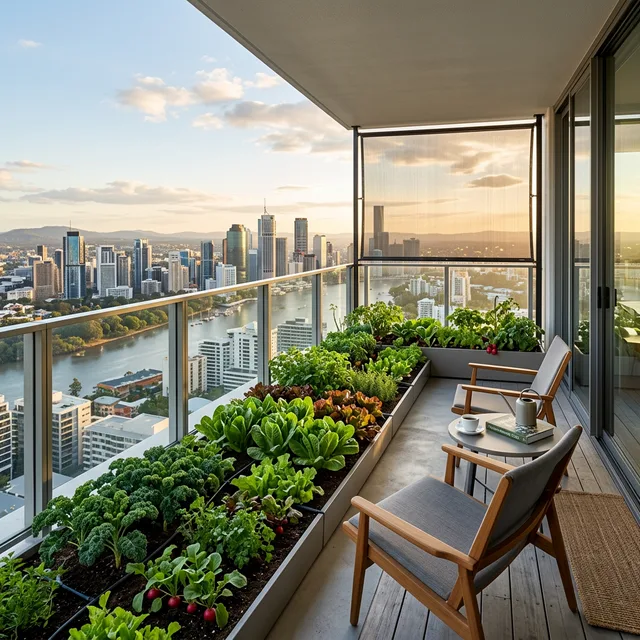
The most common mistake urban gardeners make is assuming a sunny balcony is a safe haven for any plant. On a high-rise floor, wind is a more immediate threat than pests. Wind resistant vegetables for high rise balconies are crops that possess low centers of gravity, flexible stems, or waxy leaf coatings that prevent rapid moisture loss. If you grow tall, top-heavy heirloom tomatoes on the 15th floor without a structural cage, you are inviting a harvest of snapped stems. In this guide, I’ll reveal the 7 most robust crops that can handle a 40mph gust without flinching.
Why trust this guide? I once watched my prize-winning 6-foot indeterminate tomato plant get decapitated by a sudden squall on my 22nd-floor balcony because I ignored wind physics. I spent the next three seasons testing dwarf varieties and low-profile crops to see what actually survives a gale.
[TABLE: Vegetable Resilience Matrix]
| Vegetable | Wind Level | Best For | Height (cm) |
|---|---|---|---|
| Dwarf Kale | Violent | High Winds | 25-30 |
| Radishes | High | Exposed Rails | 10-15 |
| Swiss Chard | Moderate | Partial Shelter | 40-50 |
| Bush Beans | High | Heavy Pots | 30-40 |
| Little Gem Lettuce | Moderate | Tabletop Pots | 15-20 |
| Micro-Tomatoes | Moderate | Floor Level | 20-30 |
| Chives | Violent | All Conditions | 20-30 |
How Wind Impacts Balcony Gardening (The Physics)
Wind on a high-rise isn’t just about physical breakage. It’s about desiccation. High-velocity air strips moisture from leaves faster than a root system can resupply it. This leads to “wind burn,” where leaf edges turn crispy and brown despite the soil being damp. In a 2×1 meter space, a wind tunnel effect can double the ambient air speed, turning a moderate breeze into a plant-killing gale. This is why automatic watering for renters is often paired with windbreaks—you need a constant supply of hydration to combat the drying effect of high-altitude airflow. Automate with a smart watering system.
How to Choose Wind-Resistant Vegetables for a High-Rise
When selecting seeds, I ignore the “giant” varieties. For urban micro-living, you want crops that stay low. A plant that is 30cm tall has a much lower leverage point for the wind to grip than one that is 120cm tall. I also look for “flexible” foliage. Thin, papery leaves (like spinach) tatter easily, while waxy, thick leaves (like kale) endure.
What are the most wind-resistant vegetables for high-rise balconies?
The most wind-resistant vegetables are low-growing cruciferous crops such as dwarf kale and radishes, alongside flexible-stemmed herbs like chives. These plants excel because they offer minimal surface area for the wind to “catch.” Additionally, bush varieties of beans and determinate micro-tomatoes provide a compact, sturdy architecture that resists snapping. For high-rise environments, the “Little Gem” romaine is the gold standard for lettuce because its tight, dense head protects the inner leaves from tattering. Avoid tall, vining crops like peas or indeterminate tomatoes unless you have structural, heavy-duty wind screening in place.
Best 7 Wind-Resistant Vegetables
1. Dwarf Blue Curled Kale
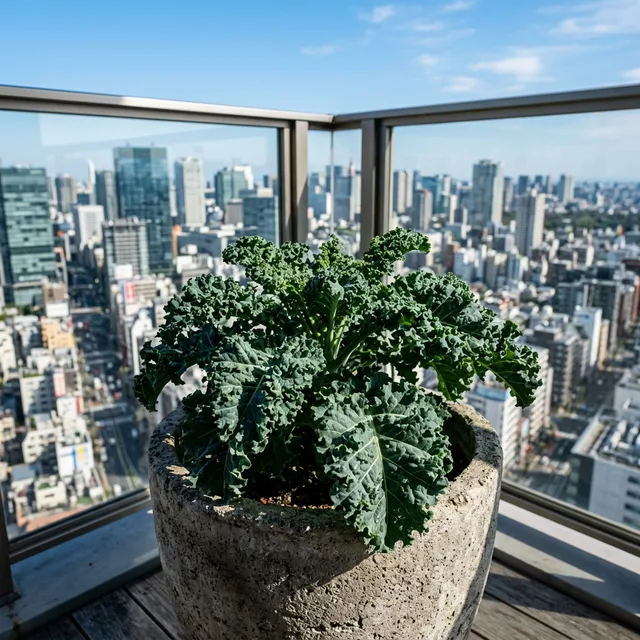
This is the tank of the vegetable world. Because it stays under 30cm, the wind mostly passes right over it. Its ruffled leaves are thick and waxy, making them highly resistant to wind burn. This variety has been my main apartment balcony gardening staple during the stormy spring months.
- Real-World Application: Ideal for the most exposed corner of your balcony.
- Risk & Safety Notes: Ensure the pot is heavy (clay/terracotta or weighted with 2kg stone) to prevent the whole plant from blowing over.
- ✅ Pros: Extreme cold and wind tolerance.
- ❌ Cons: Needs frequent nitrogen for best leaf texture.
2. “Little Gem” Romaine Lettuce
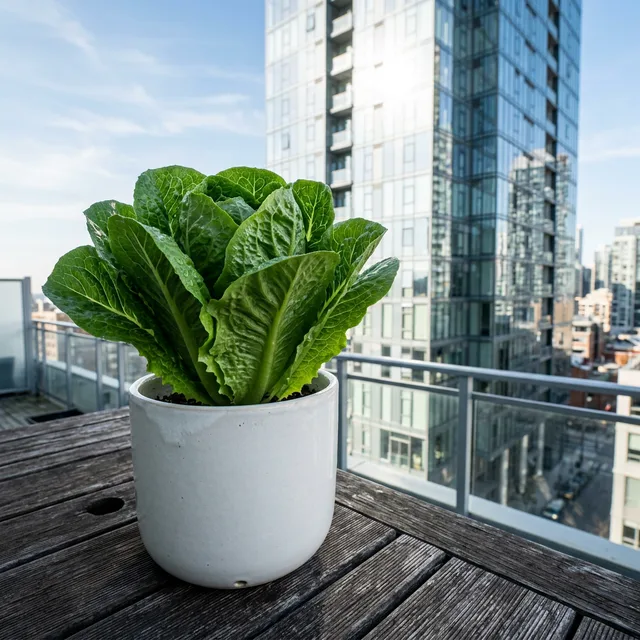
Its tight, “bullet” shape is aerodynamic. Unlike loose-leaf varieties that get shredded by gusts, Little Gem stays compact and crunchy. It’s a perfect addition to a complete balcony herb garden layout where space is at a premium. See the complete balcony herb garden guide.
- Real-World Application: Best for tabletop planters.
- Risk & Safety Notes: Keep at floor level during severe storms to avoid “sail” effects.
- ✅ Pros: Naturally resistant to heart-rot.
- ❌ Cons: Can bolt quickly if the wind is hot and dry.
3. Bush Beans (Contender or Blue Lake)
Pole beans are a death sentence on a high-rise. Bush beans, however, grow into a sturdy 40cm mound that supports its own weight. They are far superior to vining types in high-altitude edible balcony setups. Mind balcony weight limits.
- Real-World Application: Use a wide, low pot for a stable base.
- Risk & Safety Notes: Beans are heavy when fruiting; secure the pots with heavy-duty ties.
- ✅ Pros: High yield in small spaces.
- ❌ Cons: Leaves can still tatter in heavy hail.
4. French Breakfast Radishes
The ultimate “low-profile” crop. They are so close to the soil that the wind literally can’t find them. I’ve grown these on a 1x1m Juliet balcony with zero protection, and they never once showed signs of stress.
- Real-World Application: Perfect for shallow, heavy trough planters.
- Risk & Safety Notes: Zero falling risk if planted in low troughs.
- ✅ Pros: 25-day harvest cycle.
- ❌ Cons: Needs consistent moisture to avoid pithy roots.
5. Bright Lights Swiss Chard
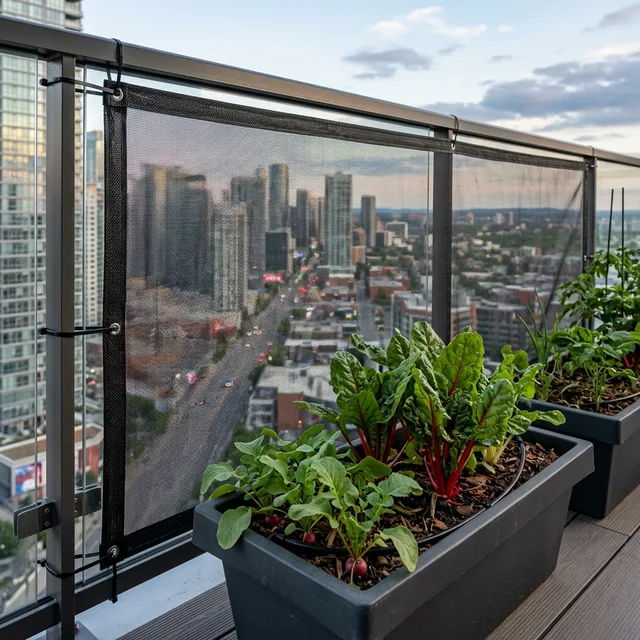
Chard has incredibly strong, flexible “ribs” that can bend without breaking. The “Bright Lights” variety adds a stunning aesthetic to your small apartment layout without being fragile.
- Real-World Application: Provides a splash of color while acting as a “living windbreak” for smaller herbs.
- Risk & Safety Notes: Large leaves can catch the wind; keep pots weighted with large pebbles.
- ✅ Pros: Beautiful and edible; survives light frost.
- ❌ Cons: Needs deep pots (20cm+).
6. Micro-Tomatoes (Tiny Tim or Orange Hat)
These stay under 30cm but produce hundreds of cherry tomatoes. They don’t need stakes, which are often the first thing to fail in a storm. They are a “pro-tool” for any smart balcony herb garden enthusiast.
- Real-World Application: Best for sheltered corners or floor-level shelving.
- Risk & Safety Notes: Ensure pots are not on railings without secondary tethers.
- ✅ Pros: No staking required; highly compact.
- ❌ Cons: Lower total yield than full-size “determinate” plants.
7. Garlic Chives
Flexible, grass-like leaves that simply bend with the wind and spring back up. They are functionally indestructible and a great companion for mason jar herb gardens.
- Real-World Application: Use them as a border in your larger planters.
- Risk & Safety Notes: Very safe for high-rises; low center of gravity.
- ✅ Pros: Perennial and indestructible; edible flowers.
- ❌ Cons: Can become invasive if they go to seed.
My Experience with High-Rise Wind on a Tiny Balcony
Living on the 18th floor of a south-facing building, I learned the hard way that a “gentle breeze” at street level is a gale up here. My balcony is only 1.5m x 3m, making every centimeter a high-stakes zone. I once lost a lightweight plastic “vertical tower” because I didn’t weight the base; it toppled and shattered my neighbor’s expensive ceramic pot below. I had to pay $120 in damages, which is a steep price for a few heads of lettuce.
Now, I strictly use heavy resin pots weighted with 2kg of drainage rocks at the bottom. I’ve shifted 90% of my “edible” production to these 7 crops. The Dwarf Kale, in particular, survived a week-long storm that literally ripped my outdoor rug. If you are serious about apartment gardening, start with these “low-crawlers” and invest in a good windproof balcony gardening mesh. Add wind protection for plants.
Conclusion
Growing food in the sky is an exercise in engineering. By choosing wind resistant vegetables for high rise balconies, you are working with the elements rather than against them. Start with a heavy pot, choose a dwarf variety, and watch your sky-high garden thrive where others fail. Don’t wait for your first snapped stem to make the switch—reclaim your balcony productivity today.
Safety Disclaimer
On high-rise balconies, falling objects are a major liability. Always use heavy pots (terracotta or weighted resin) and never place un-secured planters on top of railings. Ensure all “hanging” elements are double-tethered with UV-resistant cable ties. Balcony weight limits should be audited before adding heavy rocks to pots.
How do I stop my pots from blowing over?
Use heavy drainage stones (large pebbles) in the bottom 5cm of the pot. For lightweight plastic pots, ‘glue’ them to a heavy paving stone using outdoor mounting tape.
Do I need windscreens?
If you are above the 10th floor, yes. A simple **mesh privacy screen** can reduce wind speed by 50% without creating a ‘sail’ effect that might pull your railing off.
Why are my leaves turning white?
This is likely ‘wind burn’ or sunscald. The wind is drying out the leaf tissue faster than the plant can drink. Increase watering frequency during windy spells.
Can I grow tall tomatoes if I use a cage?
Yes, but the cage must be bolted to the floor or a permanent structure. For renters, it’s safer to stick with the dwarf varieties listed above.
