
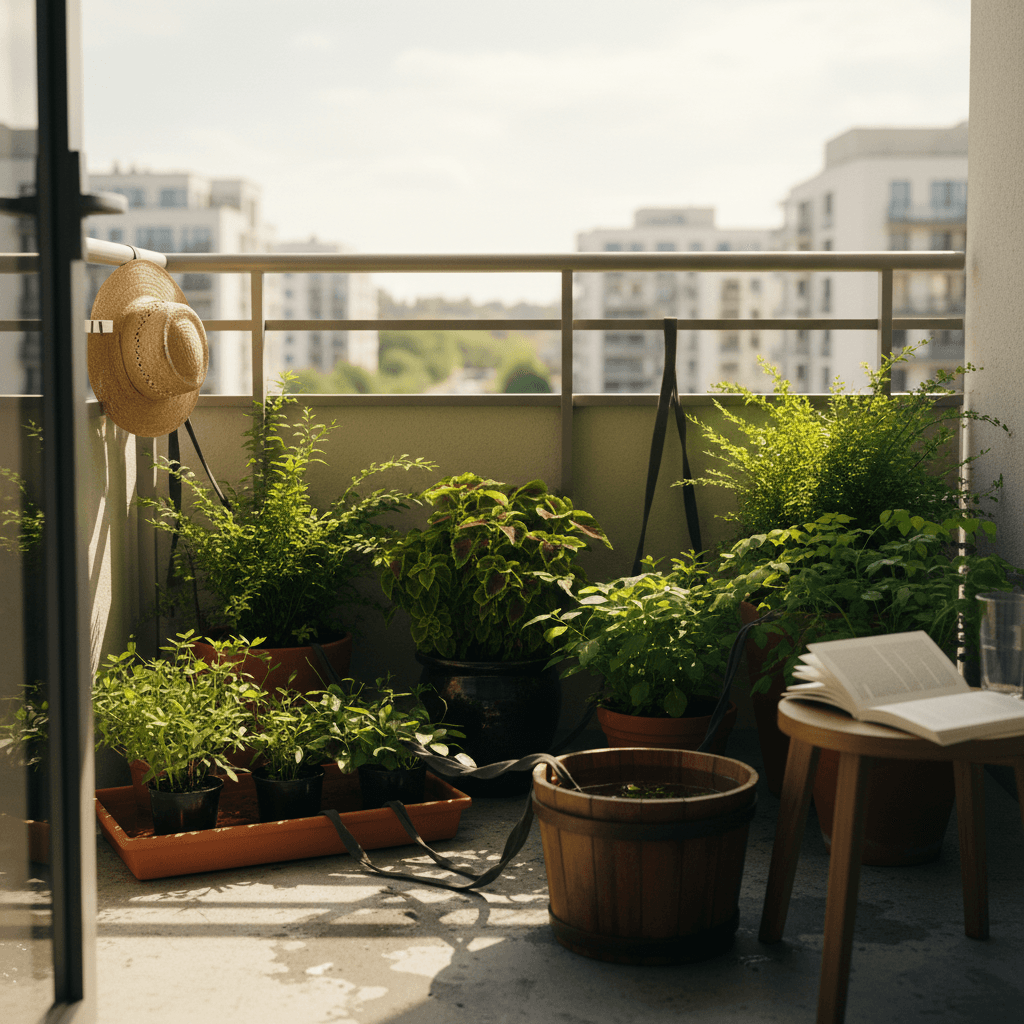
You book a cheap flight for a week‑long getaway. You’re excited. Then you look at your balcony garden. It’s July, it’s hot, and your tomatoes are already thirsty. The question hits: Will I come home to a lush jungle or a graveyard of crispy stems? See the complete balcony herb garden guide.
For urban micro‑gardeners, this anxiety is real. Balcony containers are isolated islands; they rely 100% on you for water. One hot afternoon without moisture can kill sensitive plants like lettuce or basil. Use balcony containers with good drainage.
The good news: you don’t need a plant sitter or a $200 smart drip system. With basic physics and household items, you can hack simple self‑watering setups that keep plants alive while you’re away. More on keeping plants alive on vacation.
The Strategy: Preparation Is 90% of Survival
Before you add gadgets, fix the conditions.
- Group plants together
Move pots into a tight cluster in the shadiest corner of the balcony. They create a humid microclimate and shade each other’s soil. - Mulch heavily
Add a 5 cm (2 inch) layer of bark, straw or even shredded cardboard on top of the soil. This can cut evaporation dramatically and keeps the surface from baking. - Water deeply before you leave
The night before departure, water each pot until water runs freely from the drainage holes. You want the entire root ball saturated, not just the top few centimeters.
These three steps alone often buy you an extra 2–3 days.
3 DIY Self‑Watering Hacks
1. Wick System (Capillary Action)
Good for roughly 1–2 weeks if set up correctly.
- How it works
- Place a large bucket or container of water on a stool or crate higher than your pots.
- Cut strips of cotton fabric (old T‑shirt) or use thick nylon rope.
- Push one end deep into the pot’s soil, near the edge, and the other end into the water bucket.
- Physics
Water moves along the wick via capillary action, delivering moisture to the soil as it dries. - Best for: Medium pots and leafy greens that like consistent moisture.
Test one pot a few days before your trip to see how quickly the soil stays evenly damp.
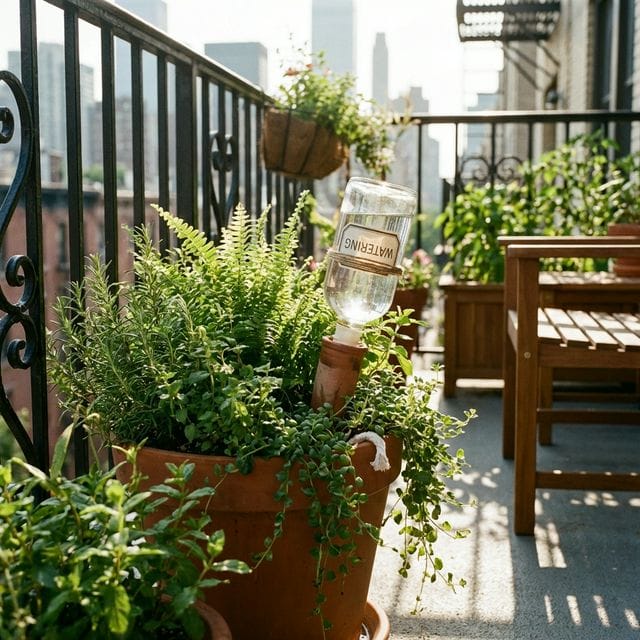
2. Bottle Spike (Slow Drip)
A classic quick fix for 3–5 days.
- How it works
- Take a 1–2 L plastic bottle.
- Heat a needle and pierce 2–3 tiny holes in the cap.
- Fill the bottle with water, screw the cap on, and push the neck into moist soil upside down.
- Physics
As the surrounding soil dries, air bubbles rise into the bottle, letting water drip out slowly. - Best for: Large pots, tomatoes, peppers or small balcony trees.
- Important: Always test a bottle several days in advance. If water drains in 24 hours or not at all, adjust the size/number of holes.
3. “Bathtub” Tray (Bottom Watering)
Suited to very thirsty plants for 3–7 days.
- How it works
- Place pots with drainage holes into a deep tray, storage box or kiddie pool.
- Fill the tray with 2–5 cm (1–2 inches) of water.
- Physics
As soil dries, it wicks water up from the tray through the drainage holes. - Best for: Tougher plants and large containers that can drink steadily.
- Risk: Sensitive plants can develop root rot if left standing in water for more than a week. Don’t use this method for succulents or plants that hate “wet feet.”
Solution Comparison Table
| Method | Typical duration | Cost | Main risk | Best for |
|---|---|---|---|---|
| Wick system | 7–14 days | Free/low | Wick drying out | Herbs, leafy greens |
| Bottle spike | 3–5 days | Free | Flow too fast/slow | Tomatoes, big containers |
| Tray “bathtub” | 3–7 days | Low | Root rot if too long | Very thirsty plants |
| Glass globes | 2–4 days | $15+ | Clogging, uneven flow | Decorative or indoor use |
Use a Balcony Plant Calculator to Plan Your Layout
Vacation mode usually means moving things: clustering heavy pots, adding a big water bucket for wicks, or setting up deep trays. All of that changes how weight is distributed on your balcony.
A 20 L (5 gallon) bucket of water weighs over 18–20 kg (40+ lbs). Several clustered containers can create a heavy “hot spot” on one side.
The Balcony Plant Calculator helps you:
- See how much extra load each reservoir and grouped pot adds.
- Arrange your “vacation layout” so weight spreads evenly instead of piling into one corner.
- Stay within a safe range for typical balcony live loads.
Open the Balcony Plant Calculator before you leave, and check whether your grouped pots and water buckets still keep the balcony comfortably within safe limits.
The Mosquito Issue
Any standing water — in buckets, trays or deep saucers — is a mosquito hotel.
How to reduce breeding:
- Cover wicking buckets with a lid or plastic wrap, cutting only small holes for the wick.
- Add a very thin film of vegetable oil or a drop of dish soap to open reservoirs; it breaks surface tension so larvae can’t survive.
- Empty and wipe trays as soon as you’re back.
Conclusion
Coming home from vacation shouldn’t mean a funeral for your ferns. With deep pre‑watering, shade, and simple setups like wicks, bottle spikes and bottom trays, your balcony garden can stay on life support for surprisingly long periods. The systems are low‑tech, electricity‑free and almost free to build.
Once you’re back, give your plants a gentle trim and a nutrient boost. A zero‑waste balcony compost or liquid feed from kitchen scraps is a great way to help them recover and keep your system sustainable.
What is the easiest self-watering hack for vacations?
The capillary wick method: place a large pot of water above the plants, and run thick cotton strings from the water deep into the soil of each pot.
Do self-watering terracotta spikes actually work?
Yes, terracotta watering spikes attached to recycled wine bottles release water slowly into the soil as it dries, easily lasting 1-2 weeks.
Can I just leave my indoor plants sitting in water?
You can use a humidity tray for a few days, but leaving plants sitting in deep water for a long vacation will cause fatal root rot.
