
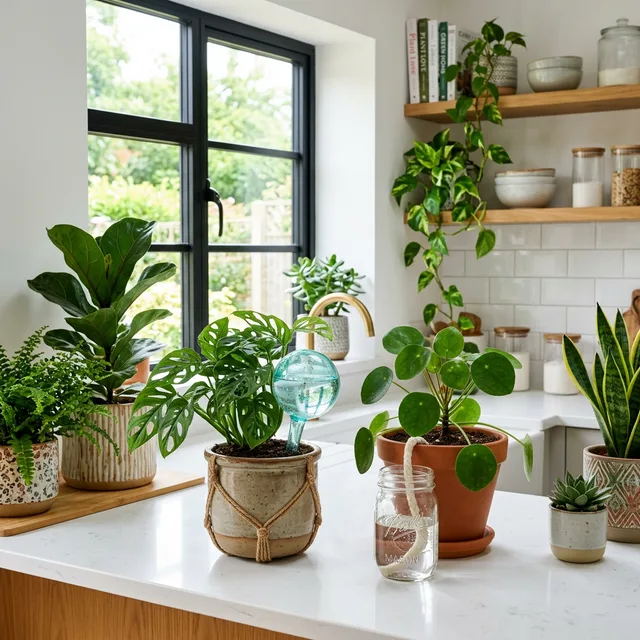
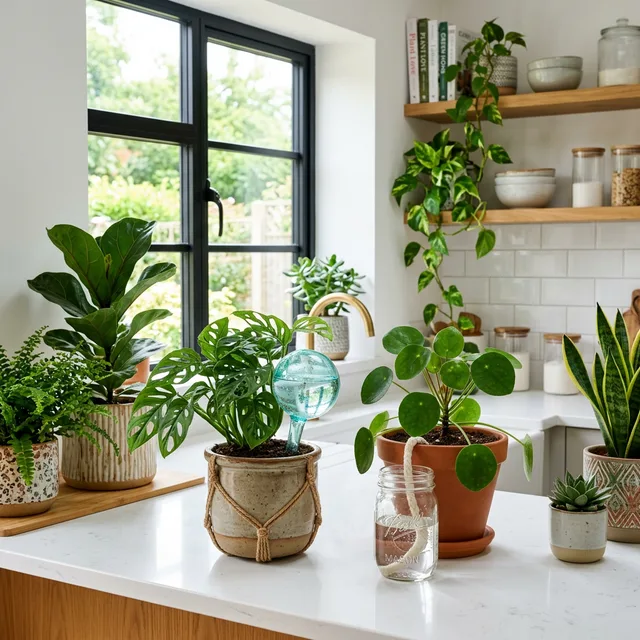
Learning how to keep apartment plants alive for 2 weeks while you are away on summer vacation is the secret to maintaining a lush micro-jungle. Urban living presents a unique challenge: unlike suburban homeowners, studio renters often don’t have a neighbor they trust with their spare key, or their apartment management might forbid “unsupervised guest entry.” This leaves your plants stranded in a 300-square-foot glass box that can reach 95 degrees once you turn off your AC for the trip.
In a small apartment, the air volume is low, meaning humidity drops rapidly. If you leave your plants on a sunny windowsill while you are away, they will likely be “crispy” within 72 hours. To succeed, you have to move beyond simple watering and create a self-sustaining “micro-climate” that recycles moisture and protects your green investment while you are sipping cocktails on a beach.
My Experience with the “Studio Bathtub” Hack
In my third year of urban gardening, I left for a 14-day trip to Greece. I had seventeen plants, including a very drama-prone Fiddle Leaf Fig and a collection of thirsty Calatheas. I didn’t want to pay a plant-sitter, so I performed an experiment.
I moved every single plant into my windowless studio bathroom. I placed them all inside the bathtub on top of a layer of damp towels. I hung a single LED grow light on a timer over the tub and left the bathroom door slightly cracked.
When I returned two weeks later, not a single leaf had turned yellow. In fact, my Calatheas looked better than when I left. The small, enclosed space of the bathtub had trapped the evaporating water from the towels, creating a high-humidity “greenhouse effect” that kept the plants perfectly hydrated without me ever touching a watering can.
The 3 Rules of Summer Plant Survival
Before you hatch a DIY plan, you must stabilize the environment of your studio:
- Ditch the Direct Sun: Sun is the enemy of a vacationing plant. Even “full sun” plants should be moved 5–10 feet away from the window. Direct light increases soil temperature and accelerates evaporation.
- Lower the Ambient Temperature: If your building allows it, leave your AC on a “Vacation” or “Eco” mode set to 78 degrees. If the apartment reaches 90+ degrees, your plants will “perspire” moisture faster than any DIY wick system can replace it.
- No Fertilizer Before You Leave: Never fertilize your plants in the two weeks leading up to a vacation. Fertilizer encourages “flush” growth, which requires a massive amount of water to sustain. You want your plants to stay in a “stagnant” state while you are away.
4 DIY Self-Watering Hacks for Studios
If you don’t have a bathtub or want to keep your plants in the living room, use these four low-cost urban hacks.
1. The “Cotton String” Wick System (Best for Multiple Small Pots)
This is the most reliable way to water 5–10 small pots at once using a single reservoir. * How it Works: Place a large 5-gallon bucket of water on a chair. Group your plants on the floor around the chair. Run a thick cotton string (or strips of old cotton t-shirts) from the bucket into the soil of each pot. * The Physics: Capillary action draws water down the string and into the soil as it dries out. * Pro-Tip: Ensure the water source is higher than the plant pots to ensure gravity assists the wick.
2. The Wine Bottle “Inversion” (Best for Large Floor Plants)
For your monsteras or large palms, a string won’t move enough water. * How it Works: Thoroughly water your plant until it’s saturated. Fill an empty wine bottle with water. Quickly flip it and shove the neck 4-5 inches deep into the soil. * Benefit: The dense soil creates a vacuum. As the soil dries, it allows a small bubble of air into the bottle, which releases a corresponding “gulp” of water. * Note: This usually lasts for about 7–10 days. For a 14-day trip, use a 1.5-liter Magnum bottle.
3. The “Ziploc Greenhouse” (Best for Tropicals/Calatheas)
If you have high-humidity plants but no bathtub, give them their own personal tent. * How it Works: Water the plant well. Place the entire pot inside a clear plastic dry-cleaning bag or a large clear trash bag. Blow air into the bag to create a “balloon” and tie it shut. * Result: The plant breathes, releases moisture (transpiration), and that moisture hits the plastic and drips back into the soil. It is a 100% closed-loop system.
4. Terracotta Watering Spikes (The “Aesthetic” Choice)
If you hate the look of buckets and bags, buy a set of terracotta stakes. * How it Works: These porous clay stakes are pushed into the soil and then connected to a water source (like a recycled soda bottle). * Logic: The water seeps through the clay only when the surrounding soil is dry. It’s the most precise way to water without over-saturating.
Compare Vacation Watering Methods
| Method | Duration | Best For | Complexity | Risk |
|---|---|---|---|---|
| Bathtub Method | 14+ Days | All Tropicals | Moderate | Low |
| String Wick | 10-14 Days | Small Herb/Houseplants | Moderate | Moderate (Wick can dry) |
| Wine Bottle | 7-10 Days | Large Floor Plants | Low | Moderate (Can clog) |
| Plastic Bag | 21+ Days | Humidity-lovers | High | High (Mold risk) |
Conclusion
Your summer vacation shouldn’t be a death sentence for your houseplants. By utilizing the “Bathtub Greenhouse” strategy or setting up a gravity-fed “String Wick” system, you can ensure your plants stay hydrated for up to 14 days without human intervention. Move your pots out of the sun, stabilize your apartment’s temperature, and use these renter-friendly DIY hacks to come home to a garden that is just as green as when you left. Pick hardy low-light indoor plants that forgive neglect.
Can I just leave my plants in a tray of water?
Generally, no. This is called “bottom watering,” and while it works for 24 hours, leaving most plants (like Monsteras, Pothos, or Figs) sitting in standing water for 2 weeks will cause root rot. The roots need oxygen as much as they need water. If they sit in a “swamp” for 14 days, the roots will turn to mush, and the plant will die shortly after you return. The only exceptions are bog plants like carnivorous Venus flytraps or certain types of ferns.
Safety Disclaimer
If you use the “Bathtub Method,” ensure your bathroom has a functioning overflow drain and that you do not leave any electrical devices (like non-waterproof LED grow lights) in a position where they could fall into water. If your grow light is not rated for high humidity, do not seal it inside a plastic “greenhouse” bag with a plant, as the condensation can cause an electrical short or fire.
