
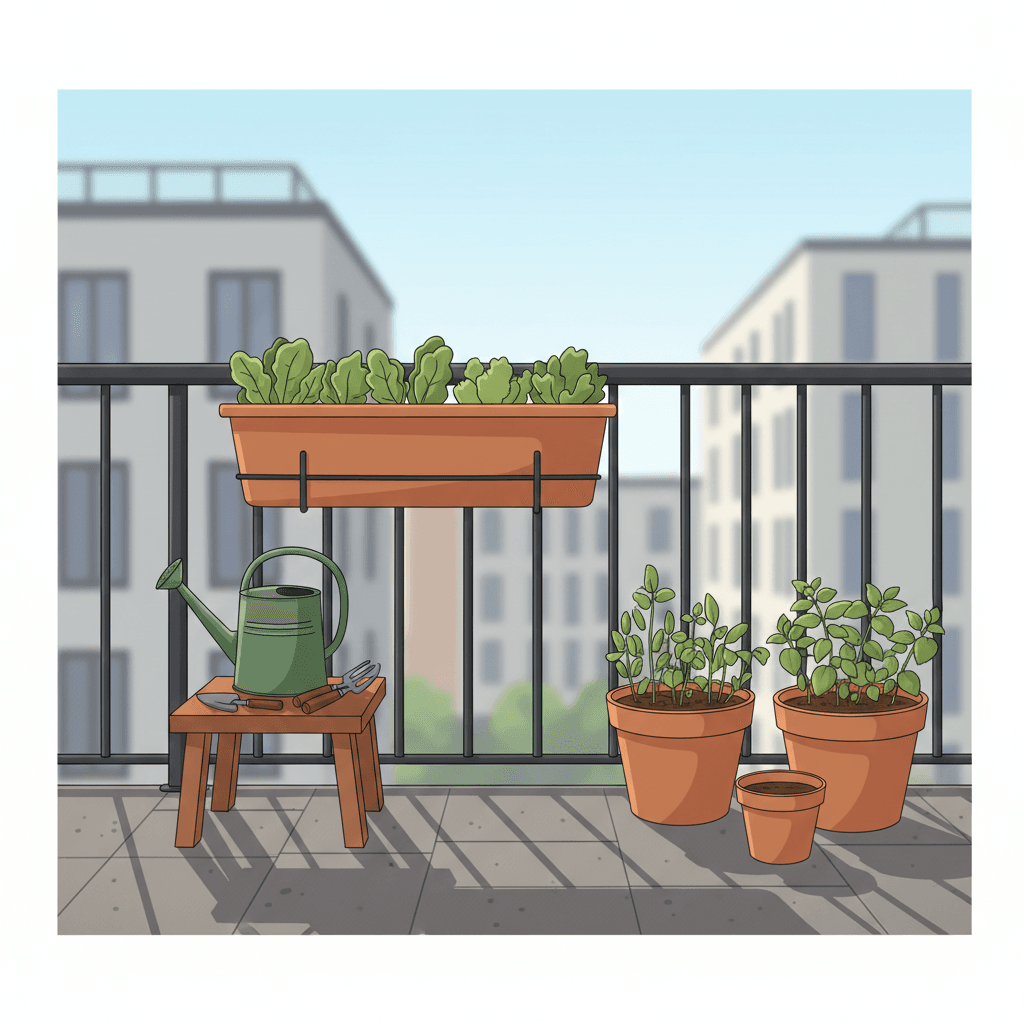
A space outside your door sits unused. Just a meter by two, hard concrete underfoot, home only to an old metal drying rack. Now you want green there instead — but feeds full of perfect patios make it hard to start. Can vines climb without a trellis? Will water reach roots without a tap? Does store‑bought soil even work when it’s poured onto city stone?
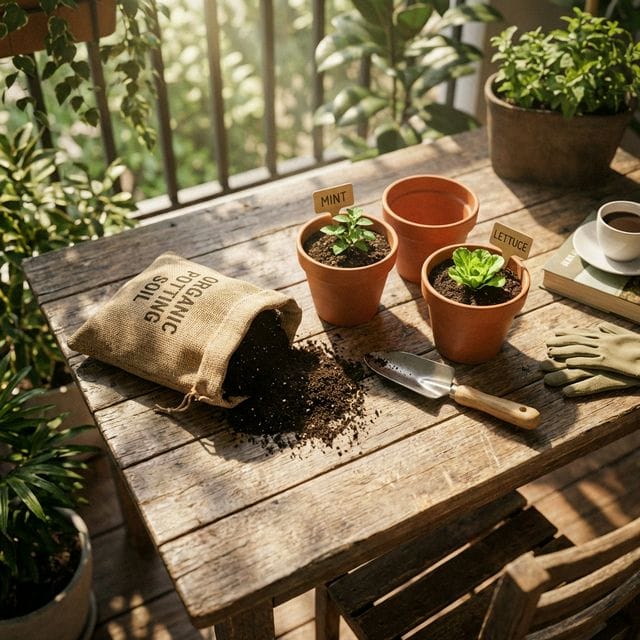
On a tiny rental, mistakes cost more — every inch matters, money does too. The upside: success here grows with less stuff. Just the basics can fill one or two square meters and still look alive.
This isn’t about impressing anyone. Think small, work smart: your outdoor strip can thrive in just 1–2 m². Forget grand designs. Focus on what actually grows where you live — containers that fit, plants that match your light, and a simple watering routine. Consistency beats complexity.
Step 1: Reality Check — Assess Your Space
Start by understanding your space before picking any plants.
Step outside three times: around 10 AM, at midday, and near 4 PM.
- A hot beam hits most of the day, and you squint in the glare → likely south‑facing.
- It’s bright but not blinding, with gentle warmth in morning or evening → often east or west‑facing.
- A soft glow lingers all day, no harsh rays, long gentle shadows → typically north‑facing.
Always read the plant tags. A plant labeled “full sun” won’t thrive in heavy shade, and true shade lovers can burn on a sunny southern ledge.
Next, feel the wind:
- Up high, air usually moves faster. Some balconies barely stir leaves; others feel like an open field.
- If lighter containers wobble or small objects slide, you’ll need heavier, more stable planters.
Finally, check water access:
- Most balconies don’t have an outdoor tap.
- You’ll likely be filling a watering can at the kitchen or bathroom sink.
- Clear the path — when you’re making round after round with 3–5 liters in your hand, obstacles get annoying fast.
Step 2: Container Basics
On a small balcony, each container becomes its own little world.
Drainage is non‑negotiable
Skip pots without holes. Drill some if you must. When water has nowhere to go, it sits, roots drown, then decay. Drainage holes stop that.
Size matters
On hot days, tiny pots can lose moisture within hours. Aim for mid‑sized containers:
- Around 20–30 cm wide, or
- Long rectangular planter boxes.
More soil means more stored moisture. Fat roots like deep, loose mix that holds dampness like a sponge, so one missed watering doesn’t kill everything overnight.
Material choices
Plastic and resin aren’t “cheap” here — they’re practical:
- Plastic/resin pots: light enough to move when you change rentals, and they hold moisture reasonably well.
- Terracotta: beautiful but heavy and thirsty; great for one or two stable pots, less fun when you have to carry them up stairs or to a new apartment.
Step 3: What Lies Beneath the Surface (Soil)
Balcony containers struggle with regular garden soil. It’s too dense and heavy:
- Topsoil compacts when wet, almost like concrete.
- Heavy blends choke roots instead of letting them breathe and drain.
Get: potting mix or container mix.
- Light materials like perlite (the small white specks) and peat or coir usually go into these blends.
- Together they keep the mix fluffy, open and well‑drained.
A single big bag often costs less per liter than several small ones. Most people underestimate how much mix they’ll use — you’re likely to need more than you think.
Plan Your Balcony Layout with a Calculator
One step into a garden shop and suddenly you’re eyeing fifteen planters — more than your one‑square‑meter railing can hold. The real weight doesn’t sink in until you’re hauling fifty liters of wet soil.
The Balcony Plant Calculator helps you stay sensible:
- Put in your balcony length and depth.
- Map out where planters can go without blocking the door or making the space impossible to walk through.
- See how many plant “slots” actually fit with breathing room.
- Get a rough estimate of overall weight in a simple 3D sketch.
Pacing your purchases based on this plan keeps clutter from taking over, especially when space and load capacity both matter.
Use the Balcony Plant Calculator to plan layout and weight before you swipe your card at the garden center.
Step 4: First Small‑Space Setup — Tools
A tiny balcony thrives with less. Three basic tools are enough to get going:
Watering can
A 3–5 liter can works best. Too small and you’re walking back and forth all evening. A nozzle or rose that spreads water like rain helps avoid blasting soil out of pots.
Pruners or sharp scissors
Clean cuts on stems matter. Use them for:
- Removing dead growth
- Trimming spent flowers
- Harvesting herbs and leafy greens
Hand trowel
For digging, planting and moving potting mix. A worn plastic cup can work in an emergency, but your hands will be happier with a real trowel.
A tiny brush and scoop or a small broom and dustpan are also handy. Balconies shed soil, and whatever lands there tends to end up inside on your floor if you don’t sweep it up.
Step 5: Selecting Your First Plants
Start with high‑reward, low‑drama plants that forgive small mistakes.
If You Get Full Sun (About 6+ Hours a Day)
Herbs: basil, rosemary, thyme
Later, you can dive deeper with a full balcony herb garden guide.
Flowers: marigolds and petunias
They provide regular color and stay surprisingly tough even if care isn’t perfect.
Veggies:
- Cherry tomatoes near the railing, with a stake or support.
- Peppers that stay relatively compact but bring plenty of flavor.
If You Get Shade (Less Than 4 Hours of Direct Sun)
Leafy greens:
Lettuce thrives in cooler air. Spinach tolerates cloudy days. Kale hangs on through chilly spells. All handle low light better than many flowers.
Herbs:
- Mint in its own pot so it doesn’t take over everything.
- Parsley where it catches morning light.
- Chives threading thin green leaves through small gaps.
Flowers:
Begonias and impatiens do well in bright shade. They keep their color without needing harsh direct sun.
Begin with just a handful of containers — three to six, not twenty. Watch how each plant behaves before you add more.
The “I’m Ready” Checklist
Write down what your balcony actually needs, then use this as a filter at the store so impulse buys don’t take over.
Save this chart in your phone’s notes app and bring it along.
| Item | Status | Note |
|---|---|---|
| Space measured | [ ] | Exact length × width. |
| Sunlight tested | [ ] | Full sun, part sun, or shade? |
| Pots chosen | [ ] | All with drainage holes. |
| Potting mix ready | [ ] | Enough container mix (not topsoil). |
| Water plan | [ ] | Watering can or bottles prepared. |
| Wind safety | [ ] | Will pots stay stable in gusts? |
| Budget decided | [ ] | Set a number and stick to it. |
Conclusion
One pot kicks it off. Decent potting mix helps. Watering every few days keeps things moving. There’s no overnight magic — but a little green pushing through concrete beats staring at an empty slab.
Once containers are in place, focus shifts to root health. Soil needs to drain as well as hold moisture; soggy pots don’t help. A steady rhythm (water, check, adjust) beats “perfect timing” every time.
With your first setup done, the next step is making sure excess water has somewhere to go. Look for a guide on balcony drainage basics so roots stay healthy instead of waterlogged.
What size pots are best for a small balcony?
Aim for mid-sized containers around 20-30 cm wide or long rectangular planter boxes. Small pots dry out too quickly in the summer heat.
Should I use plastic or terracotta pots on my balcony?
Plastic and resin pots are ideal for balconies because they are lightweight and hold moisture well. Terracotta is beautiful but heavy and dries out faster.
Why is balcony direction important for plants?
Balcony direction determines your light levels. South-facing balconies receive intense sun, while north-facing balconies mostly get gentle shade.
