
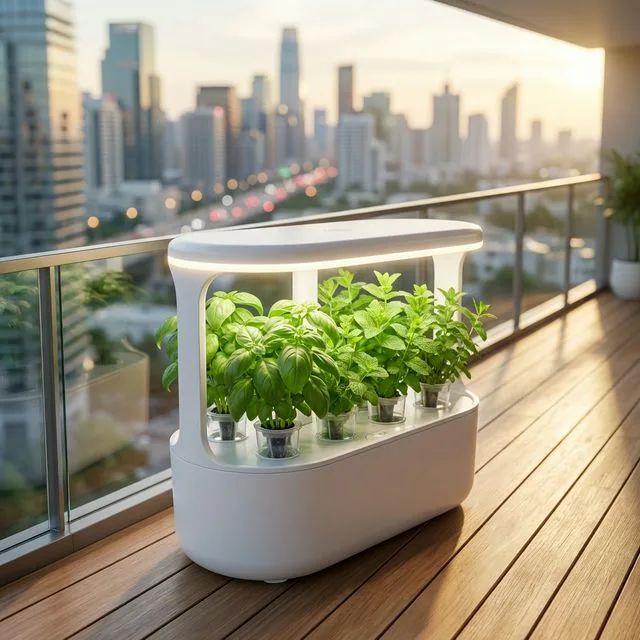
Many balcony gardeners mentally “close” their outdoor space from October to April. Summer tomatoes have their moment, then containers sit as dry, brown graveyards for half the year.
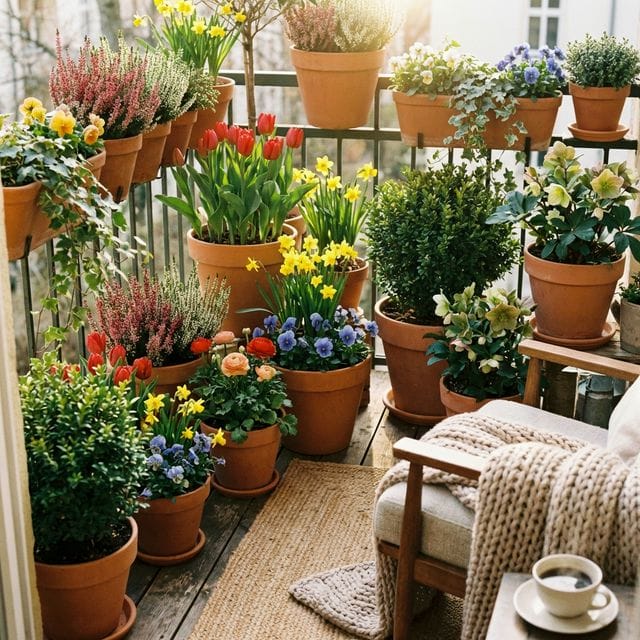
In a small apartment, your balcony is not a bonus; it is valuable square meters. With a simple succession planting plan — swapping crops as the weather shifts — even a tiny 1–2 m² ledge can give you fresh greens in spring, fruit and herbs in summer, leafy harvests in autumn and evergreen structure in winter. Here is your 4‑season roadmap for a continuously green balcony.
Spring (March–May): The Awakening
As soon as hard frosts are over, it is time to wake up the soil.
- Cool‑weather veggies: Spinach, arugula, radishes and peas love cool, bright days. Harvest them before real heat arrives, or they will bolt and turn bitter.
- Early flowers: Pansies and violas handle surprise cold snaps and instantly make a small balcony look alive.
- Spring tasks: Refresh tired potting mix with compost or slow‑release fertilizer, check drainage holes and remove any pests that overwintered in soil or under pots.
Summer (June–August): The High Season
Summer is the main event for most balcony gardens.
- Heat lovers: Cherry tomatoes, chili peppers, basil and strawberries thrive with 6–8 hours of direct sun. Arrange taller plants so they do not throw all your smaller herbs into shade.
- Watering: In containers, water evaporates fast; daily watering is normal, and on very hot days you may water morning and evening. Use a finger test on the top 2–3 cm of soil to avoid both drought and constant sogginess.
- Summer tasks: Summer crops are heavy feeders. Use a liquid fertilizer every two weeks and add mulch (straw, shredded leaves, coco coir) on top of the soil to keep moisture in longer.
Autumn (September–November): The Second Harvest
As summer crops fade, cool temperatures return and give you a second chance at greens.
- The swap: Pull out dead tomato vines and tired basil. Replant those big containers with kale, Swiss chard and fast Asian greens like bok choy for an autumn harvest.
- Autumn flowers: Mums and asters bring warm color just as trees lose their leaves.
- Autumn tasks: Collect seeds from your favorite summer flowers, clean and sanitize empty pots, and tuck garlic cloves into spare containers now for a harvest next summer.
Winter (December–February): The Structural Garden
Outside the tropics, growth slows to a crawl. Winter is about structure and survival, not speed.
- Evergreens: Dwarf conifers, boxwood and compact hollies keep your balcony looking green instead of gray.
- Hardy herbs: Rosemary, thyme and sage often stay harvestable through mild winters, especially close to a building wall.
- Winter tasks: Move pots against the apartment wall for extra warmth, wrap sensitive ceramic containers in bubble wrap or burlap to prevent freeze–thaw cracking, and add a bird feeder so your balcony becomes a small wildlife station in the quiet season.
Use a Balcony Plant Calculator to Plan Your Layout
Rotating crops means rotating containers. In summer you might park big, heavy tomato tubs at the railing, then in winter switch to lighter herb troughs pulled against the wall.
Use the Balcony Plant Calculator to re‑check your layout for each season so that total load stays within a safe range. In winter, snow, ice and waterlogged potting mix can quickly add weight on top of your containers, similar to how roofs are checked with snow load calculators. Modeling a “Winter Mode” setup helps you see whether that one extra large planter pushes you closer to a red line before you buy it.
Open the Balcony Plant Calculator, create four profiles — Spring, Summer, Autumn and Winter — and save them as your yearly rotation templates.
2m² Micro‑Rotation Plan
Here is a simple way to keep roughly 2 m² productive with just three containers.
| Season | Pot A (Large Tub) | Pot B (Railing Trough) | Pot C (Hanging) |
|---|---|---|---|
| Spring | Snap peas on trellis | Arugula / lettuce | Pansies |
| Summer | Cherry tomato | Basil / marigolds | Strawberries |
| Autumn | Kale / Swiss chard | Parsley / cilantro | Mums |
| Winter | Evergreen topiary | Empty / stored | Bird feeder |
Use this as a starting template and adjust for your climate, sun exposure and what you actually like to eat.
Living by the Balcony Calendar
A balcony garden can be a living calendar. When you work with the seasons instead of against them, you get fresh food, color and a steady reminder of natural rhythms even on the fourth floor. A bit of planning turns a dead corner in November into a view of hardy kale and evergreen shapes instead of a single dry stick.
Getting ready for storm season and winter gusts? Open your Wind‑Proof Balcony Garden guide next and secure containers, supports and feeders so your year‑round balcony garden survives wild weather, not just sunny days.
Can I grow plants on a balcony in the winter?
Yes, cold-hardy evergreens, ornamental kale, and winter pansies can survive freezing temperatures and add structural green to a winter balcony.
When is the best time to plant balcony herbs?
Spring, from March to May, is the ideal time to start your seeds or buy young seedlings as the threat of heavy frost disappears.
How do I plan a seasonal balcony rotation?
Focus on a 2-square-meter micro-rotation. Swap out fast-growing summer annuals for robust autumn perennials to keep the balcony lively all year.
