You live in a 30 sqm studio. You love the lush vibe of indoor jungles, but you also want the companionship of a pet. The problem? Balancing urban pets and plants in a tight space feels like a disaster waiting to happen. You are constantly worried your pet will nibble on a toxic leaf, or that the humidity from your reptile terrarium will rot your succulents.
If you don’t plan your layout, your tiny apartment can quickly turn into a chaotic, unsafe environment for both your pets and your greenery. But the good news is that you don’t have to choose between a green thumb and muddy paws. Integrating urban pets and plants is highly achievable if you follow spatial rules.
In this guide, you will learn practical, space-saving strategies to safely combine urban pets and plants without sacrificing square footage or safety. Let’s break down the zoning, microclimates, and toxicity rules so your shared urban pets and plants ecosystem can thrive.
The Zoning Strategy: Dividing a 30 sqm Studio
When you don’t have multiple rooms, you must rely on vertical space to create “safe zones” for your urban pets and plants. Dogs, cats, and free-roaming birds need safe floor and mid-level areas, leaving the upper echelons for your delicate or semi-toxic plants.
Command the Ceiling and High Walls
High wall shelves and macrame ceiling hangers are your best friends when balancing urban pets and plants. By keeping trailing plants like Golden Pothos or Philodendrons entirely out of reach, you prevent accidental ingestion.
Ensure that dangling vines do not fall near cages or favorite launching pads (like the top of the fridge). Cats are natural acrobats, and birds love to chew. A core law of keeping urban pets and plants together is eliminating overlap at jumping height.

Anchor the Floor with Heavy, Safe Plants
For large floor plants, stability is key. A playful pet can easily knock over a top-heavy Ficus. Opt for wide, heavy ceramic pots to anchor the lower half of your urban pets and plants arrangement. More importantly, every floor plant must be non-toxic.
For a comprehensive list of safe options, check out our guide on pet safe houseplants to ensure every low-lying leaf is completely harmless to your furry friends.
Managing Microclimates and Cages
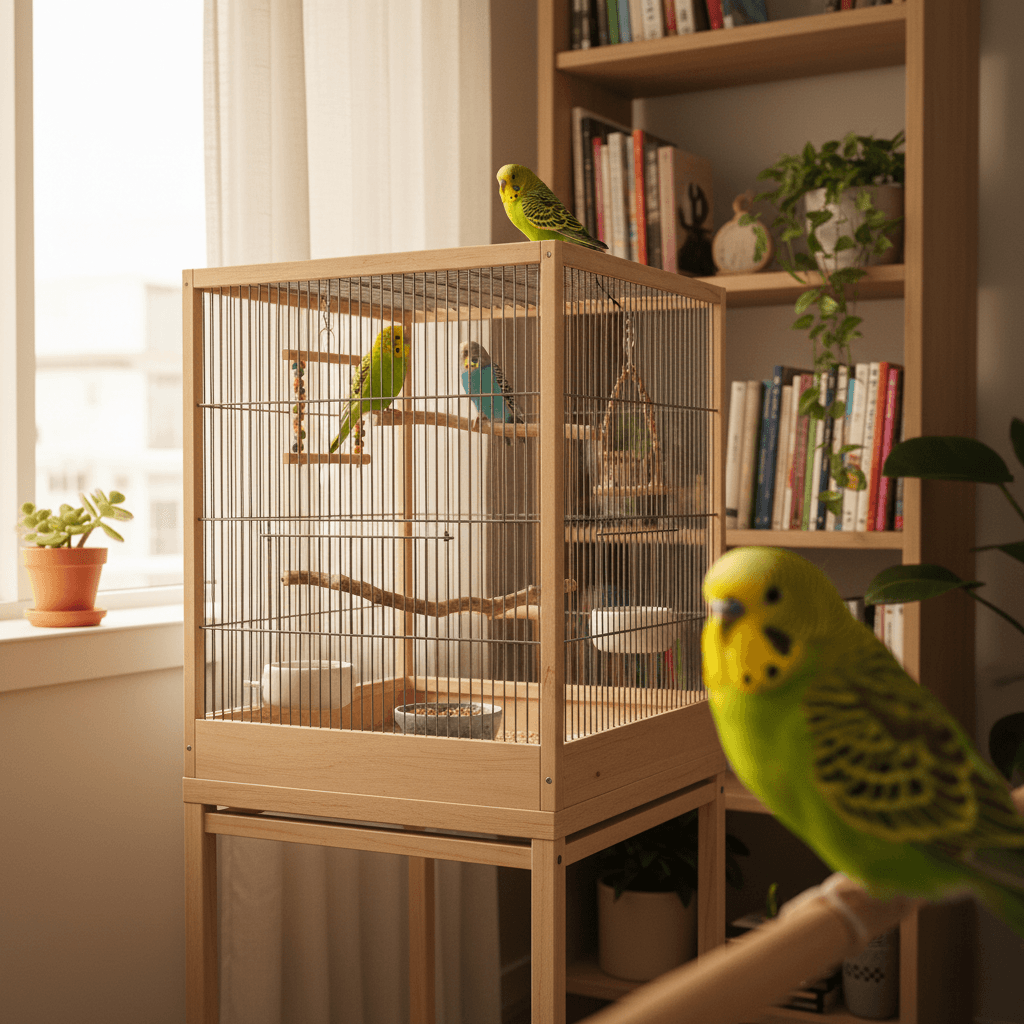
Different urban pets and plants require completely different ambient conditions. A tropical terrarium creates localized humidity, while a birdcage requires excellent air circulation without drafts.
Terrariums and Dry Plants
If you keep reptiles, you know they need precise temperature and humidity gradients. Placing a terrarium on a desk or low shelf creates a specific microclimate that changes the rules for your nearby urban pets and plants.
For instance, a setup for leopard gecko care requires a dry environment. It is smart to place arid plants like snake plants or small cacti near the gecko enclosure since they share similar low-humidity preferences and won’t be harmed by the ambient heat lamps.
Birds and Air Quality
Birds have highly sensitive respiratory systems. You cannot use chemical fertilizers, strong pest sprays, or scented leaf shiners on plants near their cages.
When setting up for budgie care, keep the cage away from heavily misted tropical plants to prevent mold spores from traveling into their enclosure. Place air-purifying, bird-safe plants like Spider Plants or Boston Ferns nearby to naturally filter the room. Mastering these microclimates is the secret to successful urban pets and plants combinations.
Use a Balcony Plant Calculator to Plan Your Layout
If you are pushing your tiny garden out onto the balcony to make room indoors, do not guess the load. Pots, wet soil, and heavy terrariums add up fast. Use a Balcony Plant Calculator to plan your layout and ensure you aren’t exceeding your building’s structural weight limits safely.
The Zero-Waste Approach to Pet and Plant Care
Balancing urban pets and plants can generate a lot of waste—from plastic fertilizer bottles to disposable puppy pads. To maintain a clean, eco-friendly studio, you need to rely on reusable alternatives.
For instance, use organic compost from your kitchen scraps (if it’s secured in an odor-free bin) to feed your plants instead of synthetic liquids. If you’re building out an eco-friendly routine, balancing this with your daily life is easier when you master the basics, like zero waste bathroom essentials, which frees up your budget for high-quality supplies for your urban pets and plants.
Safety First: Toxins and Traps
Even with perfect zoning, you need protective measures for your urban pets and plants.
- Soil Digging: Use large stones, pinecones, or mesh wire over the topsoil of large floor pots to deter pets from digging and making a mess.
- Toxicity: Never bring Lilies, Sago Palms, or Dieffenbachia into an apartment with pets. The risk of sudden kidney failure or throat swelling is never worth the aesthetic.
- Secure Cords: Heat mats, UVB lamps, and grow lights mean a lot of cables. Use cable management boxes to prevent chewing. Safety Disclaimer: Always ensure water from misting your plants does not drip onto terrarium heat lamps or electrical outlets.
Quick Reference: Pets vs. Plants in Small Spaces
| Consideration | Reptiles (e.g., Geckos) | Birds (e.g., Budgies) | Mammals (Cats/Dogs) |
|---|---|---|---|
| Plant Placement | Safe near heat lamps (arid plants) | Away from cage (avoids chewing/mold) | Out of reach (hanging/high shelves) |
| Fertilizer Risk | Low (enclosed habitats) | High (sensitive respiratory systems) | Medium (risk of ingesting soil) |
| Humidity Needs | Varies by species | Low to moderate | Moderate |
| Safe Plants | Snake Plant, Succulents | Spider Plant, Boston Fern | Calathea, Parlor Palm |
Conclusion
Sharing your small studio space with urban pets and plants doesn’t have to be a stressful juggling act. By utilizing vertical zoning, carefully managing localized microclimates, and strictly adhering to non-toxic plant lists, you can create a beautiful, thriving urban jungle that is completely safe for your animal companions.
Take an hour this weekend to audit your current layout of urban pets and plants. Move the questionable ones out of reach, double-check your cables, and breathe easy knowing your micro-apartment is a balanced ecosystem.
Looking to expand your eco-journey after securing your home? Read our guide on smart balcony herb gardens to take your plant game outside!
Can I keep pothos with a cat in a small apartment?
Yes, but only if you use vertical space. Pothos is toxic to cats, so it must be hung from the ceiling using macrame planters or placed on high wall shelves completely out of jumping-reach.
Do terrarium heat lamps hurt nearby houseplants?
Heat lamps lower local humidity. While tropical plants will suffer nearby, arid plants like Snake Plants or small succulents thrive in the drier microclimate near a reptile terrarium.
Are there any large floor plants that are completely pet-safe?
Yes! The Parlor Palm, Cast Iron Plant, and large Calatheas are excellent, non-toxic floor plants that will not harm your cats or dogs if they accidentally chew on a leaf.
![Leopard Gecko Care: Complete Beginner Guide [2026]](https://urbanmicrotips.com/wp-content/uploads/2026/02/Leopard-Gecko-Care-Beginner-Setup-in-36x18x18-Terrarium.png "Leopard Gecko Care: Complete Beginner Guide [2026] 2")