
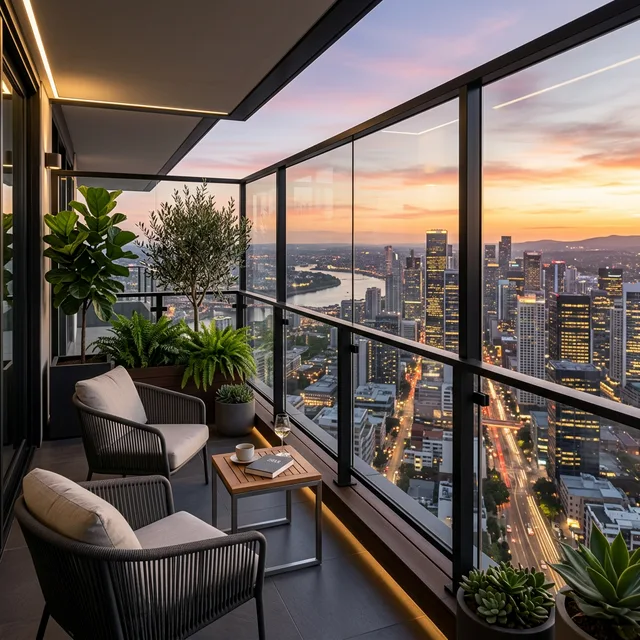
If you live above the 10th floor, you don’t just have a balcony; you have an experimental wind tunnel. I remember my first night in my 22nd-floor penthouse. A moderate city breeze on the ground felt like a gale force at my level. I woke up to find my “heavy” designer chair had migrated three meters to the left, and my poor basil plant had been literally stripped of its leaves.
This is the reality of high-rise living. The wind at higher altitudes isn’t just stronger; it’s more turbulent due to the “downwash” effect from neighboring buildings. To turn your balcony into a usable urban micro-living space, you need more than just heavy furniture. You need apartment wind-breakers that are silent, stable, and—most importantly—renter-safe.
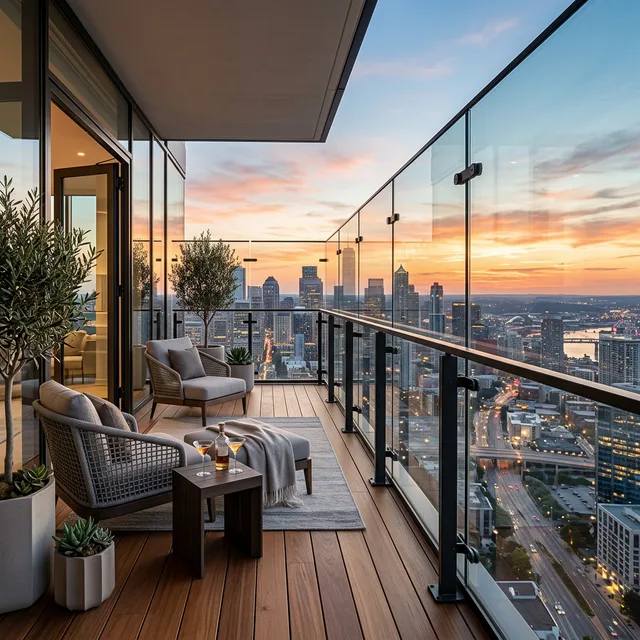
The Physics of High-Rise Wind
Before you buy a screen, you must understand what you’re fighting. Wind doesn’t just “blow” in one direction on a balcony. It swirls.
- The Venturi Effect: When wind hits your building and is squeezed between it and another skyscraper, it accelerates. Your balcony might be in a permanent high-velocity zone.
- The Whistle Problem: Many cheap wind-breakers (like thin reed fencing) create a high-pitched whistling sound as wind passes through the gaps. In a small apartment layout, this noise can be maddening.
- Micro-Climate Control: A good wind-breaker doesn’t just stop the wind; it creates a thermal pocket. By reducing the wind chill, you can extend your edible balcony growing season by up to 4 weeks.
Top 3 Apartment Wind-Breaker Solutions for 2026
Choosing the right barrier depends on your lease agreement and your aesthetic preferences.
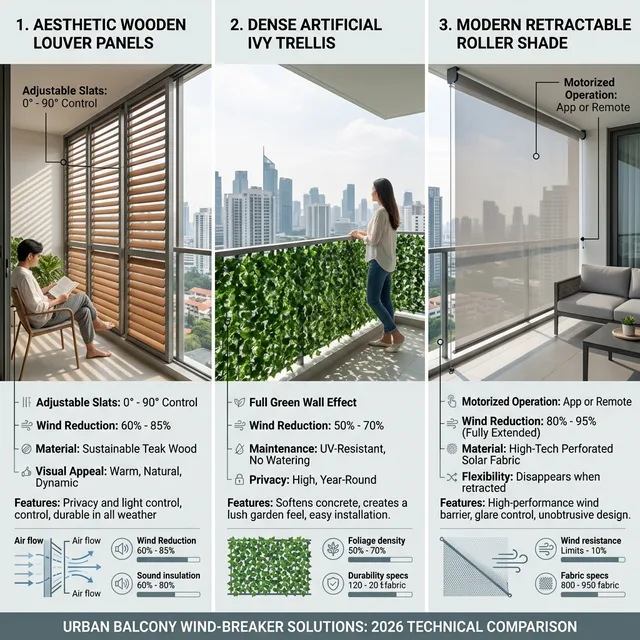
1. Frameless Glass Shields (The Invisible Guardian)
This is the gold standard for luxury urban balconies. It consists of thick, tempered glass panels that are either floor-mounted or attached to the existing railing.
- Pros: Zero impact on your view; near-perfect wind reduction; extremely silent.
- Cons: High cost; needs professional installation; attracts bird strikes (use invisible UV decals to prevent this).
- Renter Hack: Look for “Clamp-On” glass kits that attach to the railing without drilling into the building’s facade.
2. Modern Louvered Panels (The Adjustable Choice)
Wooden or aluminum louvered panels allow you to control the exact amount of airflow.
- Pros: Provides privacy alongside wind protection; adds a “warm” design element to concrete.
- How it Works: By angling the slats, you can deflect wind upwards or downwards, preventing it from hitting your smart balcony herb garden directly while still allowing fresh air to circulate.
- Material Choice: In 2026, sustainable teak and recycled composite aluminum are the top choices for durability against UV and salt spray.
3. Perforated Wind-Screens (The Budget-Friendly Hero)
Unlike a solid tarp (which acts like a sail and can rip your railing off), perforated screens feature thousands of tiny holes.
- Pros: Relieves pressure by letting 15-20% of the air pass through; easy to install with zip ties; UV resistant.
- Elena’s Tip: Choose a “Solar Fabric” that also blocks heat. This is perfect for south-facing balconies where you need to fight both wind and scorching afternoon sun.
Renter-Safe Installation: Keeping Your Deposit
Most apartment leases have a strict “no-drill” policy for balconies. This is because drilling into the exterior can compromise the building’s waterproofing and structural integrity.
The “No-Drill” Strategy:
- Vertical Tension Rods: These are like heavy-duty shower curtain rods that expand between the floor and the balcony ceiling. They are incredibly stable and can support glass or wood panels without a single screw.
- Weighted Planters: Use the weight of your garden. I often attach my louvered panels to the back of 15-gallon reusable grow bags. The 50kg of wet soil provides enough counterweight to keep the panel stable even in 60km/h gusts.
- Marine-Grade Cable Ties: Don’t use standard plastic zip ties from the hardware store. They will snap after 6 months of UV exposure. Use stainless steel or UV-stabilized industrial ties for your screens.
Protecting Your Plants: The Inner Barrier
Sometimes the wind-breaker isn’t enough for delicate crops. If you’re growing wind-resistant vegetables, you’re already ahead, but for things like tomatoes or large-leafed herbs, use these “internal” tricks:
- The “Bonsai” Approach: Keep your plants lower to the ground. Use tiered shelving where the top levels are empty and the bottom levels hold the plants.
- Stake Everything: In a high-rise garden, every plant taller than 20cm needs a stake. Use flexible bamboo that allows the plant to “sway” slightly—this actually makes the stems stronger.
- The “Huddle”: Group your pots together. This creates a collective micro-environment where the outer plants (the “guardians”) take the wind hit, protecting the more delicate plants in the center.
Conclusion: Reclaiming Your Sky-Sanctuary
Living in a high-rise shouldn’t mean you’re locked inside. By installing a high-quality apartment wind-breaker, you reclaim your balcony from the elements. Whether you choose the invisible elegance of glass or the practical versatility of a louvered panel, you’re investing in your own urban micro-wellness.
Stop the whistle, stop the migration of your furniture, and finally enjoy that sunset dinner on the 30th floor.
Will a wind-breaker block my view?
Glass shields are 100% transparent. If you use perforated fabric, choose a ‘darker’ color—paradoxically, dark mesh is easier to see through than light-colored mesh because it reduces glare.
Can I use a traditional reed fence?
Only if you are on a lower floor. At high altitudes, reed fences can disintegrate and become a fire hazard or litter.
How much wind reduction can I expect?
A well-installed louvered panel or glass shield can reduce wind speed on your balcony by up to **85%**.
Is it safe for pets?
Yes. In fact, many wind-breakers double as ‘cat-io’ enclosures, preventing adventurous felines from squeezing through wide railing gaps.
