
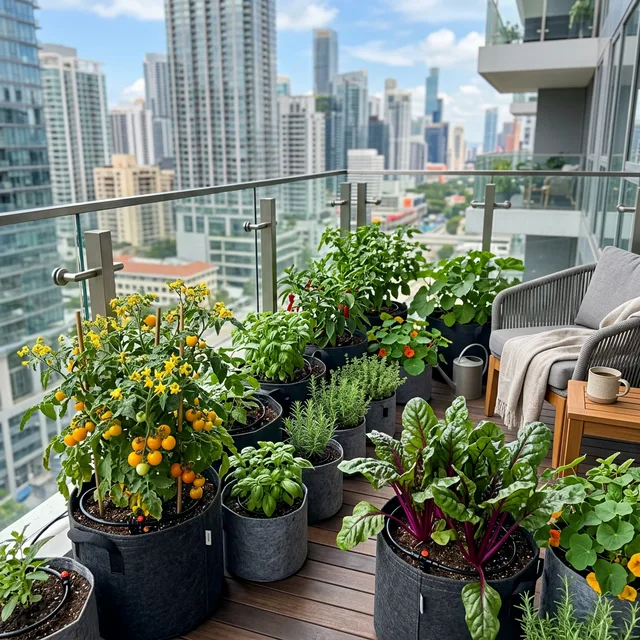
The dream of a productive urban farm on your 12th-floor balcony is no longer about aesthetics; it’s an engineering challenge. According to the 2026 Urban Agronomy paradigm, the best vegetables for a balcony are those that balance dwarf genetics, wind resistance, and high caloric yield. If you need a direct answer: the top 3 absolute champions for small-space micro-gardening are Dwarf Indeterminate Tomatoes (specifically the Golden Gypsy variety), Mini Bell Peppers (like Snackabelle), and Swiss Chard (for continuous harvesting). These crops thrive in high-rise microclimates where traditional field varieties would literally wither or blow away. Exposed? Pick wind-resistant vegetables.
The Engineering of a Balcony Garden: Beyond the Soil
Before you buy a single seed, let’s talk about Bulk Saturated Density. A standard residential balcony is typically designed for a live load of 40 to 60 pounds per square foot (psf). If you use heavy ceramic pots and traditional topsoil, a single rainstorm can push your balcony slab to its structural limit.
I learned this the hard way when I noticed a tiny hairline crack in my terrace tile after installing three concrete planters. Total rookie move. Since then, I’ve pivoted entirely to fabric grow bags (Root Pouch or VIVOSUN). They are breathable, radically lighter, and preventing root circling through air-pruning. Use reusable grow bags.
1. The Dwarf Tomato Revolution: Midnight Roma & Golden Gypsy
Traditional tomatoes are space-hogs. But the Dwarf Tomato Project changed the game. Unlike “determinate” bushes that produce once and die, these dwarf indeterminate varieties grow in a sturdy, tree-like habit and fruit all season.
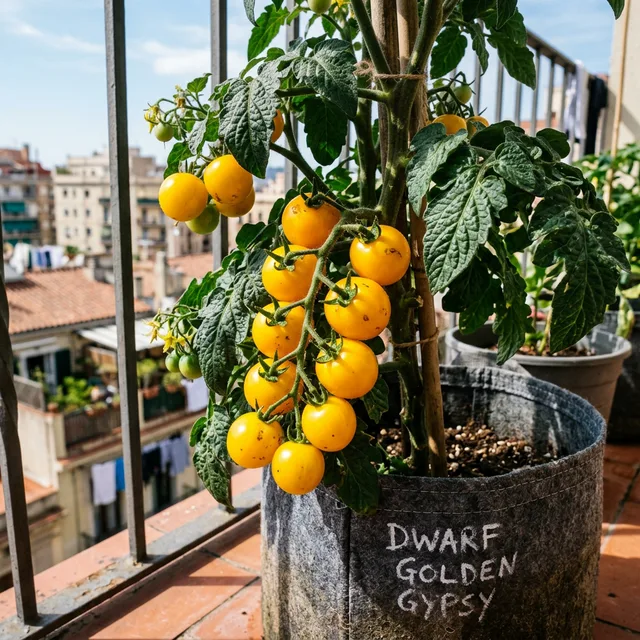
- Dwarf Golden Gypsy: My absolute favorite. It produces huge, 18-ounce yellow fruits on a plant that barely hits 4 feet.
- Midnight Roma: A dark, high-antioxidant paste tomato that beats San Marzano in flavor. It’s perfect for the 5-to-10 gallon containers that fit perfectly in balcony corners.
2. High-Yield Peppers: From Shishito to Snackabelle
Peppers are evolutionary built for pots. They have a shallow, fibrous root system and don’t mind a bit of heat.
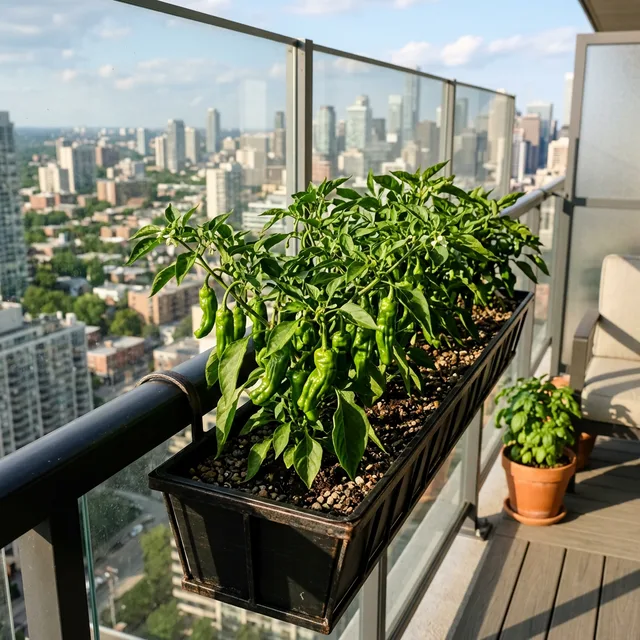
For a high-rise balcony, I swear by the Shishito. I grow them in railing planters because their tubular flowers are relatively protected from the wind. If you have kids or pets, go for Chilly Chili—it gives you the look of a fiery pepper with 0 SHU of heat. It’s a safe, “recommendable” edimental for any urban patio.
3. Leafy Greens: The Cool Shade Champions
If your balcony is north-facing or shaded by a neighboring skyscraper, don’t fight it. Lean into Partial Shade crops. Swiss Chard is the superstar here. Its neon-colored stems are gorgeous, and it’s a “cut-and-come-again” crop that provides iron-rich greens for months. Low sun? Pick shade-tolerant vegetables.
Kale and Bok Choy are also highly resistant to the thigmomorphogenesis (stem thickening caused by wind stress). They stay compact and close to the soil, minimizing aerodynamic drag.
4. 2026 AAS Novelty: Murasaki Fioretto 70 F1
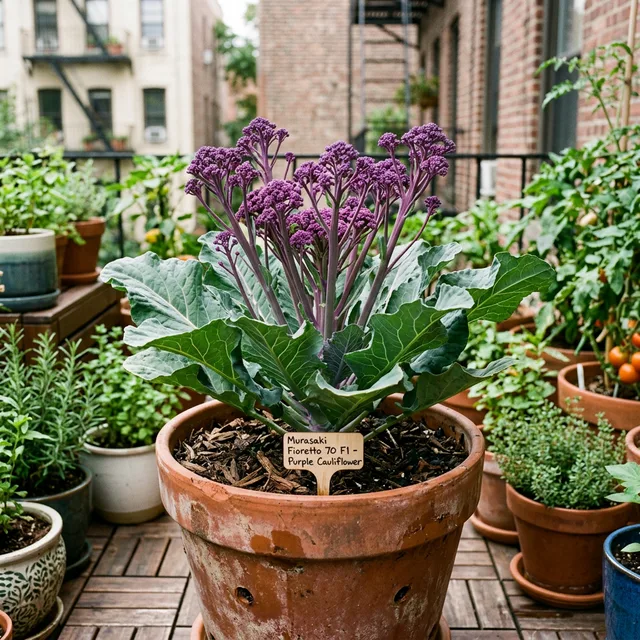
This purple cauliflower won the 2025 All-America Selections (AAS) award for a reason. It has a compact habit that loves containers. When you roast it, the neon fuchsia stems turn golden, and the flavor is significantly sweeter than store-bought white varieties. It’s the ultimate “expert” pick for a renter-friendly balcony.
5. Root Crops: Carrots & Radishes
The secret to balcony root crops is depth, not width. French Breakfast Radishes are ready in 25-30 days. I use them as “succession fillers.” Once you harvest them, the space is ready for your summer pepper seedlings. Because the bulk of the plant is underground, they are immune to high-floor gusts.
Technical Maintenance: Smart Water & Bokashi
Modern urban gardening is no longer about the watering can. I’ve integrated a LetPot Automatic Watering System which draws from a hidden 5-gallon reservoir. It uses machine learning to adjust watering based on local weather reports, saving up to 60% of water compared to hand-watering.
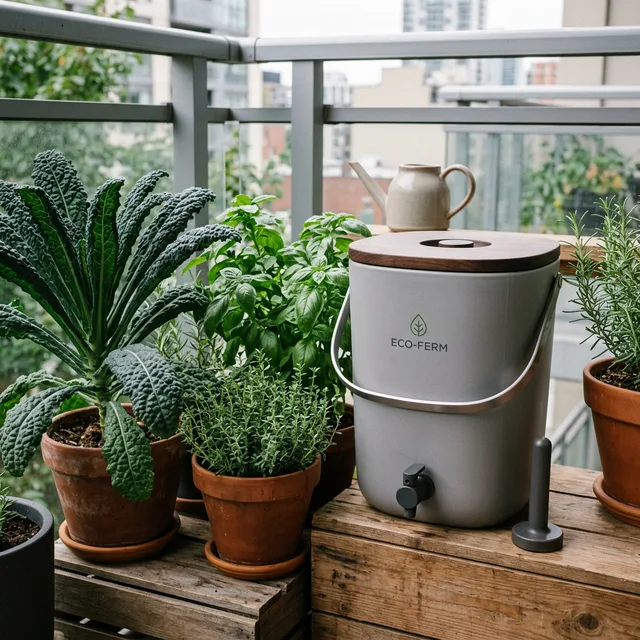
For nutrition, I’ve abandoned chemical fertilizers for Bokashi. It’s an anaerobic fermentation process that turns my kitchen scraps into nutrient-rich “soil factory” material in 2 weeks without the smell or the flies of a traditional compost pile.
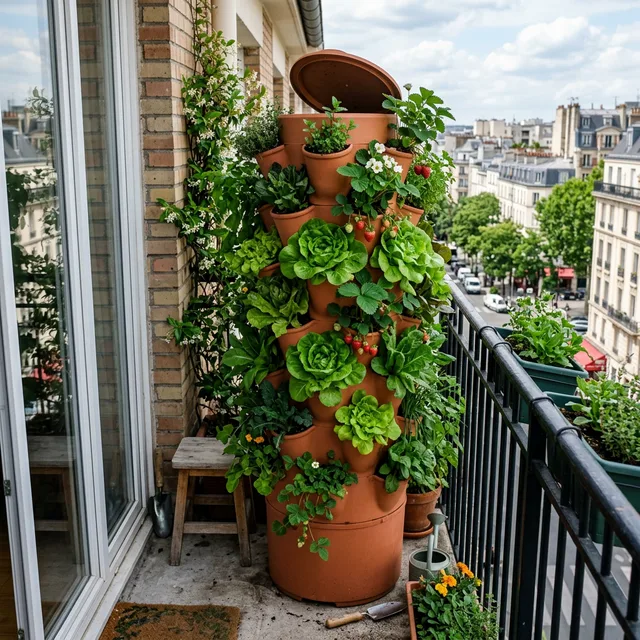
Multi-Tiered Space Optimization
If your horizontal space is measured in inches, go vertical. The Garden Tower 2 is a game changer—it supports 50 plants in just 4 square feet. It even has an integrated vermicomposting tube in the center.
Alternatively, the Gardyn Home Kit 3.0 uses hydroponics to eliminate the weight of soil entirely, making it the safest option for older balconies with compromised structural integrity. Mind balcony weight limits.
Comparison: Balcony Veggie Performance (2026)
| Vegetable | Container Size | Light Need | Wind Resistance | Best Variety |
|---|---|---|---|---|
| Tomatoes | 5-10 Gal | Full Sun | Medium | Golden Gypsy |
| Peppers | 3 Gal | Full Sun | High | Shishito |
| Kale | 1-2 Gal | Partial Sun | Very High | Red Russian |
| Cauliflower | 3-5 Gal | Partial Sun | High | Murasaki Fioretto |
| Carrots | 5 Gal (Deep) | Partial Sun | Extreme | Little Finger |
Selection Advice from Elena Verde
If you want to grow herbs rather than vegetables, the setup is even simpler. Our complete balcony herb garden guide covers container sizes, sun requirements, and a renter-safe railing mount system for basil, mint, and parsley.
Don’t be the neighbor whose tomato bush flies off a 12th-floor balcony during a summer storm. Use heavy-duty zip ties to secure your planters to the railing and always check your slab’s weight limits. Start small with a single 10-gallon grow bag of Dwarf tomatoes and see how the wind affects it before building out a full “Modern Meadow” ecosystem.
