
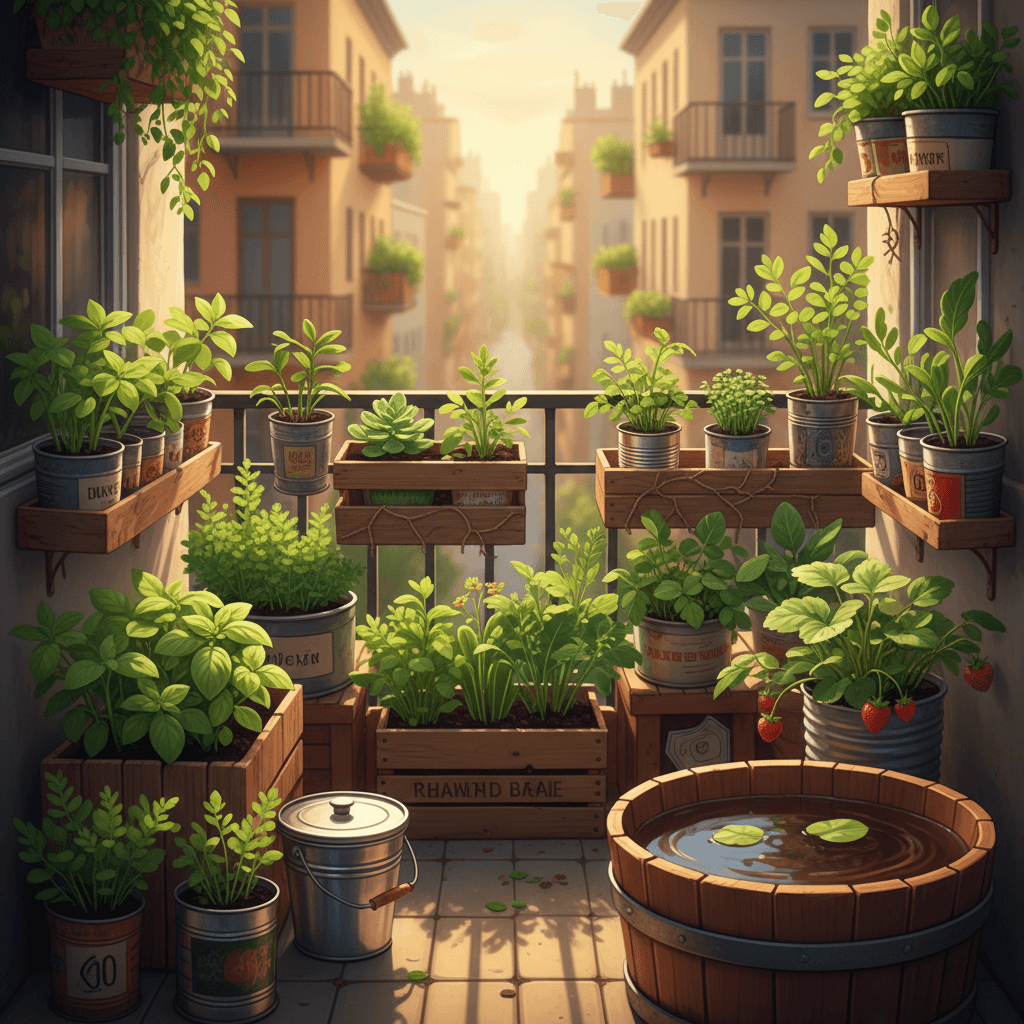
Gardening sounds green by default. In reality, plastic pots, peat‑based mixes mined from bogs and bottles of synthetic fertilizer can give even a tiny balcony garden a surprisingly large footprint.
To really align your balcony with zero‑waste values, нужно замкнуть цикл. A zero‑waste balcony garden isn’t just about growing herbs or salad; it’s about reducing what you bring in and finding new uses for what would usually go out.
Here’s how to turn a small balcony into your own mini circular economy.
1. Container “Trash” Treasure Hunt
Before you buy another pot, raid your recycling bin and local curb.
- Yogurt tubs (around 1 L)
Perfect for herbs or seed starting. Heat a nail or skewer and poke several drainage holes in the bottom and lower sides. - Wooden crates and pallets
Ask markets or wine shops for old crates. A sturdy wine crate lined with landscape fabric makes a great rustic planter for lettuce or herbs. - Tin cans
Ideal for succulents or cacti that don’t need deep soil. Drill drainage holes and watch for rust. For edibles, line the inside with a food‑safe plastic bag with holes so metal doesn’t touch the soil directly. - Old drawers
An abandoned dresser on the curb = instant balcony planter. Remove hardware, drill drainage holes and line with plastic or fabric to protect the wood.
The rule: if it can hold soil and you can safely add drainage, it’s a potential planter.
2. Balcony Composting: Turning Scraps into Fertilizer
You don’t need a yard to compost effectively.
Bokashi bucket
- Uses an airtight bucket and bran with microbes to ferment food scraps, including cooked food and small amounts of meat or dairy.
- Smells more like pickles than rot when done correctly.
- Produces a concentrated “juice” you can dilute and use as liquid fertilizer for containers.
Keep the bucket under the sink or in a shady balcony corner.
Trench composting in pots
For large containers (30 L+):
- Add raw vegetable scraps and coffee grounds to the bottom of the pot.
- Cover them with 15+ cm of soil before planting.
- Over time they break down and act as a slow‑release nutrient sponge.
Do not bury meat, dairy or oily food here — they attract pests and can smell.
3. Micro‑Scale Rainwater Harvesting
You probably won’t install a 200‑liter barrel on a fifth‑floor balcony, but you can still catch small amounts of rain.
- Buckets during storms
Set out a 10 L bucket or a couple of smaller containers when rain is forecast. Use the collected water within a day or two for your balcony pots. - Saucer catchment
Use deep saucers under containers. After rain, pour the excess into a watering can so it doesn’t sit and attract mosquitoes, then water plants that are under cover. - AC condensate
If your AC unit drips, that water is essentially distilled and mineral‑free. It’s great for sensitive plants like calatheas or carnivorous species that dislike hard tap water.
Even a few extra liters per storm reduce tap‑water use over a season.
4. Closing the Loop with Soil Reuse
Don’t throw away tired potting mix — refresh it.
- Clean and refresh
Tip old soil into a storage bin. Pull out thick roots and any large wood chunks.
Mix in about 30% fresh compost (from your bokashi, worm bin or purchased compost) plus a small amount of organic fertilizer. The result is usually fine for another growing season. - When to discard
If a plant died from a clear disease, fungus or heavy pest infestation, don’t reuse that soil in new pots unless you can hot‑compost it. It’s safer to discard than infect the next crop.
Reuse Checklist for a Zero‑Waste Balcony
| Item | Action | New use |
|---|---|---|
| Plastic nursery pots | Keep | Seed starters, gifting plants to friends |
| Egg cartons | Keep | Biodegradable seed‑starting trays |
| Banana peels | Compost | Potassium‑rich input for flowering plants |
| Coffee grounds | Compost | Nitrogen boost for leafy greens (in balance) |
| Old T‑shirts | Keep | Cut into soft plant ties for stakes/trellises |
Keep a small crate labeled “garden reuse” so these items don’t end up in the bin by habit.
Conclusion
A zero‑waste garden is, прежде всего, способ смотреть на вещи. A plastic tub becomes a future basil pot. Rain turns into free irrigation. Kitchen scraps become next season’s tomato food. You save money, send less plastic to landfill and build a balcony that feels genuinely sustainable, not just decorative.
When you’re ready to go deeper into soil health and smell‑free recycling of food scraps, your next stop is a guide on no‑smell compost systems for apartments — perfect for tiny balconies and under‑sink setups.
Can I use rainwater for my balcony plants?
Yes, rainwater is significantly better for plants than tap water as it lacks chlorine and fluoride. Harvest it easily with a bucket on your balcony.
How do I upcycle containers into balcony planters?
Large olive oil tins, wooden wine crates, and sturdy plastic buckets make great planters. Just make sure to drill drainage holes in the bottom.
Is it possible to have a zero-waste balcony garden?
Yes, by exclusively using compost made from kitchen scraps, collecting rainwater, and repotting in salvaged containers, you eliminate all plastic and chemical waste.
