Keeping a micro-kitchen sanitary often means battling a mountain of single-use plastic bottles, paper towels, and synthetic sponges. Finding effective zero waste cleaning hacks for small kitchens can drastically reduce your environmental footprint without compromising on hygiene or taking up precious cabinet space.
When you live in a studio apartment, you do not have a dedicated utility room. Your cleaning supplies likely share a cabinet with your pots or pantry items. This means transitioning to non-toxic, space-saving, and package-free alternatives isn’t just an eco-friendly choice—it is a practical necessity for renters.
In this guide, we reveal the 7 best zero-waste cleaning hacks for small kitchens, ensuring your cooking space stays spotless using minimal, sustainable ingredients.

1. Ditch Paper Towels for Swedish Dishcloths
Paper towels take up massive vertical space and produce unneeded waste. The ultimate replacement is the Swedish dishcloth.
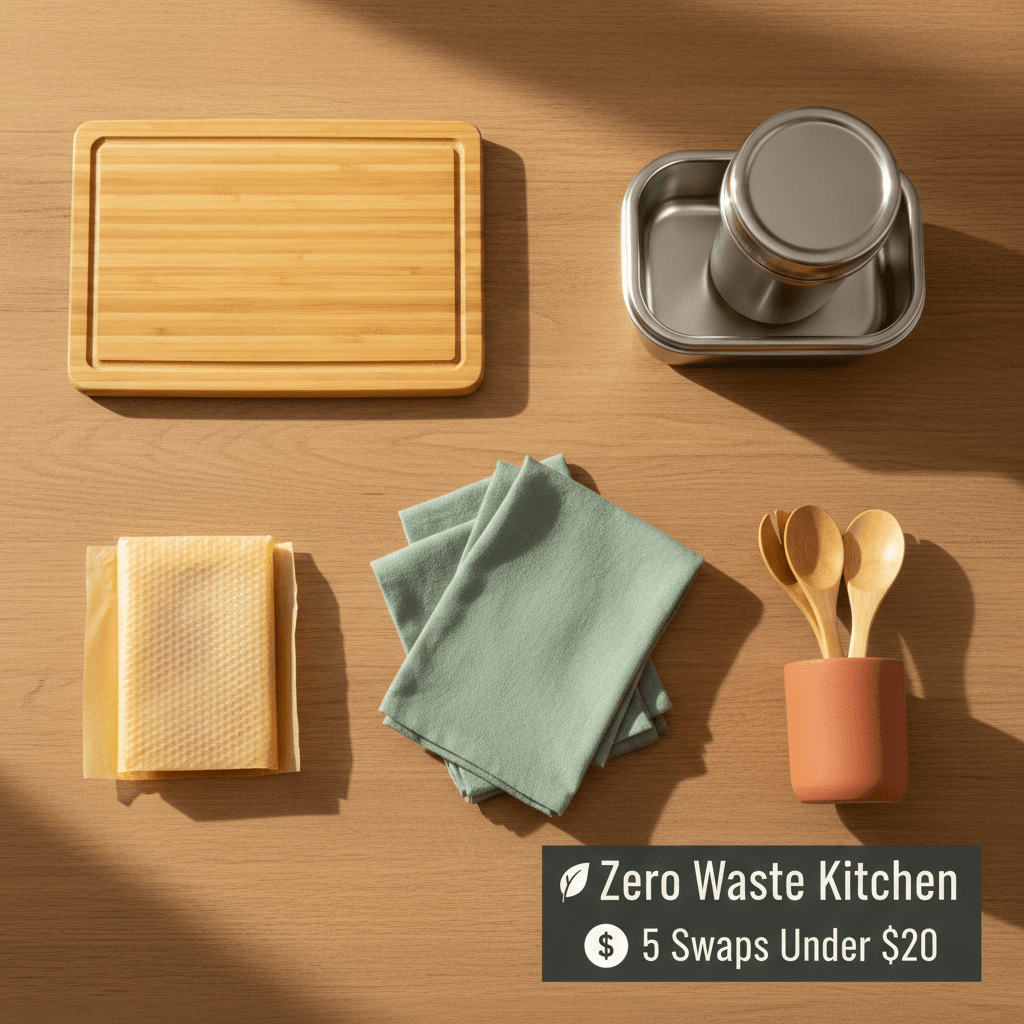
Made from cellulose and cotton, a single Swedish dishcloth can replace up to 17 rolls of paper towels. They are incredibly absorbent, dry much faster than standard cotton rags (which prevents the dreaded mildew smell in a tiny kitchen without airflow), and are fully compostable at the end of their lifespan. After wiping down your counters or absorbing a spill, simply toss the dishcloth in the washing machine or the top rack of your dishwasher to sanitize it.
2. The Citrus and Vinegar All-Purpose Spray
You do not need five different plastic bottles of cleaner under your sink. A DIY all-purpose spray cuts grease, sanitizes surfaces, and smells incredible—all using food scraps.
When testing this in a 3 sqm galley kitchen, it was discovered that infusing standard white vinegar with leftover citrus peels (lemon, lime, or orange) masks the sharp vinegar scent perfectly. Simply fill a glass jar with citrus peels, cover them with white vinegar, and let it sit in a dark cupboard for two weeks. Strain the liquid, mix it 1:1 with water in a reusable glass spray bottle, and you have a powerful, zero-waste surface cleaner.
3. Wooden Brushes over Synthetic Sponges
Standard yellow-and-green synthetic sponges harbor bacteria, smell terrible after a week, and shed microplastics straight down your drain.
Swap to a wooden dish brush with a replaceable head made from agave or tampico fibers. The handle lasts for years, and you only buy replacement heads when the bristles wear out. Not only do these brushes look aesthetic hanging on a kitchen rail, but the natural fibers are stiff enough to scrub cast-iron skillets without scratching them. When a brush head is fully worn, you can safely toss it into your compost bin.
4. Solid Dish Soap Blocks
Liquid dish soap almost exclusively comes in bulky plastic bottles that are difficult to refill and store.
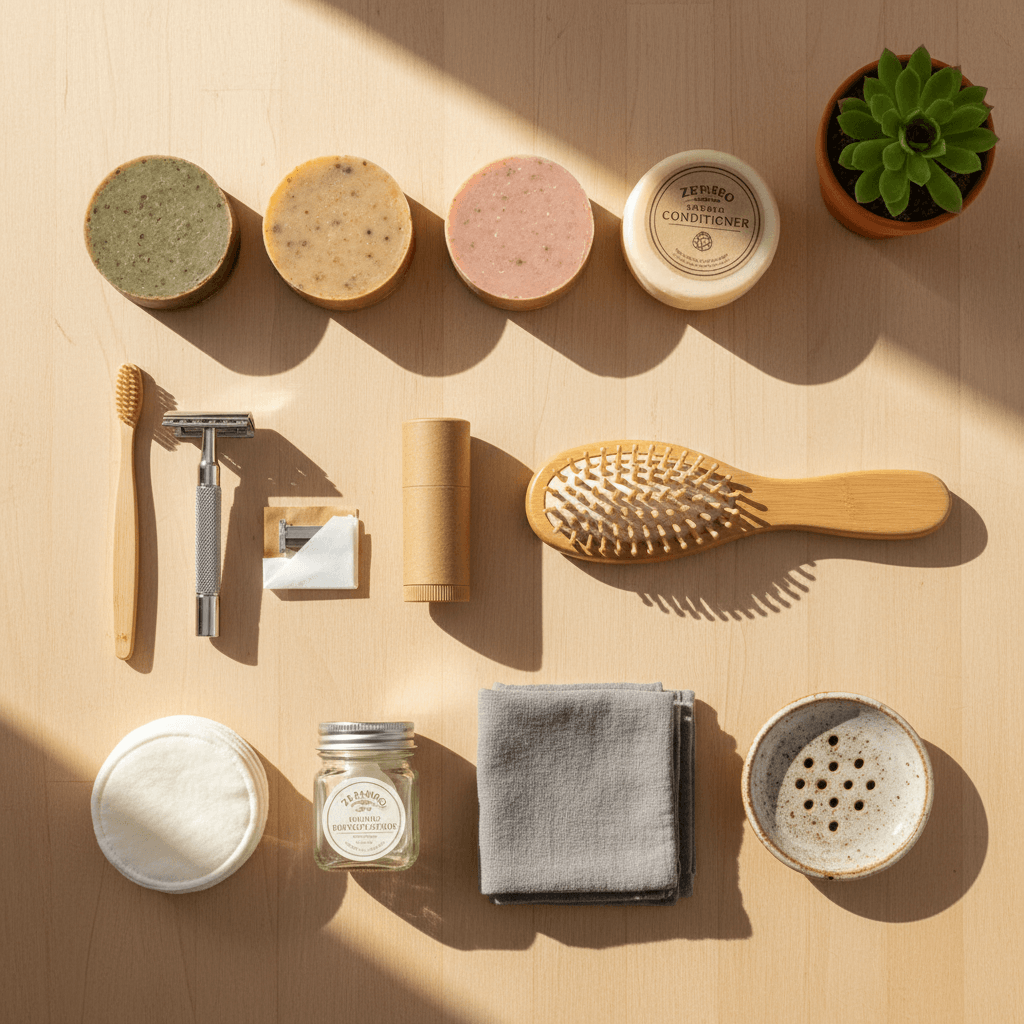
Enter the solid dish soap block. This concentrated cube of soap sits naked by your sink on a small ceramic dish or bamboo rack. To wash dishes, simply rub a wet wooden brush or loofah directly onto the block to create a rich lather. They cut through heavy grease effortlessly and last up to three times longer than a standard bottle of liquid soap, immediately freeing up under-sink real estate.
5. Baking Soda for Tough Stains
Your oven top and heavily stained mugs do not require harsh, toxic scouring powders packed in plastic.
Baking soda (available in bulk cardboard boxes) is a mild abrasive that works miracles on stubborn kitchen grime. For a burnt stovetop or a greasy oven door, create a thick paste using baking soda and a few drops of water. Spread it over the grime, let it sit for 20 minutes, and scrub it away with a Swedish dishcloth. Add a spray of your citrus-vinegar cleaner on top of the baking soda for a fizzing action that lifts burned-on food.
6. Loofah Sponges for Delicate Glassware
If you find wooden brushes too stiff for wine glasses or non-stick pans, natural loofah sponges are the perfect zero-waste alternative to soft synthetic sponges.
While often associated with showers, loofah is actually a dried gourd. When dry, it feels rough, but under warm water, it expands and becomes incredibly soft and pliable. You can buy a large loofah gourd package-free and cut it into smaller, manageable kitchen sponges with scissors. They are entirely plant-based and compostable.
7. Repurposing Glass Jars for Storage
Zero waste cleaning is not just about what you use, but how you store it. Small kitchens suffer from boxy, awkward commercial packaging.
Whenever you buy pasta sauce, pickles, or jam, save the glass jars. Remove the labels using a mixture of baking soda and oil, and use them to store your bulk cleaning supplies safely. You can keep baking soda, washing soda, and DIY dishwasher powder in these uniform jars, neatly stacked in your limited cabinet space.
Evaluating Zero-Waste Alternatives
Use this checklist to ensure your new cleaning supplies are truly sustainable and functional:
| Feature | Conventional Cleaning | Zero-Waste Cleaning |
|---|---|---|
| Packaging | Single-use plastic bottles. | Glass, cardboard, or package-free. |
| End of Life | Landfill (synthetic sponges, wipes). | Compostable (loofah, wood, cellulose). |
| Space Required | Bulky, dedicated cabinet space. | Minimal; solid blocks and multi-use sprays. |
| Ingredients | Synthetic chemicals and fragrances. | Simple, non-toxic household staples. |
Safety Disclaimer: While natural, never mix vinegar (or your citrus-infused spray) with bleach or commercial cleaners, as this can create dangerous and potentially lethal fumes. Stick strictly to natural combinations.
Conclusion
Transitioning to a minimalist, eco-friendly setup in your apartment is simple once you know what to swap out. By adopting these zero waste cleaning hacks for small kitchens, you will save money, drastically reduce your household trash, and free up critical storage space under your sink. The key is starting small—you do not need to throw away your current supplies immediately.
Ready to detox your kitchen? The next time your synthetic sponge or roll of paper towels runs out, replace it with a wooden brush or a Swedish dishcloth.
Are zero-waste cleaning supplies more expensive upfront?
Some items, like a quality wooden dish brush with a replaceable head, cost more initially. However, because they last for years and you only replace the cheap bristle heads, you save money in the long run.
Does vinegar really disinfect kitchen surfaces?
Vinegar is highly acidic and effectively kills many common household bacteria and viruses. However, it is not an EPA-registered chemical disinfectant. For everyday cleaning and grease-cutting, it is excellent.
Where can I buy package-free dish soap blocks?
Most local zero-waste shops, natural grocery stores, and online sustainable marketplaces sell naked dish blocks.