The Golden Rule: Measure Twice, Thrift Once
In a studio, a few centimeters decide whether a piece works or blocks a doorway.
- Always carry a small tape measure; serious thrift guides call this non‑negotiable for furniture runs.
- Before you leave home, note max width/depth/height for key items (desk, sofa, plant corner) on your phone. Big warehouse spaces make chairs and dressers look smaller than they will in a 3×3 m living area.
What to Look For: The “Good Bones” Checklist
Ignore fabric and surface color; focus on structure.
- Solid wood: Gently lift or push the piece — solid wood is noticeably heavy, whereas particle board feels lighter than it looks. Check edges: real wood shows continuous grain, not just a printed laminate.
- Strong joints: Open drawers and inspect where sides meet the front. Interlocking dovetail joints (trapezoid “pins and tails”) are a textbook sign of durable, higher‑quality construction.
- Real rattan/wicker: Great for boho plant stands. Accept minor fraying, but avoid frames with cracked or missing structural pieces.
- Metal frames and shelves: Rust and dated paint are usually cosmetic. A quick sand and a $5 can of spray paint can turn an old rack into a modern plant stand.
If the shape and structure are right, you can almost always change color and hardware later.
The Red Flags: When to Walk Away
Some “deals” cost more in hassle than they’re worth.
- Deep, embedded smells: Strong smoke, mildew or pet odors in foam and upholstery are very hard to remove completely; many second‑hand guides suggest skipping heavily scented sofas and mattresses.
- Serious wobble: Light wiggle is fixable, but chairs or tables with visibly loose joints and cracks may not justify the repair unless you’re comfortable with glue, clamps and possible reinforcement.
- Bed bug risk: Be extra cautious with anything padded. Check seams and crevices for tiny dark spots or shed skins; if you’re not sure, walk away and focus on hard materials like solid wood and metal.
When in doubt, assume fabric-heavy pieces are higher risk in small apartments.
Thrifting for Plant Stands (Without Buying “Plant Stands”)
You’re really shopping for height and tiers, not plant-branded furniture.
- Bar stools: Sturdy wooden bar stools are frequently suggested as compact, high‑capacity plant perches and are easy to repaint.
- Step ladders: Old wooden ladders offer multiple levels for pots and are a classic vertical gardening hack for small spaces.
- Crates and boxes: Vintage fruit or apple crates can stack on their sides as modular shelves for trailing plants and storage in one.
- Small side tables and piano stools: Adjustable or narrow stools make ideal single‑plant pedestals that tuck into corners.
Focus on stability: test wobble and weight before imagining a heavy terracotta pot on top.
Vintage vs Fast Furniture
| Feature | Vintage / Thrifted | Fast Furniture (Flat‑Pack) |
|---|---|---|
| Cost | Often low to mid ($10–$100 per piece). | Mid ($50–$300) but paid all at once. |
| Durability | High if solid wood / quality joints. | Lower; particle board chips and swells. |
| Assembly | None (already built) | Requires tools, time and instructions. |
| Resale value | Can hold or gain value if well‑chosen. | Usually poor resale or curb‑free items. |
| Eco impact | Reuse extends life, avoids new production. | New materials, packaging and shipping footprint. |
For a small, plant‑heavy apartment, sturdy thrifted pieces handle weight better and stand up to frequent rearranging.
Conclusion
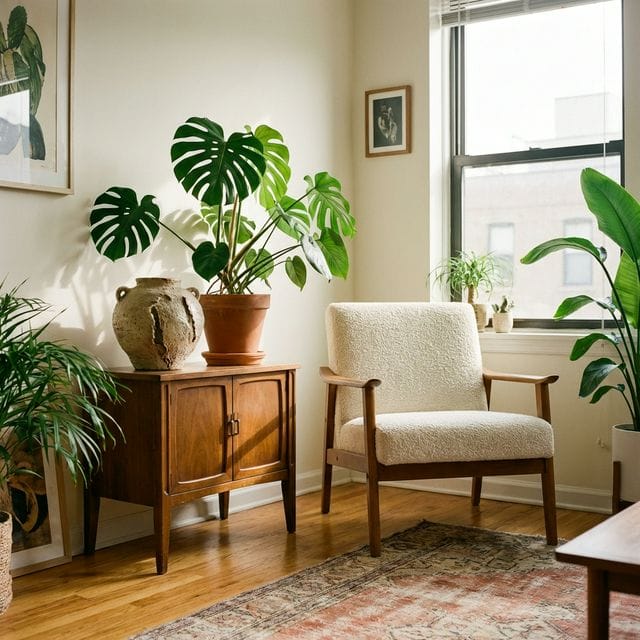
Second‑hand furniture lets your space feel curated, not catalog‑copy. A scratched mid‑century side table or repainted metal cart will hold real weight, age gracefully and support your jungle without collapsing on move number two. With a tape measure, a “good bones” checklist and a few smart stand hacks, you can furnish a tiny apartment sustainably and make room for your plants at the same time.
How do I check second-hand furniture for bed bugs?
Use a flashlight to thoroughly inspect all seams, deep corners, and underneath cushions for tiny black spots or shedding before bringing it inside.
Where can I find cheap plant stands for my apartment?
Thrift stores are excellent for repurposing items. Old wooden stools, bar carts, and tiered side tables make beautiful, unique plant stands.
Is thrifting furniture sanitary for small apartments?
Absolutely, as long as you focus on hard materials like solid wood, metal, or glass, which can be easily wiped down with a disinfectant.