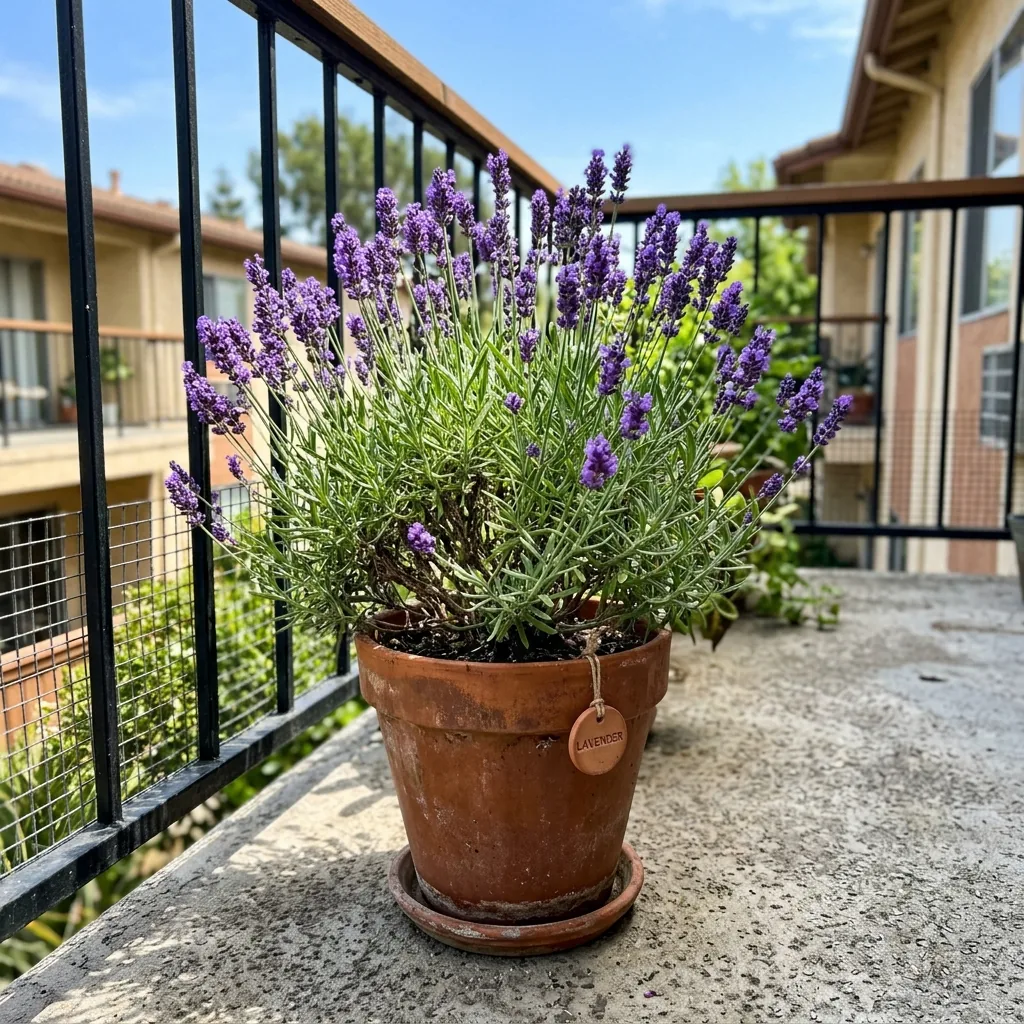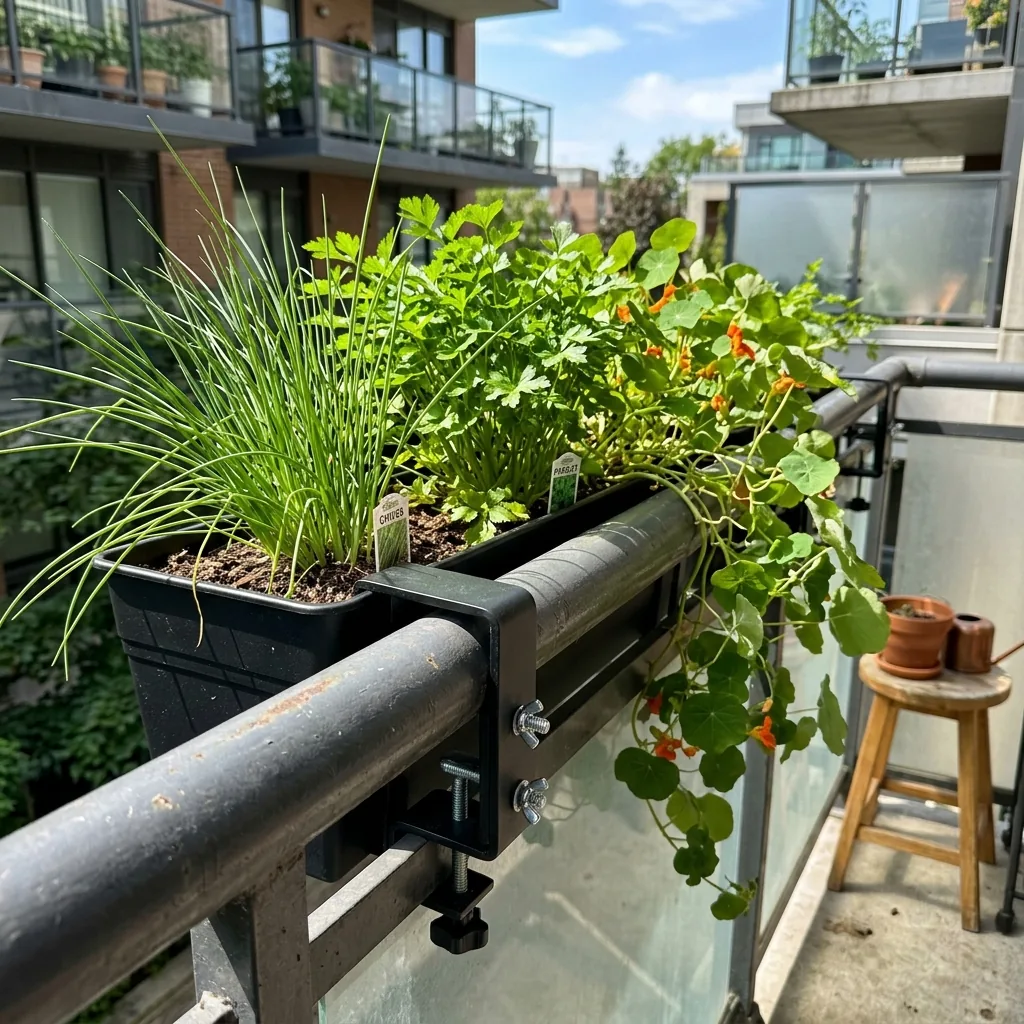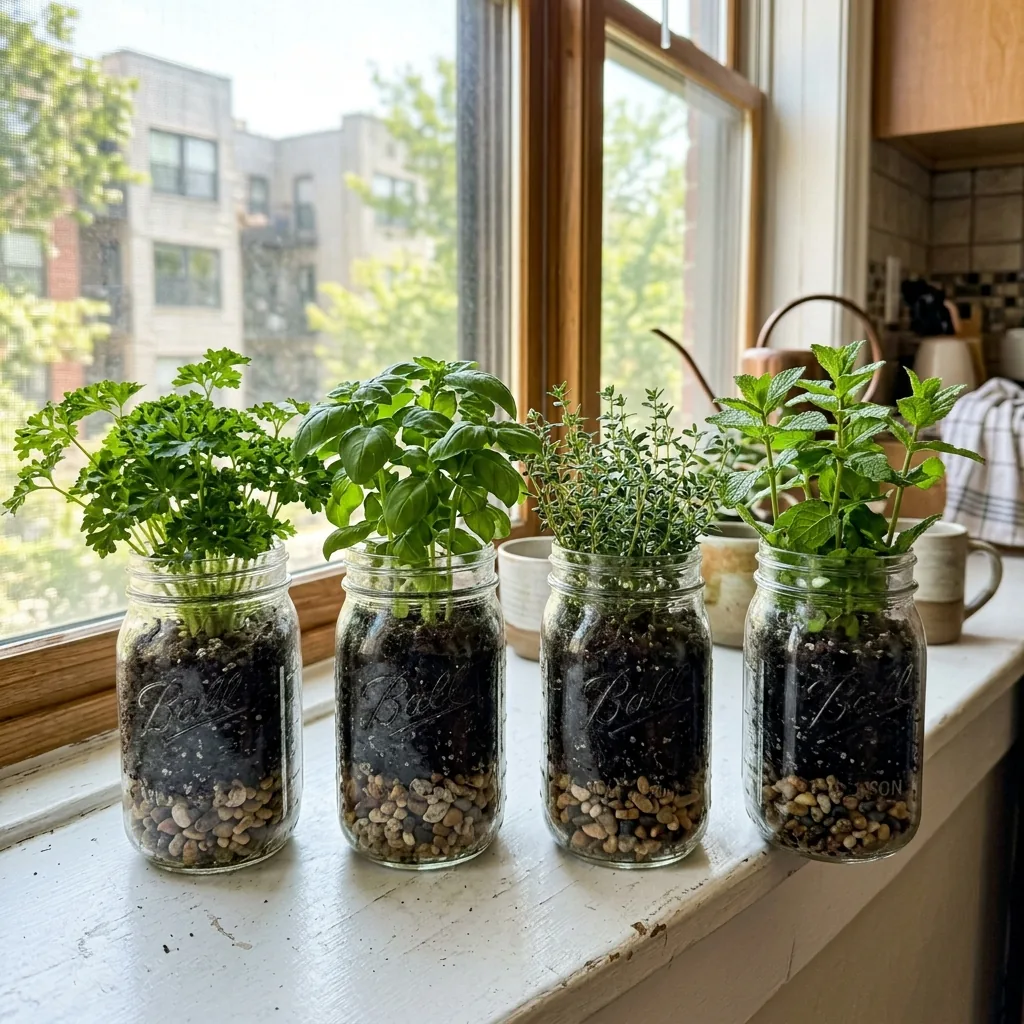
A tabletop garden is the most renter-friendly garden you can build. No structural concerns, no weight limits, no landlord conversations — just a flat surface and the right containers. In a studio or one-bed apartment, a well-designed tabletop garden on a kitchen counter or windowsill does real work: fresh herbs every day, microgreens in two weeks, and enough visual greenery to make a white rental apartment feel genuinely alive.
I started my first tabletop garden because my balcony was north-facing and my landlord had painted “no nails, no hooks, no modifications” on every available surface of the lease. A kitchen windowsill with three mason jars of herbs became the gateway to a fairly serious indoor growing operation. It cost $12. That was four years ago.
Nine setups below, from the dead-simple to the mildly ambitious. All work without drilling, without grow lights (unless noted), and without a horticulture degree.
| Apartment Type | Best Setup | Cost |
|---|---|---|
| No windowsill, low light | Microgreens on any surface | $8–15 |
| Sunny kitchen windowsill | Mason jar herb garden | $12–20 |
| South-facing window | Cherry tomato / pepper seedlings | $20–35 |
| Large counter or table | Hydroponic herb kit | $35–80 |
| Any apartment | Grow-light tabletop garden | $40–90 |
How Tabletop Gardens Work in Small Apartments
Unlike balcony gardening, tabletop gardening is entirely about light management. Soil weight, structural loads, and drilling are irrelevant. The variable that determines everything is how many hours of direct or indirect sunlight hits your chosen surface.
South-facing windowsill: 5–8 hours direct sun — the best indoor growing spot. Can support tomatoes, peppers, basil, most herbs. East/West windowsill: 2–4 hours direct sun — herbs, lettuce, microgreens, most houseplants. North-facing or no window: Under 2 hours — microgreens, sprouts, mushrooms, or grow-light setups only.
If you’re not sure of your light levels, put a white piece of paper on the surface at noon and observe whether it casts a hard shadow (direct sun), a soft shadow (indirect), or no shadow (low light). That test takes 30 seconds and tells you exactly what you can grow.
How to Choose a Tabletop Garden for Your Apartment
Match the setup to your actual light, not your aspirational light. The most common tabletop gardening failure is buying a herb kit designed for full sun and placing it in a north-facing apartment. Basil dies. Confidence drops. The whole thing gets put in the bin.
Start with what you’ll actually use. A tabletop garden of six herbs is only useful if you cook with those herbs. Grow what you eat. If you never use thyme, don’t grow thyme because it’s easy — grow what you’ll harvest.
Size to your counter space. A tabletop garden that crowds your workspace gets abandoned within a month. Leave 40% of your counter or windowsill free after installing the garden. If it fits only by sacrificing function, it’s too large.
What Is the Best Tabletop Garden for an Apartment?
The best tabletop garden for an apartment depends on light levels, but for most rental situations the most practical setup is a mason jar herb garden on a sunny windowsill ($12–20, chives, parsley, thyme, oregano) combined with a microgreens tray on any available counter ($8–15, no light required beyond ambient room light). Together these provide daily-use fresh herbs and a continuous microgreen harvest — a pea shoot tray is ready in 8–10 days, sunflower shoots in 10–12 days. For apartments with south-facing windows, a hydroponic countertop herb kit ($35–60) extends the range to basil, mint, and faster-growing leafy herbs with no soil mess.
9 Tabletop Garden Setups for Apartments
1. Mason Jar Herb Garden (The Classic)
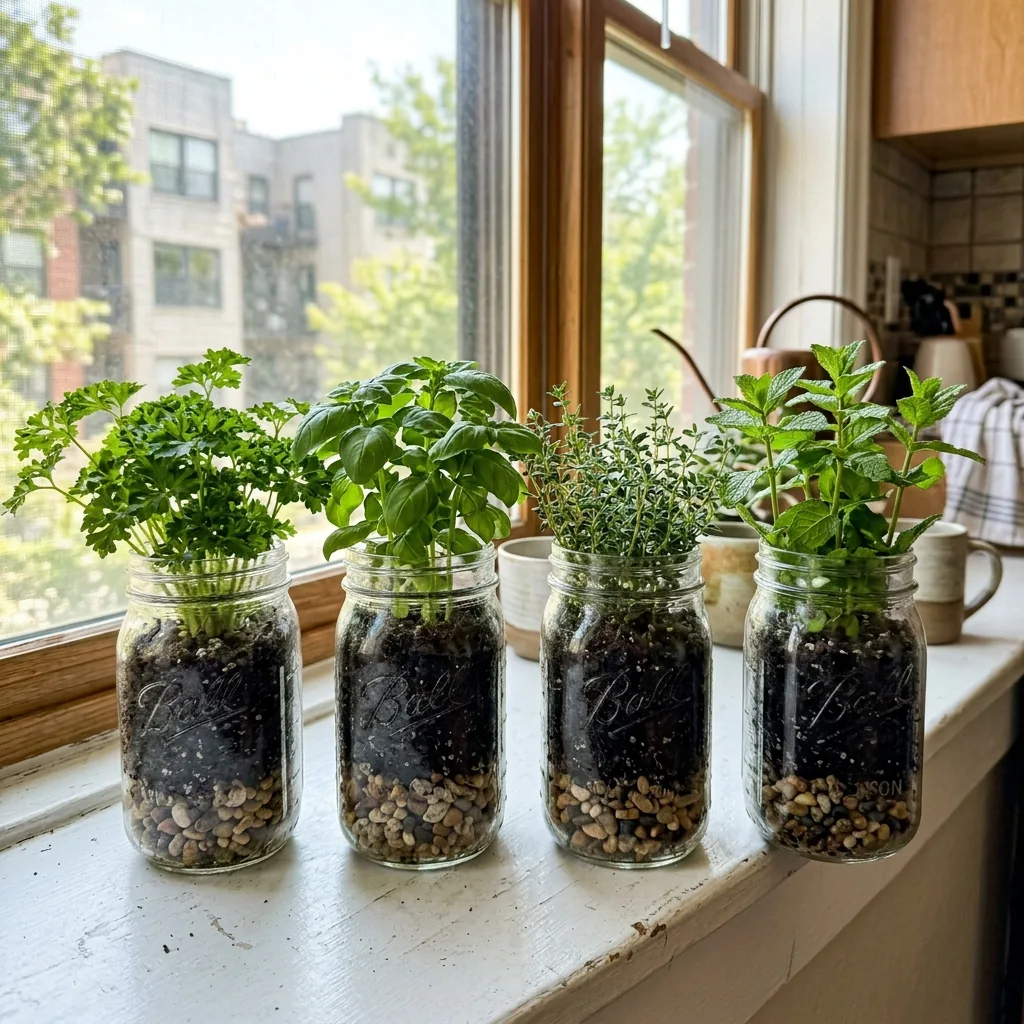
The simplest effective tabletop garden: 4–6 mason jars or similar glass containers lined up on a windowsill, each planted with a different herb. Use a 1:1 mix of potting compost and perlite for drainage. Add a layer of stones or marbles at the bottom as a drainage reservoir.
Works in east, west, or south-facing windows. Does not work in north-facing or windowless situations.
Best herbs by light level: – Full sun (south): Basil, rosemary, thyme, oregano, chilli – Partial sun (east/west): Chives, parsley, mint, coriander – Low light: Chives only (barely), or switch to microgreens
Full windowsill herb guide: mason jar herb garden ideas for windowsill.
- ✅ Pros: Zero cost if you have jars; beautiful; immediately useful
- ❌ Cons: Jars have no drainage — needs careful watering; basil struggles below 4h sun
2. Microgreens Tray Setup
Microgreens are the highest-yield tabletop garden by almost any measure: ready in 7–14 days from seed, require no direct sunlight (bright room light is sufficient), use minimal soil (a 1–2cm layer of coco coir), and produce up to 10× the nutritional density of mature plants.
A 10×20 inch tray (standard propagation tray, $2–4) planted with pea shoots, sunflower seeds, or radish produces a full harvest in about 10 days. Stagger two trays a week apart for a continuous supply.
No grow light needed. No sunny window needed. Any table, desk, or counter in any room works.
- ✅ Pros: Fastest harvest of any tabletop garden; no light dependency; almost no maintenance
- ❌ Cons: Single harvest per tray (then reseed); less visual impact than potted herbs
3. Hydroponic Countertop Kit
Hydroponic herb kits (AeroGarden, Click & Grow, and similar) grow herbs 40–50% faster than soil, use 90% less water, and produce no soil mess on your counter. The built-in grow light means light levels are irrelevant — these work in windowless kitchens, north-facing apartments, and basement studios.
Entry-level kits start at $35–45 and grow 3–7 herb pods simultaneously. Mid-range kits ($70–100) grow 9 pods and include an app timer.
Limitation: the pods are proprietary — you pay for refill pods (~$5–8 each). You can hack around this with blank pod kits and your own seeds, which drops the ongoing cost to essentially nothing.
- ✅ Pros: Works in any light condition; no mess; fastest herb growth; automated
- ❌ Cons: Upfront cost; proprietary pods if you don’t DIY; electrical dependency
4. Sprout Jar Setup
Sprouting seeds (mung beans, lentils, chickpeas, alfalfa, radish) in a jar on your kitchen counter is the absolute minimum-equipment tabletop garden: just a jar, a mesh lid or cheesecloth, and seeds. Rinse twice daily, harvest in 3–5 days.
No soil, no light, no containers beyond a jar. Cost: $3–8 for seeds that produce dozens of harvests.
Sprouts aren’t as visually impressive as herbs or microgreens, but they’re nutritionally dense, grow in truly any environment, and have zero failure modes as long as you rinse them.
- ✅ Pros: Zero equipment; works anywhere; incredibly cheap; fast
- ❌ Cons: Purely functional — not decorative; requires twice-daily rinsing
5. Single-Pot Statement Herb
If minimal maintenance is the priority, a single large pot (20–25cm diameter) planted with one statement herb — a robust rosemary, a large-leaved mint, or a spreading thyme — is more impactful than six small jars of struggling plants.
A healthy 25cm rosemary pot in a south-facing window looks architectural, smells good, tolerates neglect, and provides enough rosemary to use in cooking several times a week. It requires watering once a week in winter, twice a week in summer.
This is the right tabletop garden for people who genuinely forget about plants.
- ✅ Pros: Minimal maintenance; visually strong; drought-tolerant; long-lived
- ❌ Cons: Single plant — no variety; needs south-facing window for rosemary
6. Windowsill Salad Box
A 60cm window box (the same type as balcony railing planters) placed on a windowsill with cut-and-come-again salad mix — rocket, baby spinach, mixed lettuce — produces continuously harvested salad leaves through the spring and autumn. Doesn’t work well in mid-summer heat (lettuce bolts) or mid-winter low light.
The box depth should be at least 15cm for adequate root space. Use a lightweight mix: 70% potting compost, 30% perlite.
Harvest by cutting outer leaves with scissors, leaving the growing center. The plant regrows in 5–7 days.
- ✅ Pros: Continuous harvest; fits any windowsill; low maintenance; visually lush
- ❌ Cons: Seasonal — struggles in summer heat and winter darkness; needs east/south window
7. Cherry Tomato Windowsill (South-Facing Only)
A south-facing kitchen window with 5+ hours of direct sun can support a compact cherry tomato plant in a 10–15L pot. Varieties bred for indoor/windowsill growing: Tumbling Tom (trailing), Micro Tom (genuinely compact, 20cm tall), Window Box Roma.
These won’t produce as heavily as a balcony plant, but a single Micro Tom can yield 200–400g of cherry tomatoes over a season — enough to matter. They need feeding every two weeks with liquid tomato fertiliser.
- ✅ Pros: Genuinely productive indoors; unusual; satisfying
- ❌ Cons: South window only; needs regular feeding; some pests (whitefly) in indoor conditions
8. Mushroom Growing Kit
A mushroom kit (oyster, shiitake, or lion’s mane) lives on a kitchen counter or table, needs no sunlight (indirect light only), requires just misting twice daily with water, and produces a full flush of mushrooms in 10–14 days. Subsequent flushes follow every 2–3 weeks.
Kits cost $20–35 and produce 2–4 full flushes before the substrate is exhausted. The visual effect — actual mushrooms growing on your kitchen counter — is a conversation starter.
- ✅ Pros: No light dependency; fast; productive; genuinely impressive to visitors
- ❌ Cons: Finite kit life (3–4 flushes); needs consistent misting; limited to one crop type
9. Grow-Light Tabletop Setup (For Windowless Apartments)
If you have no usable natural light, a simple 24W full-spectrum LED grow panel ($20–35) mounted on a shelf above a tabletop garden unlocks almost any crop. Set on a 14–16 hour timer, it provides equivalent growing conditions to a south-facing window.
Pair with a 2-tier wire shelf ($25–35): top shelf holds the light, bottom shelf holds the garden. Total footprint: 60cm × 30cm. This is how studio apartment gardeners grow basil, lettuce, herbs, and even small peppers without a single window involved.
Full indoor growing guide for windowless apartments: hydroponic herb garden for windowless kitchen.
- ✅ Pros: Works in any apartment regardless of light; expandable; grows almost anything
- ❌ Cons: Electricity cost (minimal — ~$3–5/month at 24W); setup cost; visual — the light is bright
My Experience with Tabletop Gardens in a Studio
My current kitchen countertop setup occupies a 90cm × 30cm strip next to the window: a row of four mason jars with chives, parsley, oregano, and thyme on the left, a microgreens tray in the middle, and a single large rosemary pot on the right. This costs $0 in ongoing maintenance beyond seeds and soil top-ups.
The microgreens are the workhorse. I plant a tray every Sunday — pea shoots or sunflower. By the following Tuesday, it’s ready to harvest. I use them in everything: salads, sandwiches, eggs. The ongoing cost is approximately $2 per tray.
The thing I’ve learned after four years of windowsill growing: the jars look better than they function. Beautiful, yes. But the drainage situation requires attention — I water carefully and check weekly for root rot. The single large rosemary in a proper pot with drainage holes is lower maintenance and more reliable than the jar collection, despite looking less curated.
For an indoor garden I never have to think about, I’d choose the hydroponic kit every time. For one that looks good and teaches you something, the mason jar setup wins.
Common Mistakes
Planting in jars without drainage. Glass jars look great but have no drainage holes. Overwatering — even once — creates anaerobic conditions at the root zone within 48 hours. Add a drainage layer (stones, marbles) and water very sparingly.
Placing a sun-loving herb in a north window. Basil needs 6+ hours of direct sun. In a north-facing window, it will survive for 2–3 weeks and then slowly yellow and die. Either use a grow light or switch to shade-tolerant herbs (chives, mint, parsley).
Starting too many varieties at once. Three herbs you actually use beats eight herbs you don’t. Start with your most-cooked-with herbs and add slowly.
Not harvesting enough. Herb plants grow more productively when harvested regularly. Trimming the top third of a basil or thyme plant weekly encourages bushy, dense growth. Leaving it untouched leads to leggy, bitter plants.
FAQ
What is the easiest tabletop garden for an apartment? A microgreens tray — no sunlight required, ready in 7–14 days, costs under $10 to start, and has almost no failure modes.
Can I grow herbs without a sunny window? Yes, with a grow light ($20–35 for a 24W panel on a timer). Alternatively, chives and mint tolerate low indirect light better than most herbs.
How often do I water a windowsill herb garden? Check the top 2cm of soil — water only when it’s dry. In summer, most herbs in small containers need water every 1–2 days. In winter, every 4–7 days.
Are tabletop gardens safe on kitchen counters? Yes — use trays under all pots to catch drainage water, and avoid placing containers directly above electrical outlets or appliances.
What’s the best tabletop garden for a north-facing apartment? A microgreens tray (no light needed), a sprout jar (no light needed), a mushroom kit (indirect light only), or a grow-light setup with a full-spectrum LED panel.
Safety Disclaimer
Place pot trays under all indoor containers to prevent water damage to surfaces and floors. Do not position containers above electrical outlets, plugboards, or heat-generating appliances. Grow lights should be on a timer — do not leave LED grow panels on for more than 16 hours per day, as extended exposure can stress plants.