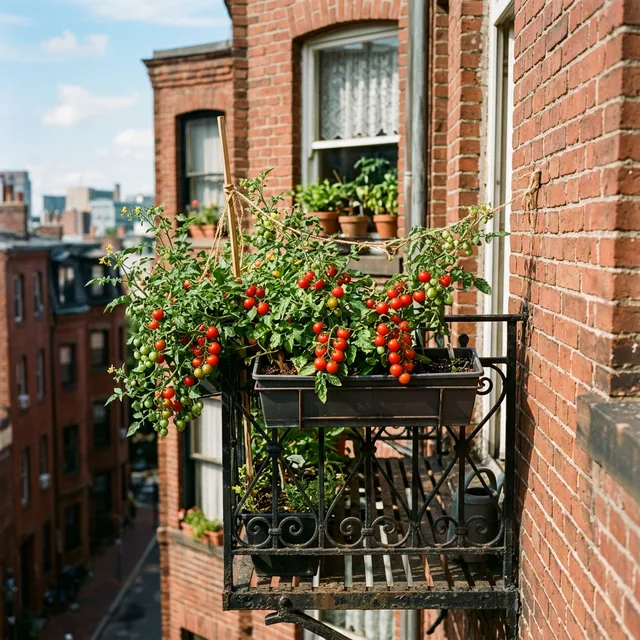
Learning how to grow cherry tomatoes on a Juliet balcony feels like trying to solve an impossible geometric puzzle. A traditional Juliet balcony (often called a “false balcony” or “French balcony”) has absolutely zero usable floor space. It is literally just a protective railing attached directly to sliding glass or French doors. You cannot walk out onto it, you cannot put a chair on it, and you certainly cannot fit a massive 15-gallon fabric grow bag on it.
Yet, Juliet balconies are actually the most highly coveted urban gardening asset. Because they protrude slightly from the building’s facade, they usually receive unobstructed, direct sunlight—the exact high-energy light that fruiting vines desperately need. You just have to completely change your approach to geometry. Instead of planting wide and heavy, you must plant vertically using the structural strength of the metal railing itself. By selecting determinate dwarf tomato varieties and utilizing heavy-duty straddle planters, you can harvest pounds of fresh cherry tomatoes right outside your living room glass.
My Experience with How to Grow Cherry Tomatoes on a Tiny Balcony
In my third apartment, I finally had south-facing French doors with a classic wrought-iron Juliet balcony. The railing was exactly 52 inches wide and sat flush against the glass. I was determined to grow food.
My first failure was a classic rookie mistake. I bought a standard indeterminate cherry tomato plant (the kind that grows infinitely tall) from a hardware store. I zip-tied a cheap plastic window box to the outside of the railing and planted it. By late June, the plant had grown 6 feet tall. It was too heavy for the shallow soil. During a minor summer thunderstorm, a gust of wind caught the massive vine like a sail, snapped the cheap zip ties, and sent my entire tomato plant crashing three stories down onto the sidewalk below.
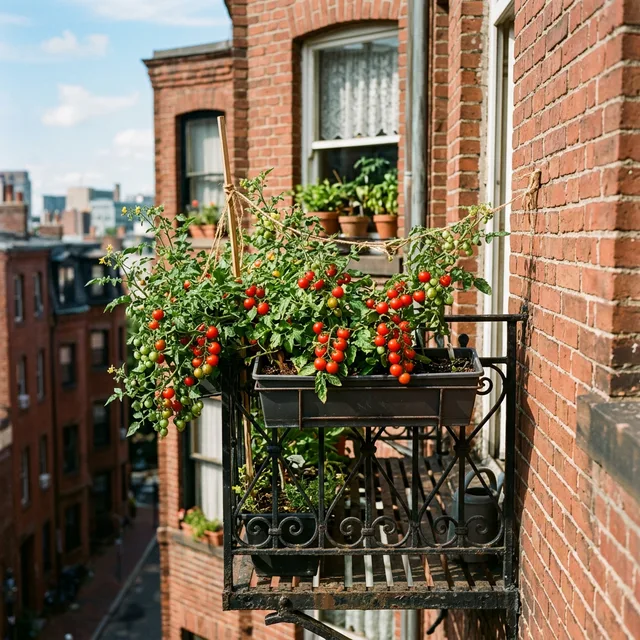
I went back to the drawing board. The next season, I switched to a “determinate” dwarf variety (which naturally caps its growth at 24 inches). Instead of zip ties, I invested in a deep “straddle” planter that physically gripped the railing using gravity and friction. Finally, I wove the main stem of the tomato directly through the iron bars of my balcony as it grew, using the building’s architecture as a free, unbreakable trellis. That summer, I harvested over 120 perfect cherry tomatoes without taking up a single inch of interior apartment space.
Step 1: Choosing the Right Tomato Variety
You cannot fight genetics. If you plant an indeterminate tomato (“vining” type) on a Juliet balcony, it will turn into an uncontrollable 8-foot monster that blocks your view and eventually snaps under its own weight.
You must buy Determinate or Dwarf/Patio varieties. These are genetically engineered to grow as compact, sturdy bushes. Once they reach about two to three feet tall, they stop growing upward and pour all their energy into producing fruit.
Top 3 Varieties for Juliet Balconies: 1. Tiny Tim: Grows only 12 to 18 inches tall. Perfect for shallow window boxes. 2. Patio Princess: Reaches 24 inches. Produces incredibly sweet, bite-sized fruit. 3. Sweet ‘n’ Neat: Specifically bred for small containers. It has thick, heavy main stems that resist high urban winds.
Step 2: The Straddle Planter Setup
Because you have no floor, the railing is your only foundation. Do not use standard long window boxes hanging on cheap S-hooks. The eccentric weight of wet soil and heavy fruit will bend the hooks over time.
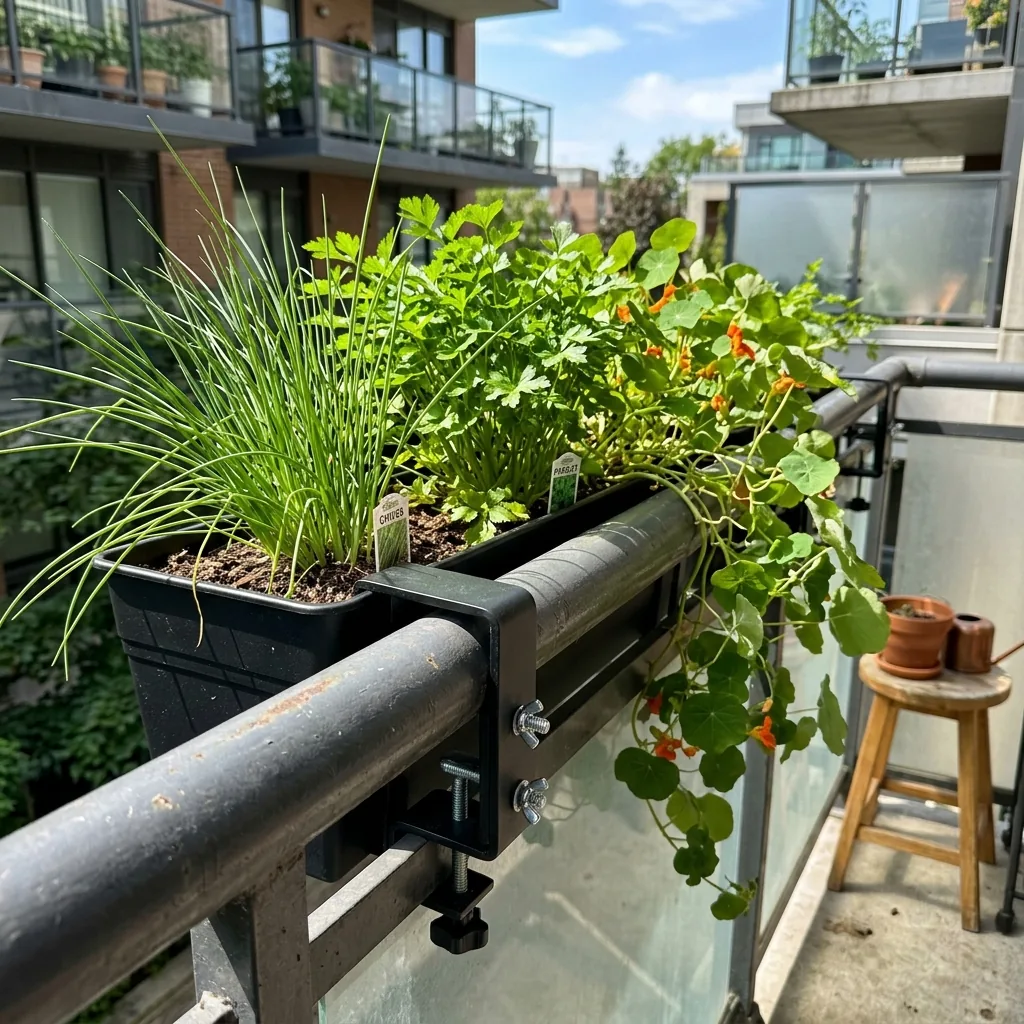
You need a Straddle Planter (also called a saddle planter). These have a deep, U-shaped groove cut directly into the bottom of the plastic. * The Fit: The pot sits down over the top rail, dropping the center of gravity significantly. Half the soil hangs on the inside of the balcony, half hangs on the outside. * The Security: Because the weight is perfectly distributed on both sides of the metal bar, the planter cannot tip over, even in 40 mph city wind gusts. * Safety Ties: Even with a straddle planter, always run two heavy-duty industrial zip ties through the drainage holes and around the iron bar as a fail-safe backup.
Step 3: High-Density Soil and Hydration
Tomatoes are incredibly heavy feeders and require ridiculous amounts of water. In a small straddle planter (usually holding only 2 to 3 gallons of soil), the dirt will dry out completely in a matter of hours during a 90-degree July afternoon.
- The Soil Mix: Do not use cheap, dense topsoil. You need a premium organic potting mix blended with 30% perlite or vermiculite. This ensures rapid drainage so the roots do not rot, but retains enough ambient moisture to keep the plant alive.
- The Hydration Hack: Mix a handful of hydrogel water crystals into the bottom third of the soil. These polymer crystals absorb 200 times their weight in water during Rain or watering, and slowly release it back into the soil during peak afternoon heat.
- Mulch: Cover the top of the potting soil with a 1-inch thick layer of sphagnum moss or small wood chips. In a micro-planter baked by direct sunlight, top evaporation is your biggest enemy. Mulch physically blocks the sun from baking the dirt.
Step 4: Vertical Weaving and Trellising
Even dwarf tomatoes need structural support once the heavy fruit clusters begin to form. Sticking a wooden dowel into a shallow railing planter does not work; the wind will just rip the dowel right out of the loose soil.
The Iron Trellis Method: Instead of buying a cage, use the Juliet balcony itself. As the tomato plant grows upward from the planter, gently lean the main stem against the vertical iron bars of your railing. Use soft cloth garden ties (or ripped pantyhose) to loosely tie the stem to the metal bar every 6 inches. This transfers all the physical weight of the heavy tomatoes directly onto the structural steel of your apartment building.
Step 5: Master the Nutrient Schedule
Because the root system is confined to a tiny volume of soil, the tomato plant will strip every available nutrient from the dirt within the first month. You must actively replace these nutrients, or the plant will simply stop flowering.
Once the first yellow flowers appear on the vine, start feeding the plant with a liquid organic fertilizer specifically formulated for tomatoes (high in Phosphorus and Potassium, lower in Nitrogen). Apply this liquid feed every 14 days, diluting it directly into your watering can.
Compare Balcony Tomato Setups
| Variety Type | Best Container Type | Support Needed | Yield Expectation |
|---|---|---|---|
| Dwarf (Tiny Tim) | 8″ Deep Window Box | None (Bush habit) | Moderate (Small bursts) |
| Determinate (Patio) | 12″ Deep Straddle Crate | Tie to railing | High (All at once) |
| Indeterminate | 15-Gallon Floor Bag | 6-foot heavy cage | Continuous (Not for Juliet) |
Conclusion
A Juliet balcony is not a useless architectural afterthought; it is a suspended vertical farm waiting to happen. You do not need a backyard or a patio to experience the incredible satisfaction of eating a sun-warm tomato you grew yourself. By selecting the right dwarf genetics, utilizing gravity-locking straddle planters, and tying the vines directly to your iron railing, you can totally bypass the limitations of a micro-apartment. Order your seeds, secure your pots, and start farming your skyline.
Can you grow tomatoes in a 6-inch deep window box on a balcony?
Yes, you can grow specific micro-dwarf cherry tomatoes in a 6-inch deep window box on a Juliet balcony, provided you manage moisture aggressively. Standard tomatoes possess deep, aggressive taproots that will rapidly choke and die in shallow soil. However, micro-dwarf varieties like “Micro Tom” or “Orange Hat” are genetically restricted to max out at 8 to 10 inches tall. Because their overall biomass is tiny, their root systems easily adapt to shallow 6-inch containers. The critical trade-off is hydration; 6 inches of soil sitting in direct balcony sun will dry out completely in 12 hours, meaning you must water them meticulously every single morning.
Safety Disclaimer
Before attaching any heavy dirt-filled planters to your Juliet railing, verify your rental lease agreement regarding exterior facade rules. More importantly, always physically test the structural integrity of the wrought iron railing by shaking it firmly. If there is rust at the anchor points or the railing wobbles, DO NOT attach a planter. A 15-pound falling planter poses a lethal risk to pedestrians on the street below.