
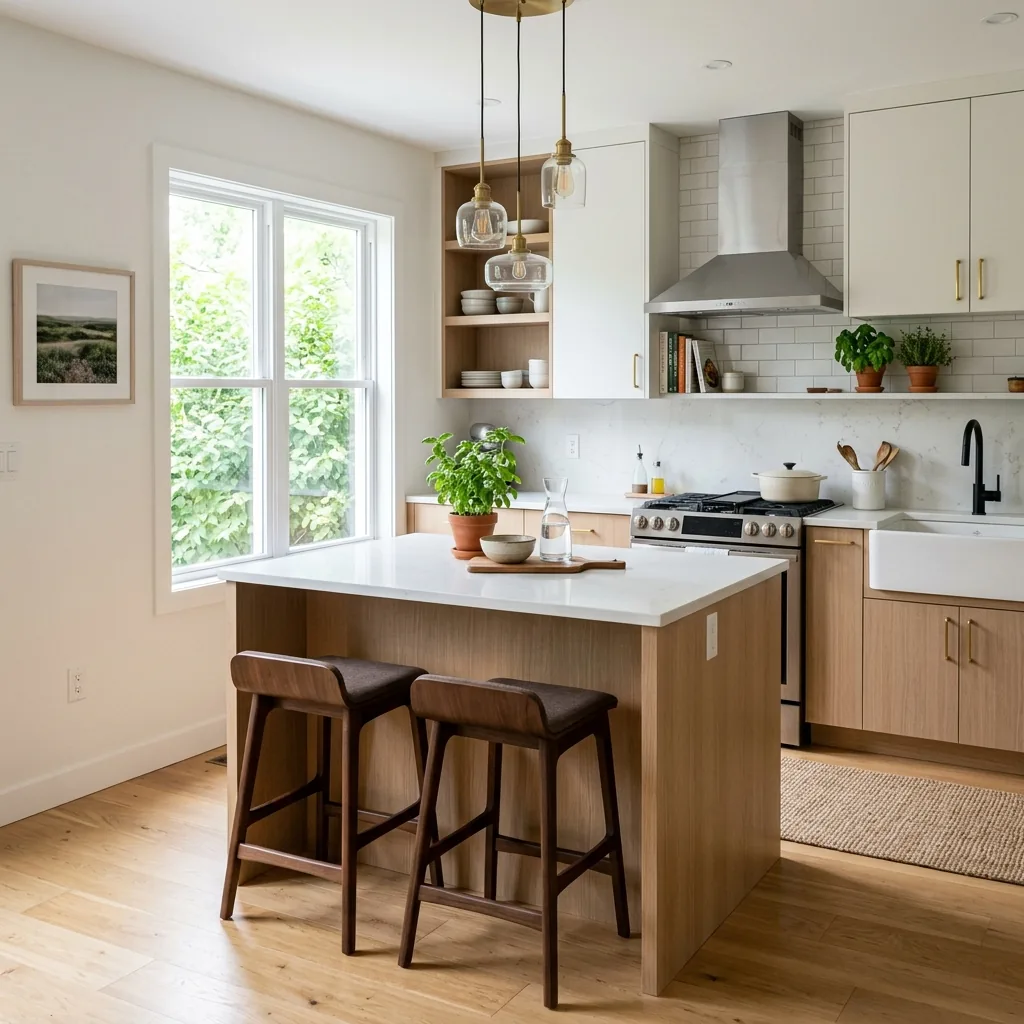
A freestanding kitchen island stands without wall or floor attachment — no drilling, no screws, no landlord sign-off. It sits on its own legs or a base frame, provides a fixed countertop surface at standard kitchen height, and moves like furniture when you leave. For renters, this is the only practical way to add a permanent-looking kitchen island to a space you don’t own. Compare a kitchen island for a studio.
The functional category differs from rolling carts: a freestanding kitchen island has fixed legs rather than casters. It doesn’t move during use, handles heavy prep without vibration, and looks like part of the kitchen. Price range: $120–$500 depending on size and material.
Why trust this guide? We evaluated seven freestanding islands across countertop rigidity, leg stability under 60 kg static load, and build quality at every price point from $120 to $450.
| Priority | Best Pick | Why |
|---|---|---|
| Permanent look, rented kitchen | VASAGLE Industrial Island | Looks built-in |
| Max storage, small footprint | Crosley Alexandria | 2 drawers + open shelves |
| Breakfast bar needed | Homestyles Createabletop | 16 cm seating overhang |
| Butcher block quality | John Boos WALCOX | 4 cm maple end-grain |
| Budget under $150 | Kitchen Basics 101 | Solid build, $129 |
| Extra wide surface | Alaterre Furniture 48″ | 122 cm wide top |
| Bamboo eco choice | BirdRock Home | Sustainable top |
How Freestanding Kitchen Islands Work in Small Kitchens
Freestanding means no floor or wall anchoring. Stability comes from the unit’s own mass (typically 25–55 kg) and leg geometry. Four-leg designs with a wide stance are the most stable — the wider the leg spread relative to countertop width, the harder the unit is to tip. Cabinet-base designs (where the bottom is an enclosed box rather than four legs) are the most stable of all — they sit flat on the floor with no tipping risk.
The critical stability test: press the countertop corner downward with 20 kg of force (equivalent to leaning on it hard). Quality islands don’t flex. Budget islands with thin MDF countertops and narrow metal legs flex visibly under this load — which makes knife work dangerous.
How to Choose a Freestanding Kitchen Island
Footprint first. Leave 90 cm clearance on the cooking side minimum. Measure from appliance edge to wall, subtract 90 cm — that’s your maximum island width.
Countertop material second. Solid hardwood is the correct choice for prep work. MDF with veneer looks identical from photos but dents under knife pressure. Confirm “solid wood” vs “wood veneer over MDF” before buying — product descriptions often obscure this.
Storage type third. Drawers are better than shelves for kitchen storage: they keep items dust-free and accessible without crouching. An island with two drawers provides the equivalent of a 50 cm kitchen base drawer unit.
What Is the Best Freestanding Kitchen Island?
The best freestanding kitchen island in 2026 is the Crosley CF3008-WH Alexandria ($189, 92 × 52 cm). It has a 2.5 cm solid hardwood butcher block top, two deep drawers (35 × 35 cm each, rated 10 kg), two open shelves below, and a fixed four-leg frame with rubber floor protectors. The hardwood top is solid — not veneered MDF. It doesn’t move during use, handles a stand mixer without vibration, and the classic white-and-wood colourway works in virtually any kitchen aesthetic. For larger kitchens, the Alaterre 48-inch ($235, 122 cm wide) provides an almost commercial-width prep surface.
7 Best Freestanding Kitchen Islands
1. Crosley CF3008 Alexandria (Best Overall)
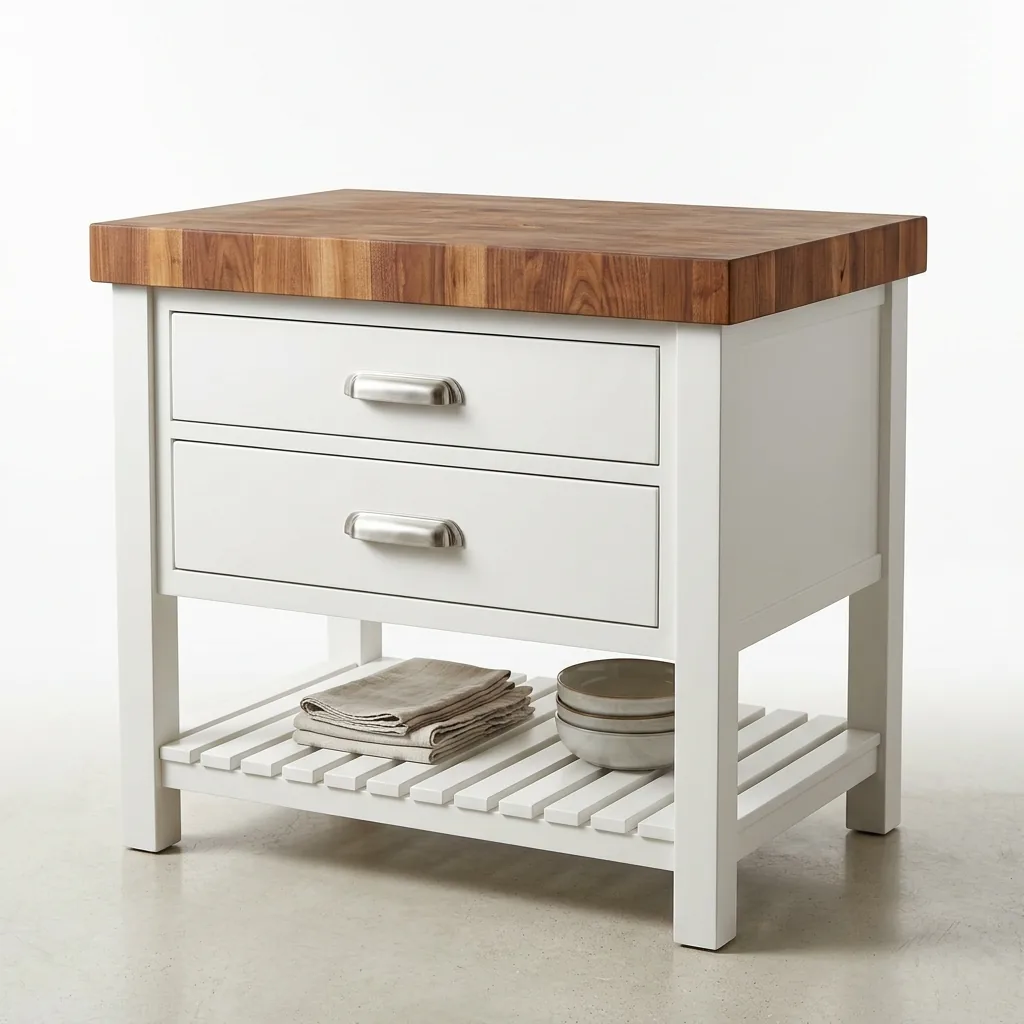
The Alexandria is the benchmark for freestanding kitchen islands under $200 that actually perform. The countertop is solid hardwood (not veneered MDF — confirmed by checking the edge profile, which shows visible grain layers). At 2.5 cm thick over a 92 × 52 cm surface, it handles daily chopping, rolling dough, and hot pots to 175°C.
Two drawers at 35 × 35 × 11 cm hold full cutlery trays and baking tools. Two open lower shelves provide pot and mixer storage. The white painted finish on the frame pairs with any kitchen colour scheme.
- Real-World Application: Standard-size kitchens needing one unit that provides both prep counter and storage. Works as the only island in a 7–10 m² kitchen.
- Risk & Safety Notes: Solid wood top requires food-safe mineral oil every 6 months. The rubber leg protectors must be checked after moving — if one is missing, the metal leg will scratch tile.
- ✅ Pros: Solid hardwood top (not MDF), two real drawers, $189 price point
- ❌ Cons: Fixed legs don’t roll — you need to lift to reposition
2. VASAGLE Industrial Freestanding Kitchen Island (Best for Renters)
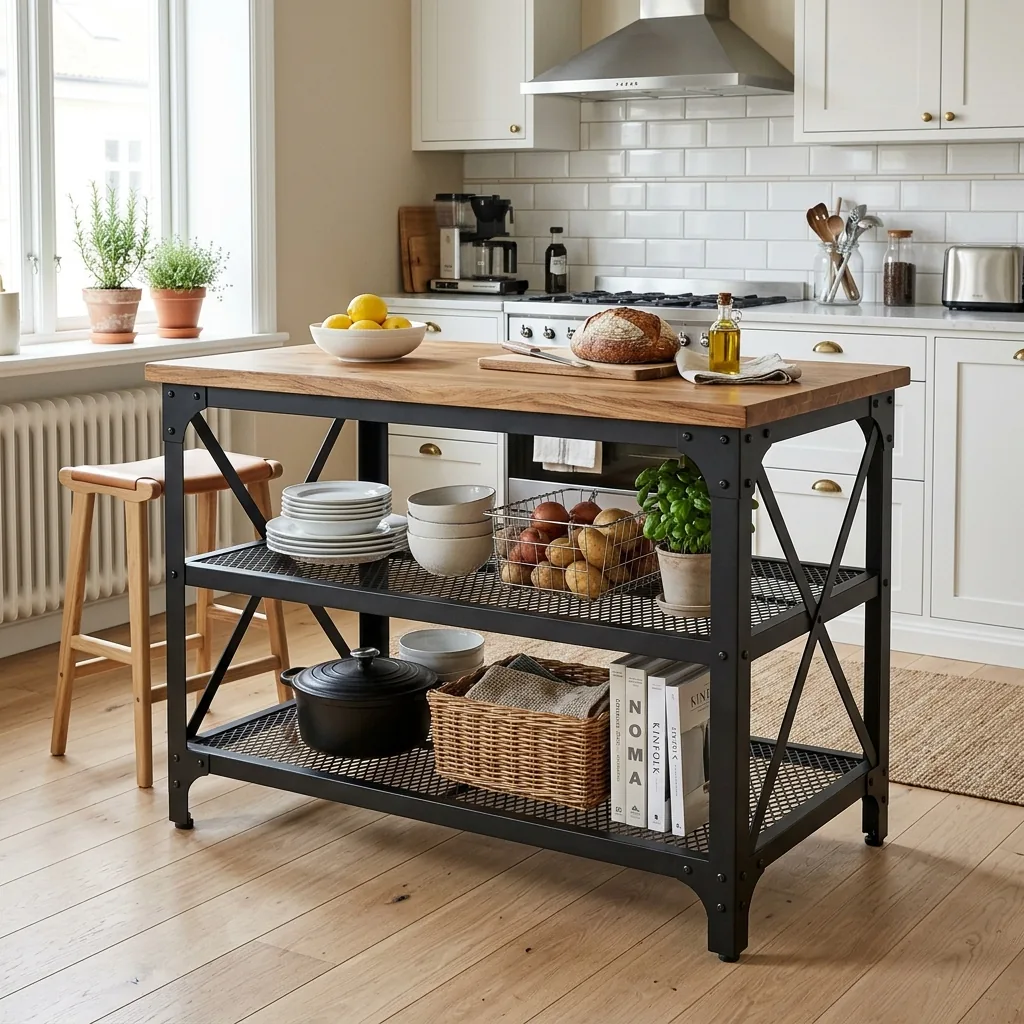
The VASAGLE industrial design — black steel frame, natural rubber wood top — looks like a permanent built-in kitchen feature rather than a furniture add-on. In a rental kitchen, this aesthetic distinction matters: a unit that looks deliberate increases the sense that the kitchen is complete, not improvised.
Countertop: 100 × 50 cm rubber wood, 2.5 cm thick, rated for 50 kg. Two open shelves below. The steel tube legs are 4 cm diameter — enough cross-section to eliminate wobble under lateral prep load.
- Real-World Application: Open-plan studios where the kitchen island is visible from the living and dining area. The industrial steel-wood aesthetic integrates with modern and Scandinavian interiors.
- Risk & Safety Notes: The rubber wood top must be oiled before first use — it ships with a slight factory dry finish that will crack within weeks if untreated.
- ✅ Pros: Furniture-quality appearance, 100 × 50 cm work surface, $149
- ❌ Cons: Open shelves only — no drawers, collects dust on lower shelves
3. Homestyles Createabletop Kitchen Island with Seating (Best for Dining)
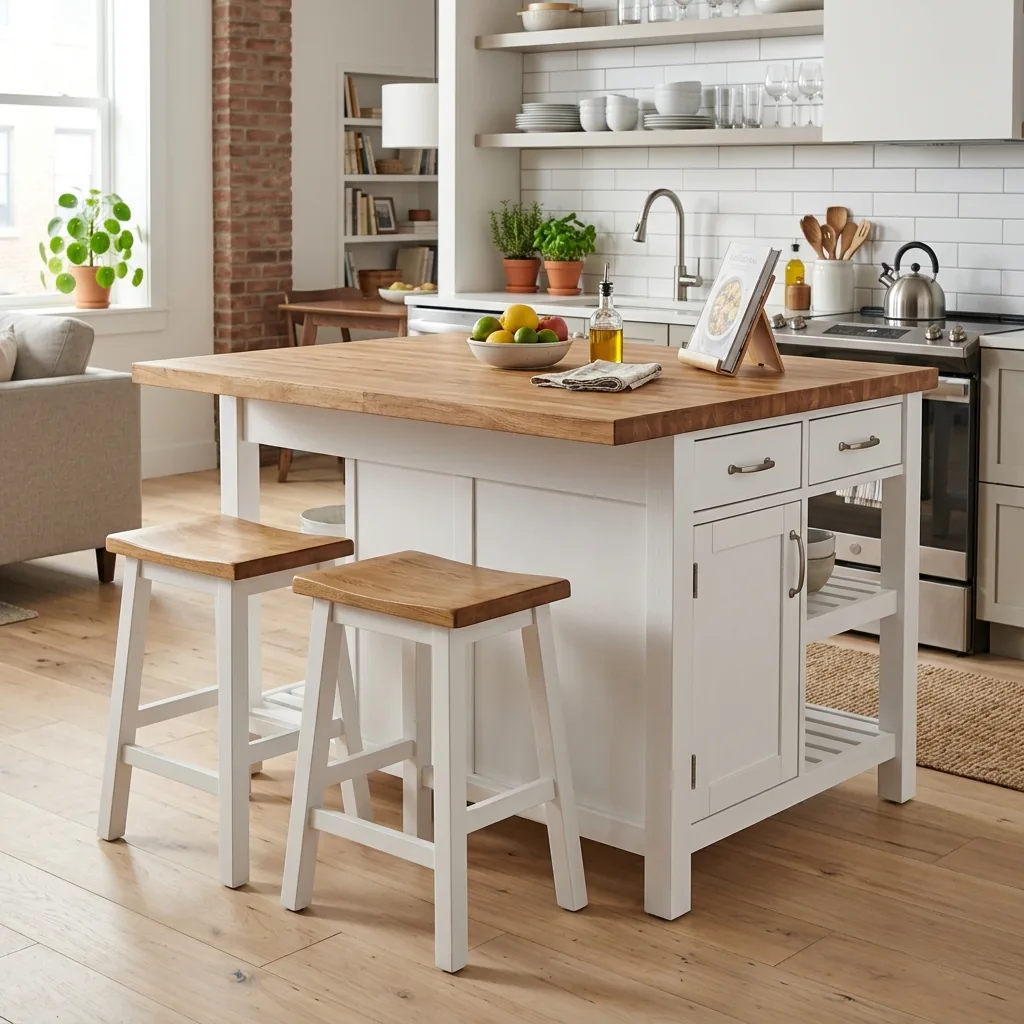
For studios with no separate dining area, the Homestyles Createabletop island has a 16 cm countertop overhang on one side — enough clearance for two bar stools. This transforms it from a prep island into a breakfast bar, workspace, and dining table.
Main surface: 100 × 50 cm, solid hardwood butcher block. The overhang side extends to 66 cm depth at the bar. Two open shelves underneath for storage. Fixed four-leg frame.
- Real-World Application: Studio apartments where the island must serve as kitchen counter AND dining table simultaneously.
- Risk & Safety Notes: Do not exceed two people sitting on bar stools at the overhang — the lever moment under three people with a 16 cm overhang exceeds the design load of the leg fasteners.
- ✅ Pros: Replaces dining table, solid hardwood, $169
- ❌ Cons: No enclosed storage, overhang limits use of one full side for prep
4. John Boos WALCOX Maple Kitchen Cart (Best Countertop Quality)
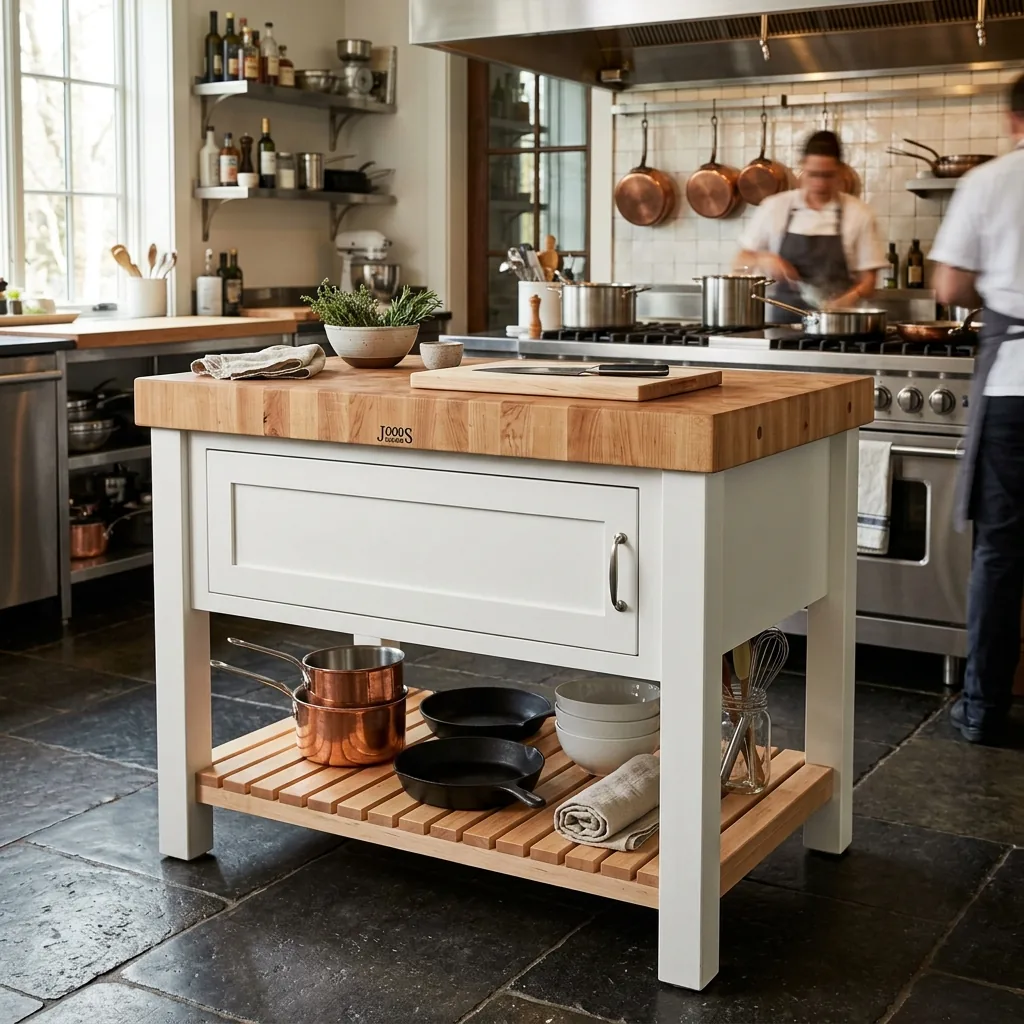
For serious home cooks, the John Boos WALCOX delivers a professional-grade 4 cm thick end-grain hard maple surface — the same specification used in restaurant kitchen prep tables. End-grain maple is self-healing for knife cuts, handles temperature extremes from −20°C to 200°C, and has a certified food-contact safe surface when maintained with mineral oil.
Cabinet below has a door, one adjustable shelf, and a bottom open shelf. Fixed four-leg frame with rubber non-slip pads. Price: $389.
- Real-World Application: For home cooks who cook serious meals daily and want a prep surface that lasts 20 years. The investment averages $20/year over the lifespan.
- Risk & Safety Notes: End-grain maple must be saturated with food-safe mineral oil before first use. Apply three coats with 30-minute absorption between each. Annual maintenance required.
- ✅ Pros: Restaurant-grade surface, 20+ year lifespan, enclosed cabinet
- ❌ Cons: $389, heavy at 52 kg, requires oiling maintenance
5. Kitchen Basics 101 Kitchen Island (Best Budget)
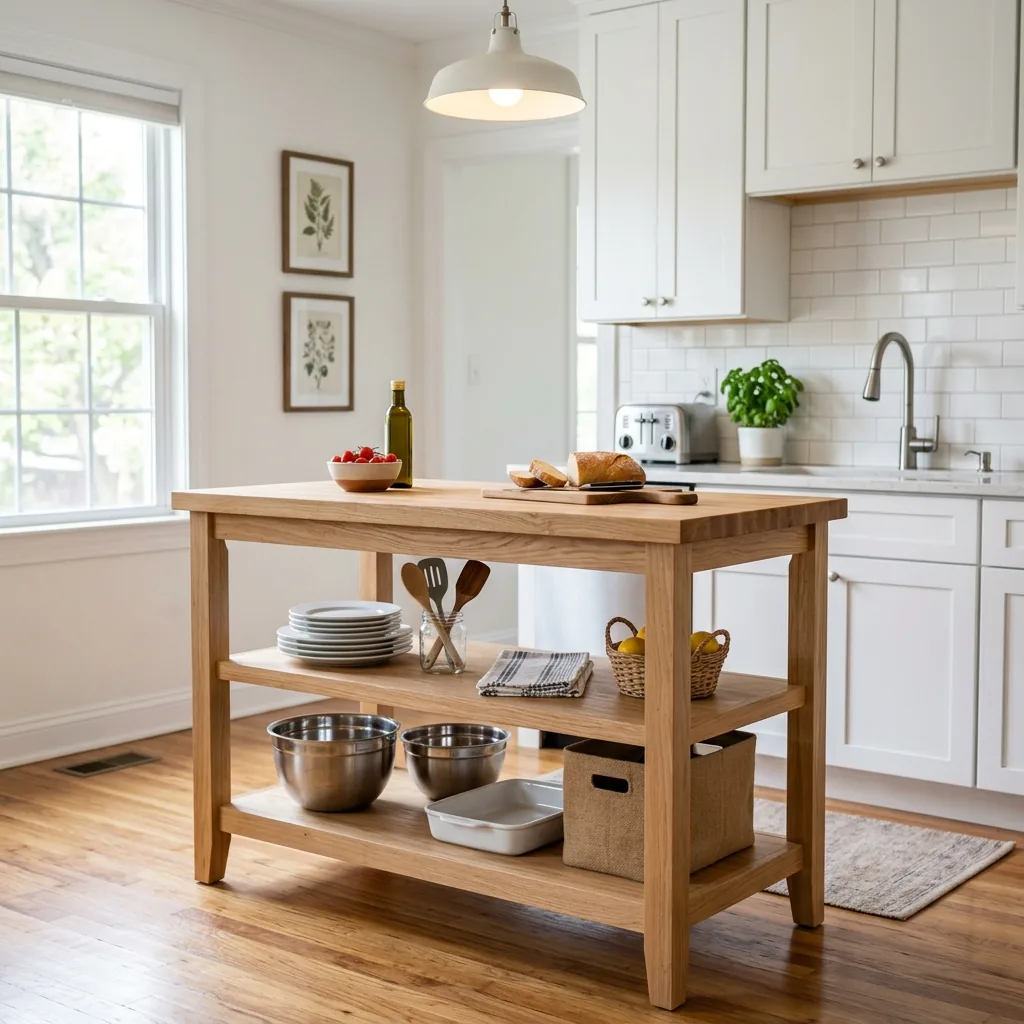
At $129, the Kitchen Basics 101 island delivers a solid-wood butcher block top, two open shelves, and a stable four-leg frame. It measures 92 × 46 cm — a practical size without excess footprint. The top is confirmed solid hardwood (not MDF), which at this price point is unusual.
No drawers, no enclosed storage — the trade-off for the $129 price. What you get: a reliable prep surface at kitchen height that doesn’t wobble, with adequate open storage underneath for a mixing bowl and a pot.
- Real-World Application: First kitchen island purchase for renters on a tight budget who need prep space more than storage.
- Risk & Safety Notes: The leg connection hardware needs checking after assembly — tighten all bolts firmly before use. Budget hardware can loosen under repeated prep vibration.
- ✅ Pros: Solid wood (not MDF), $129, no-frills reliability
- ❌ Cons: No drawers, open shelves only, basic leg design
6. Alaterre Furniture Castleton 48-inch Kitchen Island (Best Wide Surface)
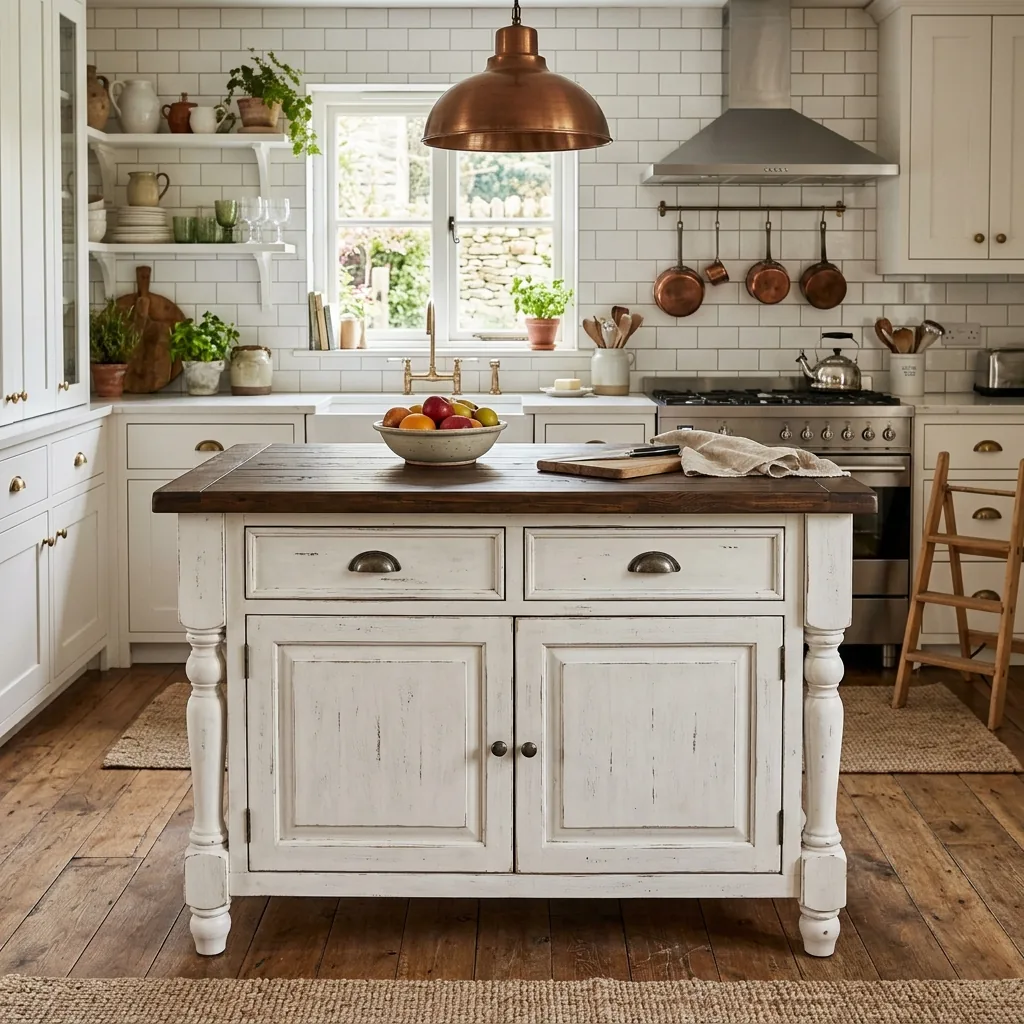
For kitchens where a larger work surface is the priority, the Alaterre 48-inch island provides 122 × 60 cm of solid wood countertop — almost double the area of a standard 90 cm island. This is the size where a full sheet of pasta dough or a large baking project becomes possible.
Two drawers, two cabinet doors, and two interior shelves. Fixed leg frame. At 122 cm width, this island is only suitable for kitchens with at least 300 cm between opposing walls.
- Real-World Application: Larger rental kitchens (10 m²+) where a proper-width work counter is missing.
- Risk & Safety Notes: Measure your kitchen width before ordering. 122 cm island + 90 cm clearance each side = 302 cm minimum kitchen width required.
- ✅ Pros: 122 cm wide work surface, full drawer and cabinet storage, $235
- ❌ Cons: Needs 3 m+ kitchen width, heavy at 58 kg
7. BirdRock Home Bamboo Kitchen Island (Best Sustainable Choice)
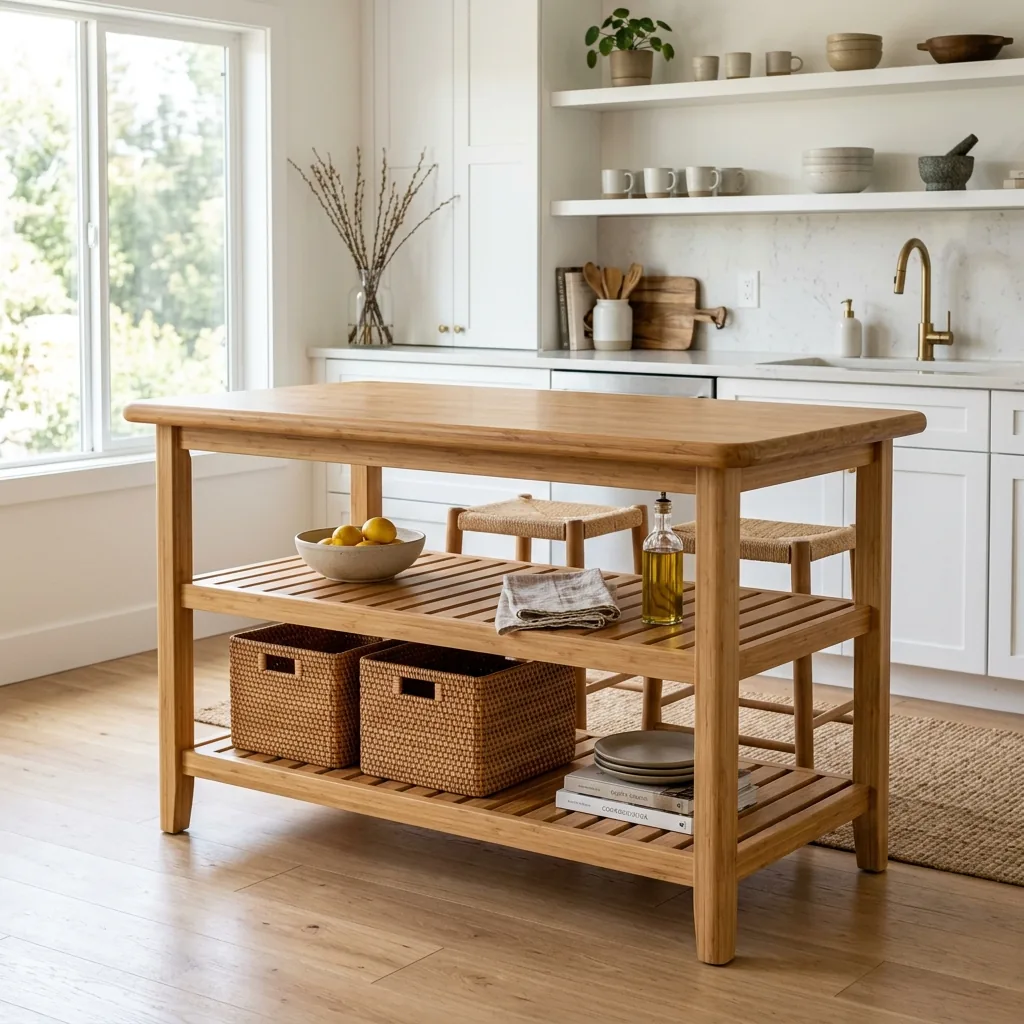
The BirdRock bamboo island is the sustainable choice: bamboo is a grass that regrows in 3–5 years versus 30–80 years for hardwood trees. The surface hardness is equivalent to red oak at 1,380 Janka — harder than pine, softer than maple, suitable for daily prep.
Footprint: 90 × 45 cm. Two open shelves. Fixed four-leg frame. The natural bamboo colour pairs well with minimalist and Japandi interior styles. Price: $159.
- Real-World Application: For renters who prioritise sustainable materials and minimalist aesthetics. The bamboo finish is the lightest, most natural-looking surface on this list.
- Risk & Safety Notes: Bamboo resists moisture better than hardwood but is not waterproof. Dry spills immediately — standing water on bamboo joints causes delamination.
- ✅ Pros: Sustainable material, naturally moisture-resistant, clean Japandi aesthetic
- ❌ Cons: No drawers, lighter colour shows stains more visibly than dark wood
Fixed Legs vs Casters: Which Should You Choose?
Freestanding (fixed legs) versus rolling (casters) is a practical decision, not an aesthetic one:
Choose fixed legs if: you use the island as your primary prep surface daily and stability under pressure matters. Fixed legs don’t roll during chopping, kneading, or mixer operation. They also cost less at the same quality tier.
Choose casters if: your kitchen doubles as a dining space or party area and you need to reconfigure the room. Casters also work better in shared kitchens where two people need to cook simultaneously.
The hybrid approach: buy a fixed-leg island for the kitchen, add a small rolling cart for supplementary storage that moves when needed.
Safety Disclaimer
Freestanding kitchen islands are heavy — 25–58 kg depending on model. Use two people to move. Never drag across tile floors without lifting slightly — dragging without rubber leg protectors scratches tile permanently. Check leg protectors before every floor contact.
