
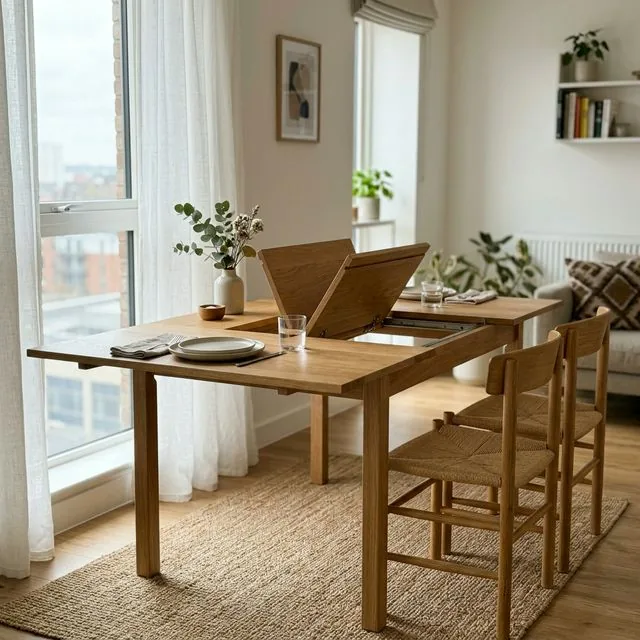
The best dining table for renters is not a permanent fixture. It’s a piece of furniture that earns its square footage every day, folds away when you have people over, and leaves zero damage when you move out in 18 months. That eliminates about 90% of what’s sold as a “dining table.” Tight on room? See our space-saving dining tables.
I’ve gone through four dining tables in three apartments. Here is what actually works in a studio or small one-bedroom — six picks, all under $200, all no-installation. The right table helps a studio feel like home.
Table of Contents
- What Makes a Renter Dining Table Different
- The 6 Best Dining Tables for Renters
- Size Guide: How Much Space You Actually Need
- My Experience with Renter Dining Tables
- When NOT to Get a Dining Table
- FAQ
What Makes a Renter Dining Table Different {#what-makes-it-different}
A homeowner buys for permanence. A renter buys for the next 12–24 months and the move after that. The constraints are different:
No drilling. Wall-mounted fold-down tables are beautiful. They also require 4–6 wall anchors and leave damage you’ll lose your deposit over. Everything on this list is freestanding.
Foldable or compact profile. In a studio, a 36×36 inch table occupies the same footprint as a small sofa when not in use. If it doesn’t fold or compress, it’s a permanent obstacle. In a one-bedroom with a dedicated dining area, you have more flexibility — but compact still wins.
Under $200. You’re not buying an heirloom. You’re buying a functional surface for the time you’re in this apartment.
Moveable. You’ll rearrange your layout. You’ll need to push it against the wall when you have six people over. Lightweight matters.
The 6 Best Dining Tables for Renters {#the-6-best}
1. IKEA LINNMON / ADILS — Best Value Under $60
$50–$60 | 59×29.5 inches | No tools needed
The LINNMON table top ($15) plus four ADILS legs ($4 each) is the most widely used budget dining setup in small apartments, and for good reason: the result is a 59-inch wide, 29.5-inch deep surface at exactly 29.5 inches tall — standard desk height, acceptable dining height. Seats four in a pinch, two comfortably.
The ADILS legs thread directly into the table top without tools. No drill, no hardware beyond the included bolt. Assembly takes 10 minutes. When you move, it disassembles flat.
Downside: the laminate surface marks easily if you don’t use placemats. And the LINNMON is a hollow-core torsion box — it’s not a cutting board. But as a dedicated eating surface with a 59-inch span for under $60, nothing competes.
2. Giantex Folding Dining Table — Best Space-Saver ($80–$100)
$85–$100 | 47×35.5 inches (folded: 9 inches wide) | Seats 4
The Giantex folds completely flat — 9 inches wide when closed, stores behind a door or in a closet. Open, it’s a 47×35.5-inch surface with fold-out legs that lock into place. Seats 4 adults adequately.
This is the pick for studios under 30 sqm where every inch matters. The table only occupies floor space when you’re eating. Hosting 4 people? Pull it out, lock the legs, done. Dinner finished? 90 seconds to fold and slide it back.
The folding mechanism is sturdy — the legs cross-brace when extended and don’t wobble under normal use. Surface is wood-grain laminate, not solid wood, but clean and neutral enough to not look like a camping table.
3. Walker Edison Urban Industrial Table — Best Aesthetic ($150–$180)
$150–$180 | 48×30 inches | Seats 4
The Walker Edison has the look of a coffee shop — steel frame, wood-top surface, slim profile. At 48×30 inches and a visual weight that reads “furniture” rather than “flat-pack,” it’s the pick if your studio is visible from your entryway and aesthetic matters.
No installation — four legs thread on. At 30×48 inches, it’s compact enough for a one-bedroom dining zone and large enough to work as a desk when you’re not eating on it (the dual-purpose play that makes sense in rented spaces).
Weight: 45 lbs — heavier than the folding options but still moveable solo.
4. IKEA NORDEN Gateleg Table — Best for Hosting ($120–$150)
$130–$150 | Open: 89×35.5 inches | Folded: 10×35.5 inches | Seats 4–6
The NORDEN gateleg is the best solution for renters who occasionally need to seat 6. Closed, it’s a 10-inch wide console table. One leaf extended: seats 4. Both leaves extended: seats 6 at 89 inches wide. Solid pine, not laminate — the one table on this list that looks genuinely substantial.
The gateleg mechanism has been around for 200 years for good reason. It’s reliable, the leaves stay up without wobbling, and solid pine handles heat and moisture better than engineered wood.
Downside: at 45 lbs it’s the heaviest option here. The solid construction means you’ll need a second person to move it across the room. Also, IKEA stock varies by location — confirm availability before planning around it.
5. Mainstays Small Space Dining Table — Best Under $50 ($40–$55)
$40–$55 | 36×22.5 inches | Seats 2
For a true studio where you eat at a two-person table or you don’t eat at a table at all, the Mainstays small-space table is 36 inches long, 22.5 inches deep, 29.5 inches tall. It seats two adults without crowding.
At $40–$55 and 22 lbs, it’s the lightest and cheapest dedicated dining surface available. The engineered wood surface is basic but functional. No wobble, standard assembly (included hardware, 20 minutes).
This is the pragmatic pick: you’re not building a dining room, you’re solving the “where do I eat that isn’t my couch or my bed” problem for minimum spend.
6. Nathan James Arya Side Table (Tall Version) — Best Bar-Height Counter ($90–$110)
$90–$110 | 23.6×23.6 inches | Seats 2 at bar height
If your studio has bar stools at a kitchen island or counter, a bar-height table converts the kitchen bar area into a dining zone without any additional floor space. At 23.6 inches square, the Nathan James Arya (counter-height version, 35–36 inches tall) slots into a corner or against the island and seats 2 on bar stools.
This is the space efficiency play — you’re using counter height (which you already have) to create a dining surface that occupies almost no additional floor space. The round table at 23.6 inches is small enough that a single bar stool tucks completely under when not in use.
Size Guide: How Much Space You Actually Need {#size-guide}
| People | Minimum Table Size | Minimum Clearance Per Side | Room Footprint Needed |
|---|---|---|---|
| 2 | 36×22 in | 30 in | ~9 sq ft total zone |
| 4 | 48×30 in | 36 in | ~20 sq ft total zone |
| 4–6 | 60×35 in | 36 in | ~28 sq ft total zone |
“Total zone” = table footprint + chair clearance on all sides. In a 35 sqm studio, a 4-person dining zone claims 20 sq ft — that’s about 8% of your total floor plan. Not trivial.
If you’re below 30 sqm, a 4-person folding table used only when needed is more practical than a permanent 4-person table.
My Experience with Renter Dining Tables {#my-experience}
My studio in Chicago is 38 sqm — the kitchen runs along one wall, the living zone takes up the rest. I spent 8 months eating on a LINNMON + ADILS setup pushed against the wall: 59 inches wide, I used one end as prep space and the other end for eating. This is a legitimate strategy if you’re solo or paired up — you lose the kitchen island vs. dining table distinction and just have “a large surface that does multiple things.”
The problem came when I started working from home full-time. The LINNMON that worked as a dining table when I ate dinner on it at 7pm became the desk that had to be cleared every time I wanted to eat. At that point I switched to the Giantex fold-flat table for eating — folded during the workday, unfolded for meals. The 9-inch folded width stores behind my bedroom door.
What I didn’t anticipate: the fold-and-unfold ritual adds about 90 seconds to every meal. That sounds minor. After 6 months it’s genuinely annoying. My current setup — the fold-flat as a backup, LINNMON as the always-out desk/dining hybrid — is the compromise that actually works.
Lesson: a permanent table that does two things (eating + working) often beats two specialized tables that each do one thing perfectly.
When NOT to Get a Dining Table {#when-not-to}
You have under 25 sqm. A dining table in a micro-studio (under 270 sq ft) typically makes the space feel like a maze. An island with bar stools or a fold-down wall ledge achieves the same function without the footprint.
You eat at your desk 90% of the time anyway. If your work desk is already in the main room and you’re never going to clear it for dinner, the “dining table” is wishful thinking. Add a good desk chair and a monitor arm instead.
You’re leaving in under 6 months. A foldable table is fine. Don’t over-invest.
For kitchen island options that double as eating surfaces, the kitchen island for studio apartment guide covers compact rolling islands that work as both prep space and breakfast bar.
