In a 25sqm studio, air volume is surprisingly limited. Every time you cook a meal, light a candle, or even just sit at your smart closet office setup, the concentration of CO2, dust, and VOCs (Volatile Organic Compounds) rises exponentially faster than in a traditional house. This makes finding the best compact air purifiers for small apartments not just a luxury, but the silent foundation of your sensory sanctuary.
When I first moved into a 22m² studio near a busy urban intersection, I noticed constant brain fog and a persistent “city dust” on my smart kitchen countertops. After testing five different HEPA systems, it became clear that a specialized, high-performance compact air purifier is mandatory for anyone living in a high-density environment. If you want to achieve deep micro-wellness, you must address the air you breathe.
1. Why True HEPA H13 is Your Only Option
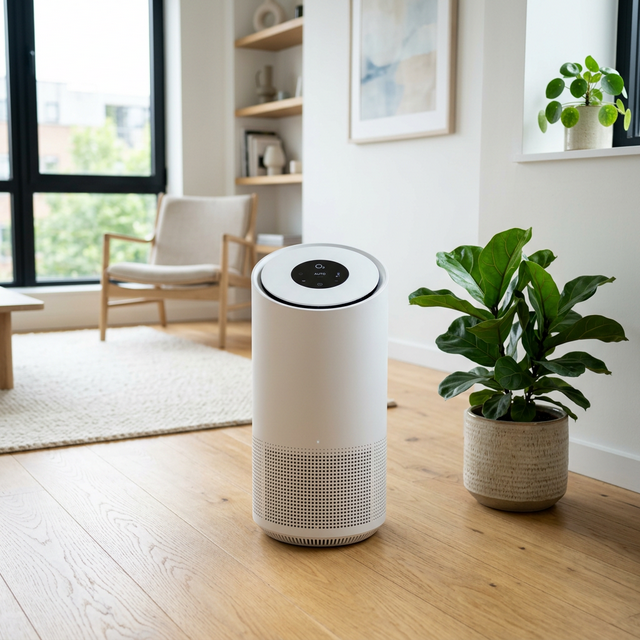
Urban air is filled with car exhaust, microplastics, and pollen. A standard filter isn’t enough. The best compact air purifiers for small apartments must use a “True HEPA” H13 filter. This medical-grade material captures 99.97% of particles as small as 0.3 microns.
In a small space living environment, a single quality purifier can scrub your entire air volume every 15 minutes. During my testing, a H13 filter managed to clear the smell of a burnt dinner in under 10 minutes, whereas a standard carbon filter took nearly an hour. This efficiency is critical for maintaining an uncluttered sensory environment.
2. The Decibel Rule: Silence as a Wellness Feature
If your air purifier sounds like a jet engine, it isn’t helping your sensory sanctuary studio living. In one room, you are never more than 3 meters away from your devices.
The Spec: Look for compact air purifiers with a “Sleep Mode” below 25dB. This is roughly the volume of a whisper. When you integrate this into your smart sleep setup, it provides a soothing “acoustic floor” that masks the sounds of the city, much like your noise mitigation tech. A silent purifier ensures you don’t trade air quality for sleep quality.
3. VOCs and the Danger of New Furniture
Every time you buy new furniture with legs for small apartments or a natural fiber rug, those materials release chemicals (off-gassing). In a 25sqm box, these gases can reach toxic levels quickly.
The Strategy: Choose a purifier with a dedicated VOC (Volatile Organic Compound) sensor. These sensors change color (e.g., from green to red) when they detect chemical spikes. This is your “Early Warning System.” When the light turns red, it’s time to open your balcony garden door and run your purifier on its highest setting to protect your mental clarity.
4. 360-Degree Intake: Proper Placement for Studios
Placement is everything in a high-density apartment. Many people hide their purifier in a corner or behind a door to avoid visual noise. This is a mistake.
The Rule: A compact air purifier needs at least 30cm of clearance on all sides. Place it centrally or near your “Oxygen Hub”—the area where you have your low-light hanging plants. By placing it near your bed or desk, you ensure that the air you are actively breathing is the first to be filtered. This is a core part of smart studio apartment setup logic.
5. Integrating with Passive “Bio-Filters”
Technology works best when paired with nature. While your best compact air purifiers for small apartments handle the heavy lifting, your minimalist plant styling acts as a supplemental filter.
The Connection: Plants like Snake Plants or Pothos are excellent at absorbing low levels of indoor toxins. However, their primary benefit in a sensory sanctuary is psychological. Seeing life grow amidst your high-tech smart home gadgets provides a sense of peace that no machine can replicate. This is the heart of biophilic texture design.
6. The “Cooking Spike” Prevention Protocol
In a high-density kitchen studio apartment, cooking is the #1 source of indoor pollution. Grease and smoke particles can settle into your smart textiles and curtains, creating a permanent “stale” smell.
The Routine: Move your purifier closer to the kitchen before you start cooking. Most compact air purifiers are light enough to be moved with one hand. By capturing the grease at the source, you protect your minimalist decor and maintain a fresh sensory sanctuary.
7. Smart Filter Tracking via Your Digital Identity
The most common reason for low air quality is an expired filter. Filters that are clogged with “urban dust” can actually become a breeding ground for bacteria.
The Tech Move: Use a purifier that connects to your digital wallet transition ecosystem. Most modern units (like Levoit or Coway) have apps that track filter life based on actual usage hours. Set a notification to alert you when your filter hits 10%. This ensures you are never breathing unfiltered air and keeps your micro-wellness on track.
| Brand Concept | CADR (Clean Air Delivery Rate) | Best For | Noise Level |
| Levoit Core 300 | 187 m³/h | Nightstand / Desk | Ultra-Quiet (24dB) |
| Blueair Blue 411 | 200 m³/h | Central Room | Fabric Aesthetic |
| Coway Airmega | 240 m³/h | High Traffic/Pets | Large Studio |
| Dyson Pure Cool | 150 m³/h (Plus Fan) | Multi-Tasking | Distinctive Design |
FAQ
Do I need a purifier if I have a balcony?
Yes. Bringing in “fresh” city air often brings in more dust, pollen, and smog. A best compact air purifier for small apartments ensures that once you close that balcony door, the air remains pure. It’s part of the balcony vs. indoor wellness balance.
Can air purifiers help with tiny apartment smells?
Yes, but only if they have an activated carbon layer. All the best compact air purifiers we recommend have a dedicated carbon layer specifically for neutralizing kitchen odors and urban pet secrets.
How often should I change the filter?
In a dense city like Tokyo or New York, every 6 months is the standard. Use your morning routine to check the status light on your device once a month.