
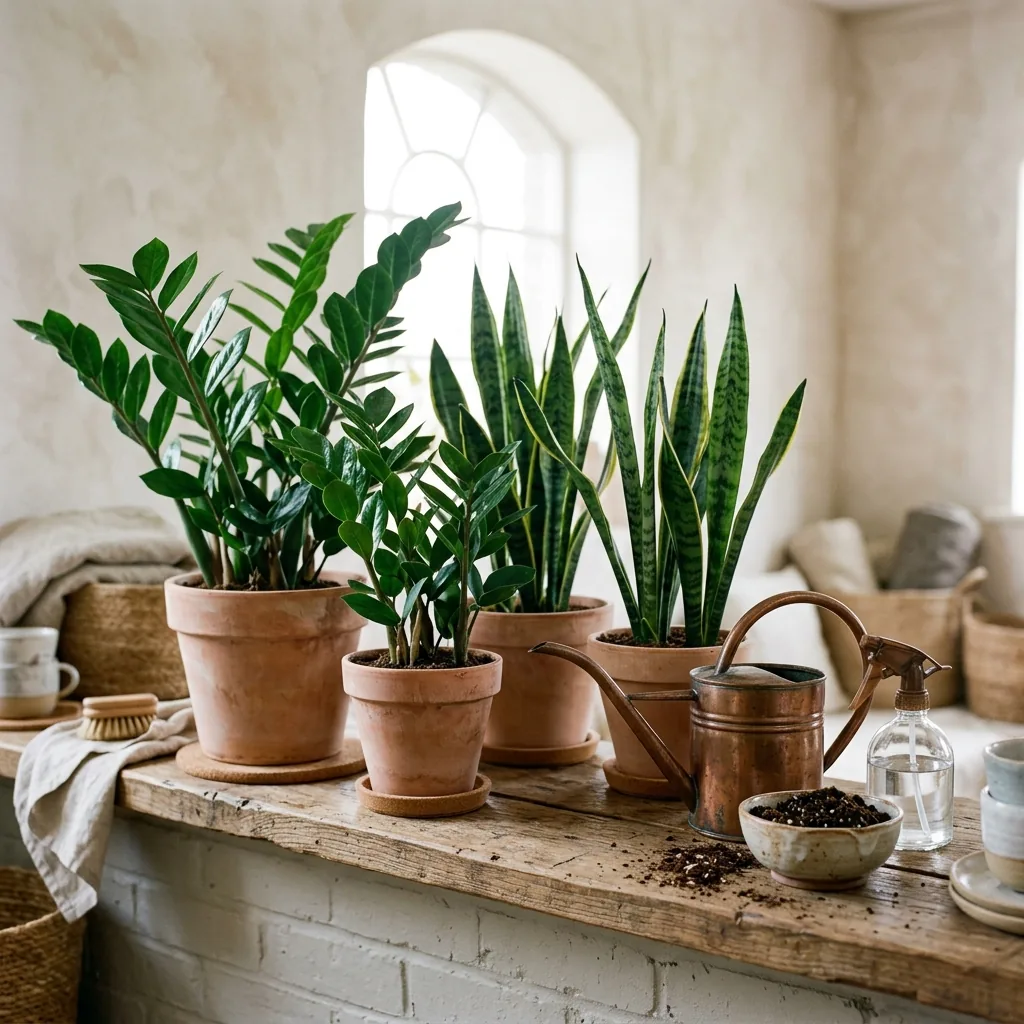
Millennial and Gen-Z urban renters have transformed their tiny apartments into sprawling, vibrant indoor jungles. However, maintaining 40 thriving Monsteras and Calatheas inside a fourth-floor walk-up requires a staggering, hidden volume of single-use plastics. From the thick, unrecyclable nursery pots to non-biodegradable synthetic potting soils, conventional horticulture is surprisingly toxic to the environment. If you consider yourself eco-conscious, you must rapidly implement a strict system for low waste indoor plant care. You can learn more about organic composting methods at the EPA’s official composting site. Extend it to a low-waste bathroom routine.
You do not need to abandon your massive plant collection to reduce your footprint. Transitioning to a sustainable indoor garden simply requires rejecting the convenience of the garden center and mastering the art of circular biology directly inside your apartment living room. If you want to start composting, check out our guide on how to start apartment composting without smell.
In this guide, we break down the 7 fundamental rules of low waste indoor plant care. You will learn to upcycle your trash, brew your own nutrients, and eliminate the plastic pipeline feeding your urban jungle.
1. Ditch the Plastic Nursery Pots
Every single, beautiful indoor plant you purchase at a big-box hardware store or boutique plant shop starts its life constrained inside a flimsy, black or green plastic “grower’s pot.” These pots are manufactured from low-grade, mixed plastics that municipal recycling centers completely flat-out reject.
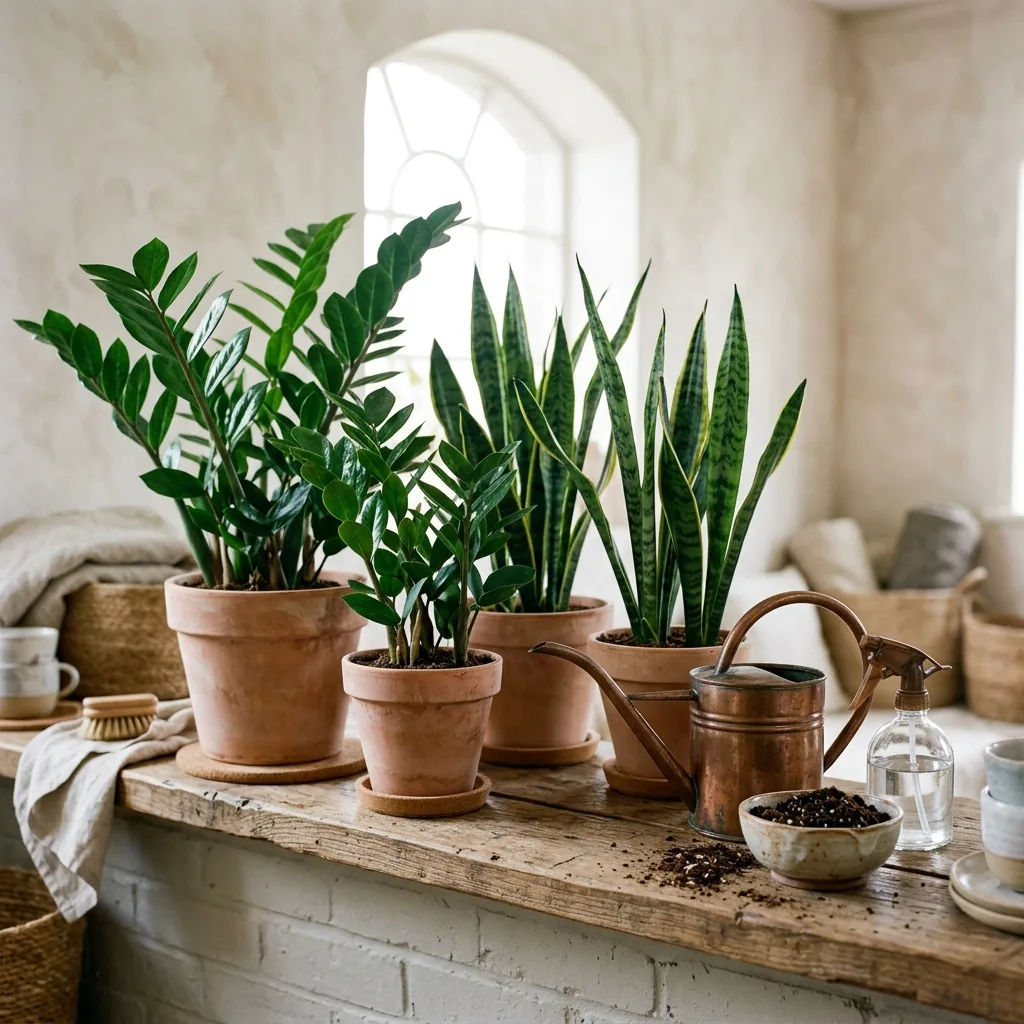
The first rule of low waste indoor plant care is to completely break your dependency on plastic housing. The moment you bring a new tropical plant home and allow it to acclimate to your apartment’s humidity, you must radically repot it directly into an unglazed terracotta clay pot or a heavy glazed ceramic planter boasting a massive drainage hole. If you absolutely require a plastic insert for deep watering, save the original nursery pots from your first five plants and wash them vigorously with dish soap. Hoard them like gold, reusing the exact same black inserts for decades as you constantly rotate and up-pot your growing collection.
2. Brewing Your Own Botanical Fertilizer
Those expensive, bright blue or neon green liquid fertilizers dominating the gardening aisle are synthesized in massive chemical factories and shipped across the country in thick, heavy plastic jugs that consist primarily of wasted water weight.
You can synthesize highly potent, organic nitrogen and potassium directly on your tiny apartment balcony using kitchen scraps. Do not buy plastic bottles. Master the art of brewing “compost tea” or botanical fertilizer. Save the skins of your organic bananas, wilted spinach, and crushed eggshells in a large glass mason jar. Fill the jar with distilled water, seal it loosely, and let it ferment aggressively in a dark cupboard for three weeks. When you finally strain the foul-smelling brown liquid, you possess a nutrient-dense, hyper-bioavailable organic fertilizer exactly equal to the $20 commercial synthetic bottles. Dilute it 10-to-1 with fresh water to scorch your plants into massive growth. Try a hydroponic mason jar garden.
3. The Terracotta “Olla” Watering System
Leaving for a two-week vacation often results in dead, crispy ferns. The modern solution is buying cheap glass or plastic “self-watering globes” that clog with wet soil and crack easily, invariably ending up in the apartment trash chute.
A core principle of low-waste indoor plant care involves returning to ancient, zero-plastic agricultural technology. Do not buy plastic globes. Implement the “Olla” system. An olla is a simple, unglazed terracotta vessel or spike planted deep into the soil next to the root ball. You fill the hollow vessel with heavy water. Because unglazed clay is intensely porous, the water slowly weeps through the walls of the vessel into the dry soil exactly as the roots demand it through capillary action. It is an infinitely reusable, highly precise, biodegradable watering logic.
4. Mixing Your Own Soil Amendments
The massive, heavy plastic bags of “premium indoor potting mix” sold at the store are frequently padded with cheap, un-sustainable peat moss (which destroys ancient bog ecosystems when mined) and synthetic styrofoam pearls designed to mimic perlite.
You must seize control of your soil microbiology. Stop buying pre-mixed, heavily plastic-wrapped dirt. Source bulk ingredients locally if possible. If you must buy in plastic, purchase the massive, industrial-sized compressed bricks of coconut coir (a renewable byproduct of the coconut industry) and massive bags of horticultural pumice (a natural volcanic rock providing drainage). You rehydrate the tiny bricks of coir in your bathtub, blending in the pumice and your own worm compost. You create a hundred pounds of elite, airy, sustainable soil while only generating three small plastic wrappers.
5. The “Bottom Watering” Submersion Hack
Pouring water violently over the top of the soil in a plastic nursery pot inevitably channels the water down the sides of the root ball, running straight out the drainage holes and completely bypassing the hydrophobic center of the soil. This forces you to water five times a week, wasting massive amounts of municipal water.
Conserve water aggressively by practicing the “bottom watering” sub-irrigation method. Fill a large, shallow metal tray (like an old baking sheet) or plug your kitchen sink with three inches of tepid water. Place your heavy terracotta pots directly into the water. Allow the porous soil to deeply, slowly wick the moisture upwards against gravity for 45 minutes. The plant becomes saturated to its absolute core, drastically extending the time required between waterings.
6. Sourcing Plants from Local Propagators
The carbon footprint of driving a massive, climate-controlled semi-truck across the entire continent, delivering an exotic Monstera Thai Constellation from a mega-greenhouse in Florida to a tiny apartment in New York City in December, is staggering.
The heart of low-waste indoor plant care is engaging with your hyper-local plant community. Stop buying plants from massive chain stores. Instead, join local neighborhood Facebook groups or Reddit plant-swap communities. When your neighbor prunes their massive Pothos vine, they simply hand you three small, rooted cuttings wrapped in a damp paper towel. You propagate them in a glass jar of water on your windowsill. The carbon footprint of acquiring this new, vibrant plant is absolute zero.
7. Natural Pest Control (The Neem Oil Emulsion)
When a devastating infestation of spider mites or fungus gnats attacks your indoor jungle, your first instinct is to buy a heavy plastic spray bottle of toxic, systemic chemical pesticides. These sprays coat your furniture, poison the air quality of your micro-apartment, and generate massive plastic waste. Plants also optimize air quality.
You must combat biological pests with organic warfare. Do not buy pre-mixed sprays. Purchase a single, small glass bottle of 100% cold-pressed Neem Oil. Neem is a natural, highly potent insecticidal oil extracted directly from the seeds of the neem tree. In a reusable glass spray bottle, violently mix one teaspoon of raw Neem oil, one teaspoon of pure castile liquid soap (acting as an emulsifier), and warm water. Spraying this potent mixture suffocates the mites and disrupts their hormonal life cycle entirely, neutralizing the threat without introducing a drop of synthetic poison into your living room.
Evaluating Sustainable Plant Habits
Use this chart to prioritize your transition away from the toxic, highly commercialized garden center:
| Plastic/Waste Item | Low-Waste Alternative | Upfront Cost | Difficulty |
| Nursery Plastics | Glazed/Unglazed Terracotta | High | Low |
| Synthetic Bottles | Banana/Compost Tea Brew | Free | Medium |
| Watering Globes | The Terracotta “Olla” | Low | Low |
| Pre-Mixed Soil | Bulk Coir & Pumice DIY | Low (Bulk) | High (Messy) |
Safety Disclaimer: Do not spray heavily concentrated Neem oil emulsions on delicate, thin-leaved plants (like a Maidenhair fern) while they are sitting directly in blazing, intense sunlight. The heavy oil will magnify the UV rays and violently scorch the foliage into crispy black ash. Spray only in the evening or in dense shade.
Conclusion
Your apartment jungle is not truly green if it is sustained by a permanent pipeline of thick plastic bottles, synthetic chemicals, and cheap disposable pots. By mastering these strict rules for low-waste indoor plant care, you align your actions with the aesthetic of your home. You shift from being a passive consumer of commercial garden products to an active creator of biological soil, fertilizer, and plants.
Ready to cut the cord? Do not throw out your banana peel tomorrow morning. Drop it into a mason jar of water and start brewing your first batch of ultra-potent, completely free organic liquid fertilizer.
FAQ
Where do I safely dispose of the dozens of plastic nursery pots I already own?
Never throw them in your apartment’s blue recycling bin; the automated laser scanners physically cannot read black plastic, and they will be diverted to the landfill. The only ethical disposal method is vigorously washing them and returning them directly to a local, independent plant nursery. Most small growers gladly accept and reuse old staging pots to lower their overhead costs.
Doesn’t banana peel compost tea smell absolutely atrocious in a small studio?
Yes. The anaerobic fermentation of biological matter smells exactly like a swamp. You must tightly screw the lid onto the mason jar and store it deep under your kitchen sink. Only open the jar when you are actively diluting it outside on your balcony or heavily ventilating the apartment.
Can I reuse the exact same potting soil if a plant suddenly dies?
If the plant died of severe thirst or sunburn, yes, the soil is sterile and highly usable. However, if the plant died a slow, agonizing death from root rot (overwatering), the soil is heavily infected with aggressive fungal pathogens. It must be thrown away or violently sterilized in an oven before reuse.
