
The dream of cultivating fresh, organic vegetables usually dies the moment you sign a lease for a basement studio or an inward-facing high-rise unit. Without direct, blazing sunlight pouring through expansive, south-facing glass, traditional potted tomato plants become spindly, yellow, and completely barren. However, our comprehensive growing food windowless apartment guide proves that producing food is entirely possible using profound advancements in artificial botany. You just have to completely abandon the concept of sunlight. For scientific backing on LED efficacy, see the USDA research on indoor LED framing.
When you remove the sun from the equation, you must become the sun. You must engineer a highly controlled, closed-loop micro-climate using precise LED spectrums and automated hydroponics. You trade the unpredictability of outdoor weather for the absolute supremacy of indoor, technological agriculture. We also recommend reading our breakdown of the best LED grow lights for a deeper hardware understanding.
In this decisive, 7-step guide, we reveal exactly how to conquer the darkness and succeed as a master of the growing food windowless apartment guide, transforming a sterile walk-in closet or a dark kitchen corner into a hyper-productive urban farm.
1. The Full-Spectrum LED Sun Replacement
A cheap, $15 fluorescent “plant bulb” from a hardware store will keep a low-light houseplant (like a pothos) alive, but it lacks the sheer photosynthetic horsepower required to force a pepper or lettuce plant to produce actual food.
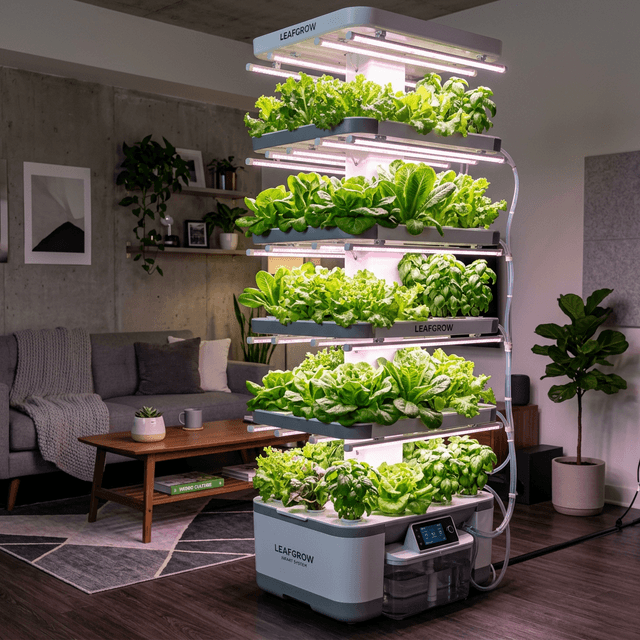
The absolute foundation of growing food in a windowless apartment is a high-output, full-spectrum LED quantum board (like a VIPARSPECTRA or Spider Farmer). These incredibly thin, passively cooled aluminum panels consume very little electricity but blast an intense, blinding array of specific red, blue, and white light wavelengths. You hang this panel 30 centimeters directly above your crop. You connect it to a heavy-duty smart plug, programming an automated “sun” that turns on at 6:00 AM and shuts off precisely at 10:00 PM. No clouds, no winter shadows—just 16 perfect hours of daily peak summer light.
2. DWC Hydroponics (Deep Water Culture)
Dragging 50 pounds of messy, bug-infested potting soil up four flights of stairs into a pristine, tiny apartment is a critical mistake. Soil indoors breeds fungus gnats and requires massive, heavy pots that consume your limited floor space.
To maximize yield in a 1-square-meter footprint, you must grow hydroponically using Deep Water Culture (DWC). Buy an opaque plastic storage tote (like a heavy-duty black container). Cut holes in the lid, insert net cups filled with clay pebbles, and suspend your plant roots directly into the dark, empty reservoir below. You fill the tote with water laced with liquid hydroponic nutrients. Because the roots are constantly submerged in pure, dissolved food, they grow explosively—three times faster than in soil.
3. The Crucial Air Stone Oxygenation
A major novice mistake in indoor hydroponics is drowning the plants. If you simply submerge roots in stagnant water inside a dark bucket, the roots will quickly consume all the dissolved oxygen, suffocate, rot, and kill the plant within days, emitting a foul swamp odor into your studio.
You must artificially breathe life into the water. Purchase a $10 dual-outlet aquarium air pump and attach two porous blue air stones via a silicone tube. Drop the air stones directly into your DWC nutrient reservoir. The pump runs 24/7, aggressively boiling the water with millions of tiny oxygen bubbles. This hyper-oxygenated environment prevents root rot completely and turbo-charges the nutrient uptake, making growing food in a windowless apartment highly sterile and wildly productive.
4. Mastering Microgreens (The 10-Day Harvest)
If setting up a massive LED panel and a bubbling water reservoir feels intimidating, or if you literally only have one empty shelf above your microwave, you must pivot exclusively to microgreens.
Microgreens (like radish, broccoli, and sunflower shoots) are the ultimate urban survival crop. You do not need deep soil or intense, high-wattage lights. You simply spread the tiny seeds densely across a shallow, flat tray lined with a wet hemp mat or coconut coir. Place the tray under a cheap, low-wattage LED strip light. Because you are harvesting the plant when it is only 5 centimeters tall, the entire grow cycle—from dry seed to a spicy, nutrient-dense salad green—takes less than 12 days. It is the fastest, lowest-barrier food production system available.
5. The Cultivation of Gourmet Mushrooms
Mushrooms completely defy the laws of traditional gardening. They contain no chlorophyll, require absolutely zero sunlight to grow, and thrive in the cool, humid, dark corners of a ground-floor or basement apartment that would instantly kill a tomato plant.
Buy a pre-colonized “fruiting block” of Blue Oyster or Lion’s Mane mushrooms from a reputable mycology supplier. This is a solid, white block of sawdust bound tightly together by living mycelium. You slice a two-inch slit in the plastic bag, place the block on a dinner plate on your kitchen counter, and mist the slit with a water bottle three times a day to maintain high local humidity. Within a week, a massive, heavy cluster of expensive, gourmet mushrooms will aggressively explode out of the plastic bag, ready to be harvested for a stir-fry.
6. The Automated Climate (Temp & Humidity Control)
Intense grow lights generate heat, and a bubbling water reservoir constantly evaporates moisture into your sealed apartment. Without an open window to vent this byproduct, your tiny closet grow-space will rapidly turn into a humid, 35°C jungle that breeds aggressive powdery mildew on your lettuce leaves.
You must install a miniature intake and exhaust fan system to cycle the air. Use a small, 100mm inline duct fan connected to a temperature and humidity controller (like an Inkbird). If the tiny digital sensor detects the humidity rising above 60% inside your grow tent or closet, it automatically triggers the exhaust fan, violently pulling the hot, wet air out of the space and replacing it with the cool, dry, air-conditioned ambient air from your living room.
7. The Nutrient Formulation Matrix
When you grow indoors without soil, you literally become God. The plant has absolutely no natural source of nitrogen, phosphorus, or calcium. If you do not provide the exact microscopic mineral ratio needed, the plant starves immediately.
Do not use cheap, chemical “houseplant fertilizer” spikes. You must purchase a professional, multi-part liquid hydroponic nutrient line (like General Hydroponics Flora Series). You use a plastic syringe to measure exact milliliters of “Micro,” “Grow,” and “Bloom” formulas into your water reservoir, following a strict weekly feeding chart based on the exact life stage of the plant. You are not “watering” the plant; you are conducting precise, biological chemistry in your kitchen.
Evaluating Windowless Grow Systems
Choose your indoor farming method based on your available space and budget:
| Grow System | Best Crop | Light Required | Setup Difficulty |
| DWC Hydroponics | Lettuce, Basil | Extreme (Quantum LED) | High |
| Microgreen Trays | Radish, Pea shoots | Low (LED Strips) | Very Low |
| Mushroom Blocks | Oyster, Lion’s Mane | Zero (Ambient light) | Zero |
| Potted Soil | Herbs (Slow growth) | High | Medium (Messy) |
Safety Disclaimer: Hanging heavy, 100-watt metal LED panels above an exposed tank of bubbling water is an extreme electrocution hazard. You must ensure all power strips are securely mounted to the wall above the water line, and everything must be plugged into a GFCI (Ground Fault Circuit Interrupter) outlet that will instantly trip if splashed.
Conclusion
A lack of sunlight is simply an engineering problem. By mastering the fundamentals of growing food in a windowless apartment, you bypass the limitations of your lease. You trade the dirt and unpredictability of nature for the absolute control of a bubbling, LED-lit hydroponic reservoir or the rapid, dark growth of gourmet mushrooms directly on your kitchen counter.
Ready to harvest your first apartment crop? Order a cardboard mushroom fruiting block tonight, place it in the darkest, coolest corner of your kitchen, and prepare to harvest a pound of fresh Oyster mushrooms next week.
FAQ
Will the bright purple grow lights annoy my neighbors or ruin my sleep?
Yes. Intense grow lights will bleed under your door and light up your entire studio like a nightclub. To maintain your sanity, you must purchase a reflective Mylar “Grow Tent” (a fabric closet) to completely contain the blinding light, or place the system inside a dedicated utility closet with a sealed door.
How do I pollinate indoor vegetables if there are no bees?
Leafy greens (lettuce, spinach, basil) do not require pollination because you eat the leaves, not the fruit. However, if you attempt to grow tomatoes or peppers indoors, you must become the bee. When the yellow flowers open, gently vibrate the stem behind the flower cluster with an electric toothbrush for three seconds to physically dislodge the pollen.
Do hydroponic vegetables taste worse than sun-grown, soil-grown vegetables?
No. Taste is entirely dependent on the genetic strain of the seed and the precise nutrient profile of the water. In fact, indoor hydroponic basil is often vastly more tender and flavorful because it has never suffered the stress of intense heat, drought, or insect attacks.
SEO & Rank Math Setup
- Suggested Focus Keyword: growing food windowless apartment guide
- SEO Title: Growing Food in a Windowless Apartment: The Ultimate Guide (2026)
- Meta Description: No sun? No problem. Discover the complete 7-step guide to growing food in a windowless apartment using LED hydroponics, microgreens, and mushrooms.
- Slug suggestion: growing-food-windowless-apartment-guide
- Internal Link Juicer Keywords: growing food windowless apartment guide, indoor gardening without sunlight, hydroponic apartment farm
