
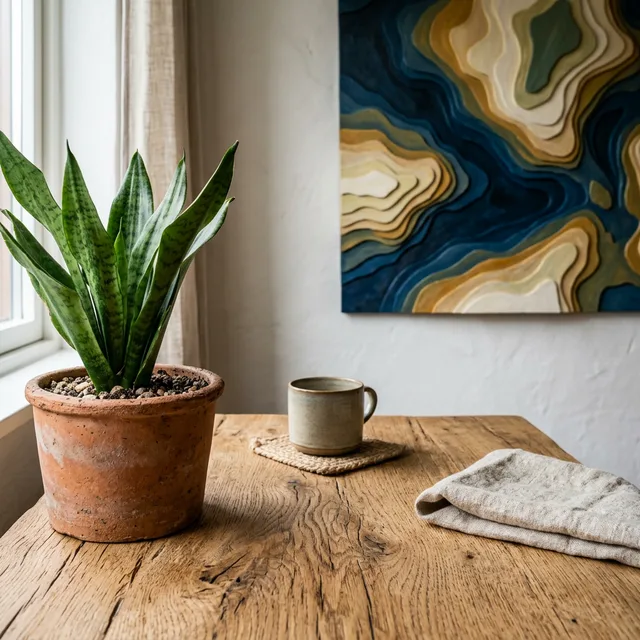
Most people think “biophilic design” just means buying more indoor plants. But in a 25sqm studio, windowsill space is a finite resource, and keeping a jungle alive can become a chore rather than a comfort. True nature integration involves Tactile Biophilia—the practice of using organic textures and raw materials to satisfy our biological craving for the natural world. If you want to achieve high-level biophilic texture design for studios, you have to look beyond the green and focus on the grain.
By layering raw, organic materials into your sensory sanctuary studio living setup, you can reduce baseline cortisol levels and increase “Place Attachment” without adding a single unit of vertical decor clutter. Biophilic design is the “biological foundation” of micro-wellness, turning a sterile 25sqm box into a grounding habitat.
1. The Power of “Raw” Grain Geometry
Artificial surfaces like plastic, white laminate, and glass offer zero sensory stimulation. When you live in a high-density apartment, your brain is perpetually starved of “soft fascination”—the type of visual complexity found in nature.
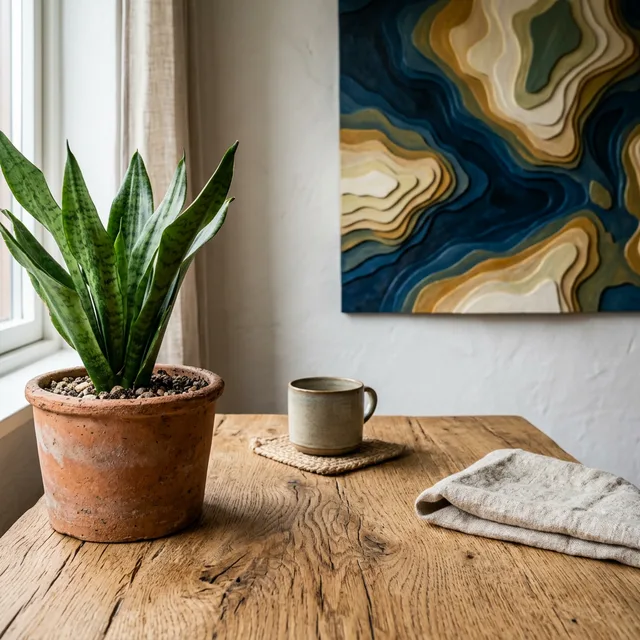
The Hack: When choosing furniture with legs for small apartments, prioritize untreated or lightly oiled wood. The visible grain provides a mathematical complexity (fractals) that our brains find inherently calming. The Tech Move: Use a circadian smart lamp to highlight the texture of the wood at night. The play of light and shadow on organic surfaces mimics the dappled sunlight of a forest. This simple shift in “Visual Architecture” is a core part of creating a sensory sanctuary. Use furniture with legs.
2. Textural Zoning with Natural Fibers
In a one-room studio apartment, you don’t have walls to separate your sleep zone from your workspace. You must use “Tactile Borders.”
The Hack: Use a jute or sisal rug for your entryway landing strip. The “rough” texture signals a transition from the chaotic urban lifestyle to your private home. The Rest Zone: Use raw linen or heavy cotton for your smart sleep setup. These breathable, organic fibers regulate temperature far better than synthetics and provide a grounding physical sensation that supports deep sleep recovery. This is how you use biophilic texture design to “map” your apartment psychologically.
3. “Fractal” Geometry in Large Scale Decor
Nature is made of fractals—patterns that repeat at different scales (like the veins in a leaf or the bark of a tree). Humans have evolved to feel safe in the presence of these patterns.
The Hack: Use large abstract art for small apartments that mimics natural topographical maps or stone veins. This provides what psychologists call “Soft Fascination”—a state where your brain can rest while still being engaged. By covering a flat, industrial white wall with a textured canvas, you eliminate the “box-like” feeling of the micro-studio. This is a primary strategy in managed studio apartment design.
4. Auditory Biophilia: Natural Soundscapes
Biophilic design is a multi-sensory discipline. If you only focus on what you see, you’re missing the psychological power of sound. The Integration: Use your noise mitigation tech to play high-fidelity soundscapes of moving water or bird calls during your 15-minute morning prep.
The Result: This creates a sense of “Acoustic Depth.” It makes your 25sqm room feel like a part of a larger ecosystem, reducing the feeling of confinement. Natural sound masking is a powerful tool for mental health studio design, acting as an invisible bridge to the natural world.
5. Integrating with Living Systems (Beyond the Pot)
Your hydroponic microgreens and smart balcony herb gardens are the “living” layer of your biopedic design. But they shouldn’t just sit alone on a shelf.
The Hack: Cluster your plants near your natural materials. An industrial PVC Lettuce Tower can look harsh, but if you place it against a wooden screen or a raw linen curtain, it becomes a harmonious part of your biophilic system. This “System Integration” is what separates a cluttered apartment from a sensory sanctuary. It supports your minimalist plant styling goals by creating a unified visual story. Build a DIY PVC lettuce tower. Style with minimalist plant styling.
6. The “Sensation Anchor” Ritual
In an increasingly digital wallet transition world, we spend our days touching glass and plastic screens. This “Tactile Isolation” contributes to urban anxiety.
The Hack: Create “Sensation Anchors” throughout your home. A single real wood valet tray on your landing strip or a wool throw on your sofa provides a moment of “sensory grounding” every time you touch it. This is a core part of urban EDC philosophy: the objects you carry and interact with daily should provide a high-quality physical experience.
7. Biological Light vs. Industrial Glare
The final layer of biophilic texture design for studios is how you light those textures. Nature doesn’t have “overhead panels.”
The Hack: Use your circadian lighting for windowless apartments to create “Atmospheric Layers.” Use low-level strips and warm floor lamps to create shadows. Shadows are just as important as light in biophilic design; they provide the “visual air” and mystery that make a small room feel premium. This supports your micro-wellness habits by ensuring your evening environment is low-stress and naturally calming. Add an evening reset habit.
| Biophilic Element | Material Choice | Psychological Impact |
| Touch (Grounding) | Untreated Wood / Jute | Reduction in stress / Safety |
| Sight (Fractals) | [Organic Art](https://urbanmicrotips.com/large-art-paradox-small-apartments) | Soft Fascination / Focus |
| Smell (Olfactory) | Cedar / Pine Oils | Memory / Biological Recall |
| Sound (Acoustic) | Moving Water / Wind | Acoustic Comfort / Depth |
| Lighting (Visual) | [Warm Smart Bulbs](https://urbanmicrotips.com/circadian-lighting-windowless-studio-sunlight) | Circadian Alignment / Calm |
FAQ
Is biophilic design more expensive than standard decor?
Not necessarily. You can start with “Texture Swapping.” Replace one plastic storage bin with a wicker basket, or swap a synthetic pillowcase for raw linen. These small investments in biophilic materials pay dividends in your micro-wellness.
How do I clean organic materials in a small space?
Use natural, zero-waste cleaners. Avoiding harsh chemicals is a key part of maintaining the “Health” of your sensory sanctuary studio living. Harsh bleaches can strip the natural oils from wood and fibers, ruining the tactile benefit.
Can I use biophilic design in a windowless studio?
Yes! It is actually more important in windowless spaces. By using circadian smart bulbs to light your organic textures, you create a convincing illusion of a sun-drenched natural sanctuary, combating “Studio Fatigue.”
