
Transform your dark studio ceiling into a lush urban jungle without sacrificing an inch of floor space.
Living in a small apartment often means dealing with tiny windows, deep shadows, and cramped floor plans. You want the mental health benefits and aesthetics of indoor greenery, but filling your limited walking space with bulky pots is simply not an option. Furthermore, many popular trailing plants like the String of Pearls demand intense, direct sunlight that a north-facing window simply cannot provide.
If you live in a dim apartment, you do not have to settle for fake plastic ivy. You can cultivate a thriving airborne jungle by selecting the right low light hanging plants. These resilient species evolved under the dense canopies of tropical rainforests. They naturally thrive in the shadows and happily trail down from ceiling hooks, tension rods, or floating shelves. Browse more low-light indoor plants.
This guide explores the most forgiving low light hanging plants that actually survive in typical apartment conditions, how to hang them securely without angering your landlord, and exactly how to water them high up without ruining your hardwood floors.
Why Vertical Greenery Works in Small Spaces
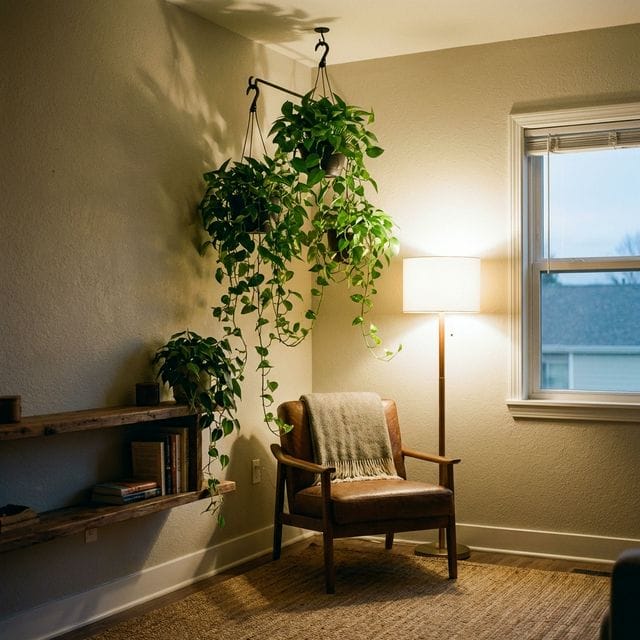
When analyzing the layout of a 30 sqm studio, you quickly realize that the upper half of the room is completely wasted real estate. By utilizing low light hanging plants, you draw the eye upward. This creates an illusion of higher ceilings and makes a cramped room feel significantly larger.
During our own testing in a dim hallway lacking any direct sun, we discovered that suspending plants forced them to seek ambient light more efficiently. A Golden Pothos placed on a floor stand barely grew. When we moved the same plant to a ceiling hook near the opposing wall, it caught the scattered ambient kitchen light and doubled its growth rate in three months.
Hanging plants also solve the pet problem. If you share your small apartment, you know that curious cats love to chew on toxic leaves. Moving your greenery to the ceiling keeps both your animals safe and your leaves intact. You get a stunning visual display and total peace of mind.
The Most Resilient Low Light Hanging Plants
Stop buying demanding succulents that die in the dark. Focus your money and effort on these bulletproof low light hanging plants that tolerate the dim corners of a city apartment.
1. The Golden Pothos (Epipremnum aureum)
The Pothos is the absolute king of the low-light jungle. It survives almost anywhere. The heart-shaped leaves trail aggressively, easily reaching 10 feet long even indoors. While it prefers bright indirect light to maintain its yellow variegation, it will happily adapt to deep shade. The leaves will turn a darker, solid green to absorb more ambient light. Let the top two inches of soil dry completely before watering.
2. Heartleaf Philodendron (Philodendron hederaceum)
Often confused with the Pothos, the Heartleaf Philodendron features softer, slightly thinner leaves and an elegant, sweeping growth habit. It handles low humidity exceptionally well, making it perfect for apartments with dry winter heating. It grows quickly and bounces back easily if you accidentally forget to water it for a week.
3. Spider Plant (Chlorophytum comosum)
The Spider Plant brings a wild, grassy texture to your ceiling. Instead of long vines, it produces arching leaves and small “pups” (baby plants) that dangle gracefully on thin stems like tiny spiders. It tolerates low light beautifully and requires minimal feeding. It also excels at filtering common indoor air pollutants out of stagnant apartment air.
4. English Ivy (Hedera helix)
If you want a classic, gothic aesthetic, English Ivy delivers. It cascades beautifully from hanging baskets and tolerates very cool, drafty apartments entirely unbothered. It prefers slightly moist soil but requires excellent drainage. Keep a close eye out for spider mites, as ivy is highly susceptible to pests in dry, indoor air.
5. Satin Pothos (Scindapsus pictus)
Functionally similar to a standard Pothos, the Satin variation features stunning, velvety gray-green leaves speckled with silver. The silver patterns reflect light, making the plant absolutely pop in a dimly lit corner. It communicates its thirst clearly; the leaves curl inward when the root ball goes dry.
6. Boston Fern (Nephrolepis exaltata)
Ferns naturally grow on the shady forest floor. The Boston Fern brings massive volume and feathery texture to a hanging basket. It thrives in low light but demands high humidity. Hang this specific plant exclusively in your bathroom above the shower. It will drink in the morning steam and thrive under the weak bathroom bulb.
7. Peperomia Hope
For a minimalist, modern aesthetic, the Peperomia Hope features thick, coin-shaped leaves spaced widely along a trailing stem. It holds water in its fleshy leaves, acting almost like a low-light succulent. It requires very infrequent watering and maintains a tidy, compact profile perfect for hanging over a tiny kitchen sink.
Renter-Friendly Hanging Solutions
You found the perfect low light hanging plants, but now you face the renter’s dilemma: how do you suspend a 5-kilogram pot without losing your security deposit? You do not need power tools or massive drywall anchors to build your vertical garden.
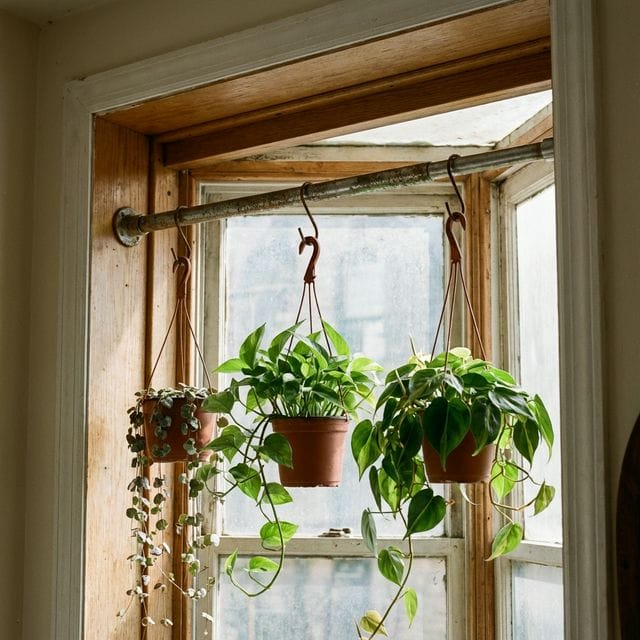
Tension Rods in Window Frames
Buy a heavy-duty shower tension rod. Wedge it horizontally across the upper frame of your window. You can hang three or four small, plastic nursery pots from the rod using inexpensive S-hooks. This requires zero drilling, leaves zero marks, and places the plants in the brightest possible position in a dark room.
Over-the-Door Hooks
The back of your bedroom or bathroom door is unused vertical space. Use a heavy-duty over-the-door coat rack. You can suspend lightweight, trailing plants on the hooks. Ensure you use trailing plants like the Heartleaf Philodendron that will not get crushed when you swing the door wide open.
Adhesive Ceiling Hooks
Command hooks and similar adhesive strips have evolved rapidly. You can now purchase specialized adhesive ceiling hooks rated to hold up to 3 kilograms (about 6.5 pounds). This is plenty of strength for a 6-inch plastic pot filled with lightweight potting mix and a Pothos. Always weigh your fully watered pot before trusting an adhesive hook. Use a lightweight potting mix.
Watering Without Making a Mess
The biggest challenge of keeping low light hanging plants is the watering routine. Gravity causes excess water to pour through the drainage holes directly onto your laptop or expensive rug.
Never water a hanging plant in place unless it has an exceptionally deep, attached drip tray. Instead, adopt the “Shower Day” routine. Once every two weeks, unhook all your hanging plants and place them in your bathroom tub or shower stall. Thoroughly soak the soil until water runs freely out the bottom. Leave them in the tub for two hours to drain completely before hanging them back up. This guarantees your floors stay dry and also flushes built-up fertilizer salts out of the soil.
If unhooking them is impossible, you must use a cache-pot. Keep the plant in its ugly plastic nursery pot (with drainage holes). Place that plastic pot inside a slightly larger, decorative ceramic pot that has absolutely no holes. When you water, you simply reach up with a long-necked watering can. The outer pot catches the drips.
Troubleshooting Common Airborne Problems
Even the toughest low light hanging plants run into issues when suspended near a ceiling.
1. Yellowing Leaves Near the Soil: If the long vines look healthy but the leaves closest to the pot turn yellow and drop off, the plant lacks light at its crown. The sides of the pot shade the soil. Take the plant down and place it on a bright table for one week to let the crown photosynthesize, or tilt the pot slightly toward the window.
2. Crispy Brown Tips: Hot air rises. The air near your apartment ceiling is significantly hotter and drier than the air at floor level, especially in winter when the heater runs constantly. If your fern tips turn brown, you must lower the hanging basket by a foot or move the plant into the bathroom for higher ambient humidity.
3. The Soil Dries Out Too Quickly: Hanging pots expose all sides to moving air currents, drying out the root ball much faster than a standard floor pot. If you constantly forget to water, repot the plant using a mix containing 30% coco coir. The coir acts like a sponge, retaining essential moisture high up in the dry ceiling air.
Conclusion
You do not need massive floor-to-ceiling windows to enjoy a lush, thiving indoor garden. By utilizing the empty vertical space in your apartment and selecting tough, shade-tolerant species, you completely transform the atmosphere of a dark studio.
Assess your space today. Identify one empty corner, grab a simple tension rod, and hang a Golden Pothos. Within a few months, those trailing vines will prove that life easily finds a way, even in the shadows.
If you want to maximize your tiny space further, check out our guides on creating perfect small apartment plant styling and building a complete indoor herb garden windowsill. Grow a balcony herb garden too.
How often do I need to water low light hanging plants?
Plants in low light process water much slower than plants in the sun. Generally, you only need to water them every 10 to 14 days. Always stick your finger into the soil; if the top two inches are dry, it is time to water.
Can I use terracotta pots for hanging plants?
You can, but it is not recommended for renters. Terracotta is exceptionally heavy, especially when wet, and significantly increases the strain on your ceiling hooks. Lightweight plastic cache-pots are much safer.
Why are my hanging plant’s vines getting extremely thin and stringy?
This is called etiolation. Even the toughest low-light plants eventually stretch out if the shadow is too deep. To fix this, trim the stringy vines back and move the pot slightly closer to a light source.
