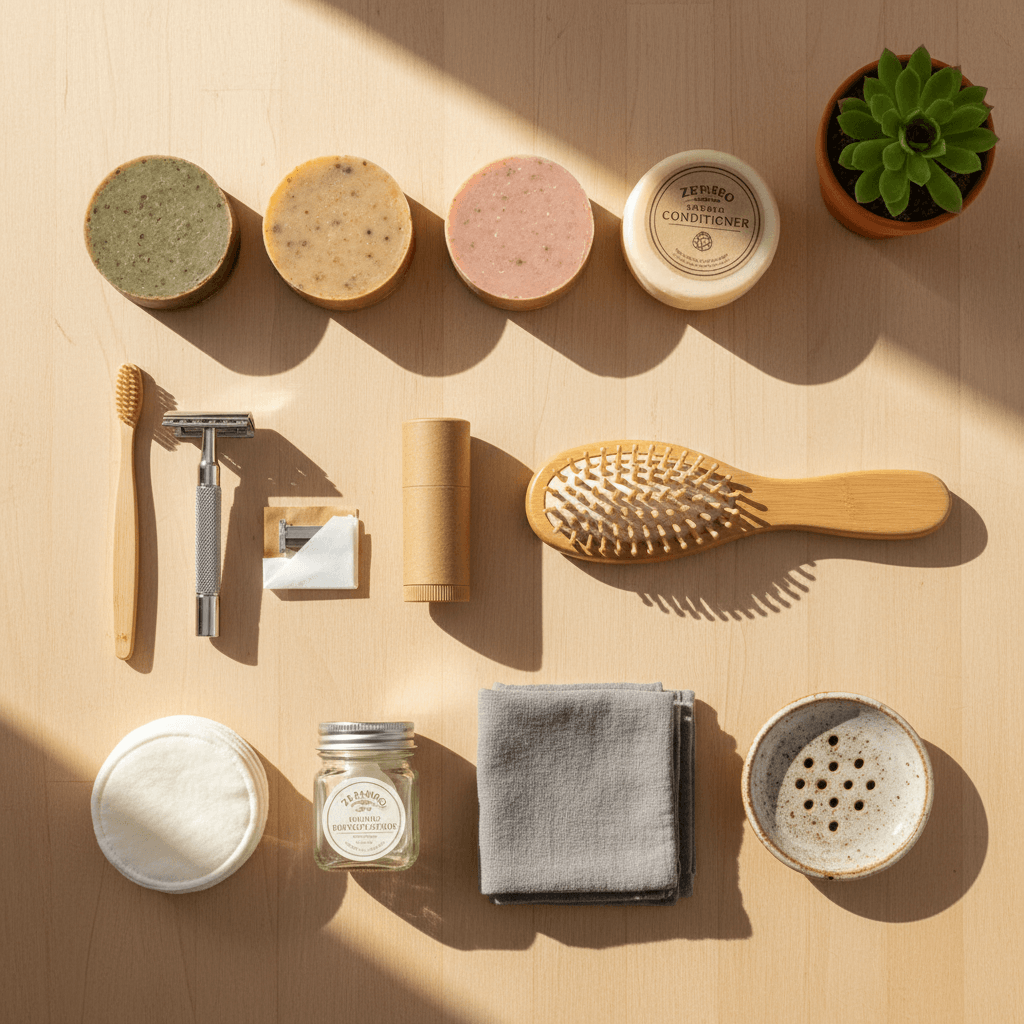
Achieve a plastic-free morning routine with these zero waste bathroom essentials without sacrificing clean hair or smelling like patchouli.
We all buy the bamboo toothbrush with good intentions, but taking the leap to solid shampoo bars feels terrifying. Will your hair feel like dry straw? Does natural deodorant stand a chance during a 12-hour shift or an intense workout? You want to reduce your environmental footprint by finding the right zero waste bathroom essentials, but you absolutely cannot afford to smell bad or compromise on actual hygiene.
Many people give up on sustainability because the learning curve is steep and early products were genuinely terrible. You don’t have to choose between saving the planet and having zero waste bathroom essentials that actually work. We are going to separate the essential zero-waste swaps that perform perfectly from the “eco-trends” that ruin your hair.
Here is exactly what you need to know about building a high-performance routine around zero waste bathroom essentials.
The Immediate Swaps: High Performance, Zero Learning Curve
Some zero waste bathroom essentials require zero adaptation. You throw out the plastic version, replace it with the sustainable one, and notice precisely zero drop in quality. These are the zero waste bathroom essentials you should swap immediately.
Bamboo Toothbrushes and Silk Floss
You brush your teeth every single day. A standard plastic toothbrush sits in a landfill for 400 years. Bamboo toothbrushes handle exactly like plastic ones, but they compost in months. They form the absolute baseline of your zero waste bathroom essentials.
When it comes to flossing, the classic nylon strings are essentially unbreakable plastic wires. Switch to peace-silk or corn-starch floss housed in a refillable glass jar. You pull the string, you clean your teeth, but you leave no trace.
Reusable Cotton Rounds
If you use disposable cotton pads for makeup removal or applying toner, stop buying them. They cost you money every month and generate unnecessary waste. Your collection of zero waste bathroom essentials must include a set of these.
Reusable cotton or bamboo rounds feel softer against your skin, and they absorb liquids more efficiently. You use them, toss them in a mesh laundry bag, and wash them with your normal clothes. They last for years and save you a small fortune over time.

The Tricky Transitions: Haircare and Deodorants
This is where people usually quit building out their zero waste bathroom essentials. Replacing chemical-heavy liquids with compact solids requires a few tactical adjustments.
Solid Shampoo and Conditioner Bars
Traditional liquid shampoo is 80% water. You are paying for a plastic bottle to hold aqua. Solid bars are concentrated ingredients devoid of plastic packaging.
However, many early shampoo bars were basically just harsh lye soaps. They stripped natural oils and left a heavy residue. To maintain performance in your zero waste bathroom essentials, you must buy bars explicitly labeled “pH balanced” or “sulfate-free.”
When testing various bars in our own apartments, we found that switching from liquid to solid requires a two-week transition phase. Your scalp will overproduce oil at first. Push through it. Once you find a high-quality, pH-balanced solid shampoo, your hair actually retains more natural volume because you aren’t coating it in synthetic silicones.
If you are just beginning to organize your space, looking into zero waste bathroom essentials is the logical first step before tackling complex eco-systems.
The Natural Deodorant Reality
Aluminum blocks sweat glands. Natural deodorants do not. When you make the switch, you will sweat.
The goal of a zero-waste deodorant (usually packaged in cardboard tubes or glass jars) is to neutralize the bacteria that causes odor, not to stop the natural sweating process.
Look for formulas containing magnesium hydroxide instead of baking soda. Baking soda causes severe chemical burns and rashes on sensitive armpits for about 40% of users. Magnesium neutralizes odor equally well without the harsh skin reaction. Again, expect a two-week “detox” period where your body flushes out residual aluminum as you transition to natural zero waste bathroom essentials.
The Zero-Waste Bathroom Showdown
Here is a clear breakdown of which zero waste bathroom essentials you should swap today, and what requires patience.
| Item | Ease of Switch | Performance Drop? | Cost over 1 Year |
|---|---|---|---|
| Bamboo Toothbrush | Easy | None | Cheaper |
| Reusable Cotton Pads | Easy | None (Actually better) | Much Cheaper |
| Solid Shampoo Bar | Medium | Temporary (2 weeks) | Same / Slightly Cheaper |
| Natural Deodorant | Hard | Body needs to adapt | More Expensive |
| Safety Razor | Medium | Closer Shave | Huge Savings |
Advanced Zero-Waste: The Safety Razor
If you want to save money and reduce plastic, the safety razor is the ultimate tool in the arsenal of zero waste bathroom essentials.
Disposable razors clog landfills and provide mediocre shaves due to dull, multi-blade friction. A heavy stainless-steel safety razor uses a single, razor-sharp recyclable blade. The weight of the metal handle does the work for you. You apply zero pressure. You just glide it across your skin.
It feels intimidating initially, but it provides a closer shave and abolishes razor burn. Instead of paying $20 for a pack of plastic cartridges, you pay $10 for 100 stainless steel blades that last two years.
Conclusion
Transitioning to a plastic-free life does not mean living like a caveman. It means making calculated upgrades to your daily hygiene routine by analyzing your zero waste bathroom essentials. Start with the easy wins like toothbrushes and cotton pads. When you are ready for a challenge, upgrade to pH-balanced solid shampoos and a safety razor.
Take a look at your bathroom counter right now. What is the easiest piece of plastic you can eliminate today?
Start bringing nature into your apartment by looking at our guide on pet safe houseplants and pair your brand new zero waste bathroom essentials with a perfectly green home!
Are shampoo bars bad for long hair?
No, if you buy sulfate-free bars that are pH balanced. Avoid ‘lye soaps,’ which can coat the hair. A good shampoo bar provides just as much moisture to long hair as liquid formulas.
Why do natural deodorants cause a rash?
Many natural deodorants use heavy baking soda ratios, which cause friction and pH burns. To avoid rashes, find a formula containing magnesium hydroxide instead of baking soda.
Is a safety razor harder to use than a plastic razor?
There is a slight learning curve. The weight of the metal handle means you do not need to apply any pressure; you just glide it. Once you learn the technique, it prevents razor burn better than plastic.