
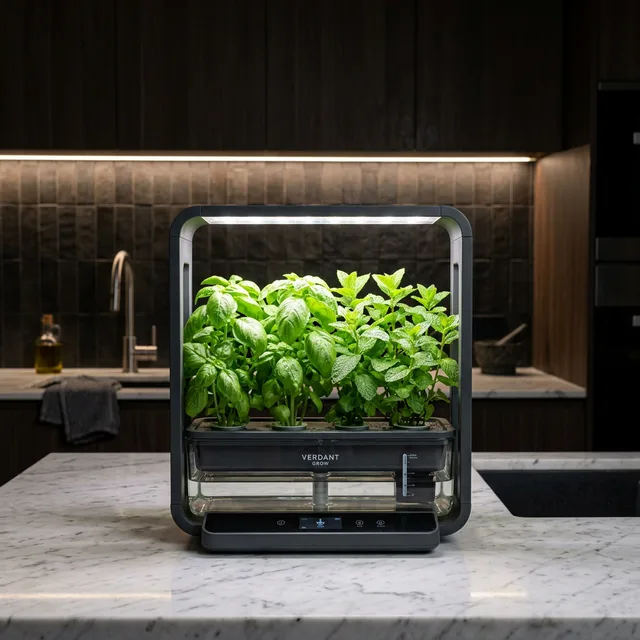
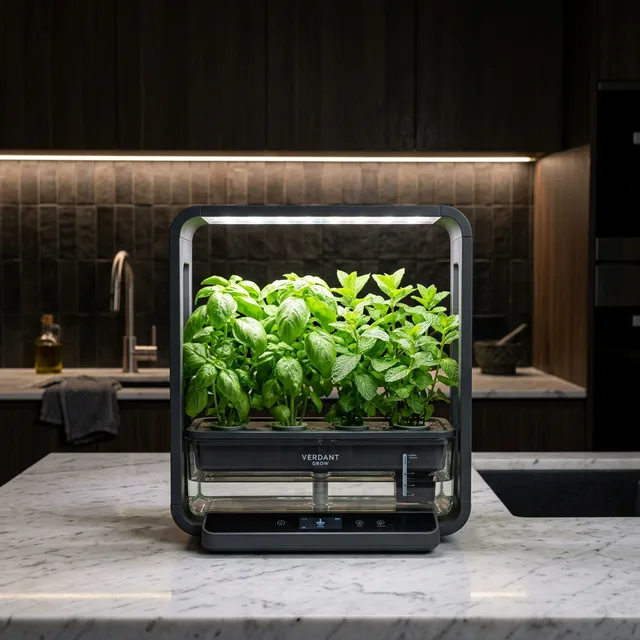
Attempting to grow fresh food in a hydroponic herb garden for windowless kitchen feels like defiance. When you rent an urban studio apartment, the kitchen is usually relegated to the deepest, darkest interior wall of the unit. You have zero natural light, zero cross-breeze, and maybe 20 inches of usable counter space. See the complete balcony herb garden guide. Where you can, maximize natural light.
Traditional soil gardening in this environment is literally impossible. Herbs like basil, mint, and cilantro require massive amounts of high-energy, direct sunlight. If you buy a potted basil plant from the grocery store and stick it on your dark apartment counter, it will stretch toward whatever weak ambient light exists, turn yellow, and die within 7 days.
To grow herbs without a window, you must remove nature from the equation entirely. You need a self-contained, high-tech hydroponic system that provides its own perfectly calibrated artificial sun cycle and delivers liquid nutrients directly to the roots without using a single ounce of messy dirt. These countertop systems have shrunk drastically in the last two years, making them the ultimate micro-kitchen luxury.
My Experience with Windowless Kitchen Gardening
In my second apartment, my “kitchen” was essentially a hallway between my bathroom and the front door. It had black cabinets, terrible overhead fluorescent lighting, and absolutely no windows. I desperately wanted fresh mint for my morning tea.
I tried using standard soil pots paired with a cheap, purple LED grow light bulb clamped to a cabinet. The setup looked like a tacky nightclub, and the results were disastrous. The soil stayed perpetually wet because there was no airflow or real heat to evaporate the moisture, which immediately triggered a massive fungus gnat infestation. The herbs rotted at the stem base and died terribly.
Angry at my failure, I purchased a sleek, automated hydroponic pod system. I dropped the seeded sponge pods into the water tank, added two drops of liquid fertilizer, and plugged it in. The machine’s built-in hood automatically blasted the plants with 15 hours of intense, full-spectrum white light (not purple) every single day. Because there was no soil, there were no bugs. Within three weeks, I was harvesting handfuls of massive, perfectly green basil leaves and thick mint stems from a kitchen that felt like a cave. It completely changed how I cooked in that apartment.
The 3 Rules of Countertop Hydroponics
Before you sacrifice your prime counter real estate, you must ensure the system you buy fits the unique constraints of micro-living:
- Full-Spectrum White Light: Do not buy systems with blurple (blue/purple) LED lights. They will ruin the aesthetic of your apartment. You want high-Kelvin, full-spectrum white LEDs that look like high-end under-cabinet lighting.
- Zero-Soil Sponges (Peat): The system must use sterile peat sponges or rockwool. If a system requires you to dump loose potting soil into a reservoir, it is not true hydroponics and will attract bugs instantly.
- Low Water-Level Alarms: In an interior apartment kitchen, the ambient humidity is often low. The plants will drink water rapidly. You need a system that actively flashes or beeps when the water level drops below the roots, otherwise the pump will burn out.
The 5 Best Countertop Hydroponic Systems
After growing entirely without sunlight, these five systems proved they can fake a Mediterranean summer right on your countertop. Try growing microgreens too.
1. Click & Grow Smart Garden 3 (Best Minimalist Aesthetic)
If you hate the look of complicated machines with exposed wires and massive water pumps, the Click & Grow is the Apple product of indoor gardening. * Footprint: Incredibly slim (only 5 inches deep). Fits easily on a narrow windowless ledge or shallow counter. * Technology: It uses “Smart Soil” pods (a proprietary sponge) that already contain nutrients. You just add water. * Why it Wins: It operates entirely silently. There is no noisy water pump trickling 24/7. It uses passive capillary action to draw water up to the roots. * Light: Exudes a beautiful, warm white light that perfectly acts as ambient kitchen task lighting.
2. AeroGarden Harvest 2.0 (Best for Fast Growth)
AeroGarden is the heavy-hitter of countertop hydroponics. This machine is built to grow massive amounts of herbs as quickly as physically possible. * Capacity: Grows up to 6 different herb pods simultaneously. * Technology: Uses active aeroponics. A microscopic water pump runs on a timer, continuously spraying the naked roots with oxygenated, nutrient-dense water. * Growth Speed: Basil will germinate in three days and be ready for a first, small harvest in exactly 21 days.
3. VegeBox Hydroponic Kitchen Garden (Best Budget Entry)
If you are intimidated by spending $150 on an herb machine, this provides the exact same LED physics for half the price. * Capacity: 9 planting holes. * Lighting: A highly adjustable light hood that you can raise up to 20 inches as the herbs grow taller. * Trade-off: You have to source your own seeds and peat sponges after the initial starter kit runs out, whereas proprietary systems sell convenient pre-seeded pods.
4. INKBIRD Hydroponic Growing System (Best for Tall Plants)
Some herbs, like dill or certain varieties of basil, will quickly outgrow a standard countertop unit and burn their leaves against the LED hood. * Height Adjustment: The light panel extends significantly higher than the competitors, allowing for aggressive, bushy growth. * Tank Size: Massive 4-liter water reservoir means you can easily leave the apartment for a 10-day vacation without the plants starving or the pump burning dry. * Smart Panel: Features dedicated spectrum buttons (Veg mode vs. Flower mode) if you decide to try growing cherry tomatoes later.
5. LetPot LPH-SE (Best App Integration)
For the obsessed data nerd who wants to track their indoor farm from their phone while sitting on the couch. * Connectivity: WiFi and Bluetooth enabled. * App Control: You can adjust the light intensity from 0 to 100%, switch the light cycle schedule (e.g., set it to run lights at night while electricity is cheaper), and monitor the exact water level. * Design: Beautiful matte black finish that looks premium against stainless steel appliances.
Pro-Tips for Windowless Kitchen Farming
- Prune Aggressively: The most common mistake beginners make is letting the herbs grow straight up until they touch the hot LED lights. You must “top” your basil. When a stem gets 4 inches tall, snip the top off right above a leaf node. This forces the plant to grow wide and bushy, yielding double the harvest.
- The Algae Blackout: Hydroponic fertilizer water exposed to intense LED light will instantly grow green algae. Ensure all empty pod holes are covered with the manufacturer’s plastic caps. Do not let light hit the water reservoir.
- Pollination Hack: If you decide to grow fruiting plants (like miniature peppers or tomatoes) instead of leafy herbs, you must “be the bee.” Since there are no insects in your windowless kitchen, gently shake the main stem of the plant every morning. This triggers the pollen to drop inside the closed flowers.
Compare Hydroponic Countertop Systems
| Brand & Model | Pod Capacity | Pump Type | App Control | Best Feature |
|---|---|---|---|---|
| Click & Grow 3 | 3 Pods | Passive (No Pump) | No | Silent & sleek |
| AeroGarden Harvest | 6 Pods | Active (Pump) | No | Extremely fast growth |
| VegeBox | 9 Pods | Active (Pump) | No | High capacity budget |
| LetPot LPH-SE | 12 Pods | Active (Pump) | Yes | Granular app control |
Conclusion
A dark, interior apartment kitchen should not sentence you to eating dried, flavorless herbs from a plastic shaker. By leveraging the advanced LED technology and soil-free root environments of modern hydroponic systems, you completely bypass the need for natural sunlight. These compact machines act as aggressive little agricultural factories, bringing brilliant light and fresh, living food into the darkest corners of your home. Pick a system that fits your counter space, plug it in, and start growing. Fits small apartment kitchen ideas.
Can I use my own seeds in an AeroGarden or Click & Grow?
Yes, you are not strictly locked into buying the expensive pre-seeded proprietary pods from the manufacturer. You can buy blank “grow sponges” (made of peat or compressed coco coir) that perfectly fit into the plastic baskets of an AeroGarden or LetPot. You simply drop two or three seeds of your choosing (like a high-end heirloom basil or a rare Thai chili) into the hole of the blank sponge, insert it into the machine, and add liquid hydroponic nutrients to the water tank as normal.
Safety Disclaimer
Hydroponic systems combine 2-liter tanks of standing water with high-voltage electronics and light fixtures in a very tight package. Always ensure the power cord loops downward (creating a “drip loop”) before entering the wall outlet, so any accidental water spills cannot run down the cord directly into the electrical socket.
