The biggest barrier to a thriving urban micro-garden isn’t lack of sun or soil—it’s the logistics of hydration. If you live in a modern apartment, your balcony likely lacks an outdoor faucet. This means you are either a slave to the watering can or you are watching your plants die every time you leave for a long weekend.
Finding smart watering systems for balcony without tap used to involve janky DIY siphons that inevitably leaked onto your downstairs neighbor’s patio. However, in 2026, we have access to high-performance, solar-powered drip irrigation kits designed specifically for the “bucket-to-pot” workflow. In this guide, I’ll show you how to build a fully automated, faucet-free irrigation system that keeps your basil lush and your deposit safe.
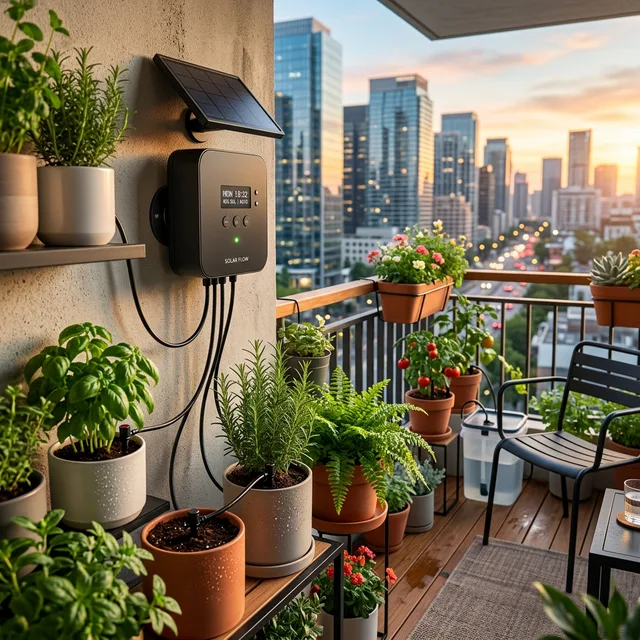
My Experience: The “Leaky Siphon” Catastrophe
Before I discovered dedicated solar pumps, I tried a DIY “gravity bag” system. I hung a 10-liter water bag from my balcony ceiling and ran thin tubes to my plants.
One hot Tuesday while I was at work, the main connector failed. Ten liters of nutrient-rich, brown water drained directly onto the white outdoor rug of the apartment below me. The resulting urban apartment conflict took three months and a professional cleaning bill to resolve.
That was the day I realized that closed-loop security is more important than the watering itself. If you are a renter, you need a system that is either low-pressure or uses a pump with an automatic “dry-run” shutoff. Today, I use a solar-powered controller that lives on my railing and draws water from a hidden, floor-level reservoir. No gravity risks, no neighbor drama.
The Technical “Faucet-Free” Architecture
How do you water plants when there is no pipe? You create a localized water circuit.
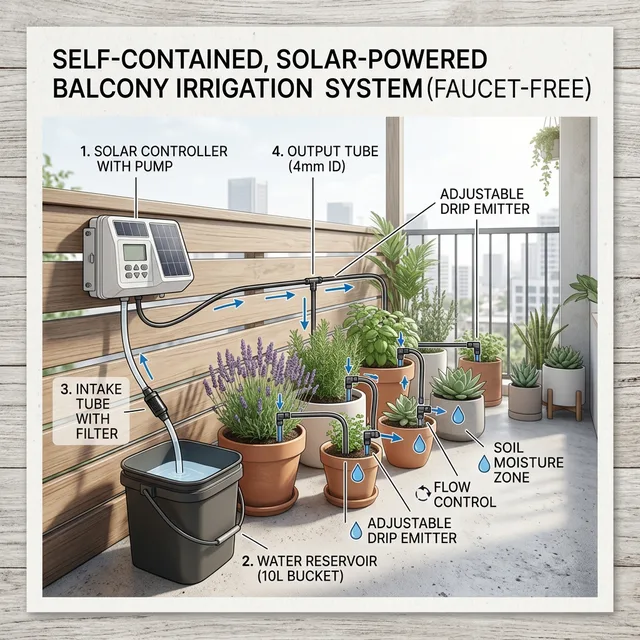
The Three Core Components of a 2026 Setup:
- The Reservoir: A 10L to 50L heavy-duty bucket or a decorative “water barrel” hidden behind a chair. For a 14-day vacation, I recommend at least 30 liters for a 10-pot garden.
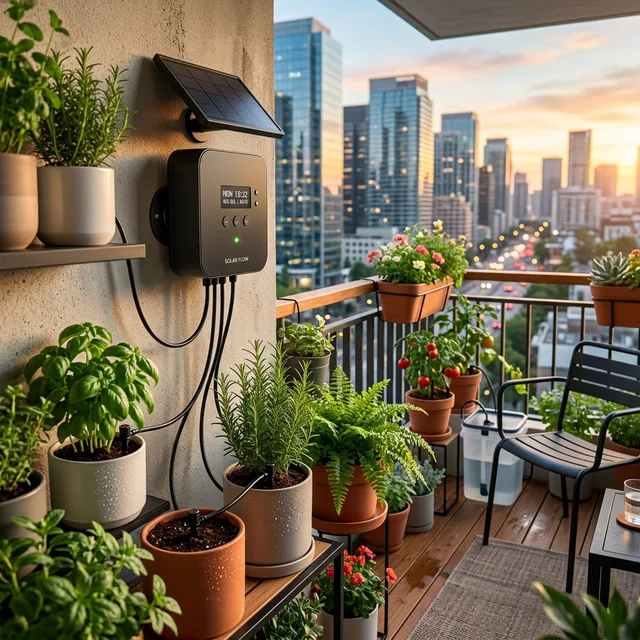
- The Solar Controller (The Brain): A small, waterproof unit with a built-in pump and timer. It sits in the sun on your railing. Look for models with USB backup charging for windowless or shaded balconies.
- The Drip Line: A 4mm vinyl tube that travels from the bucket, through the pump, and branches out to each individual pot.
1. Solar-Powered Drip Kits: Top 2026 Picks
For most small space living setups, a solar-powered pump kit (like the ones from RainPoint or Gardena) is the gold standard.
- How it Works: The solar panel charges an internal battery. The timer turns on a small internal pump that literally “sucks” water from your bucket and pushes it through the drip emitters at a rate of roughly 2-4 liters per hour (L/h).
- The Benefit: Since there is no tap pressure (PSI), if a tube pops off, the water just stops. You aren’t flooding the building.
- Anti-Siphon Tech: High-end 2026 kits include an anti-siphon valve. This prevents water from continuing to flow after the pump stops if your bucket is higher than your pots—a common beginner mistake that leads to “reservoir drain.”
2. Reservoir Sizing: The Math of Survival
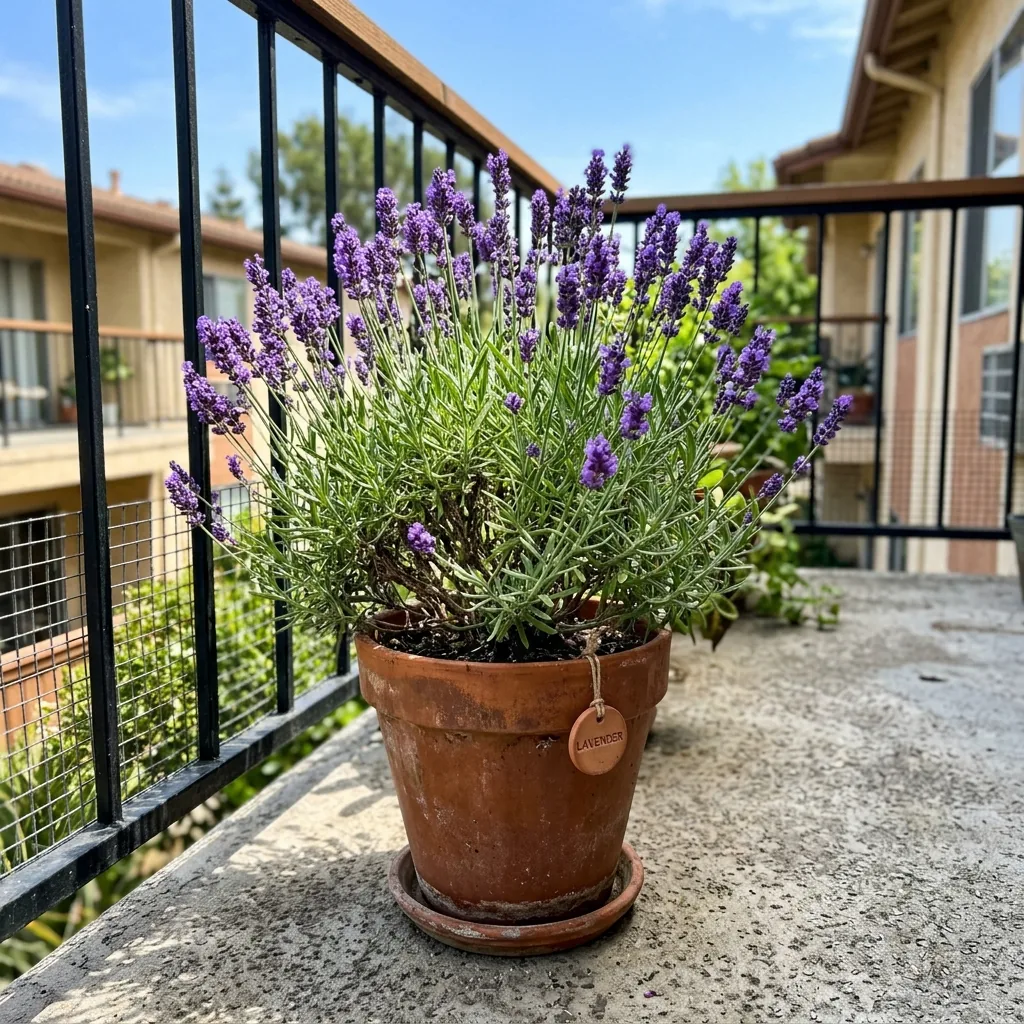
People always ask: “How big of a bucket do I need?” The answer depends on your plants’ Evapotranspiration rate. In a typical south-facing 10th-floor balcony in July: – Small Herb (4″ pot): Needs ~100ml / day. – Tomato Plant (5 gallon pot): Needs ~1 liter / day. – Lavender (12″ pot): Needs ~300ml / day.
Example Calculation: If you have 5 Herbs, 2 Tomatoes, and 3 Lavenders, you need roughly 3.4 liters per day. For a 7-day trip, a 25L reservoir is your minimum safety margin.
3. The “Wick” Alternative (Zero Electronics)
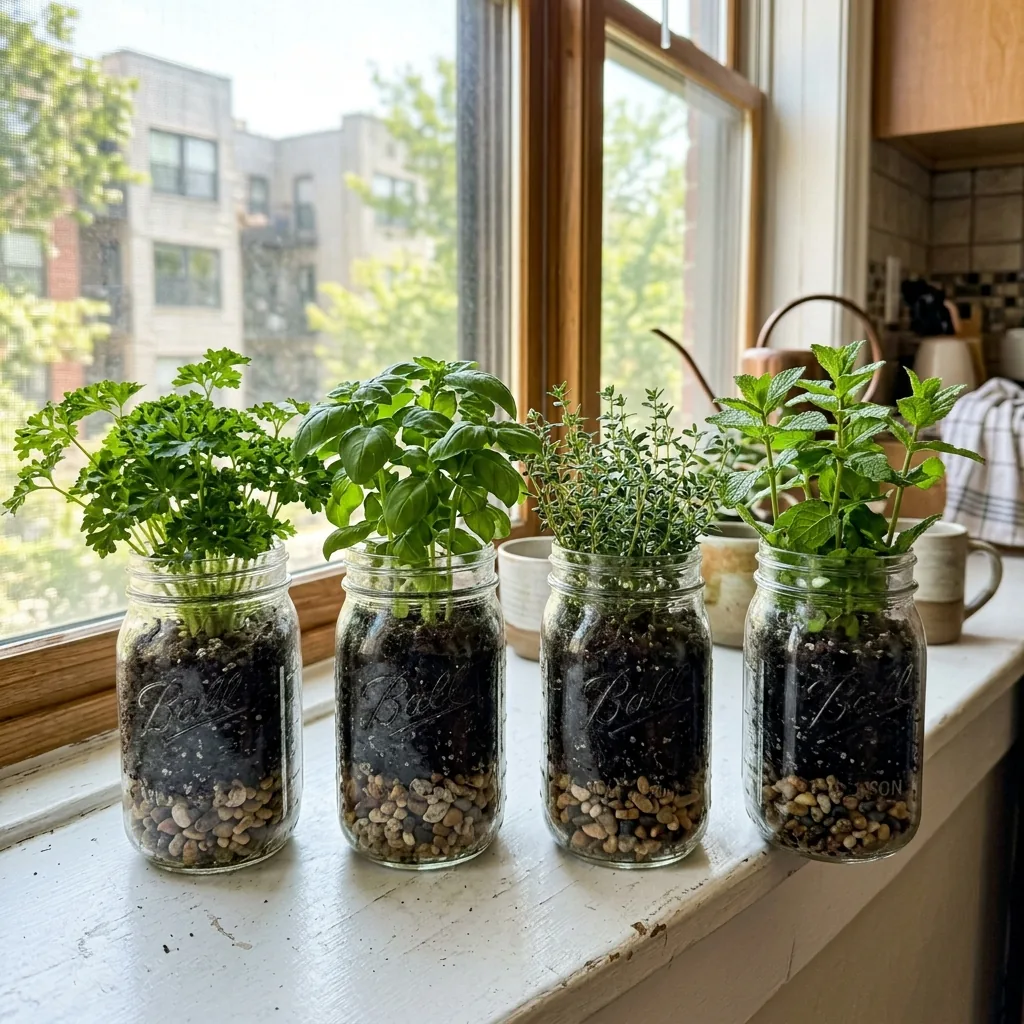
If you hate the idea of batteries and pumps, you can use Cotton Wick Irrigation. * The Setup: Place a water bucket on a small stool above the level of your pots. Run a thick cotton wick (or a specialized capillary cord) from the bucket into the soil of each pot. * Capillary Physics: The water naturally travels through the fibers of the cord into the dry soil. * Limit: This only works for smaller pots and isn’t enough for thirsty plants like tomatoes or large lavender shrubs. It’s a great budget hack for a small windowsill herb garden.
4. Renter-Safe Installation: No-Drill Mounting
As a renter, you cannot drill into your building’s exterior.
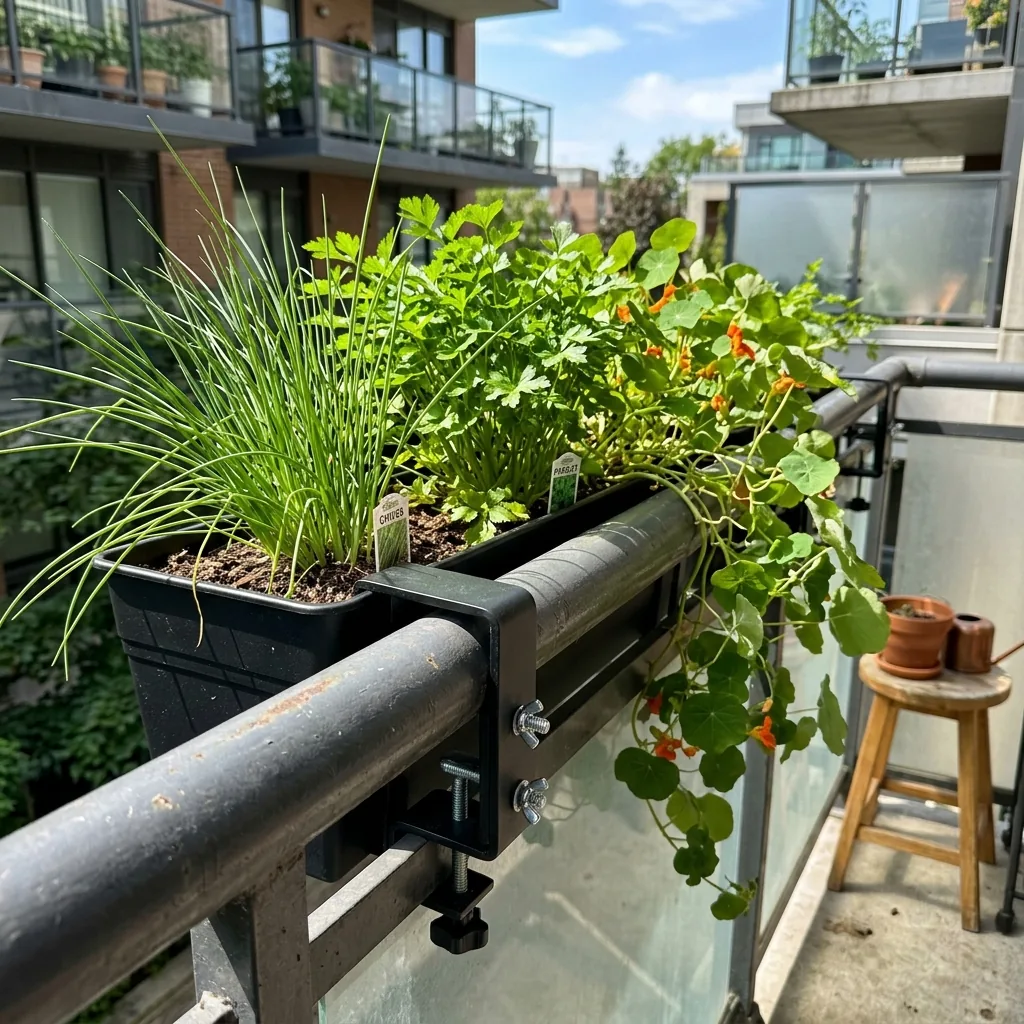
The No-Drill Setup: 1. Zip Ties: Use UV-resistant black zip ties to secure your solar controller to the balcony railing. 2. Suction Cup Clips: For running the tubing along the wall or glass railing, use high-strength suction cup clips. They are invisible and leave zero residue when you move out. 3. The Reservoir Cloak: Don’t just leave a blue plastic bucket on your deck. Use a woven storage basket or a small wooden crate to hide the reservoir. It turns a “utility” into an aesthetic feature.
5. Troubleshooting: The Airlock and The Battery
Even the “smartest” system can fail. Here are the two most common 2026 balcony irrigation failures: – The Airlock: If your pump runs but no water comes out, there’s a bubble in the line. Fix: Submerge the intake tube and the pump briefly in a bowl of water to “prime” it, or suck on the output end (no, it won’t kill you) to pull the water through. – Solar Shadowing: If your balcony only gets 2 hours of sun, your battery will die within 3 days. Fix: Look for a system with a detachable solar panel that you can mount higher up on a railing, or use a system with a USB-C charging port and a weatherproof power bank.
Efficiency Matrix: Which System For Your Balcony?
| System Type | Power Source | Best For | Max Pots | Longevity |
|---|---|---|---|---|
| Solar Pump Kit | Solar (2026 Tech) | High-Rise/Full Sun | 15-20 | 14 Days |
| Gravity Bag | Elevation Only | Low Floor/Shade | 5 | 3 Days |
| Cotton Wick | Capillary Action | Small Herbs | 3 | 7 Days |
| Smart Reservoir | Battery/USB | High-End Decor | 10 | 10 Days |
Conclusion: Micro-Wellness Through Automation
Automating your balcony watering isn’t about being lazy; it’s about urban micro-wellness. There is a specific peace of mind that comes from knowing your green oasis is thriving while you’re stuck in an office or away on holiday. By utilizing a solar-powered, faucet-free kit, you turn your balcony from a chore into a self-sustaining retreat.
Investing $40-$60 in a solid drip system is cheaper than replacing your entire garden three times a year. Your future self (and your downstairs neighbor) will thank you.
Does the water in the bucket get ‘stale’?
If you leave it for more than a month, yes. Algae can grow. **Elena’s Hack:** Add a few drops of organic grapefruit seed extract to the water. It’s a natural antifungal that keeps the water clear without hurting your plants.
Can I use my kitchen sink tap with an adapter?
You can, but running a hose through your apartment is a massive trip hazard and can leak indoors. A self-contained bucket system is always safer for **apartment living**.
What happens if it rains?
Most 2026 smart systems have a ‘Rain Sensor’ port. If it detects moisture, it skips the watering cycle to prevent root rot.
How many pots can one pump handle?
Most standard kits can push water up to **3 meters** high and sustain **10–15 emitters**. If you have a larger garden, you’ll need a ‘high-head’ pump or two separate solar units.
What remains the best way to hide the tubing?
Use ‘Adhesive Cable Clips’ designed for outdoor use. They match most balcony wall colors (white/gray) and keep the 4mm tubes perfectly straight and professional-looking.