The most significant threat to mental clarity in a 25sqm studio is “Visual Encroachment.” When your desk is always visible from your bed, you never truly leave work. Your laptop becomes a glowing reminder of unfinished tasks, poisoning your sensory sanctuary and ruining your sleep quality. The solution is the smart closet office setup, affectionately known as the “Cloffice.”
A cloffice isn’t just a desk in a closet; it’s a high-performance, sensor-driven capsule that allows you to “Close the Work Day” physically and psychologically. By utilizing vertical decor vs clutter logic and hidden tech & cable management, you can create a professional-grade workspace that disappears in one second. In my own managed studio apartment, moving my desk into a 120cm closet was the turning point that allowed me to finally separate my urban mobility career from my micro-wellness life.
1. The “Zero-Depth” Desk Selection
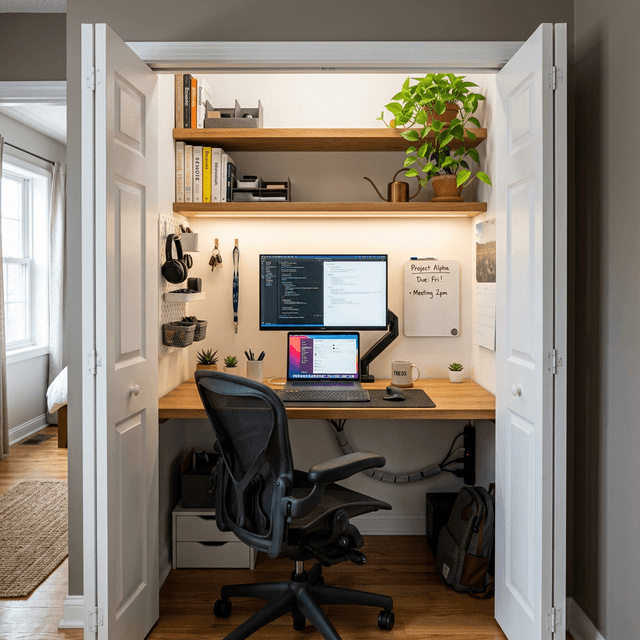
In a 60cm deep closet, you don’t want a 60cm deep desk. You need room for your chair and your knees. The strategy: Use a wall-mounted “Floating Desk” or a slim butcher-block top (40cm – 45cm depth). The Value: This leaves 15cm of “Air” at the front of the closet, allowing the doors to close without hitting your monitor or keyboard. It’s part of the furniture with legs for small apartments philosophy: prioritize high-utility, low-volume surfaces.
2. Contact-Sensor “Auto-Power” Logic
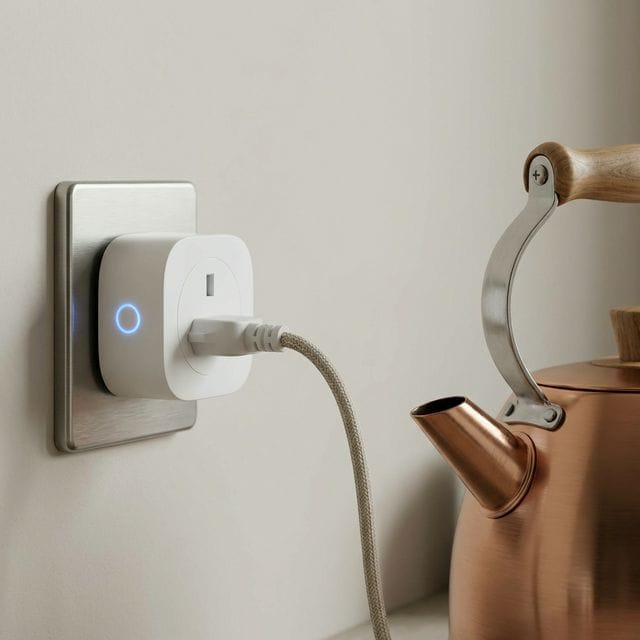
The difference between a “Desk in a Closet” and a smart closet office setup is automation. The Tech: A simple magnetic Contact Sensor on the closet door linked to a smart plug. The Routine: When you open the door, the sensor triggers the power to your monitor, docking station, and bias lighting. When you close the door, the power cuts. The Psychological Impact: This “Machine Activation” tells your brain: “The office is now open.” It eliminates the “Decision Friction” of starting your work day.
3. “High-Z” Vertical monitor Mounting
In a narrow space like a closet, your monitor takes up 50% of the surface area if it’s on a stand. The Hack: Use a wall-mounted gas-spring monitor arm. The Benefit: It lifts the monitor off the desk, reclaiming the “Floor Space” of your desk for your digital identity kit and notebooks. It also allows you to push the monitor back into the “Depth” of the closet when you want to close the doors. This is a core vertical decor hack.
4. Biophilic Light: Mimicking the Window
Most closets are dark and depressing. Working in one can lead to “Tunnel Fatigue.” The Tech: Use high-CRI (95+) LED strips behind the monitor. The Routine: Link these to your circadian lighting hub. The Value: During the day, the light should be a crisp 5000K white to mimic a window. At 4 PM, it should shift to a warm 3000K. This “Artificial Horizon” prevents eye strain and maintains your biological clock even in a windowless closet.
5. Acoustic “Felt” Zoning
A closet is basically an echo chamber. If you are on public transit survival tech calls, you need sound control. The Hack: Line the back and sides of the closet with 10mm acoustic felt or “Cork Tiles.” The Synergy: This provides “Acoustic Shielding” and doubles as a pin-board for your minimalist lifestyle goals. It reduces the “Hollow” sound of your voice, making your cloffice sound like a professional studio.
6. The “Invisible” Cable Infrastructure
In a smart closet office setup, one loose cable can prevent the door from closing properly. The Strategy: Use “Under-Desk Rails” and “J-Channels” to route all power to a single point. The Rule: No cables should touch the vertical plane of the doors. Utilize your hub for hidden tech & cable management. This ensures your sensory sanctuary studio living remains visually clean when the “off-hours” begin.
7. Vertical “Oxygen” Integration
Since you are working in a confined 1m² space, the air can get stale fast. The Hack: Place a small low-light hanging plant (like a Pothos) on the top shelf of the closet. The Routine: Place your compact air purifier just outside the closet door. The Impact: This ensures a constant flow of “Scrubbed Air” into your workspace, preventing the “Brain Fog” that hits at 2 PM. It integrates minimalist plant styling into your productivity center.
| Cloffice Element | Goal | [Micro-Wellness](https://urbanmicrotips.com/micro-wellness-habits-studio-living) Gain | Device Link |
| Surface | Wall-Mount Desk | Reclaimed Floor Space | Floating Bracket |
| Logic | Door Sensor | Workflow Automation | Zigbee Contact Sensor |
| Light | Bias LEDs | Eye Strain Reduction | [Circadian Smart Bulbs](https://urbanmicrotips.com/smart-lighting-windowless-studio-sunlight) |
| Sound | Acoustic Felt | Deep Focus / Privacy | Industrial Felt Tile |
FAQ
How do I manage heat in a closed closet?
Never close the doors while the computer is under heavy load. The smart closet office setup is designed to be hidden when you are NOT working. When you are working, the doors should be wide open to allow for indoor-outdoor flow of air.
What chair should I use for a Cloffice?
Choose a “Sled Chair” or a task chair with furniture with legs aesthetics. Bulky rolling chairs often don’t fit in the “Swing Path” of closet doors. We recommend a slim, ergonomic stool that can be tucked 100% under the desk at the end of the day.
Will this desk setup hurt my neck?
Not if you follow the “Monitor Height” rule. The top of your screen should be at eye level. Use your wall-mounted arm to adjust this perfectly. Ergonomics is a pillar of vertical fitness for urban professionals.
SEO & Rank Math Setup
- Suggested Focus Keyword: smart closet office setup
- SEO Title: 7 Steps to a Smart Closet Office Setup: The High-Efficiency Cloffice
- Meta Description: Work in secret. Discover 7 steps to a smart closet office setup to maximize your productivity and keep your living space uncluttered today.
- Slug suggestion: smart-closet-office-setup-cloffice-guide
- Internal Link Juicer Keywords: smart closet office, cloffice setup, hidden desk hack, studio office zoning, small space workspace, invisible office tech
Pro Tip: The “Door-Seal” Ritual
At the end of your workday, physically clear the desk of your digital identity kit and close the closet doors. Take one deep breath and walk to your landing strip. The act of “Sealing the Office” is a powerful psychological “Transition Anchor.” Your 25sqm room is now 100% focused on recovery, with no “Work Ghost” visible. This is how you win at sensory sanctuary studio living.