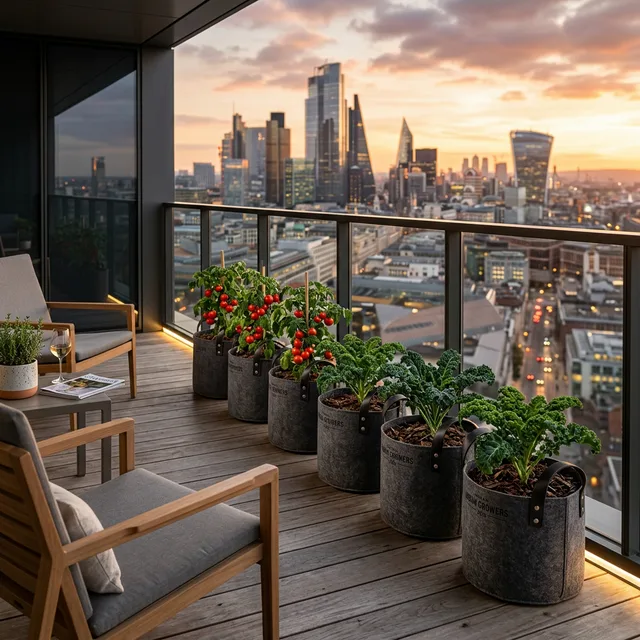
If you’ve ever tried to move a 50-liter ceramic pot across a studio apartment during a relocation, you know the literal weight of traditional gardening. For years, I was a “pot purist,” believing that expensive terracotta was the only way to give my plants a “premium” home. I was wrong. The evolution of reusable grow bags for apartments has fundamentally changed how we manage high-rise greenery. These aren’t just “bags”; they are technical horticultural tools designed to solve the three biggest problems of apartment balcony gardening: weight, drainage, and space.
In this guide, I’m going to break down the science of the “Air-Pruning” effect, why fabric is the most planet-friendly choice for your urban micro-living setup, and how to store an entire garden in a single drawer.
A Note from Elena: Last year, I migrated my entire 12-plant tomato garden from plastic buckets to non-woven fabric bags. My yield increased by roughly 30%, and for the first time, I didn’t have a single case of “root-bound” yellowing. If you’re serious about your edible balcony, this is the upgrade you need.
Why Grow Bags Beat Traditional Pots
The primary difference between a plastic pot and a grow bag is breathability. In a standard pot, when roots reach the wall, they keep growing, circling the container until they form a dense, choked-off “root ball.” This is called being root-bound, and it’s a death sentence for high-performing vegetables.
The Magic of Air-Pruning
When roots reach the edge of a fabric grow bag, they encounter air. Instead of circling, the root tip naturally dehydrates and stops growing. This triggers the plant to send out thousands of tiny, fibrous “feeder” roots from the center.
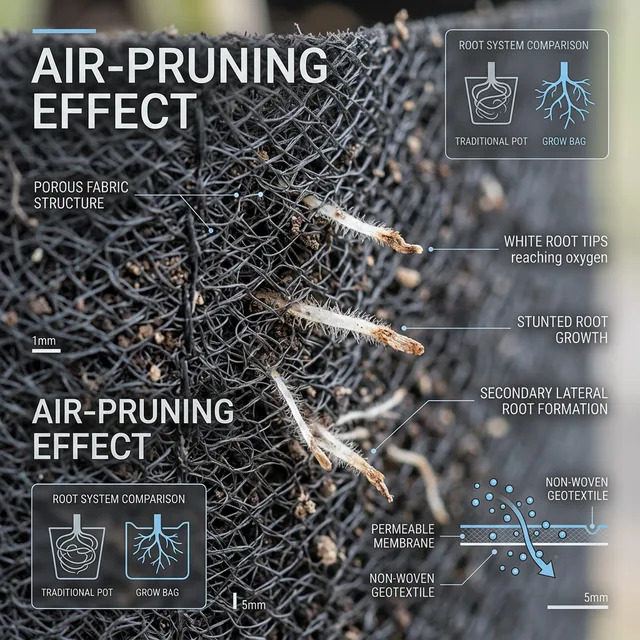
- Technical Metric: A plant in a grow bag can have up to 4x the surface area of active root tips compared to one in a plastic pot of the same volume.
- Urban Benefit: This means your plants can absorb nutrients and water much more efficiently, which is critical when you’re limited to small apartment layouts.
Environmental Impact: The Planet-Friendly Choice
Sustainable gardening isn’t just about the plants; it’s about the lifecycle of the tools. Most reusable grow bags for apartments are made from recycled PET (polyethylene terephthalate)—often sourced from ocean-bound plastic bottles.
- Recycled Materials: Leading brands in 2026 use 100% post-consumer recycled felt.
- Longevity: A high-quality thickened non-woven bag lasts 5–7 years. If it gets dirty, you simply throw it in the washing machine on a cold cycle.
- BPA-Free: Unlike cheap plastic tubs, premium fabric bags are lead and BPA-free, ensuring your smart balcony herb garden produces truly healthy food.
The “Storage Paradox”: Solving the Space Problem
The biggest barrier to entry for apartment gardening is where to put the equipment during the off-season. Traditional pots are bulky, fragile, and impossible to hide.
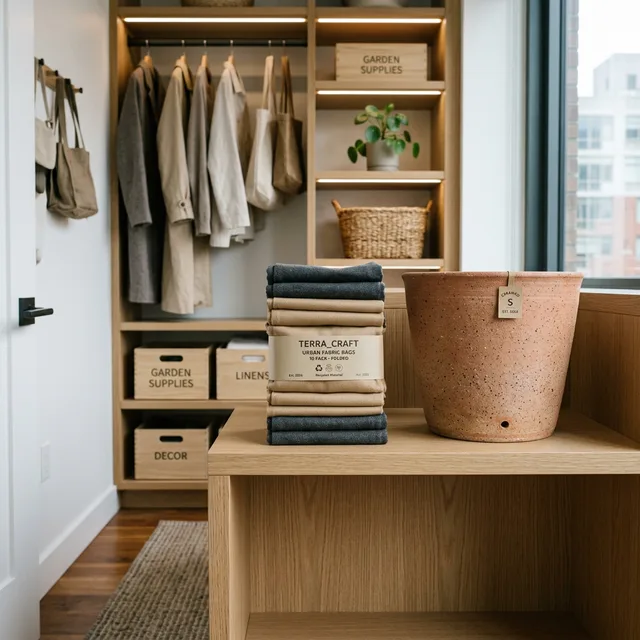
As seen in the image above, you can stack ten 20-liter grow bags in the same space as a single pair of shoes. When I moved from my ground-floor studio to my current high-rise, I packed my entire garden equipment in one medium-sized box. If those had been ceramic pots, I would have needed a dedicated van and a massive amount of bubble wrap.
Essential Features to Look For
Not all grow bags are created equal. If you’re shopping for your apartment balcony gardening kit, look for these “Elena-Approved” specs:
| Feature | Why it Matters | Recommendation |
|---|---|---|
| Fabric Density | Prevents sagging and tearing | Look for 300g/m² or higher |
| Reinforced Handles | Essential for moving bags to follow the sun | Cross-stitched nylon or leather |
| Drainage Rate | Prevents root rot in heavy rain | Water should permeate immediately, not pool |
| UV Protection | Prevents the fabric from becoming brittle | Ensure “UV-Stabilized” is in the description |
How to Set Up Your Grow Bag Garden
Setting up a reusable grow bag for apartments requires a slightly different approach than a hard pot.
- Choose the Right Size:
- Herbs/Salad: 3–5 Gallons (11–19 Liters).
- Peppers/Bush Tomatoes: 7–10 Gallons (26–38 Liters).
- Potatoes: 15 Gallons (57 Liters) with a side “harvest window.”
- The “Saucer” Requirement: Because fabric leaks water from every side, you must use a deep saucer or a heavy-duty tray. For a clean modern balcony aesthetic, I use charcoal-colored trays that match the bag.
- Soil Selection: Grow bags dry out faster than plastic. Use a mix with high water retention, like a blend of coco coir, compost, and vermiculite. Avoid using heavy “topsoil” as it will compact and weigh the bag down.
My Expert Tips for Reusable Bag Success
- The “Cool Root” Advantage: In the peak of summer, black plastic pots can cook your roots. Fabric bags provide evaporative cooling. As moisture evaporates through the walls, it lowers the temperature of the root zone by up to 5°C.
- Wash and Reuse: At the end of the season, empty the soil into a compost bin (like a bokashi composting for apartment balcony setup). Soak the bags in a bucket with a dash of vinegar and dish soap, scrub any salt deposits, and dry them in the sun before folding.
- Vertical Integration: If you have a very narrow balcony, look for “Wall Hanging” grow bags. These allow you to create a vertical garden wall using the same breathable fabric technology.
Conclusion
If you’re still using heavy, breakable, non-breathable pots, 2026 is the year to make the switch. Reusable grow bags for apartments are lighter on your floor’s weight limit, better for your plants’ root health, and vastly easier to store. They represent the perfect intersection of technology and sustainability in the urban space.
Your balcony deserves a “Smart” upgrade. Your plants deserve to breathe.
Do grow bags get moldy?
Only if you have zero airflow. On a typical balcony, the fabric dries out too fast for mold to take hold. If you see white ‘crust,’ it’s usually just salt deposits from your fertilizer.
Can I use them indoors?
Yes, but you need a very reliable tray to catch the drainage. I recommend using them on a tiled surface or inside a decorative outer pot for indoor use.
How often should I water?
Generally, 20-30% more often than in plastic pots. A **balcony drip irrigation** system is the perfect companion for fabric bags.
Are they cat-safe?
Yes, but some cats love to use the fabric as a scratching post. If you have a cat, choose bags with a smoother ‘non-woven’ finish rather than a ‘fuzzy’ felt texture.