Staring at empty, aggressively white rental walls quickly causes institutional fatigue. You cannot physically drill massive holes for large art installations, and you absolutely cannot paint the flat black. Installing renter-friendly peel and stick wallpaper solves this rigid design problem immediately. However, if you slap cheap adhesive directly onto a dirty drywall surface, you will physically tear the landlord’s original paint layer off when you eventually move out. We architecturally outline the exact, safe method to hang removable wallpaper perfectly straight.
Why trust this guide? We once had to forfeit an $800 security deposit on a downtown lease simply because cheap vinyl wallpaper chemically bonded to the landlord’s matte paint over two hot summers. We learned the hard way that properly cleaning the wall and testing the adhesive tension beforehand completely prevents aggressive drywall failure. We now strictly use specific prep methods for all our studio interior projects.
The Complete Tool List
You cannot install wallpaper using just your bare hands and a kitchen knife securely. You must physically acquire the correct tools to guarantee the heavy vinyl adheres flat against the wall without capturing ugly, permanent air pockets.
| Tool Required | Practical Function | Importance |
|---|---|---|
| Laser Level | Projects a perfectly straight red light line across the drywall. | Non-negotiable |
| TSP (Trisodium Phosphate) Spray | Aggressively strips microscopic grease and heavy skin oils off the paint. | High |
| Felt-Tipped Squeegee | Pushes massive air bubbles outward without structurally scratching the vinyl ink. | Absolute |
| Snap-Off Utility Knife | Slices the heavy wallpaper cleanly against the baseboards without tearing the wet paper edges. | High |
Step 1: Assess and Aggressively Clean the Urban Space
Wallpaper adhesive acts exactly like heavy tape. If it touches dust, it physically bonds to the dust, entirely ignoring the actual wall.
Start by aggressively spraying the entire target wall with a heavily diluted TSP cleaner. Use a rough sponge to scrub the invisible grease layer strictly found near kitchen borders or bathroom door frames. After scrubbing, take a completely clean, damp microfiber cloth and wipe the wall repeatedly until the surface feels slightly grippy, not chalky.
You must allow the drywall to visually dry for a minimum of 24 solid hours. Applying heavy vinyl over trapped moisture immediately causes the adhesive backing to liquify and violently fail within three weeks.
Does peel and stick wallpaper ruin apartment walls?
Peel and stick wallpaper will aggressively tear the paint off your walls if you directly apply it over flat, matte builder-grade paint, or if the wall was freshly painted within the last 30 days. To guarantee the safe, zero-damage removal of the wallpaper later, verify your rental specifically has semi-gloss or satin paint, physically clean the wall with a heavy degreaser before application, and use a hair dryer to gently melt the adhesive backing when peeling the heavy paper off.
Step 2: Establish a Strict Plumb Line
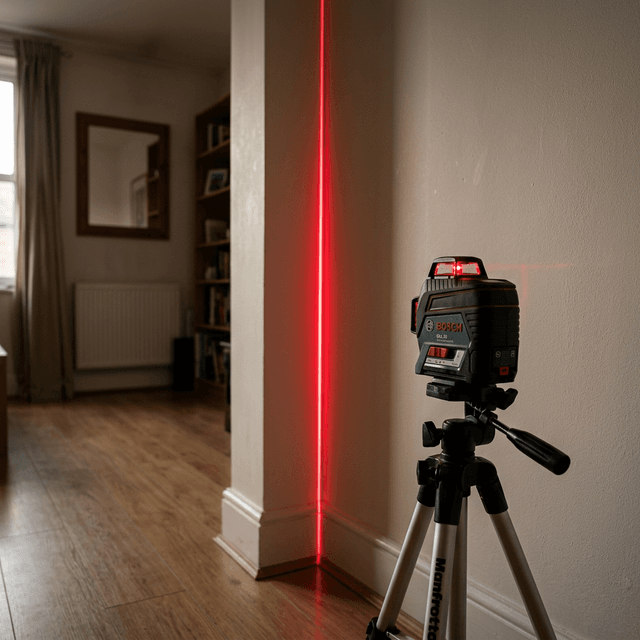
Never align your very first heavy wallpaper panel strictly with the corner of the room or the edge of the ceiling. Urban apartment buildings physically settle, meaning architectural corners are practically never straight mathematically.
Place your laser level securely on a heavy tripod. Measure exactly 19 inches (or one inch less than the strict width of your specific wallpaper roll) outward from the left corner. Project a heavy vertical red line directly down the wall here. This bright laser line serves as your absolute physical anchor for the extremely difficult first drop.
Step 3: Apply the First Drop and Eradicate Air Bubbles

Peel exactly 10 inches of the heavy backing paper away from the top edge. Strictly align the right edge of the exposed vinyl squarely against your bright red laser line. Do not look at the ceiling physically; only watch the heavy laser.
Press the exposed top section aggressively against the wall. Take your heavy felt-tipped squgee and forcefully push from the direct center of the panel aggressively outward toward the edges, physically driving the trapped air bubbles out.
Reach underneath the panel and slowly pull the backing paper down precisely 10 more inches. Repeat the aggressive center-to-edge pushing motion rigidly. Never pull the entire paper backing off at once; the static electricity will instantly cause the heavy panel to fold over and aggressively glue itself together irreparably.
Step 4: Slice the Excess Edges Cleanly
Once you fully reach the bottom baseboard, do not use scissors safely. Use a wide metal putty knife to physically jam the heavy wallpaper tightly into the 90-degree corner between the drywall and the wooden base.
Take your razor-sharp snap-off utility knife and forcefully run the blade directly along the hard metal edge of the putty knife. This physically forces a completely straight, factory-clean cut without accidentally slicing into the wooden trim piece. Immediately snap off the dull blade segment after cutting exactly two heavy panels to ensure the metal remains razor-sharp for the subsequent edge cuts safely.
Common Fatal Installation Mistakes
- Applying over Orange Peel Texture: Heavy peel and stick vinyl is physically designed exclusively for completely flat walls natively. If your apartment has aggressive bumpy orange peel texture, the vinyl will only adhere strictly to the high points, leaving thousands of microscopic air gaps that practically guarantee the heavy paper falls down in three months.
- Ignoring Pattern Repeats: When ordering custom geometric sheets, you must explicitly account for the pattern repeat height safely. If the repeat is 12 inches, you lose exactly a foot of heavy paper on every single vertical drop just attempting to aggressively match the left and right connecting edges correctly.
- Stretching the Vinyl: When fighting a difficult heavy corner, novices actively pull and stretch the plastic vinyl tightly. Within two active days, the plastic physically shrinks back to its original mathematical size, leaving a completely bare half-inch gap aggressively exposing the ugly white wall underneath firmly.
Final Thoughts
You dramatically change the heavy psychological feel of a cramped generic apartment by aggressively updating a single prominent focal wall. Physically hanging heavy renter-friendly peel and stick wallpaper simply requires methodical preparation, entirely rejecting corners as a straight reference, and using a razor-sharp blade cleanly. Reclaim your architectural aesthetic responsibly today.
Safety Disclaimer
Before working heavily near electrical outlets safely, physically turn off the main breaker switch reliably. You must explicitly unscrew the heavy plastic outlet covers to cleanly push the wallpaper completely underneath the edge. Do not attempt to forcefully trim the wet wallpaper securely around a live open electrical box cleanly.
How do I safely remove peel and stick wallpaper years later?
Aim a hot hair dryer specifically at the top corner of the panel for exactly **45 seconds**. The heat physically melts the rigid adhesive safely, allowing you to pull the heavy paper straight downwards tightly against the wall surface without actively ripping off the drywall perfectly.
Can I use peel and stick wallpaper in a rental bathroom?
Only if the manufacturer explicitly rates the heavy vinyl for high-humidity wet zones natively. Standard cheap target paper will actively absorb the hot shower steam mechanically, causing the heavy adhesive backing to dissolve entirely within six tight months.