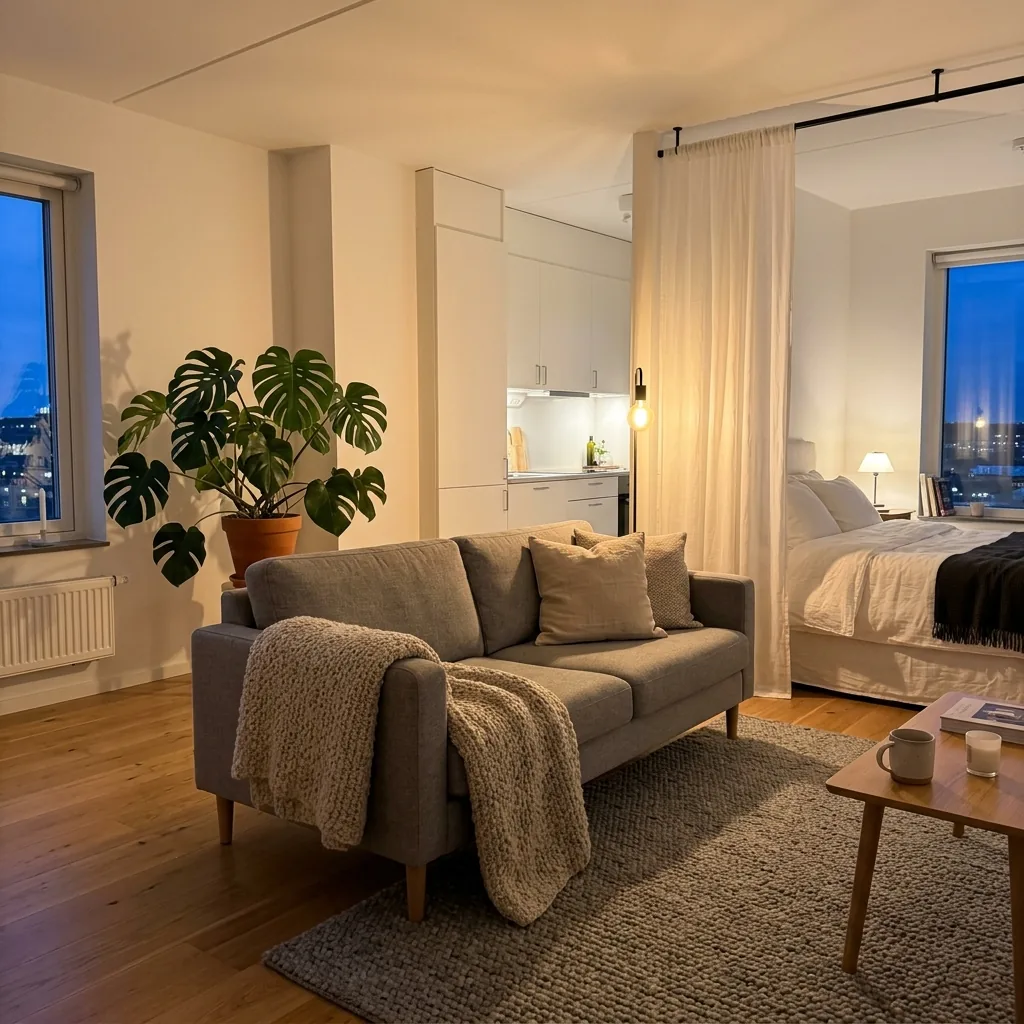
The best renter friendly flooring options go directly over existing floors without adhesive, nails, or landlord permission, and come up completely when you move. Top picks by situation: peel-and-stick vinyl tiles (best for damaged linoleum, $1.50–$3/sqft), interlocking LVP click-lock planks (best for large rooms, $2–$4/sqft), large area rugs (fastest fix, $0.50–$2/sqft), and foam interlocking mats (best for renters with pets or home gym, $0.80–$1.50/sqft). All fully reversible with zero adhesive residue.
The floor is the first thing you see when you walk into an apartment and often the worst thing about it. Scratched laminate, stained linoleum, cracked tiles, orange-tinted wood from 1987 — rental floors are a category of suffering all their own. And because most leases explicitly prohibit floor modifications, most renters live with it.
They do not have to. The renter friendly flooring market has expanded considerably in the past five years, and the options now available — peel-and-stick vinyl that removes cleanly, floating click-lock planks that require no adhesive, large-format rugs — mean you can cover virtually any bad floor for under $3 per square foot without risking your deposit.
Why trust this guide? I have covered bad floors in four different rental apartments since 2019. My worst case: orange-lacquered 1980s parquet in a Berlin apartment that made every room look like a sauna. I tested peel-and-stick tiles, a large area rug, and finally interlocking LVP planks. All three worked. All three came up cleanly at move-out.
Quick-Choice Matrix
| Floor Problem | Best Fix | Cost/sqm |
|---|---|---|
| Stained/ugly linoleum | Peel-and-stick vinyl tiles | €15–€28/sqm |
| Entire room overhaul | Click-lock floating LVP planks | €20–€40/sqm |
| Fastest fix, any floor | Large area rug | €5–€20/sqm |
| Damaged tiles | Interlocking foam or wood tiles | €8–€15/sqm |
| Home gym / pet area | Interlocking rubber/EVA foam mats | €7–€14/sqm |
| Balcony / outdoor | Interlocking acacia deck tiles | €12–€22/sqm |
| Cold floors / insulation | Cork underlay + area rug combination | €8–€15/sqm |
Renter Flooring Options: Size & Cost Guide [UPDATE 2026]
| Option | Installation | Removal | Damage Risk | Looks Like | Cost/sqm | Best For |
| Peel-and-stick vinyl tiles | 30 min/10sqm | Heat gun + clean | Low on vinyl/tile subfloor | Stone, wood, geometric | €15–€28 | Kitchens, bathrooms |
| Click-lock LVP planks | 2h/20sqm | Reverse clicks apart | None (floating) | Wood, concrete | €20–€40 | Living rooms, bedrooms |
| Area rug | 5 min | Roll up, carry out | None | Textile patterns | €5–€20 | Any room, any size |
| Interlocking foam tiles | 20 min/10sqm | Pop apart | None | Wood grain, solid colour | €8–€15 | Gym, playroom, office |
| Interlocking deck tiles | 30 min/6sqm | Pop apart | None | Natural wood | €12–€22 | Balcony, outdoor |
| Cork tiles (adhesive-free) | 45 min/10sqm | Lift up, stack | None (no adhesive version) | Natural cork texture | €10–€18 | Bedroom, quiet zones |
| Peel-and-stick carpet tiles | 30 min/10sqm | Peel up carefully | Medium on bare wood | Carpet | €12–€20 | Bedroom, home office |
How Renter Flooring Works
Every renter-safe flooring option uses one of two strategies: floating over the existing floor (click-lock planks, foam tiles, rugs) or pressing on with mild adhesive that releases cleanly (peel-and-stick tiles). Neither attaches permanently to the subfloor; both leave the subfloor in its original condition.
The key principle: the existing floor must be flat and clean. A floating floor over a bumpy subfloor will wobble. Peel-and-stick tiles on a dusty surface will lift within weeks. Before installing anything, sweep, mop, and let the floor dry completely.
What is the best renter friendly flooring for apartments?
The best renter friendly flooring depends on how permanent you want it to look and how much floor you are covering. For a full room overhaul that looks like real renovation: click-lock LVP floating planks (€20–€40/sqm) install in about 2 hours for a 20 sqm room, click apart for removal, and leave zero trace on the original floor. For a quick fix in a kitchen or bathroom: peel-and-stick vinyl tiles (€15–€28/sqm) cover stained linoleum or ugly tile in 30 minutes and remove with a heat gun and adhesive remover without damaging the subfloor beneath. For the fastest possible improvement with no installation at all: a large area rug covers any floor in 5 minutes and costs as little as €5/sqm for a basic polypropylene option.
7 Renter Friendly Flooring Options
1. Peel-and-Stick Vinyl Tiles
Peel-and-stick vinyl tiles are the most popular renter flooring fix for kitchens and bathrooms — the two rooms where flooring matters most visually and where a rug is impractical. Modern versions (2023 onwards) use a repositionable acrylic adhesive that bonds firmly to existing vinyl, tile, or linoleum, but releases cleanly with the application of a heat gun ($20) at move-out.
The key spec to check: mil thickness. Tiles under 2 mil are too thin and will telegraph every bump in the subfloor. Choose 4 mil or thicker for a surface that lies flat and does not crack at the edges.
Installation for a 5 sqm kitchen: approximately 30 minutes. Peel the backing, press the tile, align to the grid. No tools required during install. At move-out: run the heat gun along each tile for 15 seconds, pull from a corner, scrape any remaining adhesive with a plastic scraper and adhesive remover.
- Real-World Application: Best for kitchens and bathrooms with flat existing linoleum or ceramic tile subfloors. Not recommended over bare wood floors — the adhesive can leave residue that damages the wood finish.
- Risk & Safety Notes: Test one tile in an inconspicuous corner before installing the full room. Some older painted concrete floors can pull paint when the tile is removed. Heat gun removal is essential — do not cold-pull.
- ✅ Pros:
- Looks like real tile — neighbours will assume you renovated
- No tools needed for installation
- 30-min job for a small kitchen
- Wide pattern range (herringbone, hexagonal, marble, solid)
- ❌ Cons/Limitations:
- Requires a heat gun at removal ($20 tool investment)
- Not for wood subfloors
- Edges can lift in high-humidity bathrooms without proper edge sealing
2. Click-Lock Floating LVP Planks
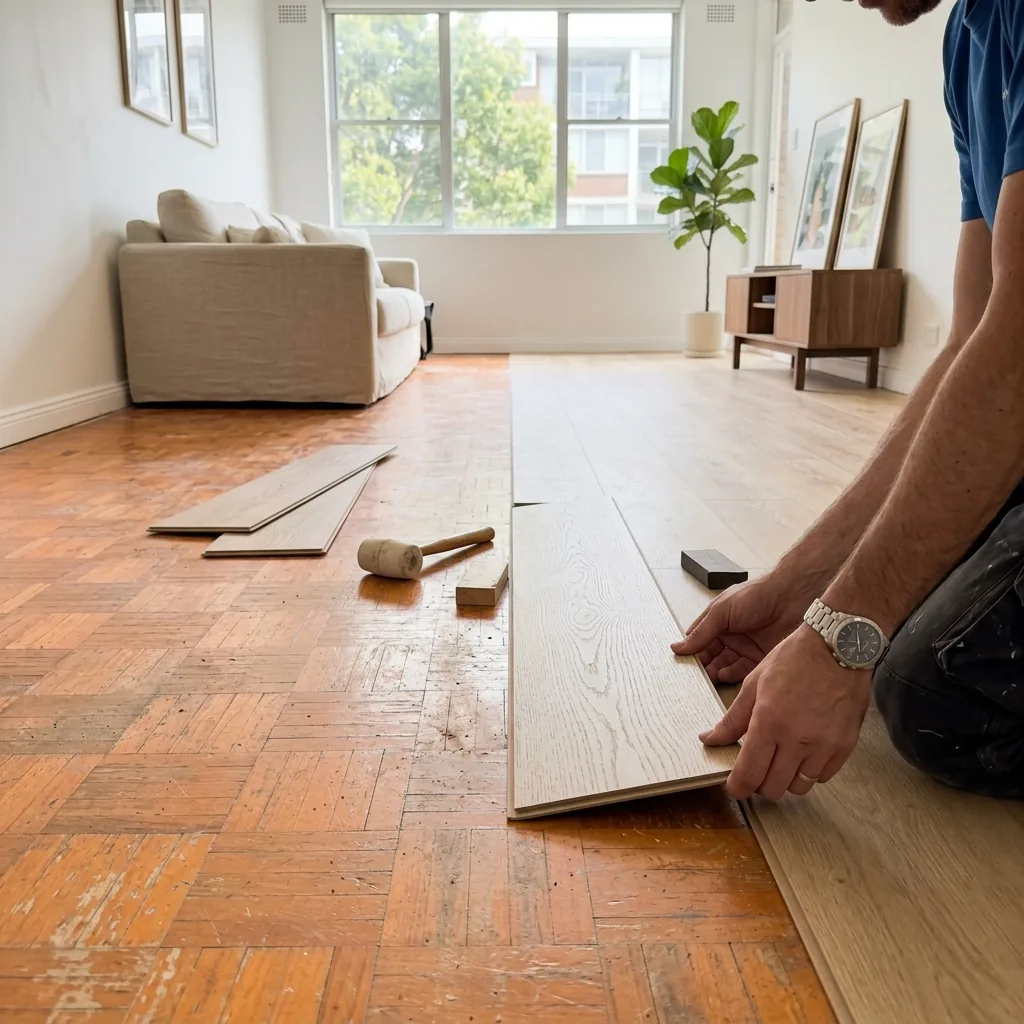
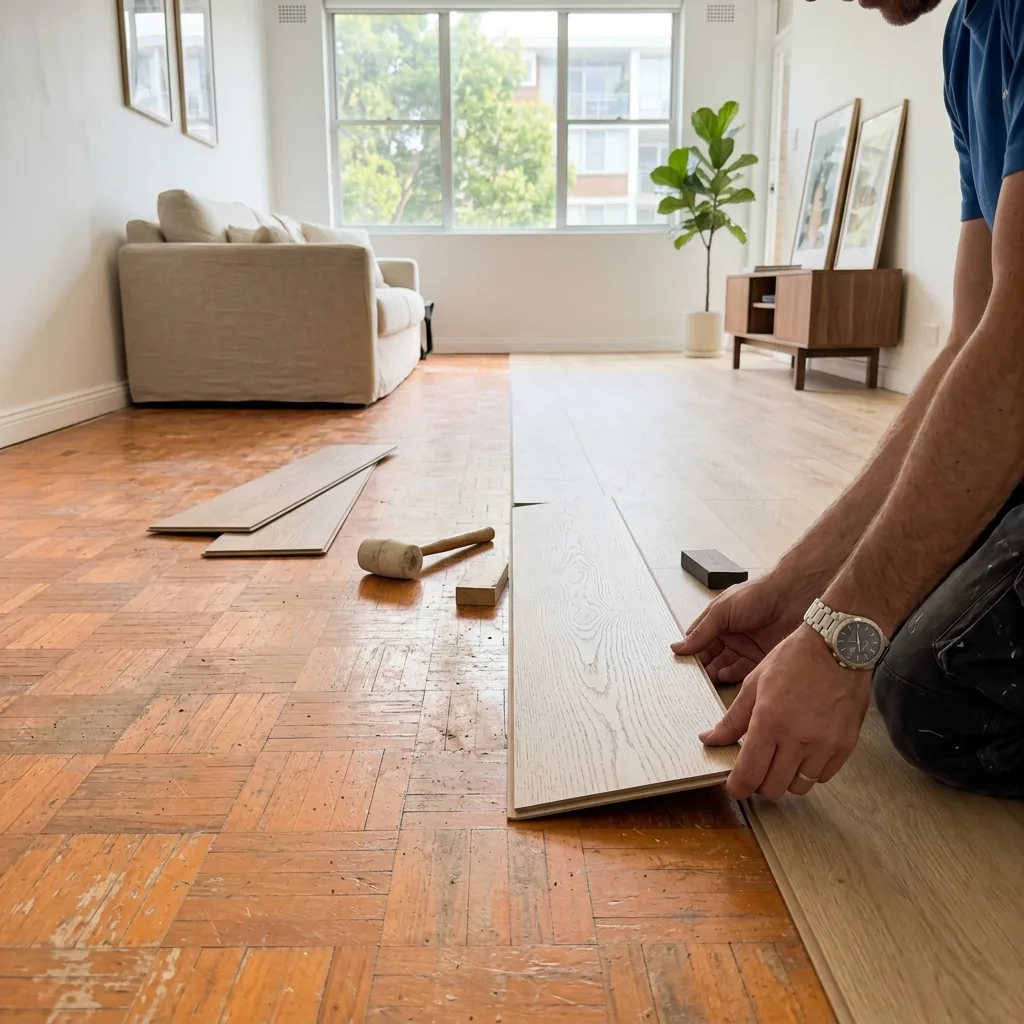
Luxury Vinyl Plank (LVP) with a click-lock edge is the most convincing renter flooring for living rooms and bedrooms. The planks click together into a floating floor that sits on top of the existing subfloor with no adhesive, no nails, and no screws. The floor is held together by the interlocking edges and the weight of the planks themselves.
A standard pack covers 2.5–2.8 sqm and costs €25–€40. For a 20 sqm studio living area, budget €200–€320 in materials plus one day of installation. The planks click apart in reverse at move-out — stack them, box them, take them to the next apartment.
Brands to look for: LifeProof (Home Depot), Pergo (IKEA-distributed), SKARA (IKEA’s own LVP line at ~€22/sqm). All use the same click-lock system and produce the same result.
- Real-World Application: Best for the main living area of a studio or the bedroom of a 1-bedroom apartment. The transformation is dramatic — a scratched laminate floor becomes what looks like oak planking in one day.
- Risk & Safety Notes: LVP floating floors need 8–12mm of expansion gap around all walls and fixed objects. Without this gap, the floor buckles in temperature changes. Use spacers during installation and cover the gap with a removable baseboard strip.
- ✅ Pros:
- Zero adhesive — floor leaves no trace on removal
- Looks identical to real wood flooring from normal viewing distance
- Waterproof — can go in kitchens and bathrooms unlike real wood
- Take it with you to the next apartment
- ❌ Cons/Limitations:
- 2-hour installation for a 20 sqm room
- Requires a flat subfloor — bumps over 3mm height difference cause plank movement
- Click-lock edges can chip if the floor takes heavy furniture leg impact
3. Large Area Rugs
The fastest and most reversible renter flooring fix. A large area rug — 200×300cm for a studio living area, 160×230cm for a studio bedroom zone — covers the majority of a bad floor in 5 minutes and adds visual warmth, acoustic insulation, and tactile comfort that hard flooring options cannot.
The practical consideration: choose polypropylene or nylon for durability and ease of cleaning. Wool rugs are beautiful but cost 3–5× more for the same size and are harder to clean. For a studio living area, a 200×300cm polypropylene rug costs €40–€90 from IKEA, Wayfair, or Amazon.
Under the rug: always use a non-slip rug pad ($15–$30). Without it, the rug slides on hard floors and becomes a slip hazard. Rug pads also prevent the rug backing from marking the floor beneath over time — relevant for protecting your deposit.
- Real-World Application: The universal fix. Works on any floor type, in any room, with no installation. For a studio, one large rug (200×300cm) and one smaller rug (120×180cm) in the bedroom zone cover 80% of the visible floor.
- Risk & Safety Notes: Always use a non-slip rug pad. Do not use rug tape directly on hardwood floors — it can pull the finish when removed.
- ✅ Pros:
- 5-minute install
- No adhesive, no tools, zero deposit risk
- Adds acoustic insulation (significant in hard-floor studios)
- Wide aesthetic range
- ❌ Cons/Limitations:
- Does not work in kitchens or bathrooms (slip risk when wet)
- Edges can roll up if not secured with pad
- Shows every piece of pet hair and dust
4. Interlocking Foam Tiles
Interlocking EVA foam tiles — the jigsaw-edge type — are the fastest full-floor coverage option for spaces where aesthetics are secondary to function: home gym corners, children’s play areas, home office zones. They interlock without adhesive and pop apart for removal or reconfiguration.
Modern foam tiles come in wood grain, solid colour, and soft carpet texture finishes that are significantly more attractive than the classic gym mat look. A 1sqm pack (4 tiles) costs approximately €8–€12 — the cheapest full-coverage option on this list.
For a 10 sqm room, budget €80–€120 and 20 minutes of installation. They are not suitable as the only flooring in a studio living area (they look like gym equipment regardless of finish) but work extremely well as a zone delineator: lay them in the home office corner or under the exercise area, and the texture transition signals a different use zone.
- ✅ Cheapest full-coverage option. Comfortable underfoot for standing. Great for home gym zones.
- ❌ Seams are visible on close inspection. Not a convincing replacement for real flooring in a main living area.
- Cost: €8–€15/sqm.
5. Adhesive-Free Cork Tiles
Cork tiles without adhesive — pressed flat by furniture weight rather than glued down — provide the warmest, most acoustically effective renter floor option. Cork naturally insulates against cold subfloors (significant in ground-floor apartments) and absorbs sound, reducing impact noise by 15–20 dB compared to bare hard floors.
The installation method for no-adhesive cork: lay the tiles in a staggered brick pattern, place furniture on top within 24 hours to press them flat, and they stay in position through pressure and the slight tackiness of the cork surface itself. They are not as secure as glued cork, but in a bedroom with a bed, wardrobe, and nightstand, they stay flat without adhesive.
- ✅ Best acoustic insulation of any option on this list. Warm underfoot. Sustainable material.
- ❌ Moves in areas with no furniture to hold them down. Not suitable for high-traffic corridors or kitchen areas.
- Cost: €10–€18/sqm.
6. Peel-and-Stick Carpet Tiles
Carpet tiles with repositionable adhesive allow you to create a carpeted zone in any room without wall-to-wall carpet installation. A 50×50cm tile covers 0.25 sqm and costs €3–€5 — budget €120–€200 to carpet a 20 sqm studio bedroom. The repositionable adhesive can be pressed down, peeled up, and repositioned without leaving residue on most hard floors.
The practical advantage over a large area rug: individual tiles can be removed for cleaning or replaced when stained. The disadvantage: the seams between tiles are visible, and the adhesive is less secure than a permanent install.
- ✅ Individual tiles replaceable if stained. Creates a carpeted feel without full carpet installation.
- ❌ Seams visible. Adhesive can pull finish from bare wood floors — test one tile first.
- Cost: €12–€20/sqm.
7. Outdoor Interlocking Deck Tiles (Indoor Use)
Interlocking acacia or bamboo deck tiles — the same product used for balcony floors — work indoors in specific contexts: an entry zone, a kitchen island area, a bathroom mat replacement. A set of 9 tiles (30×30cm each, covering 0.81 sqm) costs approximately €20–€30 and installs in 10 minutes with no tools or adhesive.
Used indoors, the wood tiles create a warm, defined zone against any existing floor. They are most effective as an area rug substitute in the kitchen or entryway where textile rugs are impractical. For full-room coverage indoors, they are expensive (€22–€25/sqm) compared to LVP click-lock planks.
- ✅ No adhesive. Reversible. Works as a defined zone inside where rugs are impractical.
- ❌ Higher cost per sqm than LVP for full-room coverage.
- Cost: €12–€22/sqm.
My Experience with Renter Flooring
My worst floor was orange-lacquered 1980s parquet in a Berlin Altbau apartment. It was original, the landlord valued it, and any floor covering had to be removable without trace.
I tried three approaches. First, a large 200×290cm rug from IKEA (€85): immediate improvement, but the parquet was still visible around the edges and the room still felt like 1987. Second, peel-and-stick vinyl tiles in the kitchen (the one room I could not rug): they came up cleanly at move-out with a heat gun, but I spent 45 minutes removing residue. Third — and this is the one I wish I had done from the start — click-lock LVP planks over the living area parquet, with the expansion gap hidden under the existing baseboard.
The LVP installation took 4 hours including the expansion gap spacers and the result looked like a renovation. The landlord inspected at move-out and never knew the original floor was under the LVP. Removal took 90 minutes — click the planks apart, stack them, done.
The lesson: for anything other than a temporary or small-area fix, the LVP floating floor is worth the 4-hour investment.
Conclusion
For a full living room or bedroom transformation: click-lock LVP floating planks (€20–€40/sqm, 4-hour install, fully reversible).
For kitchen or bathroom quick fix: peel-and-stick vinyl tiles (€15–€28/sqm, 30-min install, heat gun removal).
For any floor, immediately: large area rug with non-slip pad (€5–€20/sqm, 5-min install, zero risk).
For a complete renter strategy — how flooring fits with no-drill wall decor, renter-safe furniture, and deposit-protecting modifications — see our studio apartment layout ideas guide.
Safety Disclaimer
Floating LVP and foam tile floors over existing surfaces: ensure the combined floor height does not create a tripping hazard at doorways. Maximum height increase without a transition strip is typically 5mm. Use a bevelled transition strip at doorways if the new floor height difference exceeds this. Peel-and-stick tiles on stairs: not recommended — the adhesive is not rated for the shear forces on stair treads.