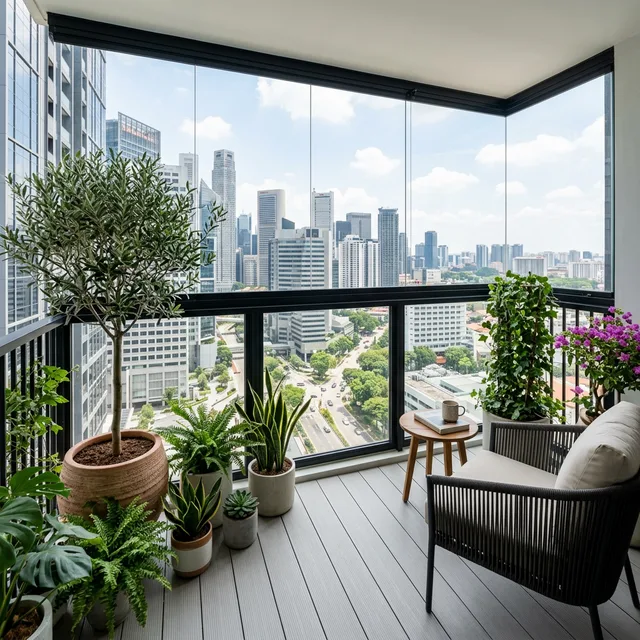
Finding a renter-friendly balcony privacy screen is the only way to enjoy a morning coffee in your pajamas when your neighbor’s windows are exactly 12 feet away. In a dense urban environment, a balcony without a screen isn’t an outdoor space; it’s a stage where you are the unwilling performer for the entire block. Most renters suffer in silence because they assume installing privacy requires a power drill, masonry bits, and a heavy fine from the landlord for damaging the building’s facade.
The reality is that you can reclaim your sanctuary using specialized materials designed to attach to metal railings or glass partitions without a single permanent screw. These solutions focus on lightweight, wind-permeable fabrics and adjustable tension systems that can be uninstalled in 10 minutes when your lease ends. Whether you are dealing with a standard 4×10 foot concrete balcony or a tiny Juliet rail, the right screen doesn’t just block the view—it creates a psychological barrier that turns 40 square feet of exposed ledge into a private room.
Why trust this guide? I once spent $45 on a heavy bamboo fence that I “secured” with tape and prayer, only to have it nearly collapse onto a passerby during a summer thunderstorm. I’ve since spent years testing no-drill attachments that actually survive high-rise wind tunnels without leaving a mark on the railing.
| Balcony Type | Best For | Top Pick |
|---|---|---|
| Metal Railing | Total Opaque Block | High-Density Polyethylene (HDPE) Screen |
| Glass Enclosure | Modern Aesthetics | Adhesive-Free Static Cling Film |
| Juliet Balcony | Airflow + Privacy | Faux-Ivy Expandable Trellis |
| Exposed Patio | Versatile Layouts | Freestanding Retractable Side Awning |
| Windy 10th Floor | Wind Resistance | Mesh Windbreak Screen |
How Balcony Privacy Screens Work in Small Spaces
A renter-friendly balcony privacy screen operates on the principle of temporary tension. Instead of using bolts to anchor to the building, these screens use the existing railing as a structural skeleton. You are essentially “skinning” the railing with a new material.
The most common mechanism involves heavy-duty, UV-resistant cable ties or specialized bungee cords that wrap around the vertical spindles of your balcony. Because the weight is distributed across the entire length of the railing, even a 15-foot long screen won’t put undue stress on a single point. For glass balconies, the tech moves toward molecular adhesion (static cling) or vacuum-suction brackets that hold 5 lbs of tension without using glue.
How to Choose a Privacy Screen for a Small Balcony
When you’re living in a 350-square-foot studio, you have to ignore the “pretty” lifestyle photos on Pinterest and focus on three brutal variables: Wind Load, Translucency, and Installation Integrity.
- The Wind variable: A solid plastic screen acts as a sail. If you live on the 5th floor or higher, a solid screen will eventually rip your railing out or snap its ties. I look for screens with at least 10% wind permeability—small pores that let the air through while still blocking the neighbor’s gaze.
- UV Rating: Cheap $15 screens turn into brittle, yellow plastic after 3 months of summer sun. Look for “UV-Stabilized” labels. If the material feels like a cheap grocery bag, it will disintegrate and leave a micro-plastic mess on your balcony.
- Landlord-Friendly Fasteners: If the kit comes with metal screws, throw them away. Only use industrial-grade zip ties (rated for 50 lbs) or nylon cords that won’t scratch the powder-coated finish of the building’s metalwork.
What is the most wind-resistant balcony privacy screen for high-rise renters?
For renters living above the 4th floor, the best solution is a high-density polyethylene (HDPE) mesh screen with reinforced brass grommets every 12 inches. Unlike solid wood or plastic panels, HDPE mesh is breathable, allowing wind to pass through the fabric at a micro-level, which reduces the “sail effect” by up to 60%. This material is nearly impossible to tear and can withstand gusts of up to 45 mph if secured correctly with elastic bungee toggles. These toggles are superior to rigid zip ties because they provide “give,” allowing the screen to move slightly with the wind rather than snapping under the pressure of a sudden gust.
Best 5 Renter-Friendly Balcony Privacy Screens for Urban Living
1. DearHouse Faux Ivy Privacy Fence (Best for Juliet Balconies)
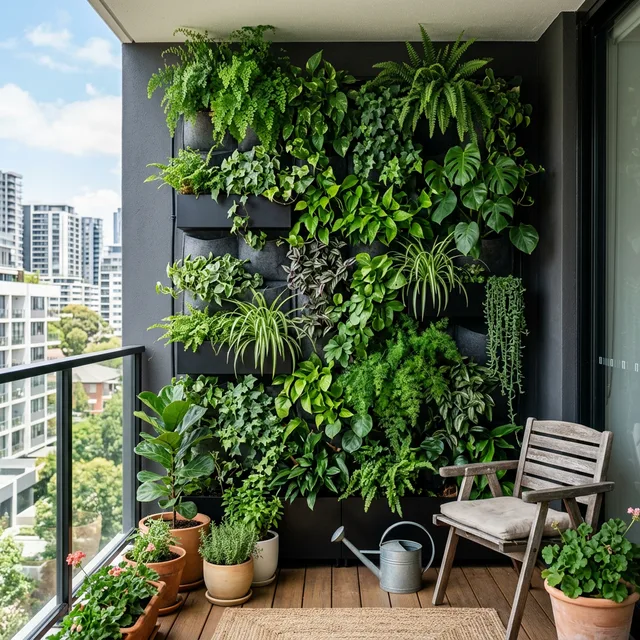
This is the classic urban renter’s choice for adding green vibes without the maintenance. It’s an expandable willow wood trellis with polyester ivy leaves attached.
- Real-World Application: Ideal for 3-foot high Juliet balconies where you want to block the direct line of sight from the street while still letting light into your room.
- Risk & Safety Notes: The wooden trellis is lightweight (under 4 lbs), but it should be secured at every corner. If the trellis is fully expanded to its 98-inch length, it becomes thinner and more prone to bending.
- ✅ Pros:
- Looks like a real garden from 10 feet away.
- Expandable design fits weirdly shaped corners.
- ❌ Cons/Limitations:
- Leaves can fade to a weird blue-green after 2 years.
- Dust builds up on the plastic leaves in city environments.
2. Alion Home High-Density Mesh Screen (Best for Wind Resistance)
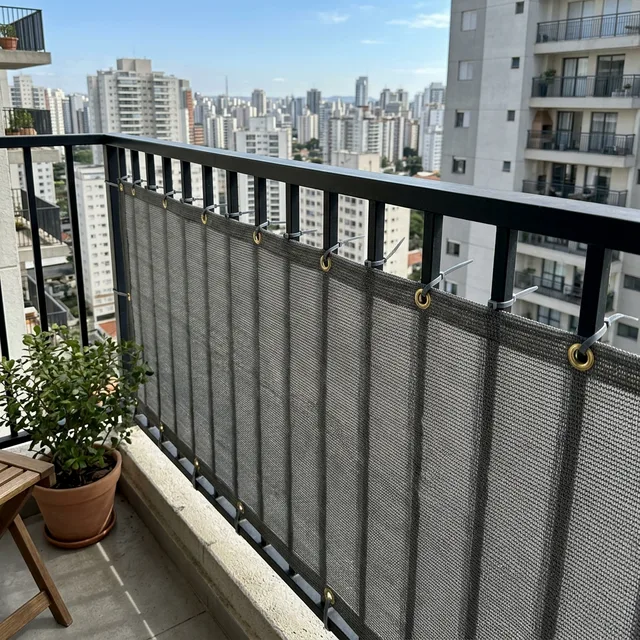
This is a heavy-duty fabric screen made from 185 GSM polyethylene. It’s commercial-grade but priced for renters.
- Real-World Application: Perfect for high-rise balconies (floors 5-20) where wind is a constant threat to your sanity and your furniture.
- Risk & Safety Notes: Ensure the brass grommets are lined up with your railing’s vertical bars. Use UV-rated zip ties; standard interior zip ties will snap in 4 weeks.
- ✅ Pros:
- Blocks 90% of visibility but 0% of the breeze.
- Available in custom heights like 36 inches to fit standard rails.
- ❌ Cons/Limitations:
- Industrial “construction site” aesthetic if you choose the wrong color.
- Edges can fray if you try to cut it to size.
3. Tangkula Retractable Side Awning (Best for Shared Balconies)
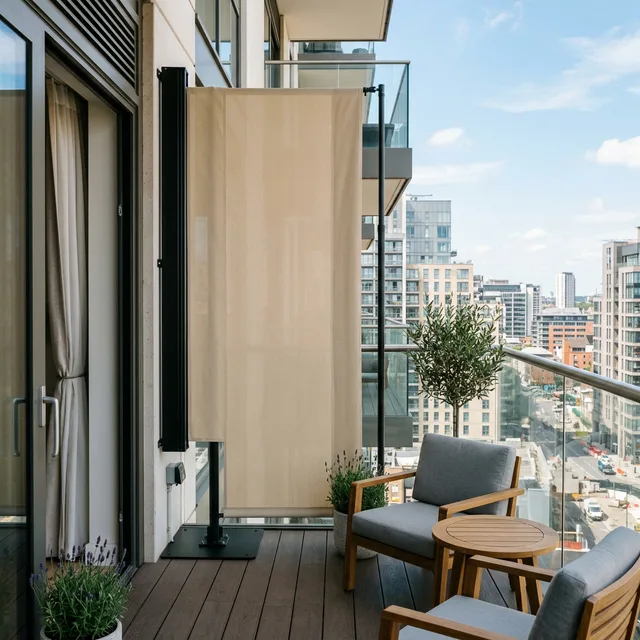
If you have one of those “double balconies” where only a thin glass pane separates you from your neighbor, this is the nuclear option for privacy.
- Real-World Application: Best for side-by-side balconies where you need a vertical wall that can be rolled away when not in use.
- Risk & Safety Notes: This is heavy (15-20 lbs). Most versions require a base plate. For a truly renter-friendly version, you must bolt the base to a heavy 2×2 foot paving stone rather than the balcony floor.
- ✅ Pros:
- Creates a literal wall for 100% privacy.
- Retracts into a sleek aluminum housing.
- ❌ Cons/Limitations:
- Expensive, usually costing between $80 and $120.
- Can “rattle” in the wind if not fully tensioned.
4. Windscreen4less Bamboo Reed Fence (Best for Natural Vibes)
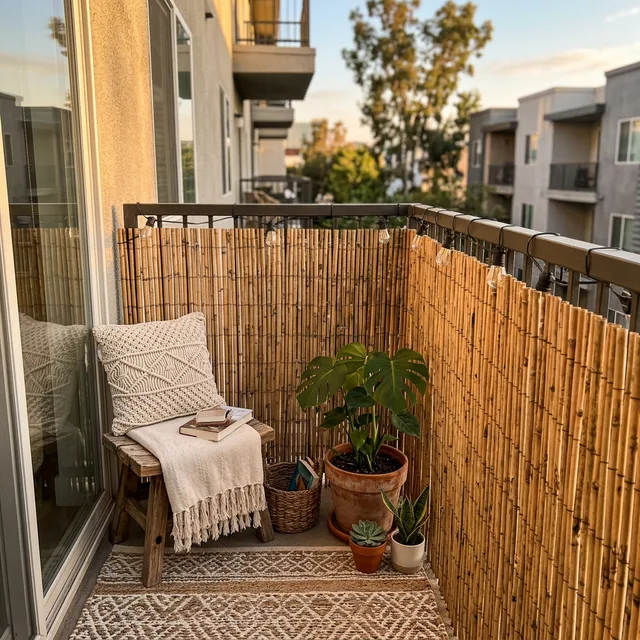
Natural bamboo reeds woven together with galvanized wire. It’s the cheapest way to cover a large area.
- Real-World Application: Best for ground-floor patios or low-rise apartments where you want a “boho” look for under $30.
- Risk & Safety Notes: Bamboo is flammable. Keep it at least 3 feet away from any balcony grills or fire pits.
- ✅ Pros:
- Very cheap (approx. $25 for a 4×13 foot roll).
- Easy to cut with standard kitchen shears.
- ❌ Cons/Limitations:
- Reeds will eventually snap and leave sharp bits on the floor.
- Wire can rust and leave marks on white railings.
5. Rabbitgoo One-Way Window Film (Best for Glass Railings)
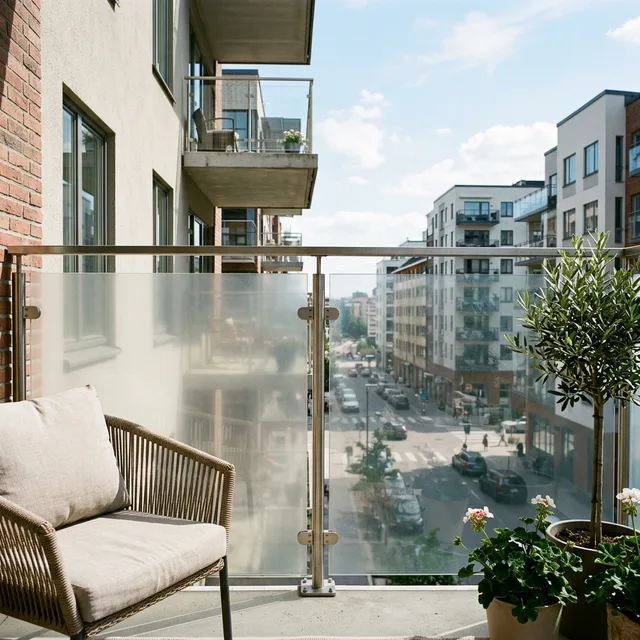
If your balcony is a modern “fishbowl” with glass panels, you don’t need a fence; you need a film.
- Real-World Application: Ideal for glass balconies where the landlord forbids anything to be hung over the rail.
- Risk & Safety Notes: Only apply to the interior side of the glass to prevent weather degradation. Use plenty of soapy water during installation to avoid bubbles.
- ✅ Pros:
- Absolutely zero footprint; invisible to the landlord.
- Blocks heat, lowering your AC bill in a south-facing studio.
- ❌ Cons/Limitations:
- Effectiveness relies on lighting; at night, with your balcony lights on, people can still see in.
- Tricky to apply on large 6-foot panels without a second person.
My Experience with Zip-Ties and the “Night of 100 Snaps”
Last August, I learned the hard way that not all zip ties are created equal. I had just installed a beautiful $60 HDPE screen on my 12th-floor balcony. To save $5, I used a pack of clear, “general purpose” zip ties from the dollar store. They looked fine for about 3 weeks.
Then a summer storm hit with 40 mph gusts. I was sitting in my living room when I started hearing a rhythmic pop-pop-pop—the sound of the plastic ties snapping one by one under the pressure. By the time I realized what was happening, half the screen was flapping like a giant sail, threatening to rip the entire railing off the concrete. I had to go out in the pouring rain with a kitchen knife to cut the remaining ties before the wind did something catastrophic.
I found the clear ties had turned yellow and brittle from the sun in less than a month. Now, I only use UV-rated black zip ties or stainless steel ties for any privacy screen. If you’re using plastic, look for the “Outdoor Rated” label. It’s the difference between a private sanctuary and a $500 repair bill.
Conclusion
Reclaiming your balcony privacy as a renter is about using the right temporary materials for your specific wind and light conditions. If you’re on a high floor, stick to HDPE mesh and UV-rated ties. For low-profile Juliet balconies, the faux ivy trellis is a winner. Start with a budget-friendly option like the reed fence if you’re not sure, but always prioritize the security of your attachments.
Don’t let the neighbors win—block the view today and finally read that book in peace.
Safety Disclaimer
Always ensure your privacy screen does not exceed the wind-load capacity of your balcony railing. Never use solid wood panels or heavy materials on high-rise balconies (above the 3rd floor) as they can act as sails and cause structural failure or become dangerous projectiles. Regularly inspect your zip ties for sun damage and replace them every 12 months to prevent snapping.