
A no-drill balcony herb garden is the version renters can actually build — no anchors, no masonry bits, no landlord conversation. The whole setup hangs, clamps, hooks, or stands freestanding. The only constraint is that everything has to hold up when the wind gets to it, which in cities like Chicago or New York means you can’t just hang a lightweight plastic basket off a railing and hope for the best. If you are still kitting out the space, our guide to small balcony furniture covers chairs and tables that fit a tight footprint.
I’ve built four versions of this on a 2.5m × 1.2m east-facing balcony in Chicago. Here is what held, what blew over, and what actually keeps basil and parsley alive through a Midwest summer.
Table of Contents
Why No-Drill Specifically
Most balcony gardening guides assume you own the space. Renters operate under different rules:
- Standard lease language prohibits “permanent alterations” — drilling into concrete balcony floors or walls typically qualifies
- Masonry drilling on apartment balconies often requires building management approval even for tenants who technically own the unit in a condo setup
- Deposit risk: a 3/8-inch anchor hole in concrete that you’ve tried to patch is visible to any building manager doing a walkthrough
The no-drill constraint is not just about aesthetics. It’s about not losing $500–$1,500 in deposit deductions for holes in concrete that cost more to repair properly than the fine itself.
For the full breakdown of what’s allowed on apartment balconies — including the difference between railing mounting (usually permitted) and structural drilling (usually not) — see the balcony fire pit rules and renter rights guide.
The 4 No-Drill Setups That Work
Setup 1: Railing Planter Hooks (Best for Most Balconies)
Cost: $25–$60 | Herbs: 2–5 pots | Wind resistance: Medium
Rail planter brackets clamp onto balcony railings — typically horizontal pipe or flat rails between 0.75 and 2 inches diameter — with a hook or U-bolt mechanism. No drilling. The planter hangs on the outside or inside of the rail.
What works: powder-coated steel railing planter hangers rated for 10–15 lbs per hook. Bloem and Umbra both make reliable versions. For outside-the-rail hanging, the planters sit in the wind shadow of the railing itself on windy days, which reduces wind stress on the plants.
What doesn’t work: plastic clip-on holders rated for 2–4 lbs. They hold in still conditions. One gust at 25 mph and a pot with wet soil (which weighs 4–8 lbs for a standard 6-inch pot) will come off and land on whoever is below you.
Use terracotta or ceramic pots only inside the balcony. Outside-the-railing: use lightweight plastic or fiberglass pots to stay under the hook’s rated weight.
Setup 2: Freestanding Tiered Shelf (Best for Large Balcony)
Cost: $45–$120 | Herbs: 6–12 pots | Wind resistance: Medium-High (if weighted)
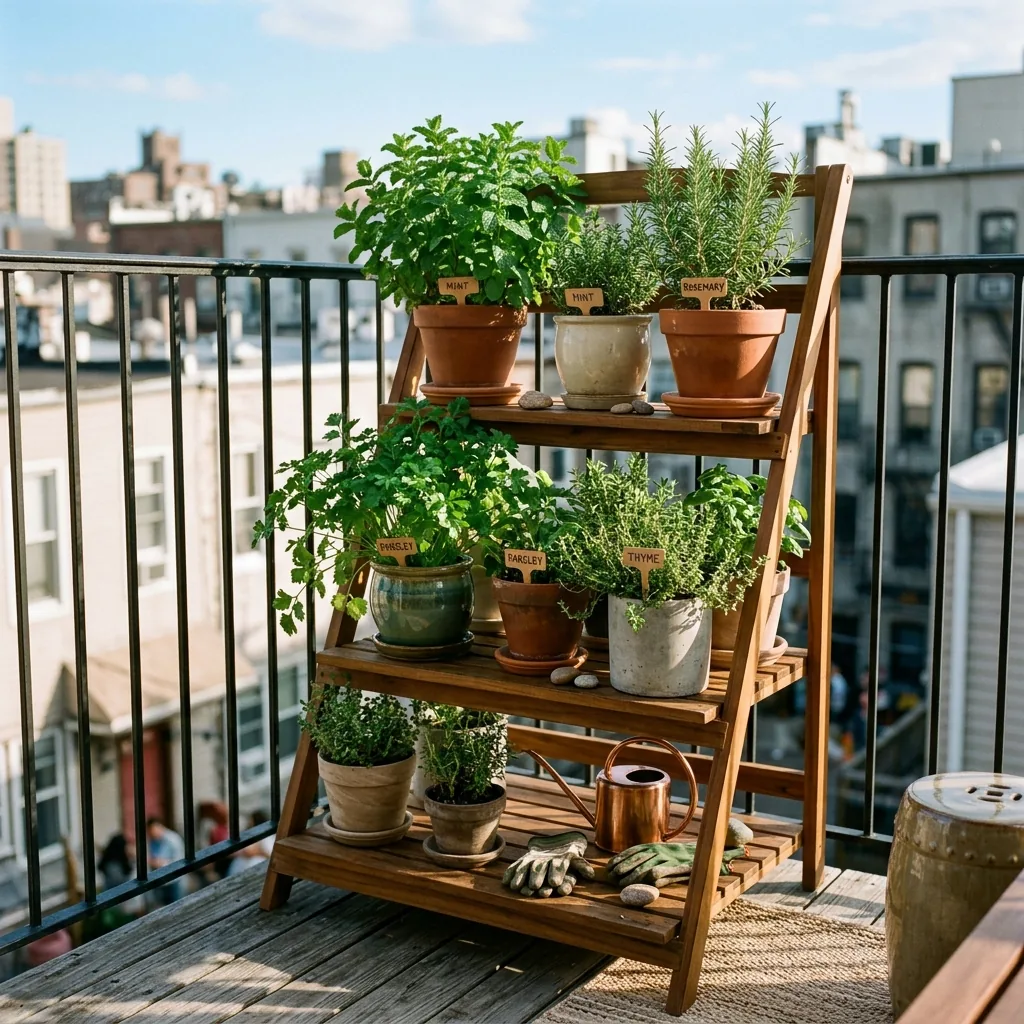
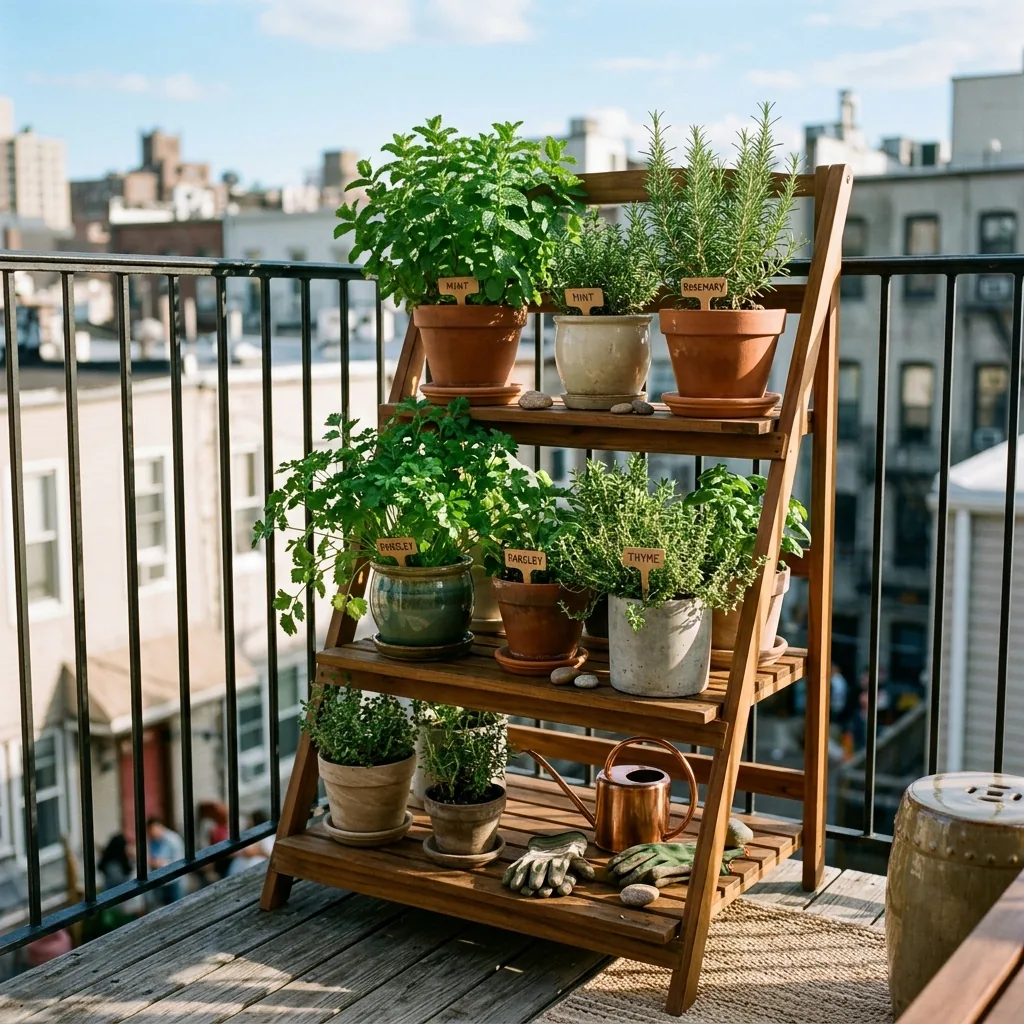
A freestanding 3–4 tier plant stand puts a lot of herb capacity in a 16×16-inch footprint — about 256 square inches of floor space for 9–12 pots. On a 2.5m × 1.2m balcony, that’s a legitimate herb garden without touching any walls.
Key requirement: weight the bottom shelf. A tall tiered stand with lightweight empty-ish pots at the bottom and heavy pots at the top is a wind disaster. Put your heaviest pots — or a sandbag or large stone — on the bottom tier. The center of gravity drops and the whole structure becomes substantially more stable.
Etagere stands in wrought iron or powder-coated steel handle weather better than wood, which warps and rots with repeated wet-dry cycles. IKEA’s HYLLIS shelving unit ($20) is not rated for outdoor use but works on a covered balcony with a sacrificial coat of outdoor sealant applied annually.
Best position: back corner against the building wall where it gets the most shelter from wind.
Setup 3: Over-Railing Planter Boxes (Best for Established Herbs)
Cost: $30–$80 | Herbs: 4–8 linear feet of mixed herbs | Wind resistance:** High (due to weight)
Window box-style planter boxes that hook over the top of a flat or pipe railing. The planter box’s weight (soil + plants = 15–30 lbs for a 24-inch box) keeps it in place. These don’t need hardware — gravity holds them.
The limitation: your railing needs to be flat-topped or a standard circular pipe diameter (1–1.5 inch for most railing hooks). Decorative railings with unusual profiles often don’t work with standard hooks.
For herbs specifically, a 24×6-inch planter box holds 4–5 plants in a row — basil, parsley, chives, thyme, mint in separate compartments. This linear format lets you harvest by reaching over the railing rather than moving pots. Practical for a kitchen herb supply you’re actually using rather than displaying.
Note on mint: always plant mint in its own separate container. It will colonize every other pot within one growing season if you plant it with other herbs.
Setup 4: Freestanding A-Frame Trellis + Hanging Pots
Cost: $50–$100 | Herbs: 4–8 hanging pots | Wind resistance: Low (needs sheltered location)
An A-frame wooden or metal trellis (the kind normally used for climbing vines) used as a freestanding pot holder. Hang S-hooks from the horizontal bars and suspend lightweight hanging planters. No wall contact, no floor contact beyond the trellis feet.
The limitation is wind. Hanging pots swing in wind, which both stresses the plant roots and eventually works the hook loose. This setup works on covered or loggia-style balconies with wind protection. On exposed high-rise balconies, it’s unreliable. On high floors, add wind protection screens.
On a covered porch or ground-floor balcony with minimal wind exposure, it’s the most visually dramatic setup — herbs hanging at multiple heights, accessible from multiple sides.
What to Plant (Per Setup)
Different no-drill setups suit different herbs based on weight, root depth, and sun/wind requirements:
| Setup | Best Herbs | Why |
|---|---|---|
| Railing hooks (outside) | Thyme, oregano, chives | Drought-tolerant, light pots, handle wind |
| Railing hooks (inside) | Basil, parsley, cilantro | Wind-sensitive, need more water |
| Tiered shelf | Mixed — basil top, mint bottom | Basil needs best light at top; mint is vigorous and holds the bottom weight |
| Over-railing planter box | Chives, thyme, parsley, basil | Linear format, easy harvest, suits compact growth habits |
| A-frame hanging | Trailing herbs: thyme, oregano, nasturtium | Work best with trailing or bushy growth in hanging form |
East-facing balcony note: you get 4–6 hours of direct morning sun before shade sets in. That’s enough for most culinary herbs except basil, which wants 6–8 hours. On an east-facing balcony, grow basil in the railing position where it gets direct morning sun from opening to about noon.
The full breakdown of which herbs survive which sun conditions is in the balcony herb garden complete guide.
Common Mistakes
Using undersized hooks. A standard 6-inch nursery pot with wet potting mix weighs 4–8 lbs. Most cheap railing hook sets are rated for 2–4 lbs. Buy hooks rated for at least 3× the expected pot weight.
Ignoring the top-heavy problem. A tiered stand with large pots at the top and small/empty pots at the bottom will tip over. Heaviest pot always on the bottom shelf.
Planting in too-large pots. A 10-inch pot of basil is a wind sail on a railing hook. Keep individual hanging or rail-mounted pots to 6–8 inches maximum in diameter.
Forgetting drainage. All balcony herb pots need drainage holes. A pot sitting in standing water for 48 hours after a rain event will rot roots. Make sure pots drain freely and that drainage water doesn’t pool on your balcony floor (it will reach the balcony below via overhang gaps in some buildings).
