When you live in a 25-square-meter micro-studio with a single, small window, buying a massive basil plant from the supermarket usually results in a tragic, wilted pile of brown leaves within five days. However, accepting the high cost of pre-cut, plastic-wrapped cilantro every time you cook is entirely unnecessary. By leveraging modern technology, engineering a thriving micro herb garden indoors is not just possible; it is highly productive, even if you do not have a balcony or direct sunlight.
The key to indoor cultivation in a tight space is rejecting the fantasy of large, messy terracotta pots filled with unpredictable soil. You must approach your culinary garden as a piece of functional kitchen hardware. You need a setup that is sterile, compact, and completely automated.
In this comprehensive guide, we explain exactly how to build a micro herb garden indoors that guarantees a constant supply of fresh, powerful flavors without sacrificing an inch of your limited counter space.

1. The Hydroponic Countertop Advantage
If your apartment lacks a bright, south-facing window sill, soil is your biggest enemy. It is messy, breeds microscopic fungus gnats, and requires an intuitive understanding of watering that most beginners lack. Furthermore, traditional pots are bulky and visually cluttered.
The absolute best way to build a micro herb garden indoors is to invest in a compact, all-in-one smart hydroponic system (like the AeroGarden Harvest or Click & Grow Smart Garden). These systems are roughly the size of a toaster. They feature a sleek water reservoir and a built-in, adjustable LED grow light canopy. Because the herbs grow directly in water spiked with liquid nutrients, they grow up to five times faster than they would in potting soil. The system automates the 16-hour light cycle and physically alerts you when the water level is low, making it practically foolproof for busy urban renters.
2. Choosing the Right High-Yield Herbs
You cannot grow everything in a tiny countertop garden. Massive, sprawling plants like dill or sprawling rosemary will quickly aggressively overtake the small grow light canopy, shading out smaller plants and causing a tangled, leggy mess.
When stocking your smart garden, you must curate a hyper-efficient “culinary holy trinity.” Plant exactly three things: Genovese Basil (which grows explosively and can be harvested weekly for pesto), Thyme (a compact, trailing herb perfect for the edges of the unit), and Mint. Mint is a famously invasive weed if planted outdoors in the ground, but contained within a single hydroponic pod, it provides an endless supply of fresh leaves for teas or cocktails without destroying your other crops.
3. The Vertical Wall-Mounted Hack
If you truly live in a micro-apartment where trading even a toaster-sized piece of counter space is impossible, you must immediately abandon horizontal surfaces. The only unused real estate in a tiny kitchen is the blank wall space between your upper cabinets and the backsplash.
You can construct a brilliant micro herb garden indoors by installing a magnetic knife rack or a heavy-duty, adhesive-backed metal strip directly onto the kitchen wall or the side of your refrigerator. Purchase small, lightweight, magnetic tin planters. Fill them with a high-quality, airy potting mix (heavily amended with perlite for drainage) and plant shallow-rooted herbs like chives or parsley. Because these tins lack drainage holes, you must water them sparingly using a spray bottle to prevent the roots from drowning in stagnant mud.
4. The Essential Art of “Pinching Back”
A common mistake new indoor gardeners make is treating their fresh herbs like ornamental houseplants. If you let a basil plant just grow straight up toward the LED light, it will become a single, tall, weak stem that eventually flowers. Once a basil plant flowers, its leaves turn horribly bitter and woody.
To maximize your yield in a small space, you must violently and consistently harvest the plant. This technique is called “pinching back.” Every time the basil stem develops three sets of mature leaves, use sharp scissors to cut the central stem completely off, exactly above the second set of leaves. This aggressive pruning forces the plant to split into two new branches. By repeating this process weekly, you force a single, lanky basil stem to mutate into a dense, bushy, highly productive shrub that fits perfectly underneath your low grow light.
5. Integrating the “Grow Light Bulb”
If you already own a collection of beautiful, aesthetic ceramic pots and refuse to buy a plastic hydroponic machine, you can still succeed. However, you cannot rely on the weak, ambient light filtering through your apartment blinds.
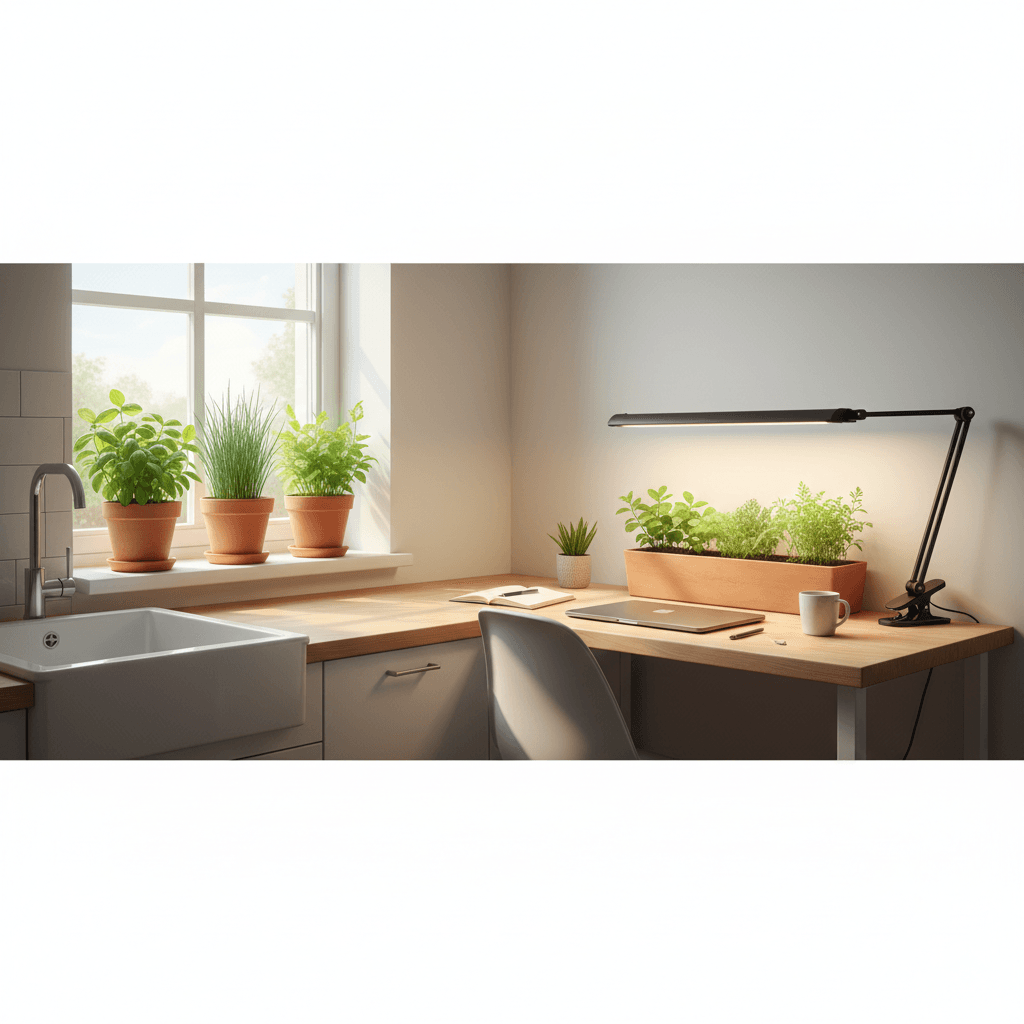
You must hack a standard desk lamp or a pendant light fixture hanging above your kitchen island. Replace the standard warm-white LED bulb with a specialized, full-spectrum LED grow bulb (like the GE BR30 line or a Sansi bulb). These bulbs screw into any standard E26 socket but emit a highly concentrated, photosynthetic spectrum of light heavily skewed towards the blue and red wavelengths that leafy greens desperately require. Point this lamp directly down at your ceramic pots, keeping the bulb exactly 15 centimeters above the canopy to prevent the herbs from stretching weakly toward the light.
6. The 10-Minute Microgreen Tray
If you lack the patience to wait four weeks for a basil seed to germinate and grow into a harvestable plant, or if you simply crave intensely spicy, crunchy textures for your sandwiches, you must pivot your indoor setup entirely to microgreens.
Microgreens (like radish, mustard, and arugula shoots) do not require deep pots, heavy nutrients, or even intense grow lights. Buy a shallow, 10×10 inch plastic germination tray. Line the bottom with a wet hemp growing mat or a thin layer of coconut coir. Scatter the seeds incredibly densely across the wet mat. Place the tray on top of your refrigerator or on a bookshelf. In exactly 10 to 12 days, you will have a dense forest of tiny, highly nutritious greens ready to be sheared off with scissors and eaten immediately.
7. Preventing the Fungus Gnat Invasion
The most catastrophic threat to any soil-based micro herb garden indoors is the sudden explosion of fungus gnats. These tiny, black, fruit-fly-like insects lay microscopic eggs in the top layer of damp potting soil. Within a week, hundreds of them will swarm your kitchen sink and relentlessly fly into your face while you cook.
If you choose to use soil instead of hydroponics, you must build physical and biological defenses immediately. First, never overwater; let the top two inches of soil dry entirely between waterings to create a hostile desert for the eggs. Second, completely cover the visible surface of the soil with a thick, 1-inch layer of coarse builder’s sand or decorative gravel. The gnats cannot physically crawl through the heavy sand to reach the damp soil below to lay their eggs, instantly breaking their reproductive cycle without spraying toxic chemicals near your food.
Evaluating Indoor Herb Methods
Use this comparison to decide which indoor system fits your lifestyle:
| Garden Type | Space Required | Maintenance Level | Best Crop |
|---|---|---|---|
| Smart Hydroponics | Low (Countertop) | Very Low (Automated) | Basil, Mint |
| Magnetic Wall Tins | Zero (Wall mounted) | Medium (Careful watering) | Chives, Parsley |
| Microgreen Trays | Low (Bookshelf) | High (Harvest weekly) | Arugula, Radish |
| Ceramic Pots + Grow Bulb | High (Tabletop) | High (Pest control) | Rosemary, Thyme |
Safety Disclaimer: If you build a magnetic wall garden, do not stick the heavy, soil-filled tins directly above your stove or toaster. The massive, fluctuating heat and greasy steam from cooking will literally bake the roots inside the metal tins and instantly kill the delicate herbs.
Conclusion
You do not need an outdoor balcony or a green thumb to enjoy fresh, vibrant flavors in your cooking. By engineering a smart micro herb garden indoors, you outsmart the physical limitations of your tiny apartment. Whether you invest in an automated hydroponic countertop unit or hack a desk lamp to grow a dense bush of basil, you will completely eliminate the sad, plastic-wrapped herbs from your grocery budget.
Ready to start harvesting? Order a cheap, full-spectrum LED grow bulb tonight, screw it into your desk lamp, and place a small pot of grocery-store basil directly underneath it to watch it explode with new growth.
How do I stop my hydroponic garden’s bright LED lights from ruining the vibe of my living room at night?
Most smart gardens feature built-in timers. You must strictly program the 16-hour light cycle to align with your waking hours. Set the machine to turn on at 6:00 AM and shut off completely at 10:00 PM so the intense white light does not interfere with your body’s melatonin production or ruin the cozy ambiance of your evening.
Why are the leaves on my indoor basil turning yellow and falling off?
Yellowing leaves at the absolute bottom of the plant strongly indicate nitrogen deficiency or severe root rot from overwatering. If the soil is soaking wet and smells like a swamp, the roots are drowning. If you are growing hydroponically, it means you have forgotten to add the liquid nutrient drops to the water reservoir for several weeks, and the plant is literally starving to death.
Can I grow garlic or onions indoors like this?
No. Garlic and large onions are deep-rooted bulb crops that require a massive volume of soil, a prolonged cold-dormancy period (winter), and specific day-length triggers to form the actual bulb. They are entirely unsuited for shallow, warm, countertop indoor systems. Stick strictly to leafy herbs.