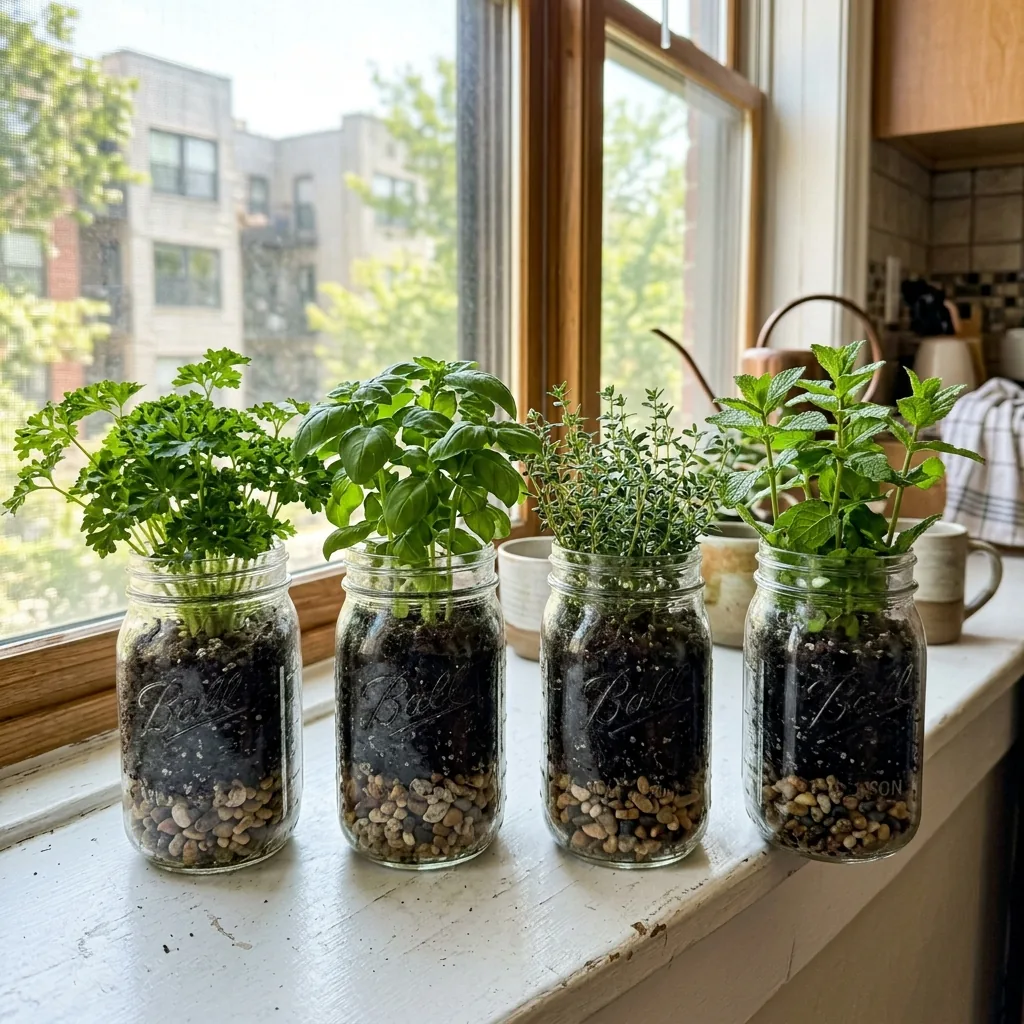
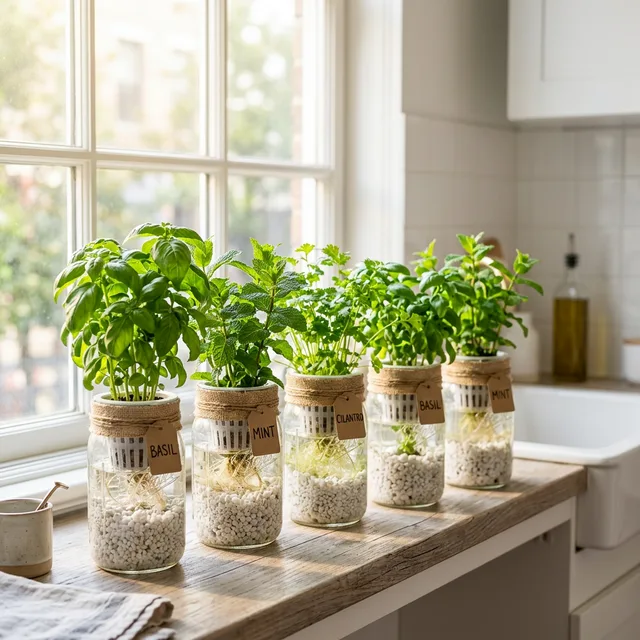
Finding the right mason jar kitchen herb garden ideas for small windowsills is the ultimate design hack for urban renters who want fresh basil without the bulk. When you live in a 350-square-foot studio, your kitchen windowsill is likely your only piece of agricultural real estate. It is probably only 4 inches deep and 24 inches wide.
Standard plastic plant pots are too wide, too ugly, and they leak dirty water onto your white paint every time you water them. Mason jars, on the other hand, are the perfect geometric fit. They are narrow, 100% waterproof (since they have no drainage holes), and their transparent glass allows you to monitor root health and water levels at a glance. However, you cannot just dump dirt into a jar and expect a plant to survive; without drainage, the roots will rot in three days. To succeed, you need to use specific soil-free or hydroponic techniques that turn a simple glass jar into a high-performance growing vessel.
My Experience with Windowsill Mason Jars
In my third apartment, my kitchen window faced a brick wall, but it received just enough indirect southern light to sustain a few plants. I bought five beautiful wide-mouth quart mason jars and filled them with standard potting soil and mint cuttings.
Within two weeks, the soil at the bottom of the jars turned into a stinky, black swamp. Because there was no drainage hole, the water sat at the bottom and became anaerobic. The mint died, and my kitchen smelled like a pond.
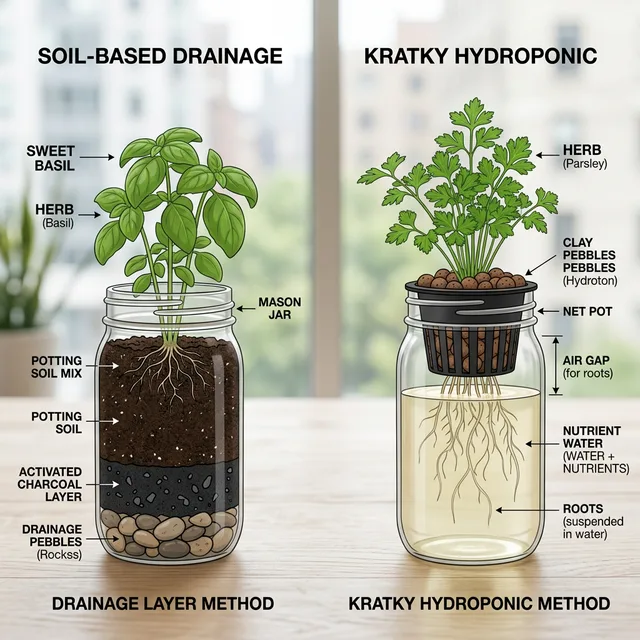
I didn’t give up on the jars; I gave up on the dirt. I switched to the “Passive Hydroponic” method (often called the Kratky method). I replaced the soil with a mixture of clay pebbles and nutrient-rich water. Once the roots were suspended in the water instead of trapped in mud, the herbs exploded into growth. I successfully grew enough basil, cilantro, and parsley on a single 4-inch deep windowsill to stop buying grocery store herbs entirely.
The 3 Rules of Mason Jar Gardening
Before you start dropping seeds into glass, you must understand the physics of growing in a closed container:
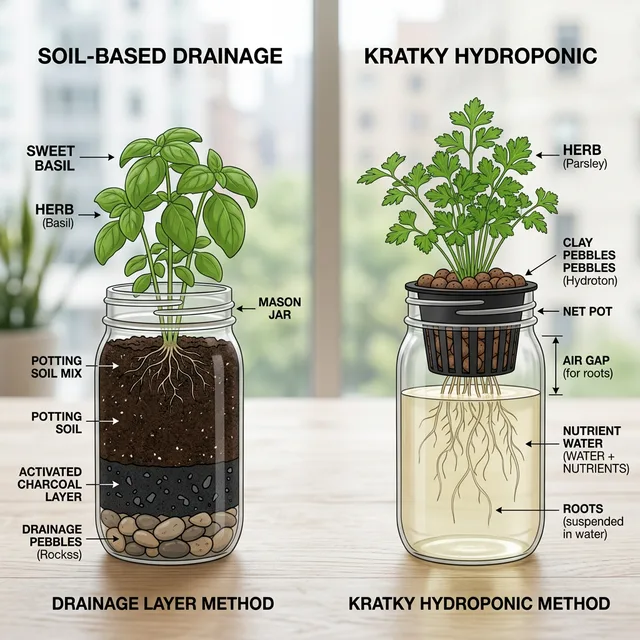
- The Net Pot Hack: You should never plant directly into a mason jar. Instead, buy a 3-inch plastic “net pot” that sits perfectly in the rim of a wide-mouth mason jar. This allows the roots to hang down into the water while the plant stays dry at the top.
- Light Blockage (Algae Prevention): Clear glass allows sunlight to hit the water. This will trigger a massive algae bloom that steals nutrients from your herbs and turns the water green. You must paint the jars, wrap them in burlap, or put them in aesthetic sleeves to keep the water dark.
- The Air Gap: Once the plant is established, never fill the mason jar to the very top with water. You must leave a 1-to-2-inch air gap between the bottom of the net pot and the water surface. This allows the “air roots” to breathe and prevents the plant from drowning.
7 Mason Jar Herb Garden Design Ideas
After testing multiple setups on narrow urban windowsills, these seven ideas provide the best balance of aesthetic beauty and high-yield growth.
1. The Painted Matte Farmhouse Jar (Best for Algae Control)
The most common and effective way to protect your roots is to spray paint the exterior of the mason jars with a high-quality matte finish. * Design: Choose a matte black or deep charcoal. It looks incredibly premium against a white windowsill. * Why it Works: 100% light blockage prevents algae growth, while the black color absorbs minimal heat, keeping the nutrient water cool. * Tip: Leave a thin vertical strip of unpainted glass on the back of the jar as a “fuel gauge” so you can see the water level without lifting the plant.
2. Burlap-Wrapped Rustic Jars (Best for Texture)
If you prefer a softer, organic look for your kitchen, wrapping your jars in natural burlap and securing them with twine is a classic for a reason. * Design: Wrap the burlap twice around the jar and tie it with a thick jute rope. * Benefit: Burlap allows some air to reach the glass, which can help regulate temperature slightly better than heavy paint. * Aesthetic: It perfectly complements the green of fresh basil and mint.
3. The “Kratky” Hydroponic Mason Jar (Best for High Yield)
This isn’t just a design idea; it’s a scientific method. * How it Works: Fill the jar with water and liquid hydroponic nutrients. Place your herb seedling in a 3-inch net pot filled with clay pebbles (LECA). * Maintenance: This is “set it and forget it” gardening. You only need to top up the water every 10–14 days. * Result: You will get 3x more leaf growth than you would with soil-based jars.
4. Chalkboard Label Jars (Best for Organization)
In a tiny studio, it’s easy to lose track of three different types of green seedlings. * Design: Apply a strip of chalkboard paint or a sticker to the front of each painted jar. * Why it Works: You can use a chalk marker to write the date you planted the herb and exactly what variety it is. * Tip: Use these labels to track when you last added liquid fertilizer.
5. Floating Wall-Mounted Jars (Best for Tiny Counters)
If your windowsill is so narrow that it can’t even hold a jar, you must go vertical. * Design: Use industrial pipe clamps to mount the mason jars to a piece of reclaimed wood, which is then screwed into the wall adjacent to the window. * Benefit: It keeps your counter 100% clear for food prep while still giving the plants maximum sunlight. * Renter-Friendly Hack: Use heavy-duty Command strips on a lightweight wood strip instead of drilling.
6. The “Wick” System Jar (Best for Humidity Control)
If you find that your herbs are drying out too fast in the summer, use a cotton wick. * How it Works: Run a thick cotton or nylon string from the center of the plant down into the water. * Benefit: The wick acts like a straw, drawing water up to the roots via capillary action even as the water level drops significantly.
7. Tinted “Amber” Glass Jars (Most Aesthetic)
If you hate the look of painted jars, buy vintage-style amber or deep blue mason jars. * Design: The colored glass naturally filters out enough light to slow down algae growth, while still allowing you to see the beautiful root structure growing inside. * Vibe: This creates a clean, apothecary-style look that fits perfectly in a modern minimalist apartment.
Pro-Tips for Small Windowsill Success
- Rotation is Key: In a windowless or single-exposure apartment, the plant will rapidly lean toward the glass (phototropism). Rotate each jar 180 degrees every single morning to ensure the plant grows straight and bushy rather than long and leggy.
- The Nutrients: Since there is no soil, you must use a high-quality liquid hydroponic fertilizer (like AeroGarden nutrients or General Hydroponics Flora Series). Add a few drops every time you refill the water.
- Harvesting: Never pick all the leaves at once. For basil and mint, only harvest the top two leaves. This encourages the plant to branch out, creating a massive, bushy herb plant from a tiny 3-inch opening.
[UPDATE 2026] The Technical Layering Method (For Soil Enthusiasts)
If you absolutely insist on using soil because you prefer the taste or the “organic” feel, you must follow the Elena Verde Layering Protocol. Since a mason jar has no hole, your mission is to create an “internal reservoir” at the bottom of the jar.
- The Drainage Base (1 Inch): Fill the bottom 1 inch with small river stones or pea gravel. This is where excess water will pool, away from the roots.
- The Charcoal Guard (0.5 Inch): Add a layer of Horticultural Charcoal (Activated Carbon) on top of the rocks. This is mandatory. Carbon absorbs the toxins and prevents the “toxic pond” smell I experienced in my early failure.
- The Barrier (Optional): A small piece of landscape fabric or even a cut-up coffee filter helps keep the soil from falling into your rocks.
- The Soil Mix: Use a high-perlite potting mix. Fill it to within 1 inch of the top.
[UPDATE 2026] The “Magnetic Fridge” Hack for Zero-Windowsill Kitchens
Many micro-studios don’t even have a windowsill in the kitchen. If your window is just a flat piece of glass in a wall, use your refrigerator.
The Setup: Buy heavy-duty magnetic mason jar holders (rated for 5 lbs+). * The Move: Attach your painted mason jars (Layout #1) to the side of the fridge that faces the window. * Why it Works: It uses the vertical “dead space” of your appliance to catch indirect sun. This is the ultimate smart studio apartment setup for renters.
The 2026 Urban Herb Compatibility Database
Not all herbs thrive in the closed environment of a glass jar. Use this technical data to select the right plants for your light levels.
| Herb Variety | Best Method | Light Needed (Lux) | Growth Speed | Harvest Window (Days) |
|---|---|---|---|---|
| Genovese Basil | Kratky/Hydro | 15,000+ (Extreme Full Sun) | Aggressive | 25-30 Days |
| Peppermint | Wick System | 8,000+ (Moderate) | Medium | 40-45 Days |
| Cilantro | Soil (Layered) | 12,000 (Bright) | Slow (Starter Sensitive) | 50 Days |
| Chives | Soil (Layered) | 6,000+ (Low-Light Path) | Steady | 60 Days |
| Lemon Balm | Hydroponic | 10,000 (Bright Indirect) | High | 35 Days |
Compare Mason Jar Methods
| Method | Algae Risk | Maintenance | Growth Speed | Aesthetic |
|---|---|---|---|---|
| Soil in Jar | Low | High (Daily watering) | Slow | Classic |
| Clear Water (Kratky) | Extreme | Very Low | Fast | Modern/Industrial |
| Wick System | Moderate | Low | Moderate | DIY / Rustic |
| Painted Hydro Jar | Zero | Low | Fast | Premium |
Conclusion
You do not need a balcony or a backyard to enjoy fresh, organic herbs. By utilizing the vertical and horizontal space of a small windowsill with mason jar gardens, you can bypass the clutter and mess of traditional pots. Focus on light-blocking designs and hydroponic nutrient solutions, and you can sustainably grow your own spices right where you cook. Pick your favorite aesthetic—whether it’s matte black, Burlap, or Amber glass—and start your micro-farm today.
Can I grow cilantro in a mason jar?
Yes, you can grow cilantro in a mason jar, but it is one of the more challenging herbs. Cilantro has a deep, sensitive taproot that hates being disturbed. For success in a mason jar, do not attempt to transplant a seedling from a store. Instead, sow the seeds directly into the clay pebbles or peat sponge of your mason jar net pot. This allows the taproot to grow straight down into the water from day one, resulting in a much healthier and more durable plant. Be aware that cilantro is a cooler-season herb; if your kitchen gets too hot in the summer, the cilantro will “bolt” (go to seed) and become bitter.
Safety Disclaimer
Mason jars are made of thick glass, but they can still shatter if exposed to extreme temperature fluctuations. If you have an older apartment with single-pane windows, do not leave your jars touching the glass during a freezing winter night. The cold transfer can cause the nutrient water to freeze slightly, expanding and cracking the glass. Always leave a 1-inch gap between the jar and the window glass.