In traditional gardening, plants get their food from the complex biological breakdown of organic matter in the soil. There are worms, bacteria, and fungi doing the heavy lifting. In a windowless studio apartment using a soil-less system, you are the ecosystem.
If you don’t provide the right nutrient solutions, your plants will simply starve and die, no matter how much light you give them.
Understanding how to mix and manage a hydroponic nutrient solution is what separates the “black thumbs” from the successful indoor farmers. It is part chemistry, part observation, and entirely manageable once you know the basic rules.
The N-P-K Alphabet: What Plants Actually Eat
Every bottle of nutrient solution has three numbers on the front (e.g., 5-10-5). These represent the percentage of the three primary macronutrients:
- N (Nitrogen): For big, healthy green leaves. Essential for microgreens and herbs.
- P (Phosphorus): For strong roots and beautiful flowers. Crucial for tomatoes and peppers.
- K (Potassium): For general plant “immunity” and the quality of the fruits.
But plants need more than just these three. They also require secondary nutrients like Calcium and Magnesium, and trace minerals like Iron and Boron. This is why you cannot use standard “Miracle-Gro” soil fertilizer for hydroponics; it lacks the micro-nutrients found naturally in soil.
Choosing the Right Solution for Your Stage
You should match your nutrient solutions to the life stage of your indoor garden.
1. The “Vegetative” Mix (High Nitrogen)
Best for: Microgreens, Basil, Lettuce, and young seedlings. This mix encourages rapid stem and leaf growth. If you only grow herbs, you can use a “Grow” formula for the entire life of the plant.
2. The “Bloom” Mix (High Phosphorus)
Best for: Tomatoes, Peppers, and Strawberries once they start showing small flower buds. Switching to a Bloom formula tells the plant to stop making leaves and start putting energy into fruit production.
Managing the “Invisible” Metrics: pH and EC
This is where beginners get intimidated, but it’s simpler than it sounds.
pH (Potential Hydrogen)
Plants can only “swallow” nutrients if the water is at the right acidity. Most indoor edibles need a pH between 5.5 and 6.5.
- If the pH is too high (alkaline), the nutrients “lock up” and become inaccessible.
- Get a cheap $10 pH test kit (liquid drops or a digital pen). Use “pH Up” or “pH Down” solutions (or simple lemon juice and baking soda in a pinch) to adjust your water.
EC (Electrical Conductivity)
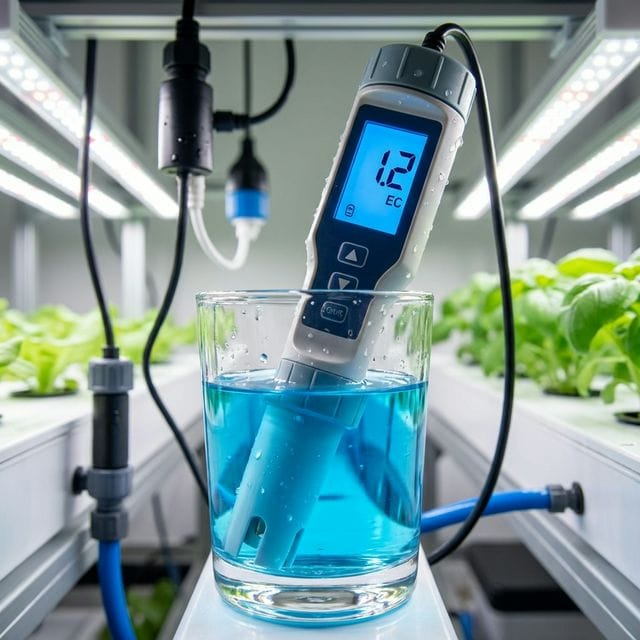
EC measures the “strength” of your nutrient solutions. If you add too many minerals, the water becomes “salty,” and the roots will actually shrivel up (nutrient burn).
- For herbs: Low EC (0.8 – 1.2)
- For fruiting plants: Higher EC (1.8 – 2.5)
- If you don’t have an EC meter, always follow the bottle instructions and start at half-strength for the first two weeks.
The Flush and Refill Routine
In a small apartment system (like a hydroponic mason jar garden), the plant drinks the water, but many of the minerals stay behind. Over time, the water becomes unbalanced.
The Golden Rule: Every 2 to 4 weeks, dump out all the old water, rinse the roots gently with lukewarm tap water, and refill with a completely fresh batch of nutrient solution. This “flushes” out toxic salt buildups and resets the pH for your plants.
Conclusion
Providing the right nutrient solutions is like giving your plants a high-performance multivitamin. It is the fuel that powers the rapid growth of hydroponics.
Don’t be afraid of the “chemistry” side of gardening. Start with a simple, all-in-one liquid nutrient like General Hydroponics FloraSeries or Masterblend. Once you see the “neon” green growth and heavy harvests, you’ll see why feeding the water is the most important task in your indoor farm.
To see these nutrients in action, read our guide on building DIY hydroponic mason jar herb gardens, and ensure your plants are energized with the best LED grow lights.
Can I make my own ‘organic’ nutrient solution at home?
It is difficult for beginners. ‘Organic’ nutrients (like compost tea) rely on bacteria to break them down. In a small water-only system, these can easily rot, smell bad, and clog your system. Stick to refined mineral nutrients for indoor hydroponics.
Why are my leaves turning yellow despite being fed?
This is almost always a pH issue, not a lack of nutrients. If your pH is 7.5, the plant can’t absorb the iron or nitrogen even if it’s floating in it. Check your pH first!
Is the nutrient water safe if my pet drinks it?
In the diluted form used for plants, it is generally low-risk, but it’s not ‘healthy.’ Keep your hydroponic reservoirs covered to prevent curiosity from cats and dogs.