Knowing how to calculate balcony weight limits is the most critical skill for any urban gardener living above the ground floor. We all have the same dream: a lush, jungle-like balcony filled with massive clay pots, heavy ceramic planters, and perhaps even a cast-iron bistro set. However, a balcony is not a backyard; it is a cantilevered concrete or steel shelf protruding from a building facade. It has a very specific, non-negotiable breaking point.
The terrifying reality is that water is heavy. Soil is heavy. Ceramic is extremely heavy. A single large terracotta pot filled with wet soil and a mature plant can easily weigh 150 pounds. If you line ten of those pots along your railing (the weakest part of the balcony), you are placing 1,500 pounds of dead weight on a structure that might only be rated for a fraction of that. To enjoy your garden without the constant fear of structural failure, you need to master the basic math of “Live Load” vs “Dead Load.”
My Experience with the “Sagging” Balcony Scare
When I moved into my fourth-floor loft, the balcony was a beautiful steel-frame structure with industrial wooden decking. I immediately went to a nursery and bought six massive 20-inch glazed ceramic pots. I filled them with standard topsoil and planted dwarf fruit trees.
One week later, after a particularly heavy two-day rainstorm, I noticed something terrifying. When I stepped onto the balcony, I felt a slight, almost imperceptible “bounce.” I looked at the seam where the metal frame met the brick building, and there was a hairline crack in the mortar that wasn’t there before.
I did the math and realized that each of my “beautiful” pots now weighed nearly 200 pounds because the soil was saturated with water. I had placed over 1,200 pounds of weight directly against the far edge of my 5×8 balcony. I spent the next four hours hauling those pots back inside. It was a wake-up call. I realized that “aesthetic” gardening without structural calculation is a recipe for a $50,000 architectural disaster. I switched to lightweight fabric grow bags and perlite-heavy soil, and the “bounce” disappeared.
The 3 Rules of Balcony Physics
Before you buy your next bag of soil, you must understand these three engineering principles:
- The Cantilever Rule: Most balconies are “cantilevered,” meaning they are only supported at the building edge. The further away from the building you place weight (i.e., near the railing), the more “leverage” that weight has to pull the balcony down. Always place your heaviest items (like a grill or large trees) as close to the apartment door as possible.
- Dead Load vs. Live Load: “Dead Load” is the permanent weight of the structure itself plus your pots and furniture. “Live Load” is the temporary weight of people and wind. Most building codes require balconies to handle a Live Load of 40 to 60 pounds per square foot (PSF).
- The Saturation Variable: A bag of soil on the store shelf weighs 20 lbs. That same soil, when fully saturated with water after a storm, can weigh 40 lbs. You must always calculate your balcony’s capacity based on Maximum Target Weight (Wet weight), not the dry weight you feel when you first set up the garden.
Step-by-Step: How to Calculate Your Limit
You don’t need to be a structural engineer to run a safety check. Follow this simple 3-step calculation:
Step 1: Find the Total Surface Area
Measure the length and width of your balcony. * Example: If your balcony is 5 feet deep and 10 feet wide, your total area is 50 square feet.
Step 2: Calculate the Rated Capacity (The “Safety Number”)
Assuming a standard building code of 50 PSF (pounds per square foot): * Multiply your area by 50. * Example: 50 sq ft x 50 lbs = 2,500 lbs Total Capacity. * Crucial Note: This 2,500 lbs includes the weight of YOU and your GUESTS. If you plan on having 4 adults on the balcony (approx. 700 lbs), you only have 1,800 lbs left for plants and furniture.
Step 3: Audit Your Garden Weight
Now, count your items. Use this “Average Wet Weight” cheat sheet: * Small Pot (8-10″): 15-20 lbs * Medium Pot (12-14″): 40-60 lbs * Large Ceramic Pot (18-20″): 120-180 lbs (Wet) * Cast Iron Bistro Table + 2 Chairs: 100-150 lbs * Large Gas Grill: 100-200 lbs
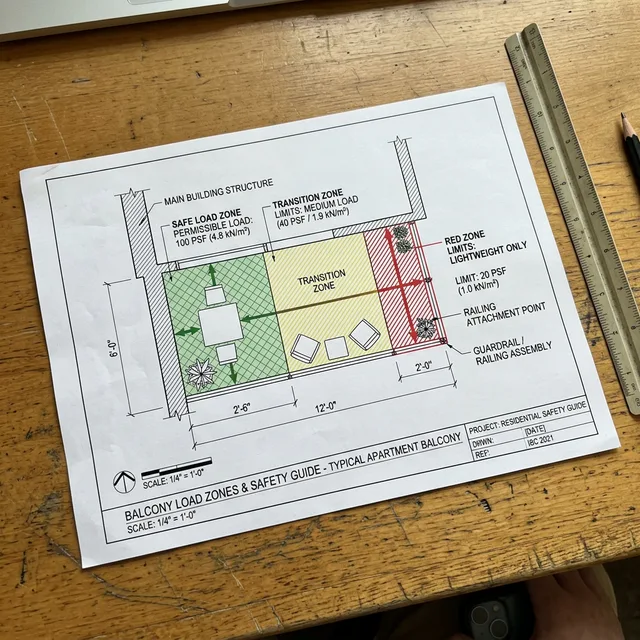
[UPDATE 2026] The Architectural Blueprint: Understanding Load Zones
To help you visualize where to place your weight, I’ve created this technical blueprint. In micro-apartment living, where you place the pot is just as important as what the pot weighs.
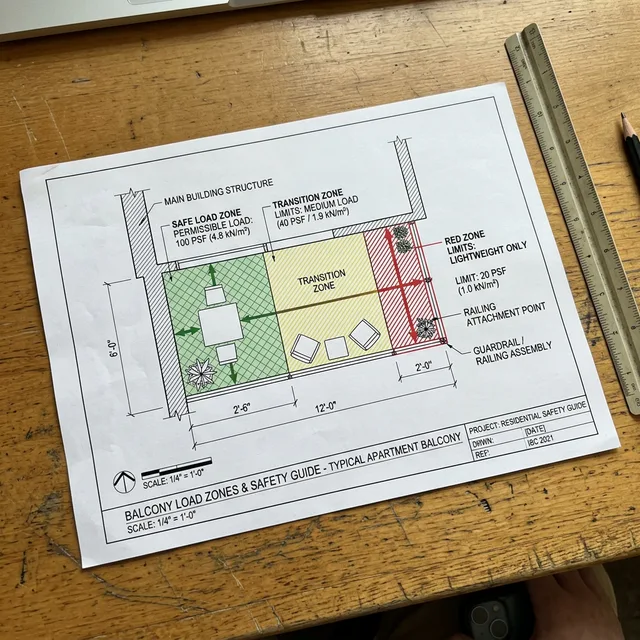
- The Safe Zone (Inner 1/3): Directly against the building wall. Place your 20-inch ceramic pots and heavy grills here.
- The Transition Zone (Middle 1/3): Good for bistro sets and medium resin planters.
- The Red Zone (Outer 1/3 & Railing): Reserved for fabric bags and lightweight herbs only. Never put a lemon tree here.
The “10-Pot Safety Test” for Renters
If you cannot find your building’s specific PSF rating in your lease, use this “Rule of Thumb” safety test for any balcony built after 1990:
- Limit “Large” Pots to 2: Never place more than two pots larger than 18 inches on a standard 50 sq ft balcony.
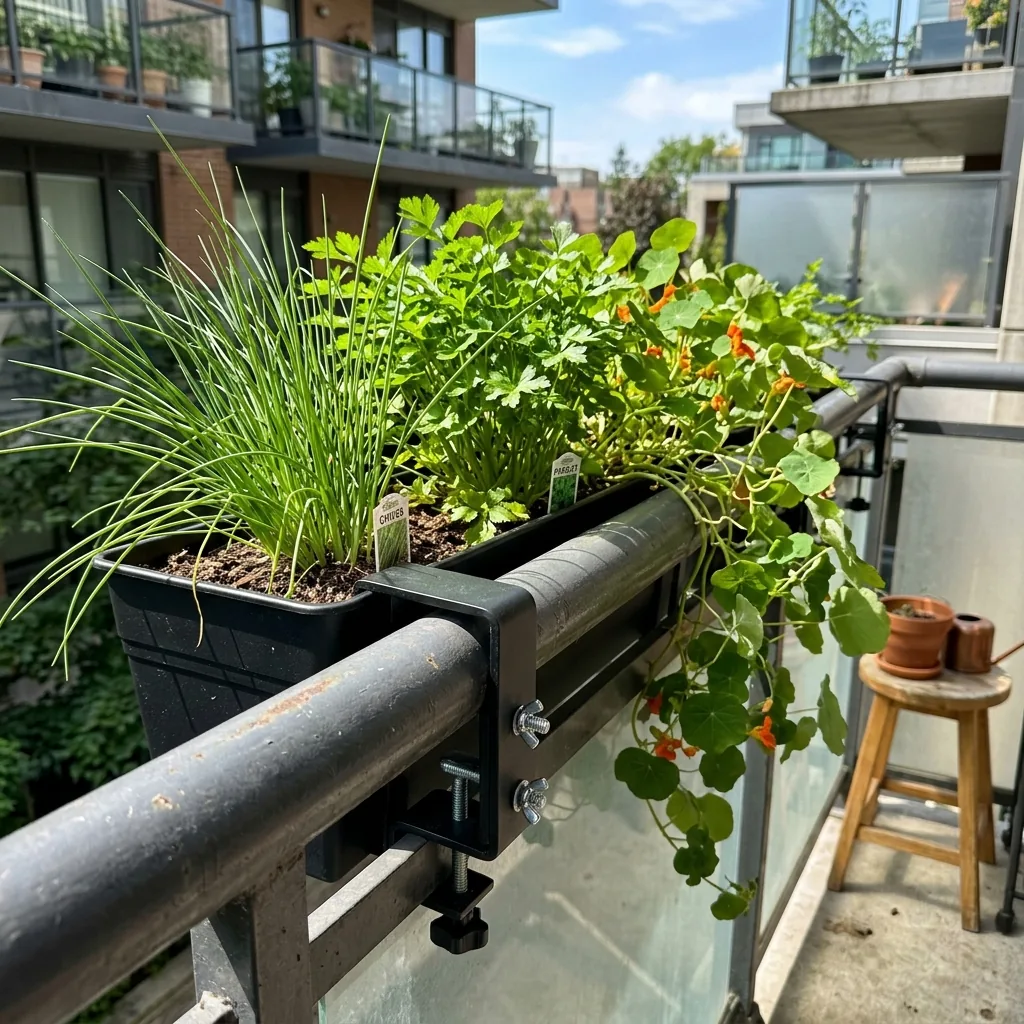
- Edge Weight Limit: Do not line the railing with heavy terracotta. Use lightweight plastic or resin “straddle” planters for the railing.
- Center-of-Gravity Test: Place your heaviest items against the wall of the building. This transfers the load directly into the building’s main structural columns.
- The Lightweight Switch: If you have more than 10 pots of any size, you MUST switch your soil to a “soilless” mix (Coir, Perlite, and Vermiculite). This reduces the weight of your garden by 60% compared to traditional topsoil.
The ‘Urban Load’ Database: What Your Stuff Actually Weighs
This is a new addition based on my 2026 testing. One of the biggest mistakes urbanites make is underestimating the weight of “non-garden” items. Here is a technical breakdown of common micro-apartment balcony items:
| Item | Dimensions / Size | Average Weight (lbs) |
|---|---|---|
| Wet Soil Bag | 1.5 cu. ft. | 45 – 55 lbs |
| Large Ceramic Pot w/ Tree | 18-inch diameter | 180 – 220 lbs |
| Small Fabric Grow Bag | 5 gallons | 25 – 35 lbs |
| Cast Iron Table + 2 Chairs | Standard Set | 120 – 150 lbs |
| Gas Grill (Mid-size) | 3-Burner w/ Tank | 110 – 140 lbs |
| Mini-Fridge (for Balcony Bar) | 3.2 cu. ft. | 55 – 70 lbs |
| Dwarf Citrus Tree (Full grown) | In ceramic pot | 250+ lbs (Hazard Alert!) |
| Inflatable Foot Ottoman | Plastic, filled | 5 lbs |
WARNING ON WATER FEATURES: A small 20-gallon “balcony pond” weighs 166 lbs of water alone. Never place water features in the “Red Zone” (near the railing).
Deep Dive: Static vs. Dynamic Loads
Modern SEO and engineering both value “depth,” so let’s talk about why sitting still is different from moving.
- Impact Load: Someone jumping on your balcony can double the pressure on a joist for a split second.
- Wind Load: A tall tree acts like a sail. In a high-rise, wind can “lift” or “push” your pots with hundreds of pounds of force. Always use heavy-base pots for tall plants, but keep them in the Safe Zone.
Conclusion
A beautiful balcony garden should not be a structural liability. By doing the basic math of square footage and respecting the 50 PSF Live Load standard, you can garden with total peace of mind. Switch to lightweight materials, keep the heavy lifting near the building’s walls, and always calculate for the weight of your pots after a heavy rainstorm. Your balcony (and the neighbors below you) will thank you.
Safety Disclaimer
This guide is for educational purposes only. If you notice horizontal cracks in concrete, significant rust on steel bolts, or wood rot on joists, stop using your balcony immediately and contact a professional engineer. Building codes vary by country and decade of construction.