You’ve done everything right. You bought the dwarf seeds, you set up the high-intensity LED grow lights, and your indoor tomato and pepper plants are covered in beautiful small flowers. But as the days pass, instead of turning into fruit, the flowers simply wither, turn brown, and fall off the stem.
This is the most common frustration of apartment gardening: flower drop.
In your third-floor studio, there are no bees, no butterflies, and no wind to move pollen from one part of a flower to another. Without pollination, your plant “aborts” the flower to save energy. If you want to actually harvest food, you have to do the job of the bee.
Learning how to hand-pollinate indoor vegetables is a simple but essential skill that separates successful urban farmers from those who just grow fancy leaves.
Understanding Self-Pollinating Plants
The good news for apartment dwellers is that common indoor vegetables like tomatoes, peppers, and eggplants are “perfect” or “self-pollinating” plants.
This doesn’t mean they do it automatically. It means a single flower contains both the male (stamen) and female (pistil) parts. You don’t need two different plants, and you don’t even need two different flowers. You just need to vibrate or move the pollen within that single flower so it falls onto the receptive female part.
The Best Tools for Hand-Pollination
You don’t need expensive agricultural equipment. You likely already have the best tools for hand-pollination in your bathroom or junk drawer.
1. The Electric Toothbrush (The Pro Method)
This is the gold standard for tomato and pepper growers. The high-frequency vibration of an electric toothbrush perfectly mimics the “buzz pollination” of a bumblebee.
2. A Small Soft Paintbrush
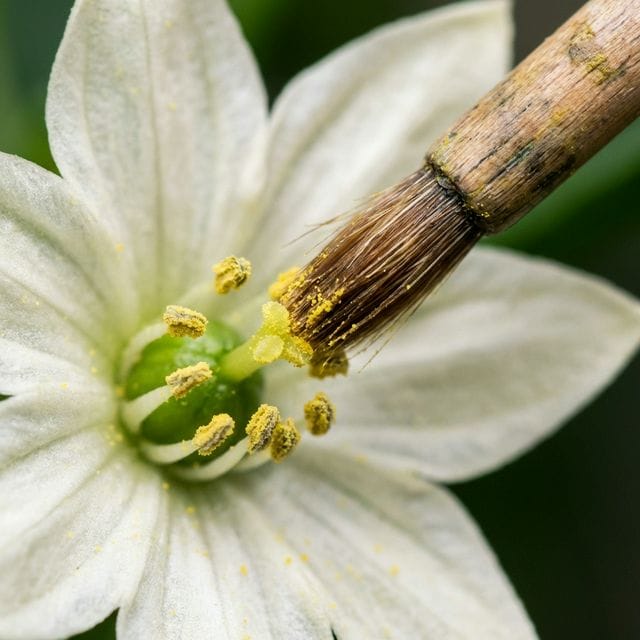
Ideal for delicate peppers or strawberries. A soft eyeliner brush or a small watercolor brush (size 0 or 2) works best for moving pollen manually without damaging delicate flower tissues.
3. A Simple “Flick” of the Finger
If you have no tools, simply tapping the flower stems firmly with your index finger once or twice a day can be enough to dislodge the pollen.
Step-by-Step: How to Hand-Pollinate Indoor Vegetables
Timing is everything. Flowers are most receptive to pollination during the morning hours (between 10 AM and 12 PM) when the humidity is slightly higher and the pollen is fresh.
Pollinating Tomatoes
Tomato flowers huddle their pollen inside a tube. To release it, you must vibrate the flower.
- Turn on your electric toothbrush.
- Gently touch the back of the toothbrush (the vibrating plastic part, not the bristles) to the stem just above the flower cluster.
- You should see a tiny cloud of yellow dust (pollen) fall out of the flowers.
- Move to the next cluster and repeat. Do this every day as long as new flowers are opening.
Pollinating Peppers
Peppers are slightly different. Their pollen is more exposed.
- Take your soft paintbrush and gently swirl it inside the center of an open flower.
- You will see 5-6 little “anthers” holding white or grayish pollen.
- Move the brush from flower to flower, transferring the pollen as you go.
Why Your Pollination Might Fail
Sometimes, even when you are learning how to hand-pollinate indoor vegetables, the fruit still doesn’t set. This is usually due to environmental factors in your apartment.
1. Humidity is Too High or Too Low: If it’s above 70% humidity (like a steamy bathroom), the pollen becomes sticky and won’t fall. If it’s below 30% (dry winter heating), the female part dries up and can’t receive the pollen. Aim for 40-50% humidity.
2. Temperatures are Too Hot: If your grow lights are too close and the temperature stays above 30°C (86°F), the pollen can become sterile. Move your plants to a cooler part of the apartment or increase airflow with a fan.
3. Improper Feeding: Too much nitrogen fertilizer makes a plant grow massive green leaves but prevents it from “focusing” on fruit. Switch to a “Bloom” fertilizer high in phosphorus and potassium once you see the first flowers.
Conclusion
Mastering how to hand-pollinate indoor vegetables is the final piece of the puzzle for urban food security. It takes less than 30 seconds of your morning, but it’s the difference between a barren plant and a heavy harvest of cherry tomatoes.
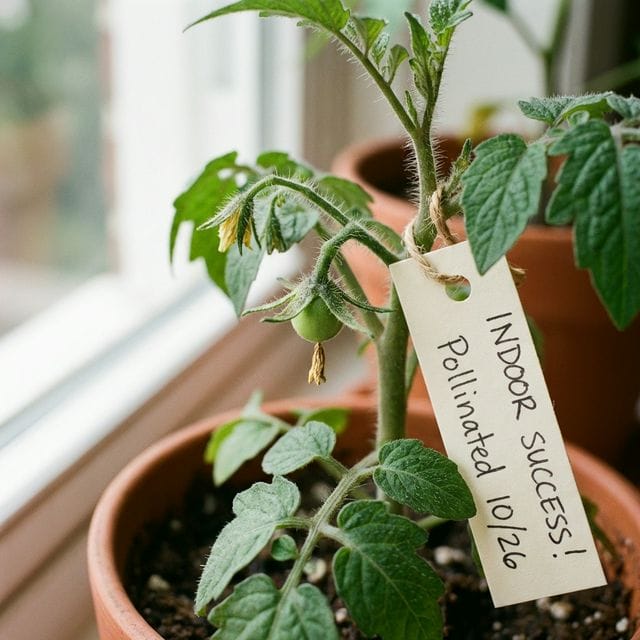
Once you see those tiny green “nubs” forming at the base of the flower, you’ll know you’ve officially succeeded as an urban farmer.
For more tips on keeping your indoor garden healthy, read our guides on managing pests without chemicals and choosing the best dwarf vegetable varieties for small pots.
How often do I need to hand-pollinate?
Every day. Flowers only stay open for a few days. If you miss that window, you miss the fruit. Make it part of your morning coffee routine.
Do I need to cross-pollinate between two different plants?
For tomatoes and peppers, no. One plant is enough. However, cross-pollination between flowers on the same plant or different plants can actually result in larger, better-formed fruit.
Can I use a hairdryer to pollinate?
Not recommended. A hairdryer is usually too hot and the blast of air is too concentrated, which can dry out the flower or knock the delicate blossoms off the plant entirely. Stick to the toothbrush or finger-tapping method.