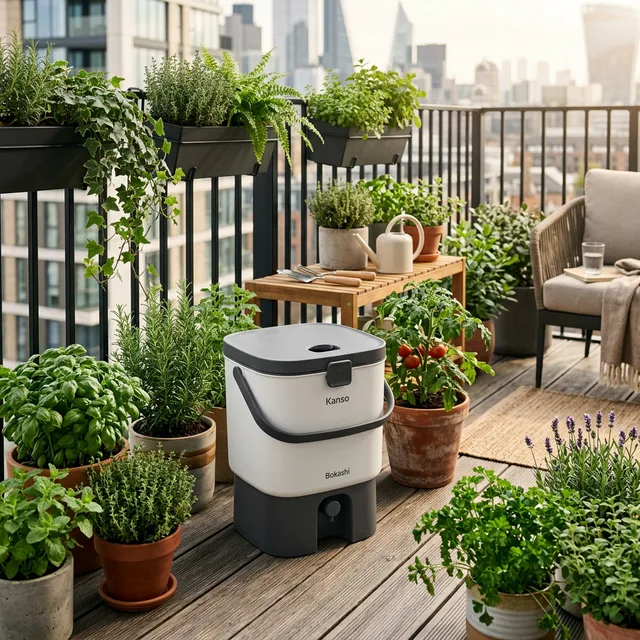
Living in an apartment often feels like being disconnected from the natural cycle of life. We buy food, we eat it, and the “scraps” go into a plastic bag that disappears into a chute. But in 2026, the urban micro-living movement is reclaiming that waste. One of the most powerful tools in my edible balcony kit isn’t a smart sensor or a high-end grow light—it’s a simple, airtight bucket.
Welcome to the world of bokashi composting for apartment balcony gardening. If you’ve been hesitant to compost because you fear the smell of rotting vegetables in your studio apartment or the judgment of neighbors on your high-rise, this guide is for you. Bokashi isn’t “rotting”; it’s fermentation. It is the silent, odorless, and incredibly efficient way to turn your kitchen scraps into “black gold” for your plants.
A Note from Elena: When I first started Bokashi, I kept the bin under my kitchen sink, just inches away from my coffee maker. My husband, who has the nose of a bloodhound, didn’t notice it for three months. That is the power of the anaerobic method.
What is Bokashi? (The Science of Fermentation)
Unlike traditional composting, which requires oxygen (aerobic) and lots of space for turning, Bokashi is an anaerobic process. It originated in Japan and uses a specific “starter” inoculated with “Effective Microorganisms” (EM).

Instead of the food breaking down into soil immediately, it “pickles.” Think of it like making sauerkraut, but for your plants. Because the bin is airtight, there is no oxidation, no heat, and—most importantly for small apartment layouts—no smell.
Why Bokashi Wins in the City:
- Speed: The fermentation takes only 2 weeks.
- Diversity: You can compost meat, dairy, and citrus—items that are strictly forbidden in traditional worm bins.
- Space: A standard bin is about the size of a tall wastebasket.
- Fertilizer: You get a constant supply of “Bokashi Tea,” a liquid fertilizer that is essentially a super-juice for your apartment gardening efforts.
The Step-by-Step Urban Bokashi Guide
Setting up your system is remarkably simple. You don’t need a backyard; you just need a corner of your kitchen or a shaded spot on your apartment balcony.
Step 1: The Layering Ritual
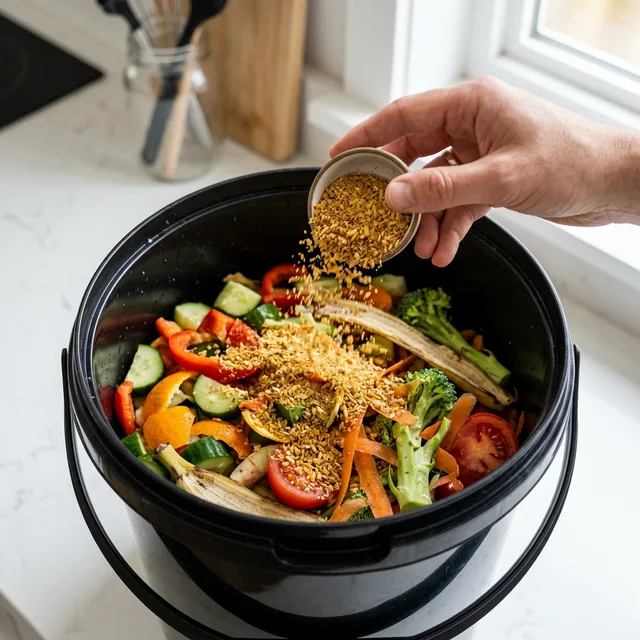
Start by placing a small layer of Bokashi Bran (the inoculated grain) at the bottom of your bin. Add your chopped kitchen scraps. I find that cutting scraps into 1-inch pieces speeds up the process significantly.
Step 2: The Smash and Sprinkle
Every time you add a layer of food, sprinkle more bran on top. Then, use a “masher” or an old plate to press the food down, removing as much air as possible.
Elena’s Pro Tip: The tighter you pack it, the better the fermentation. I use a dedicated wooden tamper that I keep right next to the bin.
Step 3: Seal and Wait
Once the bin is full, seal it tight. Do not open it for 14 days. This is where the magic happens. The microorganisms will feast on the sugars in your food, creating a nutrient-dense “pre-compost.”
Harvesting the “Liquid Gold”: Bokashi Tea
One of the best features of a specialized Bokashi bin is the spigot at the bottom. As the food ferments, it releases a dark, pungent liquid.
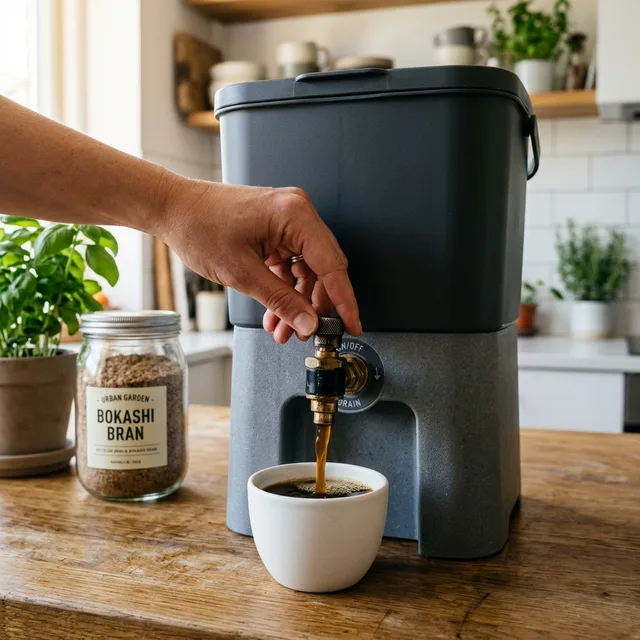
- The Fertilizer Strength: This liquid is highly acidic and incredibly concentrated. Do not pour it directly on your plants.
- The Dilution Ratio: 1:100. That’s about one teaspoon per liter of water.
- The Result: I’ve used this on my indoor air purifying plants and my vertical garden walls, and the growth spurt is almost visible to the naked eye. It’s a probiotic boost for the soil.
Managing the “Pre-Compost” in an Apartment
This is the part that confuses most beginners. After 2 weeks, your food scraps will look almost exactly identifying as when you put them in—but they are structurally changed. To finish the process, they need to meet soil.
In a house, you’d bury this in a garden bed. In an apartment balcony gardening setup, we use the “Soil Factory” method:
- Take a large plastic tub or a 15-gallon reusable grow bag for apartments.
- Put a 3-inch layer of potting soil at the bottom.
- Pour in your fermented Bokashi pre-compost.
- Mix it thoroughly with the soil.
- Cover with another 3 inches of soil to “seal” it.
- Wait 2–4 weeks. The “pickled” food will vanish into high-quality compost that you can use for your next planting cycle.
Troubleshooting: Is it Working?
- White Fuzz: Good! This is Actinomycetes or beneficial fungi. It means your fermentation is healthy.
- Black/Green Mold: Bad. This means air got in or you didn’t use enough bran. If this happens, bury it deep in a park and start over with a cleaner bin.
- The Smell: It should smell like vinegar or pickles. If it smells like a dumpster, the process has gone aerobic (rotting). Check your seal!
My Expert Tips for Urban Success
- Collect Scraps in a “Day Bin”: Avoid opening the big Bokashi bin multiple times a day. Collect your scraps in a small container on the counter and do one “big dump” in the evening to minimize air exposure.
- Drain Regularly: Drain the Bokashi tea every 2–3 days. If it sits in the bottom of the bin for too long, it can start to smell and disrupt the fermentation.
- The Winter Advantage: Because Bokashi happens indoors or in a sheltered bin, you can continue recycling your waste through the winter months, even when your smart watering systems are turned off and the balcony is dormant.
Conclusion: Closing the Loop
Bokashi composting for apartment balcony living is more than just a way to get rid of trash. It is an act of defiance against the “disposable” culture of the city. By keeping your nutrients in your own micro-ecosystem, you’re growing healthier food, reducing your carbon footprint, and becoming a more resilient urbanite.
Start small, trust the “pickle” smell, and watch your balcony transform.
Will it attract pests?
No. Because the bin is airtight and the process is fermented (acidic), pests like fruit flies or rodents aren’t attracted to it. Once it’s buried in the soil factory, the acidity keeps pests away until it breaks down.
How long does the bran last?
For a single person or a couple, a 1kg bag of bran usually lasts 3–4 months.
Can I do this with a worm bin?
Yes! Many urban gardeners use Bokashi as a ‘pre-treatment’ for their worms. Worms *love* fermented food, but you must make sure to buffer the acidity with a little garden lime first.
Is the tea safe for pets?
It is safe for plants, but don’t let pets drink the undiluted tea. It’s too acidic for their systems.