
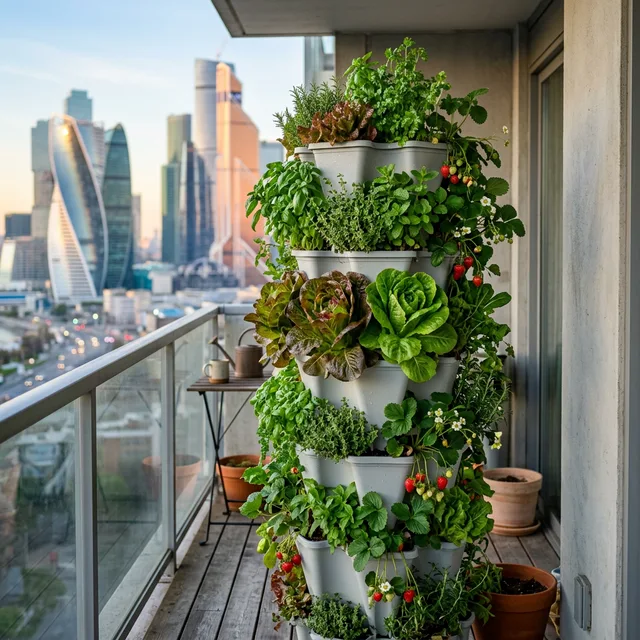
If you live in a high-density urban apartment, your balcony is probably a 5×10 foot concrete rectangle. In the world of small space living, trying to grow a garden horizontally is a strategic mistake. You’ll end up with three pots blocking your exit and zero room for a chair. To reclaim your 2 square meters of outdoor freedom while still harvesting your own salads, you must look up.
Finding the best vertical vegetable garden systems for balconies is about more than just aesthetics—it is about structural engineering and wind tolerance. In 2026, we’ve moved past simple “shelf units.” Modern systems are modular, self-watering, and designed specifically for the unique environment of a 20th-floor micro-apartment. In this guide, I’ll share my testing results of the top vertical systems, from stacking towers to hanging felt pockets, focusing on what actually survives a storm and what just ends up as a “wobbly” hazard.
My Experience with “Wobbly” Vertical Racks
Three years ago, I fell for a cheap, generic “vertical garden ladder” I saw on social media. It was a beautiful wooden A-frame with five plastic bins. I loaded it with organic soil and planted a variety of heirloom lettuces. Build a vertical garden wall.
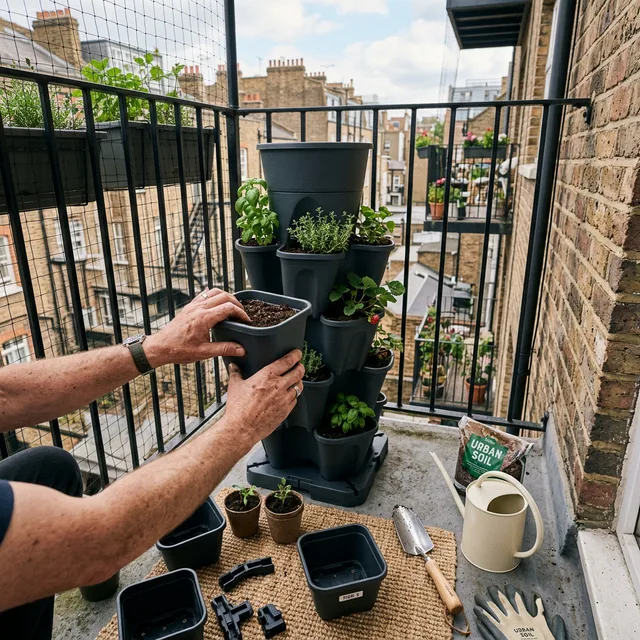
The disaster happened during a sudden July thunderstorm. My balcony is on the 14th floor, and the “wind tunnel” effect between buildings is brutal. Because the ladder was top-heavy and lacked a wide base, it didn’t just tip over—it caught the wind like a sail and literally “walked” across the deck before slamming into my glass railing. I spent three hours in the rain cleaning up mud and broken wood. Use a balcony railing rack for more space.
That was the night I learned that stability is the #1 metric for urban vertical gardening. If a system doesn’t have a weighted base or a way to anchor it to the wall, it doesn’t belong on a high-rise balcony. Today, my balcony garden is built around “lock-in” modular systems that can handle a 30mph gust without flinching. Build a DIY vertical PVC lettuce tower.
The 2026 Vertical System Comparison Table
Before we dive into the reviews, here is the technical breakdown of the systems I’ve tested this year.
| System Type | Best Model Concept | Height (cm) | Width (cm) | Capacity | Stability Rating |
|---|---|---|---|---|---|
| Stacking Tower | GreenStalk Gen 3 | 140cm | 48cm | 30 Plants | ⭐⭐⭐⭐⭐ |
| Pocket Wall | Heavy Duty Felt | 100cm | 100cm | 12 Large | ⭐⭐⭐⭐ (Wall Anchor) |
| Magnetic Modular | Iron-Clad Rails | 80cm | 20cm | 6 Pots | ⭐⭐⭐ (Renter Safe) |
| Tiered Ladder | Bamboo Folding | 120cm | 60cm | 5 Bins | ⭐⭐ (Low Floor Only) |
1. Stacking Towers: The “High-Yield” Powerhouses
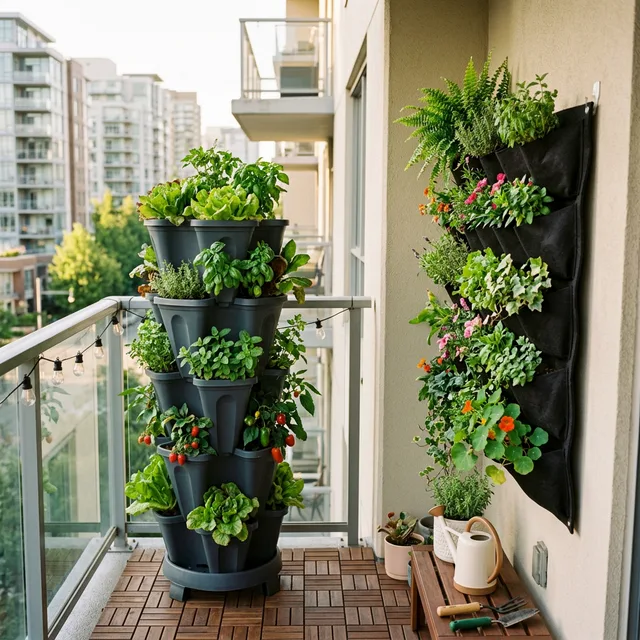
For most renters, the best vertical vegetable garden system for balconies is a stacking tower like the GreenStalk. These systems utilize a vertical water reservoir that drips down from the top, ensuring every tier gets even hydration.
Why I Love the Stacking Tower:
- Massive Yield: In a footprint of just 48cm wide, you can grow 30 different plants. That’s enough to harvest a fresh bowl of kale and herbs every single day.
- The Rotation Hack: Most high-end towers now sit on a heavy-duty spinner base. This is critical for sensory sanctuary studio living. If your balcony only gets 4 hours of sun, you can rotate the tower 180 degrees every morning to ensure the “back” plants don’t starve for light.
- Stability: When filled with wet soil, these units weigh over 150 lbs. This makes them incredibly stable. They don’t blow away; they stay planted like a structural pillar.
The “Elena Verde” Caution: Do not buy the versions without a central support tube. Cheap knock-offs will “tilt” over time as the soil settles, creating a dangerous center-of-gravity issue.
2. Pocket Walls: Turning Your Building into a Jungle
If you have a strict “no floor clutter” rule, hanging felt pockets are your best bet.
Best For: Herbs and Trailing Strawberries
Pocket walls are excellent for plants with shallow root systems. Because they sit flush against your building’s wall, they utilize the “dead space” that is usually wasted.
The Wind Factor:
In my testing on the 14th floor, felt pockets performed surprisingly well because they lack the “leverage” of a free-standing rack. However, you must use industrial-strength wall anchors. If you are a renter and can’t drill, I recommend using heavy-duty 50lb Command hooks specifically rated for outdoor use, but even then, I only use pockets for lightweight herbs, never for heavy crops like tomatoes.
3. The “High-Rise” Stability Test: Engineering vs. Nature
On a balcony, wind is your #1 enemy. Most “gardening” books assume you are at ground level. They are wrong for us.
How to Anchor Your Vertical Garden:
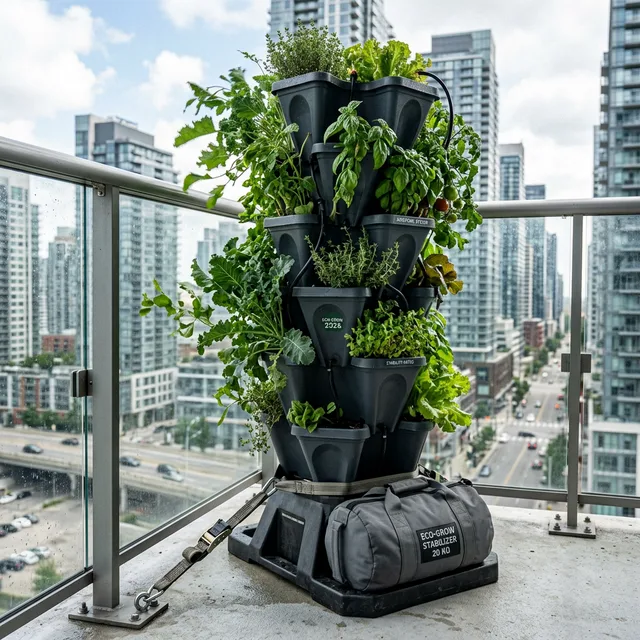
- The Sandbag Secret: If you use a stacking tower, place a 20kg sandbag or weighted base inside the bottom tier. This lowers the center of gravity significantly.
- The Ratchet Strap: On high-wind days, I use a simple black ratchet strap to secure my vertical towers to the balcony railing. It takes 10 seconds and prevents a catastrophe.
- The “Sail” Effect: If you have a pocket wall, the plants themselves act as a sail. Ensure the pockets are made of breathable felt, which allows wind to pass through the fibers slightly, reducing the total pressure on the wall hooks.
4. Maintenance: The “Drip-Line” Difficulty
The biggest frustration with vertical systems is watering. In a micro-apartment, you probably don’t have an outdoor tap.
The Solution: Look for systems with a “Top-Fill” reservoir. You pour 2 gallons of water into the very top, and gravity does the work. If you choose a system that requires you to water each pocket individually, you will quit within a month. It’s too messy and leads to water dripping onto your downstairs neighbor’s laundry—a classic urban apartment conflict.
Conclusion: Which System is Right for You?
For a simpler starting point, a balcony herb garden with basic pots requires no vertical system at all — herbs have shallow roots and thrive in standard 20cm containers on any railing or ledge.
Choosing the best vertical vegetable garden system for balconies depends on your floor level and your landlord.
- If you are on floors 1-5: Go for the A-Frame Tiered Ladder. Accessibility is easy and wind is less of a factor.
- If you are on floors 6+: Use a Stacking Tower with a weighted base. It is the only system that provides the structural integrity needed for high-altitude winds.
- If you have zero floor space: Use a Hanging Pocket Wall secured with multiple redundant anchors.
Vertical gardening isn’t just a trend; it’s a necessity for the 2026 urbanite. By choosing a modular, stable system, you can grow a significant portion of your own food without sacrificing the comfort of your small outdoor sanctuary.
Safety Disclaimer
Always check your building’s balcony weight limits before installing a large vertical tower. A fully saturated soil tower can weigh over 200 lbs, which is fine for most modern concrete balconies but may exceed the limits of older, cantilevered decks. Refer to our Balcony Weight Guide for more details. Mind balcony weight limits.
