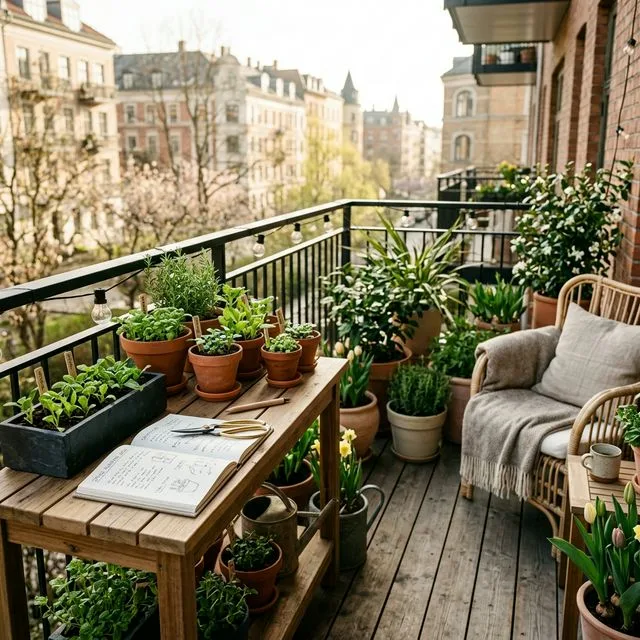
Growing on a balcony means working with nature, not against it. The biggest mistake urban gardeners make is planting too early, planting too late, or simply not knowing what is possible in each season. This balcony plant calendar for 2026 gives you a complete month-by-month roadmap — from seed starting in January to overwintering in December — designed specifically for apartment renters with limited outdoor space.
Whether you have a sun-drenched south-facing terrace or a shaded north balcony, you will find a planting window that works for you.
Free Download
🌱 Balcony Plant Calendar 2026 — PDF
Printable month-by-month planting guide. Save it, pin it, stick it on your fridge.
Download Free PDF →How to Use This Balcony Plant Calendar
Before diving in, note two things: your hardiness zone and your balcony orientation.
- South/West facing — maximum sun, warm microclimate, can push the season earlier
- North/East facing — limited direct sun, cooler, stick to shade-tolerant crops and herbs
- High-rise balconies — extra wind exposure; use windbreaks and stick to low, compact plants
All timings below are based on a temperate Northern Hemisphere climate (zones 6–9), which covers most of Europe and much of the US. Adjust 2–4 weeks forward if you are in a colder zone, or 2 weeks back if you are in a warmer zone.
January: Plan, Order Seeds, Start Indoors
January is not a resting month for serious balcony gardeners — it is the month that determines how successful your entire 2026 season will be.
What to do in January: – Sketch your balcony layout and plan container placement – Order seeds online (varieties sell out; popular tomato cultivars are gone by March) – Start chillies and peppers indoors — they need the longest growing season of any vegetable
What to start on a windowsill: – Chilli peppers (12–16 weeks to transplant) – Sweet peppers (12–14 weeks) – Celery (needs cool start, then warmth)
What can wait: everything else. Starting tomatoes in January produces leggy seedlings by the time outdoor temperatures are safe.
February: First Seeds, Microgreens Boost
February brings the first real seed-starting action. Indoor light improves noticeably, and you can begin building your indoor nursery.
Start indoors in February: – Tomatoes (cherry varieties recommended for balconies) – Aubergine / Eggplant – Leeks – Onions and shallots
Grow now on your balcony: – Microgreens — sunflower, pea shoots, radish, broccoli can be grown in a tray indoors or on a sheltered balcony any time of year – Spinach and mâche in a cold frame or mini greenhouse
| Plant | Start Method | Location | Weeks to Transplant |
| Cherry Tomatoes | Seed tray indoors | Warm windowsill | 10–12 weeks |
| Chilli Peppers | Seed tray indoors | Warm windowsill | Started Jan (continue) |
| Pea Shoots | Direct in tray | Any light spot | Harvest in 2–3 weeks |
| Spinach | Direct in container | Sheltered balcony | Ready in 6–8 weeks |
March: Herbs Wake Up, Spring Sowing Begins
March is when the balcony gardening season officially begins for most renters. Days get noticeably longer, temperatures climb above 7°C (45°F) during the day, and the first outdoor seeds can go in.
Direct sow on balcony (late March, south-facing only): – Radishes (harvest in just 25 days) – Lettuce and salad mix – Spinach
Start indoors: – Courgette / Zucchini (just 4–6 weeks needed before transplanting) – Cucumber – Basil (needs warmth, do not rush outdoors) – Nasturtium seeds
Overwintered herbs returning: – Rosemary, thyme, sage, and chives will start sending up new growth — cut back woody stems to encourage fresh shoots
April: The Big Herb Month
April is the best month to build out your herb garden. Temperatures are reliable enough for most herbs, and garden centres stock the best selection of the year.
Plant out in April (after last frost in your zone): – Mint (always in its own container — it is invasive) – Parsley – Chives – Coriander / Cilantro (sow direct; it hates being transplanted) – Thyme, oregano, rosemary
Continue indoors: – Tomatoes (pot up to larger containers as roots fill the plug) – Courgette (will be ready to go out in May)
Balcony-specific tip: April winds can be brutal. Hold off on putting out tender seedlings until the last week of April at the earliest, and use a windbreak or mini greenhouse for protection.
| Herb | Sun Needed | Container Size | Notes |
| Basil | Full sun | 6–8 inch pot | Keep indoors until May |
| Mint | Part shade OK | Own deep pot | Never plant with others |
| Chives | Part shade OK | Any size | Cut and come again |
| Coriander | Part shade | Wide, shallow tray | Sow every 3 weeks |
| Thyme | Full sun | 6 inch pot minimum | Drought tolerant |
May: Tomatoes Go Out, Peak Planting Season
May is the most exciting month in the balcony garden. The risk of frost passes for most zones, and the plants that have been waiting on windowsills can finally go outside.
Transplant out in May: – Tomatoes (stake immediately; use a cage or tie to railing) – Chilli and sweet peppers – Courgette (one plant is usually enough for a balcony) – Cucumber (train vertically up a trellis) – Basil (finally warm enough)
Direct sow in May: – Runner beans and French beans (fast growing, can be trained vertically) – Nasturtiums (edible flowers, deters aphids, zero-effort) – Courgette second batch for succession
Renter tip: Use grow bags and fabric pots rather than heavy terracotta — they are lighter, drain better, and you can move them when you leave.
June: Harvest Begins, Beat the Heat
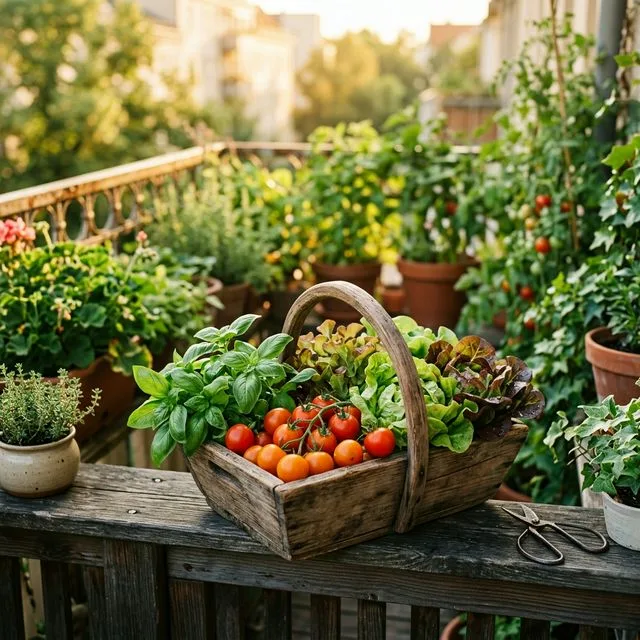
By June your balcony is coming into full production. Radishes sown in March are long gone; lettuce is in full swing; cherry tomatoes are flowering.
What to harvest in June: – Salad leaves (cut-and-come-again works perfectly — cut to 3cm above soil) – Radishes (second sowing) – Spring onions – Herbs daily
What to sow for autumn harvest: – A second batch of salad mix (will be ready in August–September) – Kale and chard (extremely productive on balconies, tolerates part shade)
Heat management: – Water containers morning and evening once temperatures regularly exceed 25°C – Move heat-sensitive lettuces to a shadier spot — they bolt (go to seed) quickly in full summer sun
July: Peak Summer, Succession Planting
July is peak harvest month for sun-loving crops. Tomatoes ripen, courgettes need daily picking, and your herbs need regular trimming to prevent flowering and going bitter.
Daily tasks: – Pick courgettes before they become marrows (harvest when 15–20cm) – Pinch out tomato side shoots (keeps the plant focused on fruit production) – Harvest basil tips regularly to prevent flowering
Start late-summer succession: – Sow another batch of radishes, lettuce, and spinach (these will be your autumn harvest) – Start kale for winter
| Crop | Peak Harvest | Frequency | Tip |
| Cherry Tomatoes | July–September | Every 2–3 days | Pick fully red for sweetness |
| Courgette | July–August | Daily | Don’t let them get big |
| Basil | June–September | Weekly harvest | Pinch flower buds immediately |
| French Beans | July–August | Every 3 days | Pick young for best flavour |
August: Prep for Autumn While Summer Delivers
August is two months in one: the summer harvest is at its absolute peak, but smart gardeners are already thinking about autumn.
Sow now for autumn: – Spinach (one of the best autumn balcony crops) – Pak choi and Asian greens (love cooler weather, ready in 40 days) – Rocket / Arugula (grows fast, tolerates frost) – Winter lettuce varieties
August balcony task: Deep clean and reorganise containers. Remove any struggling plants and free up space for autumn crops. This is also a good time to add compost to containers that have been producing all summer.
September: The Autumn Reset
September brings a second gardening season that many balcony gardeners overlook entirely. Temperatures cool, light softens, and many crops actually prefer these conditions.
Thrive in September: – Kale, chard, and spinach — these improve after a light frost (converts starch to sugar) – Autumn salad mix (many seed packets are specifically labelled “autumn/winter mix”) – Pak choi and mustard greens
What to do with summer crops: – Pull tomato plants when first frost is forecast (usually late September–October depending on zone) – Green tomatoes indoors ripen on a warm windowsill – Dig up and pot up chilli plants to overwinter indoors
Bulb planting begins (end of September): – Plant spring bulbs in containers: tulips, daffodils, alliums – Garlic can go into containers now for a June 2027 harvest
October: Harvest, Store, Wind Down
October is about bringing the season to a close gracefully while setting yourself up for spring.
Last harvests: – Clear remaining tomato plants before sustained frost – Harvest all chillies (they keep for months dried or frozen) – Lift and store any root vegetables
Planting out: – Garlic (if not done in September) — plant individual cloves 15cm apart in a deep container – Overwintering onion sets – Hardy herbs for winter: rosemary, thyme, sage (these stay outside all winter in most zones)
Container prep: – Move large planters to a sheltered corner against the building wall (reduces wind exposure and freeze-thaw damage) – Wrap terracotta pots with bubble wrap or hessian — they crack in deep frost
November–December: Rest, Plan, and Microgreens
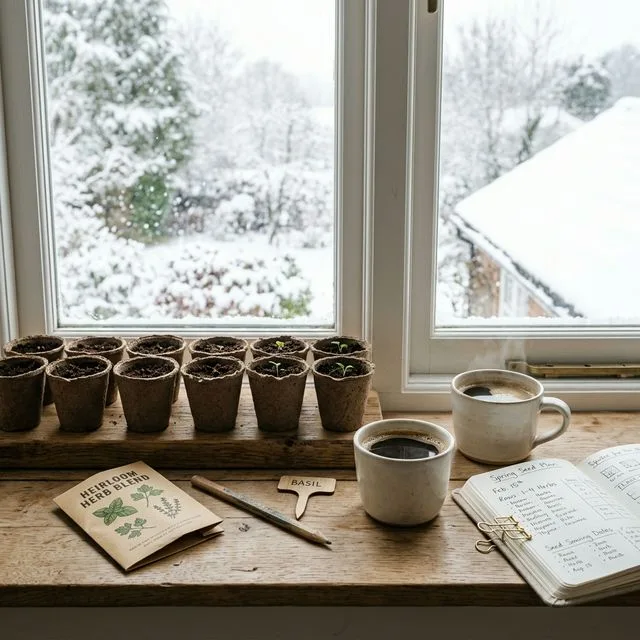
The outdoor growing season is over for most crops, but two things keep the balcony gardener busy through winter.
Keep growing all winter: – Microgreens indoors — sunflower, pea, radish, broccoli, amaranth (ready in 7–14 days, no outdoor space required) – Windowsill herbs — mint, chives, parsley can be potted up and brought inside – Forced bulbs — hyacinths in glass vases, paperwhite narcissus
December planning tasks: – Review what worked and what failed in 2026 – Order new seed catalogues and place early orders – Clean and sterilise containers with diluted bleach (prevents disease carryover) – Make a list of what containers need replacing
Free Download
Get the Full Balcony Plant Calendar as a PDF
Print it, stick it on your fridge, save it to your phone. Every month at a glance.
Download Free PDF →Quick-Reference: Full Year Planting Summary
| Month | Start Indoors | Plant Outside | Harvest |
| January | Chillies, peppers | — | Microgreens |
| February | Tomatoes, aubergine | — | Microgreens, spinach |
| March | Courgette, cucumber | Radish, lettuce (late) | Overwintered herbs |
| April | Basil | Herbs, salad | Radishes, lettuce |
| May | — | Tomatoes, peppers, beans | Salad, herbs |
| June | — | Second lettuce sowing | Radish, salad, herbs |
| July | — | Autumn kale, chard | Tomatoes, courgette, beans |
| August | — | Pak choi, Asian greens | Peak harvest all crops |
| September | — | Garlic, spring bulbs | Kale, salad, tomatoes |
| October | — | Overwintering onions | Last tomatoes, chillies |
| November | Microgreens, windowsill herbs | — | Microgreens |
| December | Microgreens, forced bulbs | — | Microgreens, herbs |
Conclusion
A well-planned balcony can produce fresh herbs, salads, and vegetables for ten months of the year — not just in summer. The key is succession planting: as one crop finishes, another goes in. Download the free 2026 Balcony Plant Calendar PDF to keep this guide at your fingertips all year, and pin it to your Pinterest boards so you can refer back to it at each planting milestone.
Start now, wherever you are in the year. The best time to plant was last month. The second best time is today.
What is the easiest vegetable to grow on a balcony in 2026?
Cherry tomatoes, salad leaves, and radishes are the easiest balcony vegetables for beginners. Radishes can be harvested in just 25 days from seed, lettuce is ready in 30–40 days, and cherry tomato varieties like ‘Tumbling Tom’ or ‘Hundreds and Thousands’ are bred specifically for container growing and do not need much staking.
When should I start tomato seeds for a balcony garden?
Start tomato seeds indoors in late January or February — about 10–12 weeks before your last expected frost date. For most of Europe, this means an outdoor transplant date in mid-May. Starting too early produces leggy, root-bound seedlings with reduced vigour.
Can I grow vegetables on a north-facing balcony?
Yes, but your options are more limited. Focus on shade-tolerant crops: salad leaves, spinach, kale, mint, chives, and parsley all grow well with 3–4 hours of indirect light per day. Avoid sun-hungry crops like tomatoes, peppers, courgette, and basil on a north-facing balcony.
How many pots do I need for a productive balcony garden?
You can run a productive balcony garden with as few as 5–8 large containers (30–40L each). Prioritise: one large container for tomatoes or peppers, one wide shallow tray for salads, two or three medium pots for herbs, and one deep container for root vegetables or garlic.
Is it worth getting a grow light for balcony gardening in winter?
A simple LED grow light (around $30–50 on Amazon) extends your indoor growing season significantly. It is most useful for starting seeds in January–February and for growing microgreens and windowsill herbs through winter. It is not necessary for outdoor summer growing.