The best apartment balcony garden ideas aren’t the ones in magazine spreads — those are photographed on penthouse terraces with unlimited budgets and no landlords. Real apartment balcony gardening happens on 3–6 m² of concrete, under a lease that probably says something vague about “no permanent modifications,” on a floor high enough that the wind occasionally ruins your afternoon plans.
I’ve gardened on five different apartment balconies across four cities. The worst was a 2.8 m² northeast-facing slab on the 11th floor in a building where gusts routinely hit 40 km/h by early afternoon. I lost an entire herb shelf to wind in the first month. The best was a 5.4 m² south-facing balcony on the ground floor — practically a garden. The lessons from the difficult ones are what’s actually useful here.
Fifteen ideas below, organized by goal: growing food, adding greenery, creating privacy, and building structure. Pick what fits your specific slab.
| Balcony Type | Best Approach | Priority Ideas |
|---|---|---|
| Full sun, 4+ hours | Vegetables + herbs | Ideas 1, 2, 4, 7 |
| Partial sun, 2–4 hours | Greens + trailing plants | Ideas 3, 5, 8, 11 |
| High-rise (6th floor+) | Wind-resistant setup first | Ideas 6, 9, 12 |
| Tiny balcony (under 4 m²) | Vertical only | Ideas 3, 6, 10, 13 |
| Privacy focus | Plant screens | Ideas 9, 14, 15 |
How Apartment Balcony Gardens Work for Renters
The renter constraint is two things: no permanent drilling into the building structure, and staying within the balcony’s weight rating. Every idea in this list addresses both. The tools are railing planters (no-drill brackets), tension rods (floor-to-ceiling, no holes), freestanding stands, and lightweight growing media in fabric or plastic containers.
Before any of this: calculate your weight budget. Most residential balconies in Europe are rated 150–200 kg/m² under EN 1991-1-1; US balconies typically at 195–293 kg/m². Subtract your furniture and work within what remains. The complete weight calculation guide walks through it in detail.
How to Choose Apartment Balcony Garden Ideas
Start with your sun exposure. Measure actual hours of direct sun across a full day — not just a glance at which way you face. A south-facing balcony with a large overhang above can receive less sun than a north-facing one with unobstructed sky.
Match plants to your floor height. Above the 5th floor, wind becomes the governing constraint, not sun or soil. Wind-resistant species and anchored containers matter more than anything else up there.
Weight-first, aesthetic second. Fabric grow bags, lightweight potting mixes (perlite blend), and plastic railing planters cost the same or less than their heavier alternatives and give you significantly more gardening capacity within the same structural limit.
What Are the Best Apartment Balcony Garden Ideas for Renters?
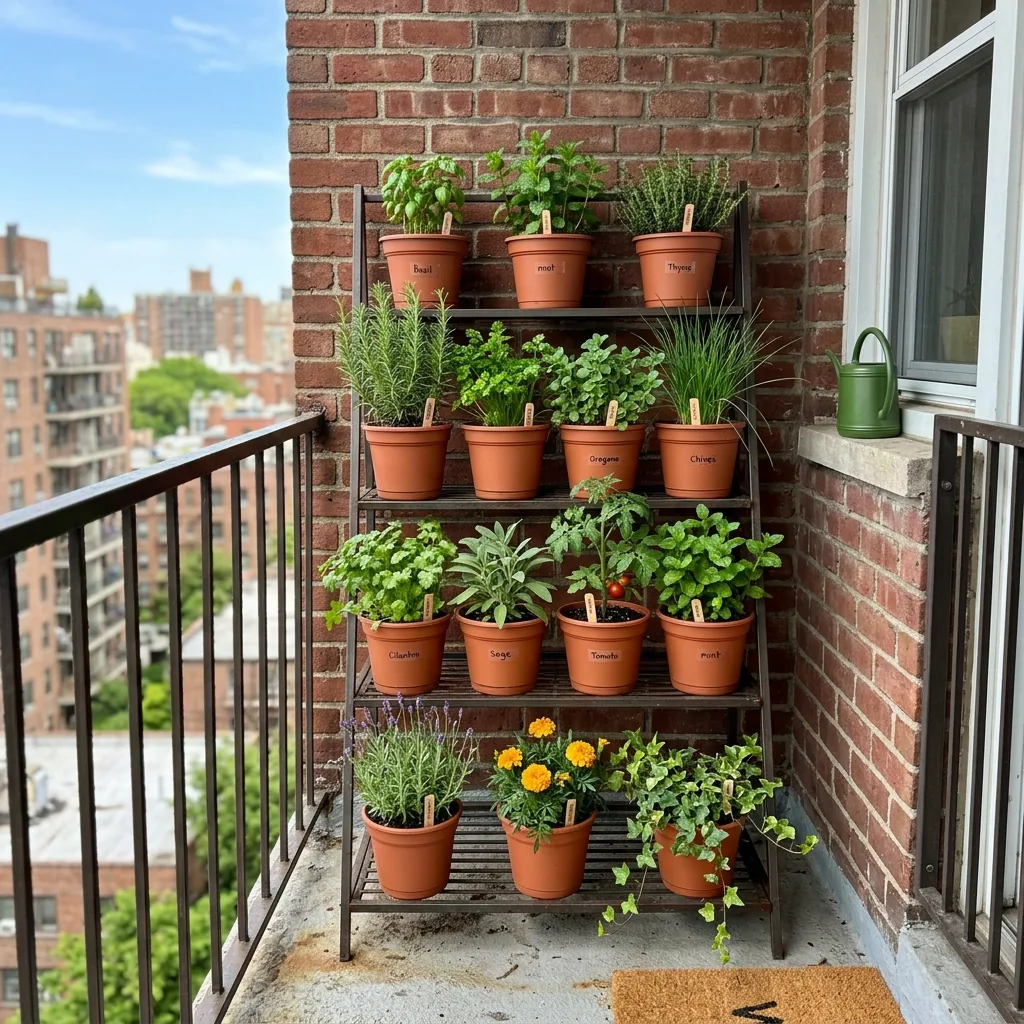
The best apartment balcony garden ideas for renters combine three elements: railing-mounted herb planters (zero floor load, accessible, productive), a freestanding tiered plant stand against the building wall for vegetables or larger plants, and a vertical tension-rod system for trailing plants and climbers. This three-layer setup fits a 3–5 m² balcony, stays well within typical structural ratings, and requires no drilling. Cost to set up from scratch: $70–120 including containers, soil, and basic plants. The railing herb setup alone — 3–4 herb varieties in adjustable bracket planters — costs under $40 and provides a continuous harvest through the growing season.
15 Apartment Balcony Garden Ideas
1. Railing Herb Garden
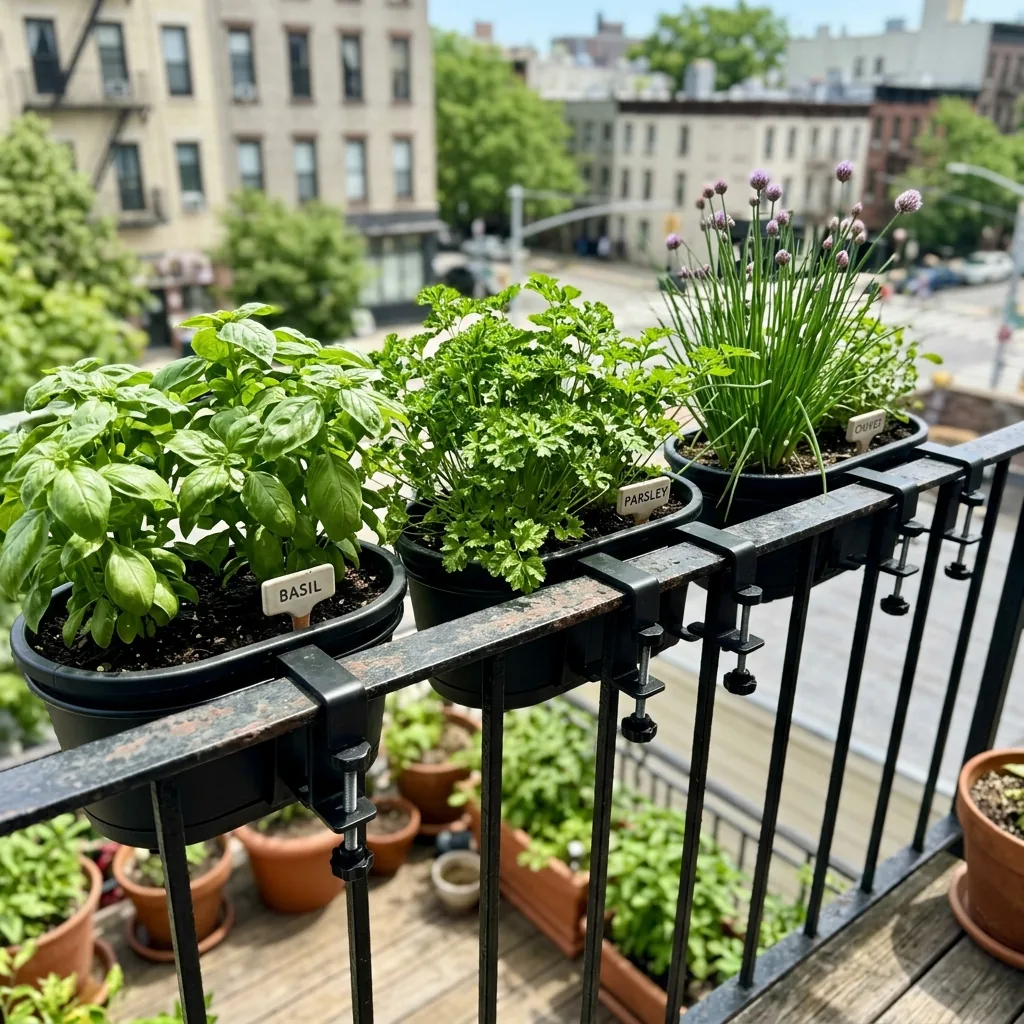
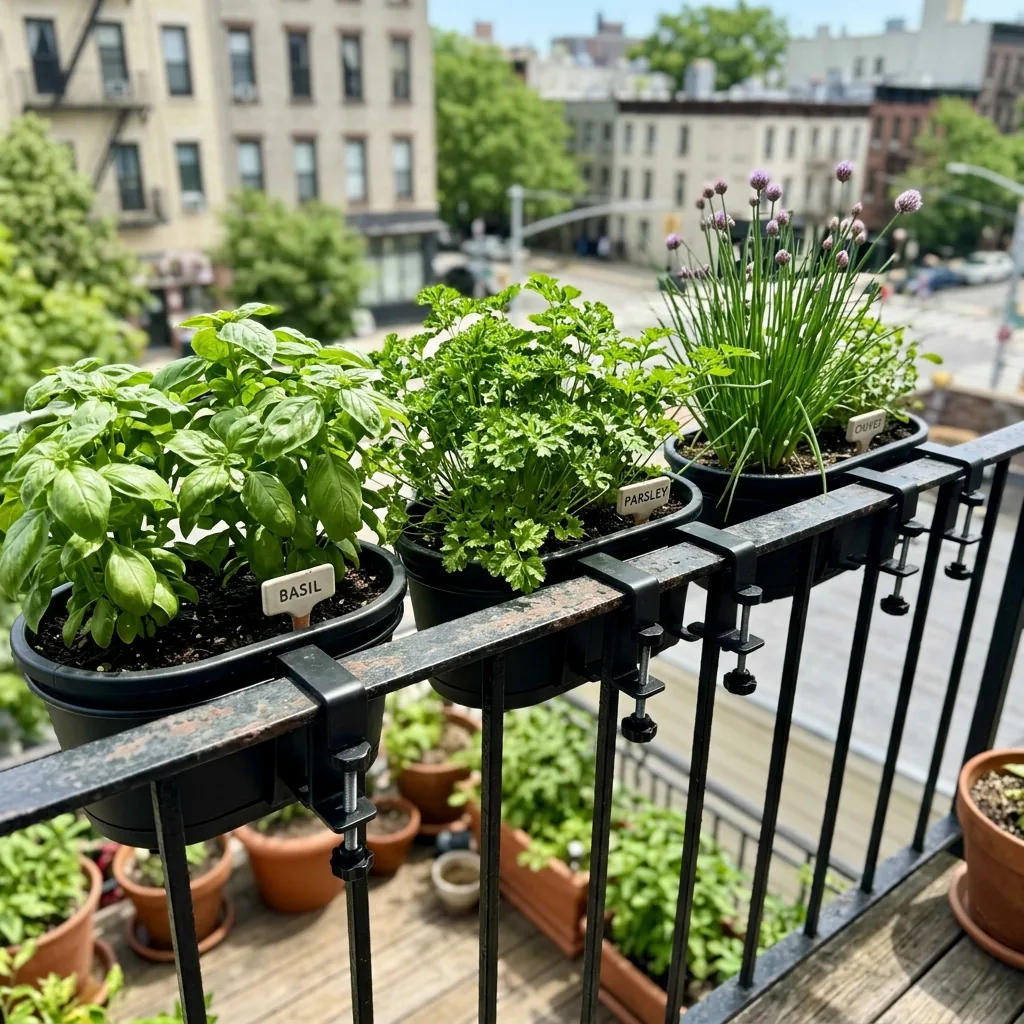
The simplest productive balcony garden setup. Adjustable bracket planters (no drilling, just clamp over the railing top rail) hold 3–6 herb pots in a row. Basil, parsley, chives, thyme, mint (keep mint contained — it’s aggressive), and oregano all thrive in 6-inch containers with 4+ hours of sun.
Yield: enough fresh herbs to stop buying them at the supermarket. The payback period on a $25 railing planter kit is approximately six weeks if you currently spend $3/week on fresh herbs.
Full setup guide: complete balcony herb garden.
- ✅ Pros: Zero floor weight; productive; low maintenance; works on any railing style
- ❌ Cons: Limited root depth — unsuitable for root vegetables or large plants
2. Cherry Tomato Tower
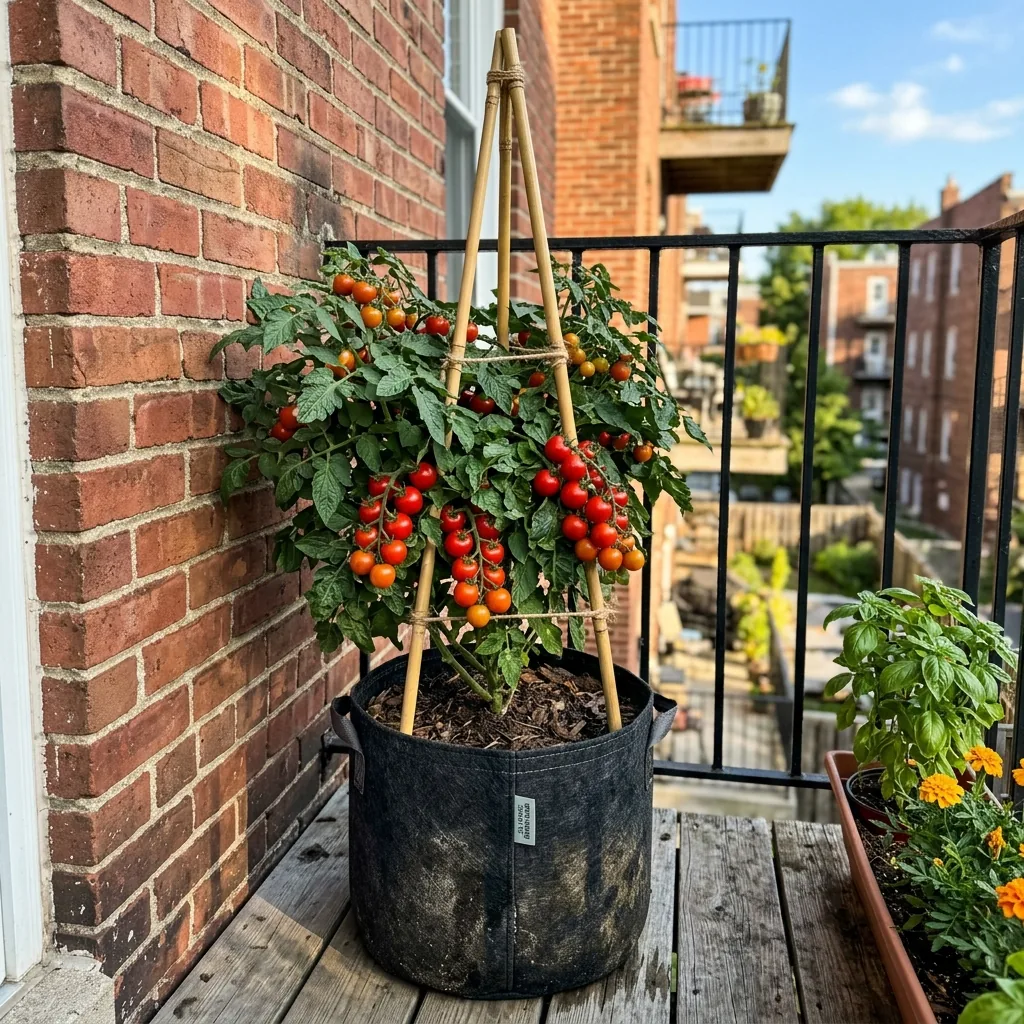
A single 25L fabric grow bag against the building wall, a 1.2m bamboo stake for support, and a Tumbling Tom or Balconi Red cherry tomato plant. These compact varieties are bred for container growing and produce heavily in 5–6 hours of sun.
Full wet weight of this setup: approximately 22–25 kg — well within the weight budget of most balconies. Yield from one plant: 2–4 kg of tomatoes per season with regular feeding.
Detailed grow guide: growing cherry tomatoes on a balcony.
- ✅ Pros: High yield-to-space ratio; compact footprint; genuinely satisfying
- ❌ Cons: Needs 5+ hours direct sun; regular watering (daily in heat); feeding every 2 weeks
3. Vertical Tension Rod Garden
A floor-to-ceiling tension rod carries hanging planters, trailing plants, and climbing supports without any wall contact. On a tiny balcony, this is how you multiply your growing area vertically — 4–6 hanging pots above a floor-level container creates a multi-layer planting column in 0.3 m² of floor space.
Works for: pothos, string of pearls, trailing fuchsia, dwarf runner beans climbing the rod itself, strawberries in hanging pockets.
Full installation method: hang plants on a balcony without drilling.
- ✅ Pros: No floor weight for hanging pots; multiplies growing space vertically; zero wall damage
- ❌ Cons: Tension rods have load limits — check weight rating before overloading
4. Salad Leaf Window Box
Shallow window boxes (or railing planters used as boxes) planted with cut-and-come-again salad leaves: rocket, spinach, baby kale, mixed lettuce. These don’t need deep soil — 15cm depth is sufficient — and they produce continuously through the season if you harvest outer leaves rather than pulling whole plants.
A 60cm window box filled with lettuce mix provides a side salad every 3–4 days from late spring through early autumn. Tolerates partial shade better than almost any other food crop.
- ✅ Pros: Works in low sun; fast harvest (leaves ready in 3–4 weeks); shallow container
- ❌ Cons: Needs consistent moisture — dries out fast in heat
5. Fern and Shade Plant Corner
Not every balcony setup needs to produce food. A north-facing or heavily shaded balcony is the perfect environment for a lush fern and shade-plant corner: Boston ferns, asparagus ferns, hostas, and impatiens all thrive with minimal direct sun and create genuine visual density that looks intentional and cared-for.
Add a rattan bistro set and this is the most achievable “apartment garden” look for difficult exposures.
- ✅ Pros: Works where food gardens fail; low maintenance; lush appearance
- ❌ Cons: Not productive — purely aesthetic
6. Wind-Proof Herb Setup (High-Rise Specific)
Above the 5th floor, standard herb pots placed on the railing get knocked over and dry out within 18–24 hours on hot windy days. The solution: railing-clamped enclosed planters with drainage holes (the enclosure breaks direct wind contact), anchored with secondary cable ties, planted with wind-tolerant herbs only — thyme, oregano, chives, sage. Basil is not viable above the 6th floor without a windbreak.
Detailed wind resistance strategies: wind-proof balcony garden tips.
- ✅ Pros: Survives conditions that kill standard setups; herbs stay productive
- ❌ Cons: Limits species selection; requires additional anchoring steps
7. Strawberry Railing Runners
Strawberries are arguably the best railing planter crop: they trail decoratively, produce prolifically in 5+ hours of sun, and have shallow roots that thrive in 15–20cm containers. A row of 4–6 railing planters planted with strawberries provides continuous fruit from late spring through mid-autumn.
Use everbearing varieties (Albion, Seascape, Everest) rather than June-bearing — they fruit in flushes through the whole season rather than one concentrated crop.
- ✅ Pros: Decorative and productive; shallow roots; continuous harvest
- ❌ Cons: Needs 5+ hours sun; slugs in lower-floor apartments (use copper tape on pot rims)
8. Indoor-Outdoor Herb Bridge
Keep herbs in pots near the balcony door that move easily between indoors and outdoors. Basil sits inside on the windowsill where it’s warmer; it moves outside on calm sunny days. Mint, chives, and parsley stay outside through the growing season; move inside before first frost. This flexibility extends your growing season by 4–6 weeks at both ends and protects heat-sensitive plants from unexpected cold snaps.
- ✅ Pros: Extends season; protects frost-sensitive plants; flexible
- ❌ Cons: Requires attention and consistency — easy to forget plants outside overnight
9. Bamboo Privacy Screen with Climbers
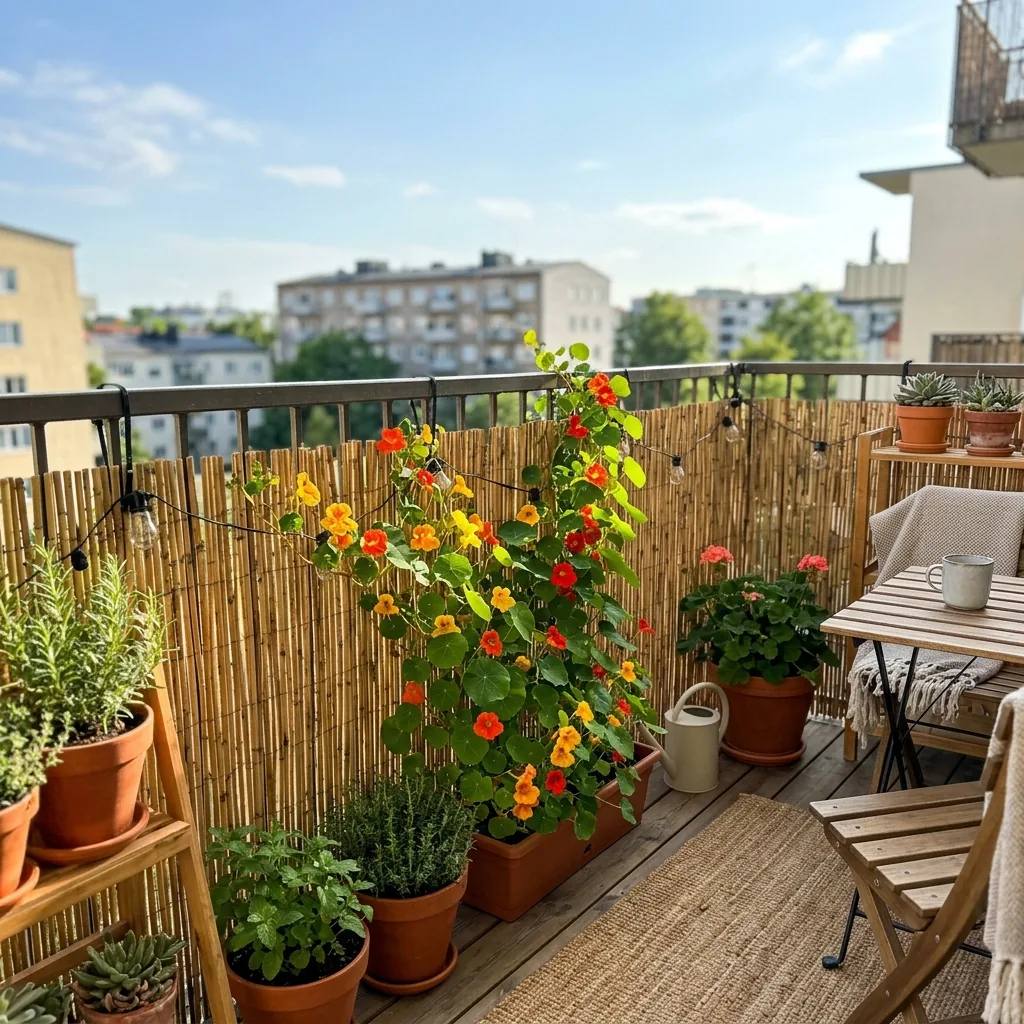
A freestanding bamboo panel or rolled bamboo screen attached to the railing via cable ties (no drilling) provides wind protection and privacy simultaneously. Train nasturtiums, sweet peas, or black-eyed Susan vine up through the screen — within 6–8 weeks the screen becomes a flowering wall.
Full renter-safe privacy screen options: renter-friendly balcony privacy screen.
- ✅ Pros: Wind reduction + privacy + floral display from one installation
- ❌ Cons: Adds wind load to the railing — secure with multiple tie points; check railing structural rating
10. Micro Greenhouse Shelf
A freestanding mini greenhouse (the 4-tier zippered cover type, approximately $30–45) protects seedlings and tender plants from wind and cold, extends the growing season by 4–8 weeks, and fits in 0.6 m² of floor space. On a small balcony, it’s the most efficient structure per square meter.
In summer, unzip the cover during the day for ventilation. In spring and autumn, keep it closed overnight. In winter, use it to overwinter tender perennials.
See: micro balcony greenhouse guide.
- ✅ Pros: Season extension; wind and frost protection; compact; no installation
- ❌ Cons: Not suitable for very high-rise balconies (wind stress on the cover)
11. Trailing Plant Cascade
A tiered plant stand positioned at the railing corner, planted exclusively with trailing plants, creates a cascading effect that turns a flat concrete slab into something that looks deliberately designed. Use: trailing nasturtiums (edible, fast-growing), string of pearls (if you have enough sun), trailing petunia, or bacopa.
The cascade effect requires 3 tiers minimum with at least 2 trailing species planted to hang over the edges. Let the plants grow without constant trimming — the trailing length is the visual point.
- ✅ Pros: Dramatic visual effect; low maintenance; works in partial shade with the right species
- ❌ Cons: Takes 4–6 weeks to establish the cascade effect — patience required
12. Anchored Vegetable Grow Bag Setup
For balconies above the 6th floor that still want vegetables: heavy-duty fabric grow bags anchored to the railing posts via velcro straps (not just placed loose). A 10L bag anchored at two points won’t move in gusts that would scatter a loose pot. Plant with compact, wind-tolerant vegetables: peas, dwarf runner beans, compact courgette, chard.
The anchoring is the critical step. An unanchored 10L pot filled with wet soil weighs approximately 12 kg — enough to cause serious injury if it falls from height.
- ✅ Pros: Productive even at height; anchored setup survives storm-force gusts
- ❌ Cons: Requires deliberate anchoring setup; limits to compact plant varieties
13. Vertical Wall Pocket Planter
Fabric pocket planters (a single sheet with 12–20 individual pockets) hang from the railing or a tension rod and plant 12–20 plants in 0.4 m² of vertical space. Best use: strawberries, herbs, lettuce, small flowers. Each pocket holds a 0.5–1L volume of soil — insufficient for large vegetables, ideal for shallow-rooted crops.
Review of the best options: vertical garden planters for balcony walls.
- ✅ Pros: Maximum plants per square meter; no floor space used; lightweight
- ❌ Cons: Dries out very fast — needs daily watering in hot weather; limited root depth
14. Tall Privacy Plant Screening
A row of tall container plants along the railing creates living privacy screening without bamboo panels or fabric screens. Best performers in containers: bamboo (clumping varieties only, non-invasive), phormium (New Zealand flax), ornamental grasses, climbing roses on a free-standing trellis.
Weight consideration: tall plants in large containers are heavy. A bamboo in a 30L container with wet soil runs 35–40 kg — plan your weight budget around these as anchor pieces.
Balcony privacy with plants: privacy plants and screens guide.
- ✅ Pros: Natural-looking; permanent (plants can be moved to new apartment); seasonal interest
- ❌ Cons: Weight-intensive; large containers require significant structural budget
15. Year-Round Rotating Crop System
Plan your balcony as a seasonal rotation system rather than a single fixed setup. Spring: salad leaves, peas, herbs. Summer: tomatoes, peppers, beans, flowers. Autumn: kale, chard, late salads, bulb planting. Winter: overwintering containers with hardy herbs (rosemary, thyme, sage survive frost in containers).
This approach keeps the balcony productive 10 months of the year and prevents the dead-looking winter balcony that most apartment gardeners resign themselves to.
Full rotating calendar: year-round balcony garden plan.
- ✅ Pros: Continuous interest and productivity; maximizes the same containers through seasons
- ❌ Cons: Requires planning ahead — you can’t decide in July what to plant in September
My Experience with Apartment Balcony Garden Ideas
The setup I use now on my 3.2 m² balcony pulls from ideas 1, 3, 7, and 15 combined. Railing planters with herbs and strawberries. A tension rod vertical column with trailing nasturtiums and a runner bean climbing up the rod itself. A 5-tier stand against the building wall holding cherry tomatoes and chard. And a rotation plan that means something is always going in or coming out.
Total weight fully planted and watered: 68 kg on a 3.2 m² balcony rated at 175 kg/m². I’m using 12% of the structural capacity. There’s room to expand, but I’ve learned that 10–14 containers is the sweet spot for what I can manage alone without the watering becoming a part-time job.
The gravity-fed drip kit (full setup) changed the maintenance load entirely — filling a 12L reservoir every two days takes 3 minutes. Before it, I was hand-watering 14 containers every morning, which took 20–25 minutes. That’s three hours a week. Not sustainable.
Conclusion
Start with your constraints — weight limit, sun hours, floor height — and pick ideas that fit those numbers before you fall in love with anything aesthetic. The most successful apartment balcony gardens I’ve seen are built around a realistic assessment of what the space actually offers, not what it would offer if it were different. A 2.5 m² northeast-facing balcony can still produce herbs, salad, and strawberries year-round. It just won’t grow tomatoes. Work with it.
Safety Disclaimer
Always verify your balcony’s structural load rating before adding container garden weight. Secure all railing planters with secondary cable ties — railing-mounted planters can be displaced by wind, particularly above the 3rd floor. Never place unsecured heavy containers near the railing edge. Calculate load with fully saturated soil, not dry weight.
—