Installing interlocking acacia deck tiles for concrete apartment balconies is the single fastest way to transform a cold, industrial outdoor space into a warm, organic sanctury. Most apartment balconies are finished with raw, grey concrete. Not only is this visually depressing, but it is also a thermal nightmare: in the peak of summer, that concrete absorbs UV rays and radiates heat back into your apartment like a giant stone radiator.
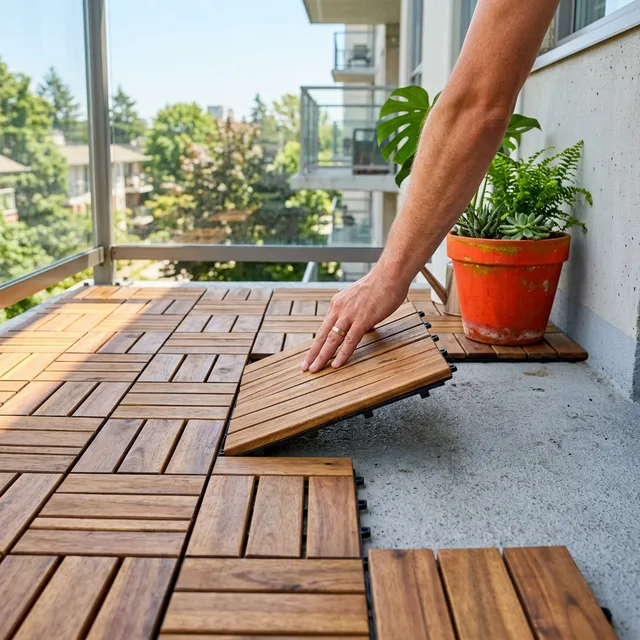
Interlocking wood tiles provide a “floating” floor system that snaps together like high-end LEGOs. Because they sit on plastic risers, they create a 1/2-inch air gap between the wood and the concrete. This allows rainwater to drain freely and prevents heat from transferring into your building. Most importantly for renters, they require zero glue, zero screws, and zero permanent alteration to the property. When your lease is up, you simply pop them apart, stack them in a box, and take your floor with you to your next home.
My Experience with the “Burned Feet” Balcony
In my third-floor walkup, my balcony was a 4×8 slab of pitted, stained concrete. It was so ugly that I never wanted to go out there, and it got so hot in the afternoon that I couldn’t step on it barefoot without burning my soles.
I bought three boxes of acacia wood tiles from a local hardware store. The installation took me exactly 45 minutes. No tools were required—only a pair of heavy-duty scissors to trim the plastic edges of the final row.
The change was instant. The wood stayed cool to the touch even in 90-degree weather, and the “clacking” sound of my patio chairs on the concrete was replaced by a solid, high-end “thud” on the wood. It made the balcony feel like a literal extension of my living room. Even after a massive spring thunderstorm, the balcony was dry ten minutes later because the water drained through the slats instead of pooling on the concrete surface.
The 3 Rules of Balcony Deck Tiles
To ensure your “snap-and-go” floor lasts more than one season, you must follow these rules:
- The Drainage Direction: Most tiles have a plastic mesh base. Ensure the “channels” in the plastic base align with the natural slope of your balcony. If you block the slope, water will get trapped under the tiles, leading to mold and a stinky “swamp” smell under your floor.
- Acacia Coating: Acacia is a naturally rot-resistant hardwood, but it will turn grey (patina) if exposed to direct sun. If you want to keep that rich, orange-gold color, you must buy tiles that are pre-oiled and give them a quick coat of teak oil every spring.
- The “Border” Gap: Never wedge your tiles tightly against the balcony railing or the building wall. Leave a 1/4-inch gap for “thermal expansion.” Wood expands when it gets hot and wet; if you don’t leave room, the floor will “buckle” and pop up in the middle.
How to Install Wood Tiles on Concrete
Follow this renter’s guide for a perfect, professional-looking install without a single tool.
Step 1: The Deep Clean
Sweep the balcony and scrub the concrete with a mixture of vinegar and water. You do not want to trap dirt, spider webs, or old bird droppings under your permanent floor. Let the surface dry completely.
Step 2: Choose Your Pattern
Interlocking tiles can be laid in a “Parallel” pattern (all slats running the same way) or a “Checkerboard” pattern (alternating 90 degrees). * Checkerboard: This is the most popular for small balconies because it hides misaligned cuts and makes the space look wider.
Step 3: Snap and Go
Start at the most visible corner (usually the one furthest from the door). Simply line up the plastic loops and pegs and press down. You should hear a satisfying “click.” * Pro-Tip: If a tile is being stubborn, don’t use a metal hammer. Use the heel of your sneaker or a rubber mallet to pop it into place.
Step 4: The Finishing Touch
Unless your balcony is a perfect multiple of 12 inches, you will have a gap at the end. * The Renter Hack: Most people fill the final 2-3 inch gap with river stones or white pebbles. This looks incredibly professional and intentional, and it saves you from having to use a saw to cut the hardwood tiles.
Why Acacia is Better Than Plastic (WPC)
| Feature | Acacia Wood Tiles | Plastic (Composite) Tiles |
|---|---|---|
| Heat Retention | Stays cool in Summer | Gets very hot to the touch |
| Drainage | High (large slats) | Moderate (smaller holes) |
| Durability | High (if oiled) | High (zero maintenance) |
| Sustainability | Renewable Hardwood | Recycled Plastic |
| Aesthetic | Premium / Natural | Industrial / Modern |
Conclusion
You do not have to live with a “hospital-grade” concrete balcony floor. Interlocking acacia deck tiles are the ultimate high-impact, low-effort upgrade for the urban renter. They are cooler, quieter, and infinitely more beautiful than raw stone. Spend one hour this weekend snapping together your new floor, and enjoy a luxury outdoor aesthetic for the rest of the summer.
Do acacia tiles need to be sealed?
Yes, if you want your balcony to maintain its “showroom” look. While acacia is a sturdy hardwood, the intense UV rays of a city summer will “bleach” the wood to a silver-grey within 3-4 months. To prevent this and keep the wood waterproof, apply a thin coat of outdoor furniture oil (like Watco or Star Brite) once a year. If you prefer the weathered, grey “coastal” look, you can leave them untreated, and the wood will still remain structurally sound for up to 5-10 years.
Safety Disclaimer
Never install deck tiles on a balcony that already has significant standing water or drainage issues. If your balcony “ponds” (water stays for more than 24 hours), the tiles will trap that moisture, which can accelerate the corrosion of the building’s rebar or cause dangerous wood rot in the balcony joists. Correct the drainage with your landlord before laying a floor on top of it.