
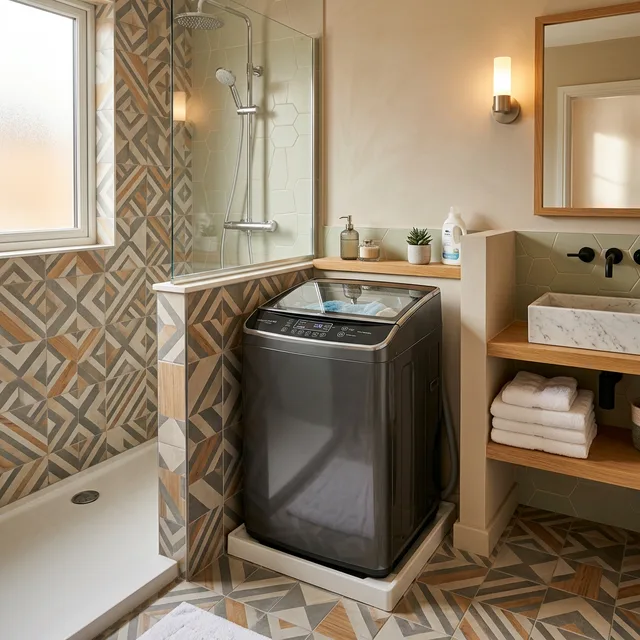
The absolute most degrading aspect of renting a 25-square-meter micro-apartment is hauling a massive, heavy IKEA bag stuffed with dirty laundry down four flights of stairs on a freezing Saturday morning, only to find every single sweaty washing machine in the basement laundromat occupied. You can verify Energy Star ratings to ensure you are being eco-friendly and saving money.
Wasting three hours of your precious weekend guarding your socks from theft is unacceptable. However, your landlord explicitly forbids installing permanent plumbing for a full-sized washer/dryer hookup in your kitchen, and you have absolutely zero floor space for massive appliances anyway. You must aggressively reclaim your time and hygiene by learning that the best portable washing machines micro apartments allow are the perfect solution. Also see portable washing machines. More in our small-space living hub.
These practical pieces of compact tech require no special 220V electrical outlets and zero permanent plumbing. They hook directly onto your bathroom sink faucet and drain straight into your shower stall. In this definitive guide, we review the top-tier portable washing machines engineered specifically for the spatial constraints of studio living. Be sure to explore our ideas for a high-density kitchen if your laundry is near the kitchen.
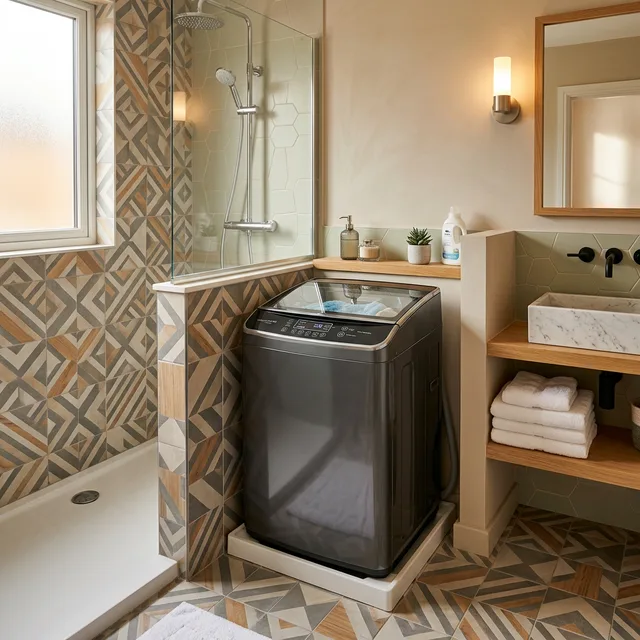
1. The Fully Automatic 1.0 Cu. Ft. Powerhouse
If you are a busy professional who violently resents doing laundry, you cannot compromise on automation. The single best portable washing machines micro apartments can handle is a fully automatic, top-loading unit (like the Black+Decker or Comfee 0.9 Cu. Ft. models).
These machines operate similarly to the washers in a larger home, scaled down to the size of a tall bedside nightstand. You load roughly 5 kilograms of dirty clothes, pour in the high-efficiency liquid detergent, and press the digital power button. The machine fills with water from your sink via a specialized quick-connect adapter (included in the box), agitates the clothes through a full wash, rinse, and fast spin cycle. Exactly 45 minutes later, it signals to alert you that your load is ready for drying.
2. The Twin-Tub Manual Workhorse
If you are on an extremely tight budget or your bathroom sink lacks a threaded faucet to connect a heavy rubber hose, the fully automatic machines are completely useless.
You must look for a semi-automatic “Twin-Tub” portable washer (like the Giantex or Super Deal models). These simple machines feature two separate top-loading chambers: one tub agitates the soapy water, and a fast spin chamber wrings out the clothes using centrifugal force. The catch? You must manually fill the wash tub using a bucket or a detachable showerhead, and manually transfer the wet, heavy clothes across the machine into the spin dryer tub. While more labor-intensive, these twin-tubs are powerful and cost a fraction of the fully automatic units.
3. The Collapse-a-Bucket Ultrasonic Cleaner
For the extreme minimalist living in an impossibly small “nano-apartment” (under 15 square meters) with literally zero extra floor space (not even the footprint of a trash can), storing a rigid plastic washing machine is geometrically impossible.
The pinnacle of hyper-compact laundry tech is the foldable ultrasonic bucket washer. These machines visually resemble a massive silicone accordion basket equipped with a thick, heavy plastic base containing a spinning pulsator disc. When expanded, they hold roughly six pairs of socks, three t-shirts, and underwear. The pulsator agitates the tiny volume of soapy water, cleaning delicate fabrics in 10 minutes. When the small load is finished, you press firmly down, and the entire bucket collapses flat, sliding directly underneath your bed frame.
4. Understanding the “Quick-Connect” Faucet Adapter
The entire feasibility of deploying the best portable washing machines for micro apartments hinges completely on a $5 piece of threaded metal: the faucet adapter.
Before you spend $300 on a heavy automatic washer, you must physically unscrew the tiny metal aerator (the little screen where the water comes out) located at the tip of your bathroom sink faucet. If the faucet has visible, solid metal threads (either inside or outside the spout), you are in the clear. The washing machine box includes a quick-connect aerator adapter that screws perfectly into your faucet, creating a heavy-duty, absolutely watertight seal for the intake hose. If your apartment features a highly stylized, square “waterfall” sink without a threaded spout, you are entirely out of luck and cannot use an automatic machine without severe leaks.
5. The Drainage Conundrum (The Pump Trap)
Water flows downhill via gravity. If you position your low-to-the-ground twin-tub washer on your bathroom floor and attempt to drain the dirty, soapy water up over the massive lip of your high-sided bathtub, the water will simply sit there, and the machine will violently flood your floor.
When searching for an automatic portable washer, you must verify that the specific model includes a built-in water pump (often explicitly labeled “up-drain” or “pump drain”). The internal motor forces the dirty water up and out of the machine’s thick drainage hose, allowing you to hook the hose over the edge of your sink basin or high-walled bathtub. If you buy a cheap gravity-drain model, you must stand the machine in the middle of your shower stall pan to drain it.
6. Eliminating Setup Friction with Rolling Casters
Portable washing machines are technically “compact,” but they still weigh an incredibly dense 20 to 25 kilograms. Dragging an awkward, heavy box violently across your pristine laminate floors twice a week will leave deep scratches and trigger a massive fight with your landlord over the security deposit.
Never drag the machine. A smart laundry choice in a studio apartment is purchasing an adjustable metal appliance dolly equipped with four lockable castor wheels. You permanently place the automatic washer on this low-profile rolling base. When laundry day arrives, you effortlessly glide the heavy block of tech entirely from your hallway closet directly into the bathroom. You lock the wheel brakes tightly before turning the machine on so it doesn’t move across the floor during the high-speed spin cycle.
7. The Crucial Art of the Spin Cycle
A portable washing machine is utterly useless if it leaves your massive pile of clothes soaking wet, violently dripping massive puddles of cold water across your apartment floor while you frantically try to hang them up. You do not own a massive, 220V heated tumble dryer to instantly fix this crisis.
The power of the appliance’s spin cycle creates the difference between frustration and success. Fully automatic portable machines typically spin at a fast 700 to 800 RPMs (Revolutions Per Minute). This centrifugal force compresses the wet fabrics against the steel drum, extracting 85% of the water weight. The clothes emerge slightly damp, ready for a fast, 12-hour dry on a collapsible indoor drying rack with the breeze of an electric fan.
Evaluating Portable Laundry Tech
Which high-performance washer perfectly solves your apartment constraints?
| Washer Type | Power | Best For | Noise Level | Fixes Problem |
| Fully Automatic 1.0 Cu Ft | High | Standard load, hands-off | Med/High | Wasting 3 hours at laundromat |
| Twin-Tub Manual | Extreme Spin | Ultra-budget, no threaded faucet | Very High | Constant trips down 4 flights of stairs |
| Foldable Ultrasonic Bucket | Weak | Gym clothes, delicates, micro-studios | Low | Absolutely zero floor space |
Safety Disclaimer: Never, under any circumstances, leave a portable washing machine running completely unattended while you leave the apartment to grab coffee. The high water pressure surging through the temporary rubber hose can violently burst or uncouple from your sink faucet due to a sudden water spike, resulting in instantly flooding your bathroom and violently damaging the ceiling of the micro-apartment directly below you.
Conclusion
Laundromats are an exhausting tax deeply levied directly upon the psychological well-being of urban renters. By aggressively investing heavily in the best portable washing machines for micro apartments, you violently wrest back control of your weekend. Hooking a highly sophisticated, fully automatic 1.0 Cu Ft unit directly to your bathroom sink permanently upgrades a chaotic 25sqm studio into a high-performance, totally self-sufficient home.
Ready to banish the dirty IKEA laundry bag from your hallway? Physically unscrew your bathroom sink aerator tonight, verify the metal threads, and order a fully automatic portable washer tomorrow morning.
FAQ
Can I wash queen-sized bed sheets or heavy winter bath towels in a portable automatic washer?
Yes, but one at a time. A typical 1.0 Cu Ft portable machine handles exactly one queen-sized fitted sheet or two bath towels per load. If you cram heavy loads into the tiny drum, it will shake out of balance during the spin cycle.
Do I need special HE (High-Efficiency) liquid laundry detergent for a portable washer?
Absolutely. Because the machine uses drastically less water than a full-sized washer, regular, cheap, thick detergent creates a massive, violent explosion of thick suds that the pump literally cannot rinse out or drain properly, ruining the pump motor. Always use precisely one tiny tablespoon of premium HE liquid detergent.
Where the hell do I dry the wet clothes if I have no room for a dryer?
You must deploy a tall, multi-tiered vertical folding drying rack (like a massive drying tower) directly in the middle of your living room, opening all the windows or running an aggressive, high-powered floor fan blowing directly on the rack. The aggressive airflow evaporates 100% of the moisture instantly in roughly six to ten hours without heat.
