
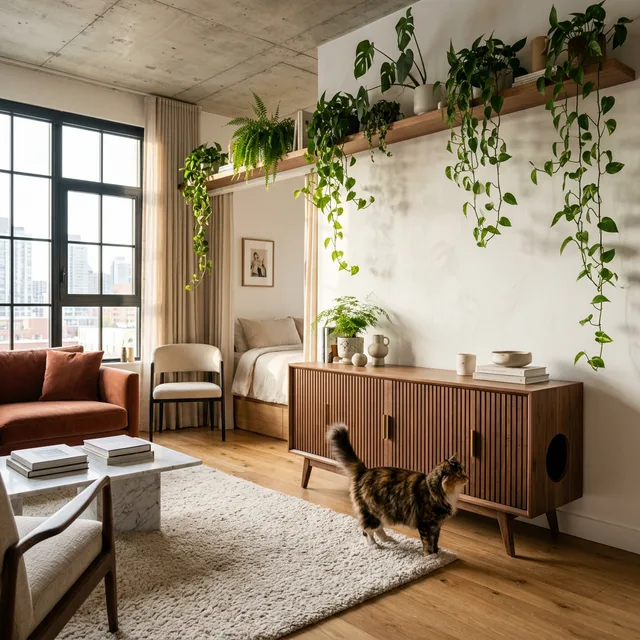
Living in a 25-square-meter studio apartment with a feline companion is incredibly rewarding, but it presents a brutal, inescapable interior design challenge: the litter box. A brightly colored plastic tray filled with clay gravel sitting in the middle of your open floor plan instantly destroys the aesthetic of your curated home. Furthermore, when your kitchen, bedroom, and living room are all in the exact same footprint, controlling the aggressive odor and preventing litter tracking onto your bed requires a tactical defense strategy. Control smells with odor-proof trash cans.
You cannot just shove the box into a tiny bathroom corner where it blocks the shower door or traps moisture and bacterial smells. You must learn exactly how to master the hide litter box studio apartment aesthetic using stealth integration and multi-functional furniture.
In this detailed guide, we break down the most ingenious, renter-friendly hacks to completely conceal your cat’s bathroom, ensuring your micro-apartment remains a fresh, stylish sanctuary that smells like home—not a pet store. For more pet-friendly ideas, check out our guide on urban pets and plants. More ideas: cat tree alternatives.
1. The IKEA “Hol” Storage Table Hack
The most famous and cost-effective method to achieve the perfect hide litter box studio apartment setup requires a simple trip to IKEA. The IKEA “Hol” is a hollow, square side table made entirely of solid acacia wood with an open, slatted grid design. You can also look up DIY guides on YouTube to see exactly how to cut the perfect hole without splintering the wood.
By using a small handsaw, you can easily cut a 20-centimeter square entrance hole into one of the side panels. You place a standard, high-sided plastic litter pan directly inside the massive interior cavity, and place the heavy wooden lid on top. The slatted wood allows for excellent ventilation (preventing toxic ammonia buildup inside), while completely obscuring the visual reality of the plastic tray. Place this attractive piece of furniture next to your sofa to act as a functional coffee table, totally hiding its true purpose in plain sight.
2. Upgrading to a High-End Litter Credenza
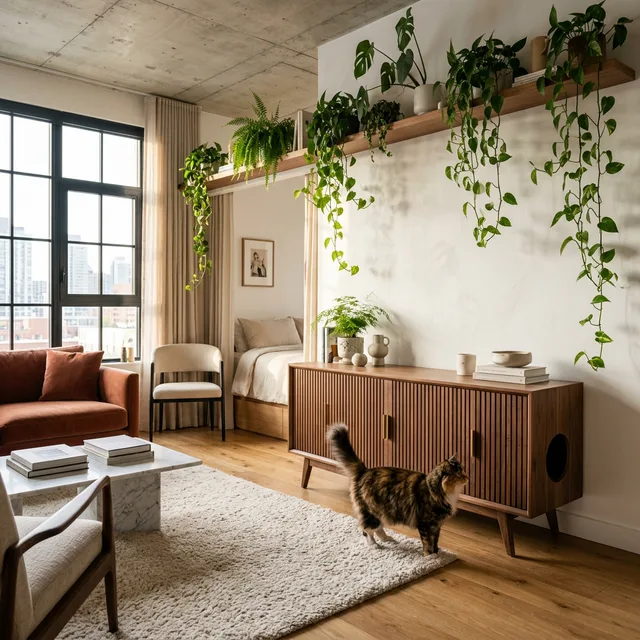
If you lack DIY skills and have a slightly higher budget, the pet industry has finally recognized the plight of urban apartment dwellers. You can now purchase stunning, pre-built “litter box enclosures” designed explicitly to look like elite, mid-century modern credenzas or TV stands.
These heavy composite-wood nightstands feature sleek, magnetic double doors that open completely for easy daily scooping. The cat enters through a discrete, beautifully trimmed circular opening on the far end. Because they resemble a standard $400 West Elm cabinet, you can place your television directly on top of the enclosure, completely centralizing your apartment’s footprint while ensuring guests never suspect they are sitting one meter away from a litter pan.
3. The Top-Entry Litter Box Deframer
Sometimes, incorporating a massive piece of wooden furniture into a micro-studio simply isn’t an option because you have absolutely zero floor space for a heavy credenza. If the litter box must be out in the open, it cannot look like a standard litter box.
The modern solution is a sleek, minimalist Top-Entry Litter Box (like the Modkat). These tall, completely seamless, matte cubes look exactly like a high-end recycling bin or a modern laundry hamper. The cat jumps onto the lid and drops down inside. Because the box is so deep and enclosed, the ugly clumped litter is entirely invisible from eye-level when you are standing in the apartment. Even more critically, the tall, seamless walls completely eliminate “litter spray” when your cat aggressively buries its waste.
4. The Entryway Bench Concealer
In a studio apartment, the microscopic entryway landing strip is often a dead zone filled with a tangle of wet shoes. Repurposing this awkward transitional space is brilliant.
Replace your messy pile of shoes with a long, hollow wooden entryway storage bench featuring a flip-up lid. Place the litter box inside the bench, pushing it far to the left side. Dedicate the right side of the bench interior exclusively as a “litter catching zone” lined with a thick, heavy-duty silicone mat. When the cat exits the pan, it must walk across the long, textured mat to reach the exit hole, forcing the sharp litter grains out of its paws inside the bench, ensuring that clay gravel is rarely tracked onto your expensive bed sheets.
5. The Decorative Curtain Under the Sink
If you refuse to surrender premium living room furniture real estate to your pet, the tiny space underneath your bathroom vanity or kitchen sink is your final frontier.
If your sink unit features exposed legs rather than solid wooden cabinent doors, simply install a cheap, tension-mounted curtain rod directly between the legs. Hang a heavy, stylish linen or velvet fabric curtain that drops entirely to the floor. Hide a low-profile litter tray behind the fabric. The cat can effortlessly nudge the flexible curtain aside to do its business, but the impenetrable fabric completely blocks the visual clutter of the tray from a guest using your toilet.
6. Real Potted Plants as Visual Blockers
Cats instinctually prefer to handle their bathroom business in privacy. If you must use a standard, open litter tray in a corner of your living room, you can create a brilliant, natural “jungle barrier” to obscure it.
Purchase three massive, towering, floor-standing potted plants (like a heavy Snake Plant, a Cast Iron Plant, or a robust Parlor Palm). Ensure the plants are 100% ASPCA certified non-toxic to felines. Cluster these three massive pots tightly around the exposed litter tray. The dense, vertical green foliage acts exactly like an architectural room divider, completely breaking the visual line of sight from your sofa while providing your cat with a helpful, jungle-like bathroom canopy.
7. Zero-Smell Pine Pellet Transition
Hiding the box visually is pointless if the heavy ammonia smell punches you in the face the second you unlock your front door. Standard clay clumping litter turns into a foul-smelling cement when mixed with cat urine.
To master how to hide a litter box in a studio apartment, you must radically switch to the Feline Pine (or cheap Tractor Supply Equine Pine) pellet system. Utilizing a specialized “sifting” litter box, when your cat urinates on compressed sawdust pellets, they instantly disintegrate into dry, fluffy sawdust and fall into a bottom collection tray. Pine wood naturally, chemically neutralizes the extreme ammonia odor on a molecular level. Your entire apartment will smell like a pristine alpine lumberyard instead of a chemical toilet, making the hidden box completely undetectable.
Evaluating Hidden Litter Setups
Choose your stealth strategy based on your available floor space and budget:
| Hidden Solution | Fixes Which Problem? | Floor Space Cost | DIY Required? |
| IKEA Hol Hack | Visual clutter & odor | Medium | Yes (Cutting hole) |
| Litter Credenza | Ugly design / No TV stand | High | No |
| Top-Entry Box | Litter tracking on floors | Low | No |
| Sink Curtain | Zero floor space available | Zero | No |
Safety Disclaimer: If you build a DIY wooden enclosure (like the IKEA Hol), you must ensure it has massive, open ventilation slots. If you trap a cat in a dark, sealed wooden box with high ammonia fumes from generic clay litter, you will rapidly cause severe feline respiratory burning and chronic asthma in your pet.
Conclusion
Sharing a 25-square-meter footprint with a cat requires ruthless interior design. By abandoning the ugly plastic tray in the center of the room and deploying strategic visual barriers, you reclaim the dignity of your home. Learning how to hide a litter box in a studio apartment using modern, enclosed credenzas, top-entry cubes, and natural pine pellets ensures your micro-apartment remains a beautiful aesthetic sanctuary where your pet’s bathroom is a complete secret.
Ready to exile the ugly plastic tray? Order a sleek, top-entry litter cube tonight to instantly upgrade your apartment’s aesthetic and cut litter tracking down by 90% tomorrow.
FAQ
Will my old cat know how to use an enclosed credenza or a top-entry box if they’ve only used an open tray?
Cats are highly adaptable but cautious. When transitioning to a hidden box or an enclosed credenza, leave the wooden doors wide open for the first entire week so it feels like a large cave. If switching to top-entry, start with the lid entirely removed for three days, eventually snapping the lid into place once the cat’s scent is deeply established inside.
Is the “sifting” pine pellet system actually cheaper than clay clumping litter?
Astronomically so. A single 40lb bag of compressed pine horse bedding from an agricultural supply store costs roughly $7 and will easily last an adult cat six to eight months. Comparatively, a massive box of generic dusty clay clumping litter costs $20 and barely lasts an entire month.
Can I hide the litter box in my tiny studio apartment closet?
No. Never place a litter tray in a closet holding your clothing. The dense ammonia smell and microscopic dust particles will strongly impregnate every fabric sweater and wool coat you own, making you unknowingly smell like cat urine in professional settings.
