When you live in a 25-square-meter studio, the sheer volume of air available to you is incredibly limited. Cooking a single fragrant meal, using harsh chemical cleaners, or simply breathing in a closed room overnight rapidly depletes oxygen levels and spikes indoor pollutants. Learning exactly how to optimize air quality small apartment layouts demand is the most critical health upgrade you can make as an urban renter. It’s so critical that the EPA Indoor Air Quality division studies it extensively.
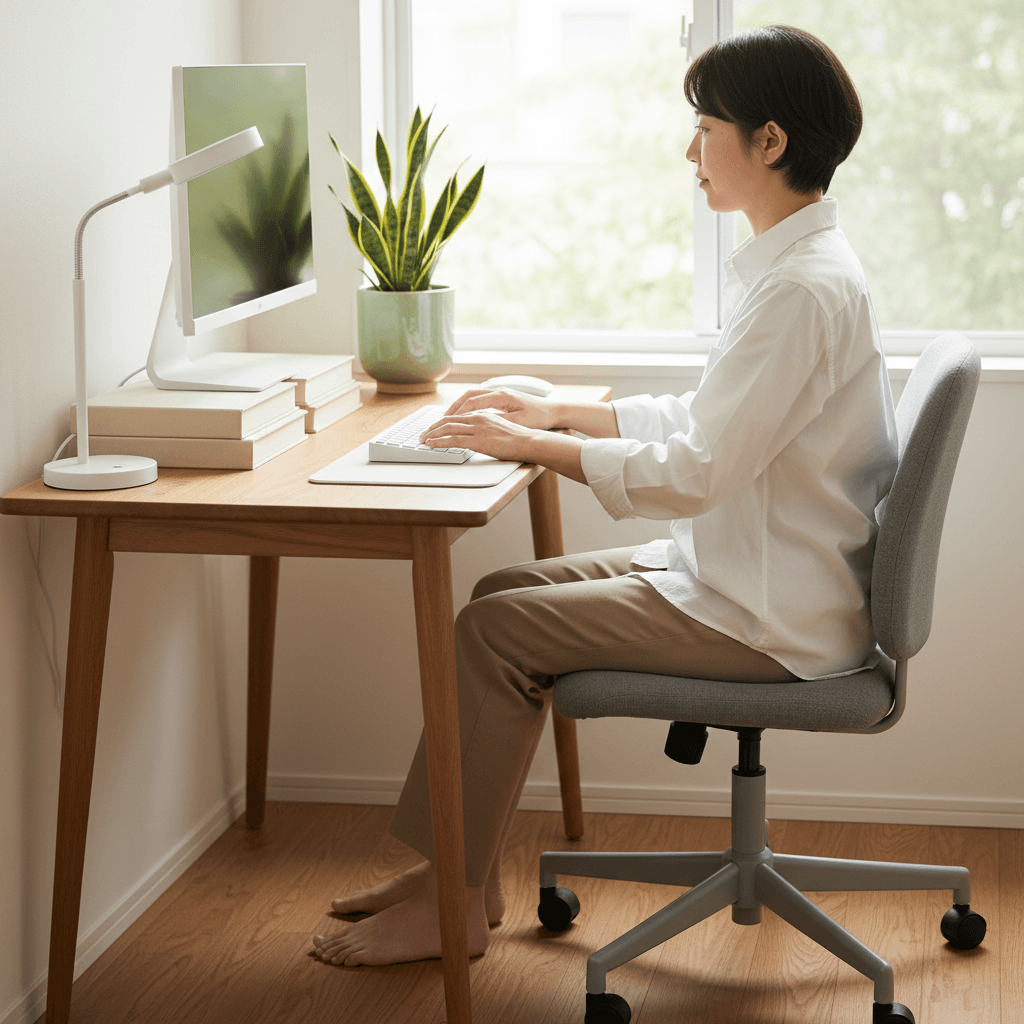
If your apartment faces a busy city street, simply throwing the window wide open might actually introduce more hazardous particulate matter (PM2.5) from car exhaust into your living space. Furthermore, many modern micro-studios or basement rentals feature windows that barely crack open, or worse, no windows at all in the bathroom or kitchen zones. You cannot rely on a strong cross-breeze. Instead, you need to optimize your smart desk setup so you can safely work at home without gasping for fresh air.
In this guide, we break down the 7 most effective, science-backed strategies to optimize air quality small apartment spaces safely, eradicating stagnant, toxic air.

1. The Strategic Cross-Ventilation Hack
Even if you only have one single window that opens three inches, you can still force a complete exchange of the air volume inside your apartment within minutes.
You must utilize a high-velocity box fan or a strong directional circulator fan. Do not simply point the fan into the room to blow the stagnant air around. To optimize air quality in a small apartment, you must forcefully expel the stale air to create negative pressure. Place the fan exactly 50 centimeters away from your open window, pointing outward into the city. Turn it on high. The fan acts as a powerful exhaust jet, blasting the stale, humid indoor air outside. This negative pressure violently pulls fresh air into the apartment through the tiny cracks under your front door or any other vents, instantly replacing the entire atmosphere.
2. Eliminate VOCs at the Source
Volatile Organic Compounds (VOCs) are toxic gases constantly off-gassing from synthetic rugs, cheap particle-board furniture, scented candles, and traditional cleaning sprays. In a tiny apartment, these gases concentrate rapidly.
The fastest way to clean the air is simply to stop poisoning it. You must switch entirely to zero-VOC cleaning products or simple white vinegar. More importantly, immediately throw away cheap synthetic room fresheners, plug-in scents, and paraffin wax candles. These products do not “freshen” the air; they mask odors by coating your lungs and the room’s surfaces with complex chemical particulate matter. Transition to diffusing pure essential oils for scent, and rely on solid beeswax candles if you must have an evening glow.
3. The True HEPA Purifier Placement
When dealing with urban smog, cooking smoke, or pet dander, you cannot simply filter the air through water or a basic sponge. You must trap the microscopic particles permanently.
Invest in an air purifier specifically equipped with a “True HEPA” filter. HEPA (High-Efficiency Particulate Air) filters are strictly graded to capture 99.97% of particles as small as 0.3 microns. Placement in a micro-apartment is absolutely critical. Do not shove the purifier into a tight corner behind the sofa where it chokes on its own exhaust. To effectively cycle the air, place the purifier elevated on a small stool, at least 60 centimeters away from any wall, directly in the airflow path between your front door and your main window.
4. Activated Carbon for Cooking Odors
If your micro-apartment lacks a heavy-duty range hood that vents directly to the outside of the building (and instead just recirculates the grease back into your face), cooking fish or searing a steak will embed intense smells into your bedsheets for three days.
A standard HEPA filter does absolutely nothing to stop gas-based odors. You must ensure your air purifier contains a massive secondary stage made of a thick activated carbon honeycomb filter. Activated carbon acts like a microscopic sponge that chemically binds and traps gaseous cooking odors and VOCs. Run the carbon-equipped purifier on its absolute maximum setting while you cook, not just afterward, to capture the smoke particles before they settle into your fabrics.
5. Humidity Control (The 40-60% Rule)
Air quality is not solely defined by particulate matter; it is heavily defined by moisture. When the humidity inside a small apartment drops below 30% during brutal winter heating months, your respiratory tract dries out, making you highly susceptible to airborne viruses and dust irritation.
Conversely, if the humidity spikes above 65% during summer or after a long, hot shower without proper ventilation, toxic black mold spores explode exponentially on your walls and clothing. Buy a cheap, $10 digital hygrometer and place it on your desk. You must brutally maintain the humidity level between 40% and 60%. If it climbs, run your bathroom exhaust fan constantly or buy a small compressor dehumidifier. If the air is bone dry in winter, run a highly clean evaporative humidifier near your bed.
6. Biomass and Living Air Filters
While a potted pothos plant will not single-handedly filter out heavy industrial smog, heavily layering specific indoor plants significantly impacts the ambient oxygen levels and humidity of a tiny room.
NASA’s famous clean air study confirmed that plants like the Snake Plant (Sansevieria), Spider Plant, and Peace Lily actively absorb specific VOCs (like formaldehyde and benzene) through their leaves and neutralize them in their root zones. By clustering five or six of these hardy, low-light plants around highly toxic off-gassing items (like a new memory foam mattress or an IKEA bookshelf), you create a biological filtration zone that complements your mechanical HEPA filter perfectly.
7. The Daily “Airlock” Purge
Dust and outdoor pollutants do not magically spawn inside your apartment; you personally track them in on your shoes, your commuter backpack, and your coats.
To drastically optimize air quality in a small apartment, you must stop the contamination firmly at the front door. Establish a hard “no-shoes” policy the second you cross the threshold. Ensure your landing strip is equipped with a high-friction doormat to trap heavy dirt, and immediately wipe your dog’s paws if they just returned from a city walk. The less dirt you drag inside, the fewer microscopic particles your HEPA filter has to desperately scrub from the air later that evening.
Evaluating Air Quality Upgrades
Use this table to deploy the most effective strategy based on your specific apartment constraints:
| Air Quality Hack | Fixes Which Problem? | Drill Required? | Cost |
|---|---|---|---|
| Exhaust Fan Trick | Stagnant, humid air | No (Window fan) | Low |
| HEPA Purifier | Smog, Dust, Dander | No (Plug-in) | Med/High |
| Carbon Filter | Cooking odors, VOCs | No | Med |
| Humidity Control | Mold growth or dry lungs | No (Digital Meter) | Very Low |
Safety Disclaimer: Never use ozone generators in a small, occupied apartment. Ozone is highly reactive and damages the soft tissues of your lungs. Ensure any air purifier you buy is explicitly certified “Ozone-Free” by a reputable organization (like CARB in California).
Conclusion
Controlling the atmosphere inside your micro-apartment is the foundation of your daily health and focus. By executing brutal cross-ventilation, banning toxic sprays, and properly placing a True HEPA purifier, you optimize air quality in a small apartment and turn it into a genuine sanctuary against city smog. You do not need massive HVAC ducts; you just need to understand how air flows and what traps particulate matter securely.
Ready to breathe deeper? Tonight, buy a cheap digital hygrometer, place it on your nightstand, and find out if your apartment is a dangerous 70% humidity mold-trap or a painful 20% dry desert.
Will my air purifier work if I keep the window open?
No. Running a HEPA air purifier while your window is wide open facing a busy street is like trying to air-condition the entire city. You must close the windows tightly when the purifier is running to effectively scrub the specific volume of air trapped inside the apartment.
How often do I actually need to change a True HEPA filter?
In a small, dusty city apartment, or if you cook heavily and have a shedding pet, a standard HEPA filter becomes completely saturated and useless within 4 to 6 months. Do not wait a full year or follow the manufacturer’s optimistic guidelines.
Does burning incense purify the air energetically?
Energetically, perhaps. Physically, burning incense releases a massive, highly toxic cloud of fine particulate matter (PM2.5) directly into your tiny living space, which your lungs must filter out. Swap incense for a cold-water essential oil diffuser.