
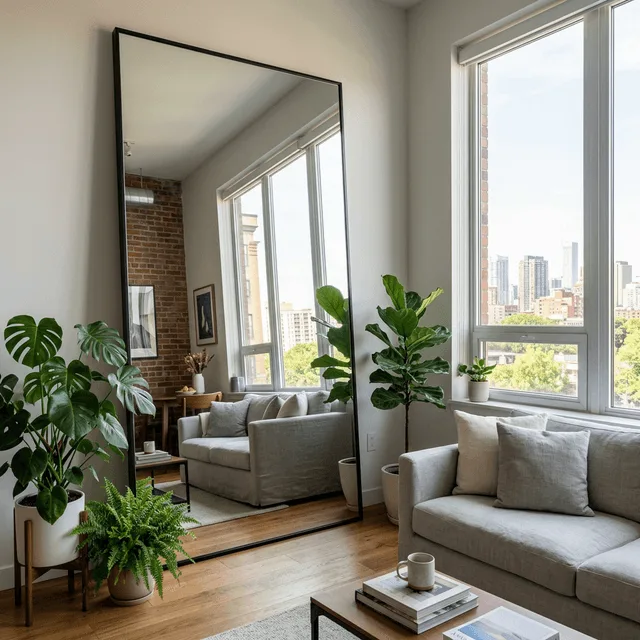
In a 25sqm studio, the physical walls are fixed, but the “visual volume” is entirely within your control. For many renters, a mirror is just a tool for checking your outfit before an urban mobility commute. But in the hands of a high-performance urbanist, mirrors in small studio apartments are architectural tools used to double the perceived square footage, multiply natural light, and eliminate the sense of confinement that leads to “Studio Claustrophobia.” Bounce natural light around.
By strategically placing reflective surfaces, you can trick your brain into perceiving “Visual Air” where there is currently a solid wall. This is a core component of the sensory sanctuary studio living philosophy—creating a home that feels expansive and open, regardless of its footprint. In my own 24m² flat, implementing these mirrors guide hacks was the single most effective way to improve my micro-wellness and daily mood.
1. The “Window Multiplier” Technique
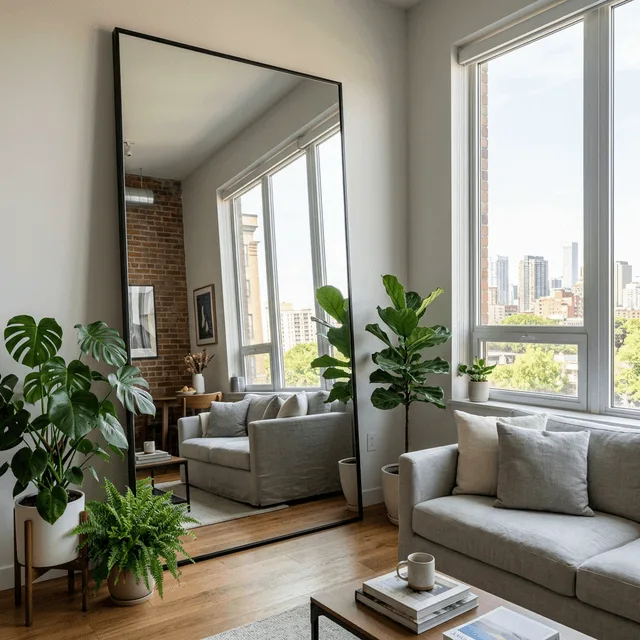
If you live in a windowless studio or a space with only one small window, your primary problem is light deprivation. The Strategy: Place a large mirror directly opposite your primary light source (window or circadian smart light). The Result: The light bounces back into the room, effectively creating a “Second Window.” This double-dose of morning light is essential for your biological clock and your 15-minute morning prep. It’s the #1 rule for mirrors in small studio apartments: light is the bridge to mental clarity.
2. Floor-to-Ceiling “Vertical Depth”
Standard mirrors often stop at waist height, leaving the upper half of the wall visible and “closed in.” The Hack: Use a full-length, oversized leaning mirror that reaches at least 180cm high. The Value: By reflecting the ceiling and the floor simultaneously, you create a “Visual Void” that makes the wall disappear. This is a primary strategy for managed studio apartment design, where you want to minimize the number of “hard boundaries” your eyes hit.
3. The “Mirror Window” (Framed Illusion)
If your studio lacks architectural detail, you can use a mirror to add it. The Idea: Use a mirror with a “windowpane” frame (mullions). The Psychology: Our brains are wired to see a paneled frame as an opening to the outside. By placing this on a blank wall in your meditation nook, you create a psychological “Exit Point” for your gaze. This supports biophilic texture design by giving the room a sense of “Acoustic and Visual Breath.”
4. Reflecting Your “Oxygen Hub” (Plants)
Minimalist plant styling can sometimes feel cluttered if you have too many pots on the floor. The Hack: Place your low-light hanging plants or hydroponic tower near a reflecting surface. The Benefit: The mirror doubles the “Green Volume” of your room without taking up any actual floor space. The sight of a lush, reflected garden improves your micro-wellness scores and makes your sensory sanctuary feel like a high-end conservatory. Style with minimalist plant styling.
5. The “Landing Strip” Entryway Portal
Your small entryway landing strip is the first thing you see when you enter. If it’s dark and narrow, you feel the “squeeze” of the city immediately. The Strategy: Install a horizontal mirror above your valet tray. The Result: It opens up the narrowest part of your home and provides a final check of your urban EDC and digital identity kit before you leave. It transforms a “closet entryway” into a “landing portal”—a core part of mirrors in small studio apartments.
6. Behind the “Cloffice”: Deep Workspace Focus
Working in a smart closet office setup can feel like working in a cave. You are often staring at a wall just 60cm from your face. The Hack: Install mirror tiles or a slim horizontal mirror above your monitor on the back wall of the desk. The Benefit: It allows your eyes to focus on “infinity” occasionally, reducing eye strain and the feeling of being “boxed in” while you work. This “Depth Trick” is essential for long-term productivity in high-density living. Build a smart closet office.
7. Mirrored Furniture: The “Invisible” Trick
Bulky furniture takes up “Visual Mass.” The Strategy: Choose furniture with legs for small apartments that also features mirrored or metallic surfaces (like a side table or a cabinet door). The Magic: The furniture reflects the floor and rugs around it, making it almost disappear into the background. This maintains an uncluttered sensory environment while providing the storage you need for your managed studio apartment.
| Mirror Placement | Objective | [Micro-Wellness](https://urbanmicrotips.com/micro-wellness-habits-studio-living) Gain |
| Opposite Window | Light Multiplication | Vitamin D / Mood Boost |
| Opposite Door | Visual Depth | Reduced Anxiety / Flow |
| In the [Cloffice](https://urbanmicrotips.com/smart-closet-office-setup-cloffice) | Eye Strain Relief | Long-Term Productivity |
| In Entryway | Final Prep Check | Morning Confidence / Order |
| Behind Plants | Bio-Volume Double | Psychological Peace |
FAQ
Are mirrors dangerous for pets in small apartments?
Some birds and cats may get confused by high-definition reflections. Introduce your pets to large mirrors in small studio apartments slowly. Use our urban pets and plants guide to ensure your sanctuary is safe for everyone.
How do I keep mirrors clean without chemicals?
Use a microfiber cloth and a 50/50 mix of water and vinegar. This is a core part of the zero-waste bathroom essentials routine and ensures your micro-living air quality stays high.
Do I need to drill holes to hang mirrors?
No. For renters, we recommend high-quality “Leaning Mirrors” with weighted bases or using heavy-duty, damage-free command strips for smaller units. This is the renter-friendly studio hack for optical expansion.
