
You’ve spent weeks measuring nutrient solutions, adjusting grow lights, and hand-pollinating every flower. Now, your micro-apartment is finally a lush, productive green space. But the work doesn’t end when the plants are grown. Add LED grow lights. Feed with hydroponic nutrients.
Knowing how to harvest indoor edibles correctly is the difference between a plant that gives you one meal and a plant that produces for an entire season.
Harvesting in a small apartment also presents a storage challenge. You don’t have a massive root cellar or a second pantry. You need to keep your herbs and vegetables crisp and potent in a standard kitchen environment. This guide covers the best techniques for picking and preserving your urban bounty.
The Art of the Perpetual Harvest
In an indoor garden, we rarely harvest “the whole plant.” Instead, we aim for a “cut-and-come-again” strategy.
Harvesting Leafy Greens (Lettuce, Spinach, Kale)
Never pull the entire head of lettuce out of the soil or water. Instead, use sharp scissors to snip the outermost leaves about an inch from the base. Always leave the “heart” (the center cluster of young leaves) intact. The plant will continue to push out new growth from the center, allowing you to harvest from the same plant for up to three months.
Harvesting Herbs (Basil, Mint, Cilantro)
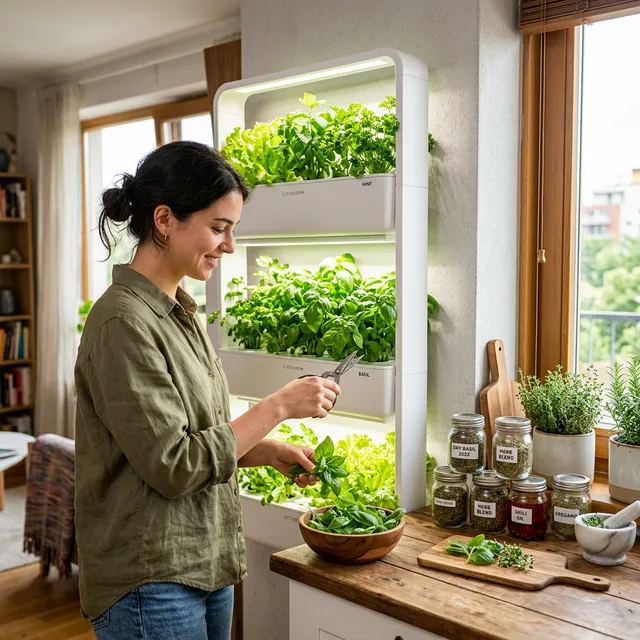
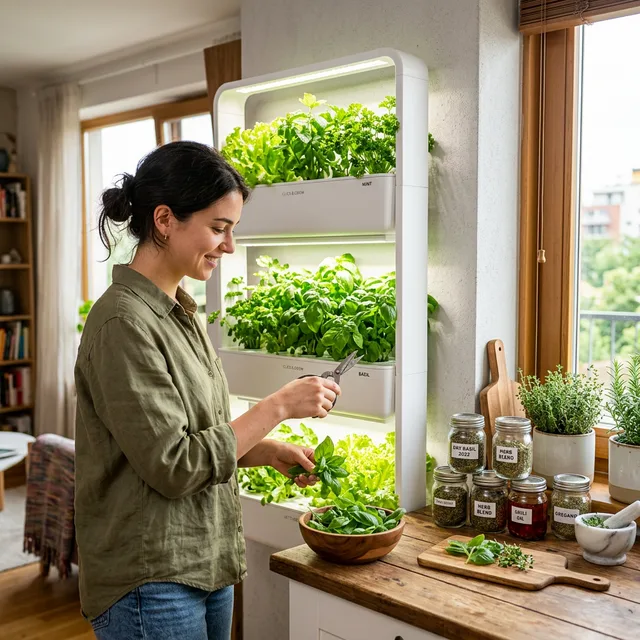
Most people make the mistake of picking individual leaves. This is the opposite of what you should do. To harvest herbs, snip the stem just above a set of two leaves. This is called “pinching.” The plant will then grow two new stems from that point, becoming bushier and more productive every time you cook.
Harvesting Tomatoes and Peppers
Wait for the fruit to transition completely to its final color (red, orange, or yellow). For tomatoes, a slight “give” when you squeeze gently indicates ripeness. Use shears to cut the stem or a light “twist and pull” upward. Do not pull downward, as this can snap the delicate branches of your dwarf plants.
Smart Storage for Small Kitchens
Once picked, the clock starts ticking. Storing indoor edibles correctly preserves the flavor and nutritional value you worked so hard to create.
1. The “Herb Bouquet” Method
Treat fresh herbs like basil, cilantro, and mint like cut flowers. Place the stems in a small glass of water and leave them on your counter. Basil, in particular, hates the cold; putting it in the fridge will cause the leaves to turn black and lose their aroma within hours.
2. The Damp Paper Towel Roll
For lettuce, kale, and spinach, rinse the leaves in cold water, spin them dry, and roll them in a damp paper towel before placing them in a reusable silicone bag or plastic container in the fridge. This maintain the humidity levels the leaves need to stay crunchy.
3. Room Temperature Tomatoes
Never put your homegrown tomatoes in the refrigerator. Cold temperatures permanently damage the enzymes that give tomatoes their flavor, resulting in a mealy, bland texture. Keep them in a bowl on your counter out of direct sunlight.
Preservation for Surplus Harvests
Sometimes your vertical gardening DIY tower or hydroponic jars will produce more than you can eat in a week. Grow up a vertical garden wall.
- Freezing Herbs in Oil: Chop your surplus basil or parsley and place them in an ice cube tray. Fill the rest of the space with olive oil and freeze. You now have “flavor bombs” ready to drop into a hot pan or soup.
- Dehydrating: If you have an air fryer with a dehydrate setting, you can turn your herbs into dried seasonings in just a few hours. They will take up 90% less space in your cupboard than fresh plants.
Conclusion
Harvesting and storing your indoor edibles is the final victory of the urban gardener. There is no greater feeling than ignoring the wilted, overpriced herbs at the supermarket because you have a fresh “flower arrangement” of basil on your counter and a fridge full of crisp, home-grown lettuce.
By mastering these simple techniques, you ensure that none of your hard-earned harvest goes to waste.
Now that you’ve mastered the cycle from seed to storage, you are a complete urban farmer. Explore our other guides on nutrient solutions and best LED grow lights to keep your indoor ecosystem thriving year-round.
FAQ
Does washing vegetables before storing make them rot faster?
Yes, if they are still soaking wet. The key is to wash them but ensure they are spun dry before putting them in the fridge. Surface moisture is what encourages mold and rot.
How long will indoor tomatoes stay fresh on the counter?
Depending on the variety, they typically last 5 to 7 days. If they start to get soft, use them immediately for a sauce or roast them in the oven.
Can I eat the flowers of my herbs?
Yes! Basil, chive, and mint flowers are completely edible and taste like a milder version of the leaves. They make beautiful garnishes for salads or drinks.
