
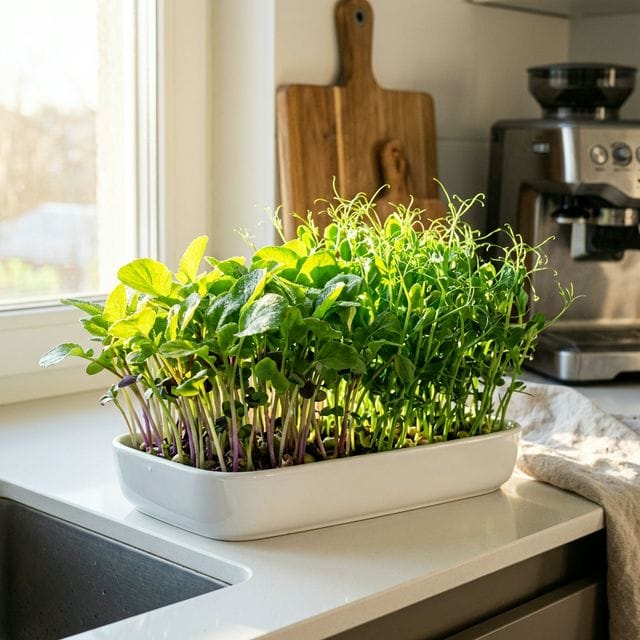
You want the health benefits of a fresh garden, but you live in a studio apartment where a single potted tomato plant takes up half your kitchen counter. You don’t have time for months of watering, and you certainly don’t have the space for bags of soil and heavy gardening equipment.
Enter the world of microgreens.
Growing microgreens in a small apartment is the ultimate life hack for urban dwellers. These tiny vegetable greens are harvested just a week after germination. They contain up to 40 times more nutrients than their mature counterparts and require virtually zero space. You can grow a literal “superfood factory” in a space no larger than a laptop.
This 7-day guide will take you from a packet of seeds to a gourmet harvest, all within the confines of your apartment.
Why Microgreens are Perfect for Urban Living
When we talk about growing microgreens in a small apartment, we are talking about efficiency.
- Space: A single 10×10 inch tray can yield enough greens for three large salads.
- Light: Microgreens don’t need intense sunlight. A simple LED desk lamp or a moderately bright window is enough for their short life cycle.
- Speed: You harvest in 7 to 10 days. If you mess up, you’ve only lost a week, not a whole season.
- Cleanliness: You can grow them on specialized hemp mats or paper towels, completely eliminating the need for dirt in your kitchen.
Essential Supplies for Your 7-Day Farm
You don’t need a trip to a specialized garden center. Most of these items are already in your kitchen or available online for a few dollars.
- Growing Trays: You can buy professional 1010 trays, but empty plastic take-out containers (cleaned thoroughly) work perfectly. Ensure they have drainage holes.
- Growing Medium: While you can use seed-starting soil, for apartments, we recommend hemp mats or coco coir. They are light, odorless, and don’t create a mess.
- Seeds: Look for “Microgreen Seeds.” Radish, Broccoli, and Sunflower are the easiest for beginners.
- Spray Bottle: A fine mist sprayer is essential for delicate watering.
- Weight: A second tray or a heavy book (wrapped in plastic) to press the seeds down during the first 48 hours.
Day-by-Day Implementation Plan
Day 1: The Soak and Sow
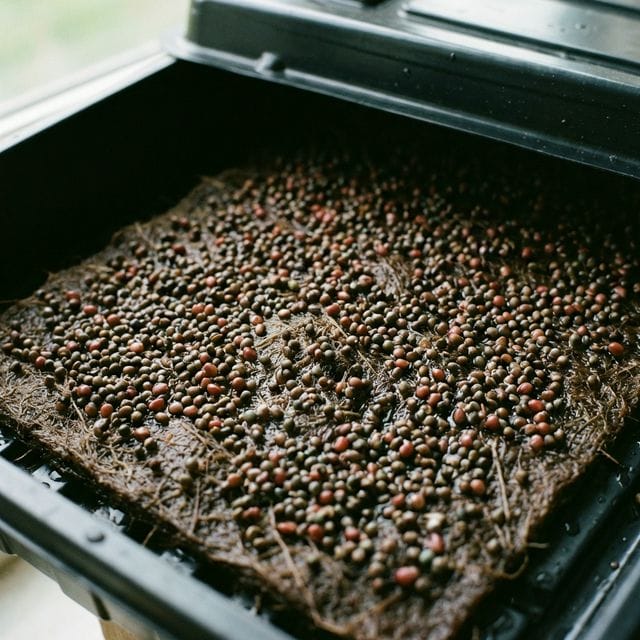
If you are using larger seeds like sunflower or pea, soak them in a bowl of water for 8 to 12 hours. For smaller seeds like broccoli or radish, skip the soak. Prepare your tray by moistening your hemp mat or coco coir. Scatter the seeds densely across the surface—think “sprinkles on a cupcake,” not “seeds in a garden.” Mist them heavily with your spray bottle.
Day 2-3: The Blackout Phase
This is the “secret sauce” of growing microgreens in a small apartment. Place a second tray (or a piece of cardboard) directly on top of the seeds to block all light. Place a weight on top. This forces the sprouts to push upward against resistance, creating thicker, stronger stems. Check once a day and mist if the medium feels dry.
Day 4: Into the Light
Remove the weight and the cover. Your sprouts will look pale yellow and slightly crushed. Don’t panic! Within 4 hours of exposure to light, they will turn a vibrant green. Place them under your LED grow light or on a windowsill. From now on, stop misting the leaves from above (which causes mold) and instead pour a small amount of water directly into the bottom tray for the roots to soak up. Add LED grow lights.
Day 5-6: The Growth Spurt
Watch the magic happen. Your microgreens will double in size daily. Ensure they have good airflow—turning on a small desk fan for an hour a day prevents “damping off” (a fungal disease that kills young sprouts).
Day 7: The Harvest
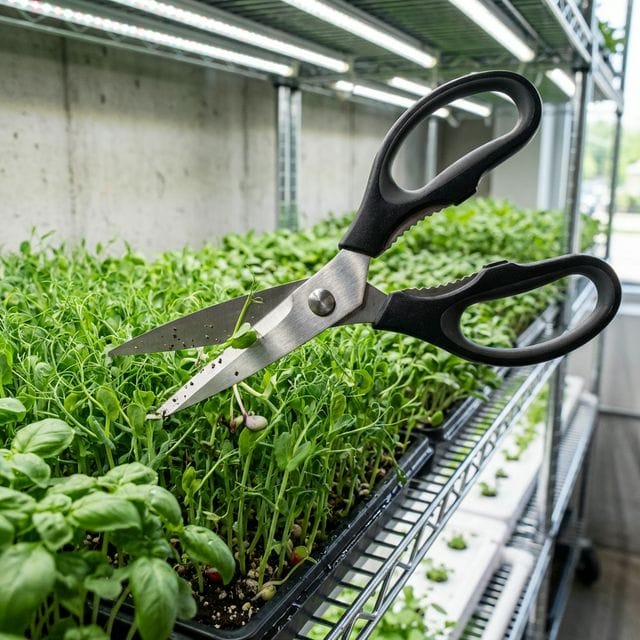
Once the first set of “true leaves” begins to emerge, it’s time to harvest. Use sharp kitchen shears to cut the stems just above the growing medium. Rinse them in cool water, and they are ready to eat.
Avoiding Common Apartment Microgreen Mistakes
Even though it’s simple, growing microgreens in a small apartment can go wrong if you ignore a few key factors.
1. Over-seeding: If you pack the seeds too tightly without airflow, the center of the tray will become a playground for mold. If you see white fuzzy growth that smells sour, toss the tray and start again with slightly fewer seeds.
2. Over-watering: The growing medium should be damp like a wrung-out sponge, not soaking wet like a pond. Excess water at the bottom of the tray is the #1 cause of crop failure.
3. Poor Airflow: Apartments can have stagnant air. If your trays are tucked in a corner behind a microwave, they will struggle. Move them to an open counter where air can circulate.
Conclusion
Growing microgreens in a small apartment transforms you from a consumer to a producer in just seven days. It is the most rewarding, high-speed gardening project you can undertake in a city.
Start with a simple tray of radish microgreens this weekend. By next Friday, you’ll be topping your avocado toast with spicy, home-grown greens that are fresher than anything you can buy in a store.
For more advanced apartment farming, check out our guides on DIY hydroponic mason jar herb gardens and the best LED grow lights to maximize your harvest. Try a hydroponic mason jar garden. Scale to vertical herb gardens.
Do I need to use fertilizer for microgreens?
No. The seed itself contains all the nutrients the plant needs for its first two weeks of life. Since we harvest at day 7, adding fertilizer is a waste of money.
Can I regrow microgreens after cutting them?
Most microgreens (like radish and broccoli) will not regrow. You must compost the roots/medium and start a fresh batch. Pea shoots are one of the few that might give you a small second harvest.
Is the white ‘fuzz’ on the roots mold?
Usually, no! Those are ‘root hairs’—tiny microscopic roots searching for water. If the fuzz is only on the roots and disappears when you mist it, it’s healthy. If it’s on the stems or leaves and smells bad, it’s mold.
