
Starting a balcony garden in a high-rise apartment comes with one big challenge that indoor plant setups don’t have: weight limits. Standard garden soil is surprisingly heavy when it’s wet, and a row of large containers can quietly add up to hundreds of pounds across a small slab. Choosing the right lightweight soil for your balcony is not just about happy roots; it’s about structural safety and peace of mind for renters.
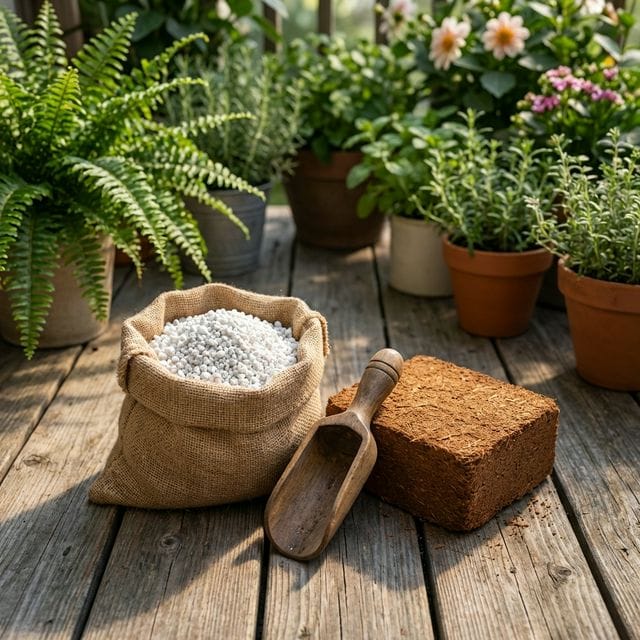
This guide shows you how to choose and mix lightweight soil components, how much weight you actually save and how to connect it all with your balcony weight calculator so you know your setup is still in the safe zone. Stay within balcony weight limits.
Why You Need Lightweight Soil for High-Rise Balconies
Short answer: Garden soil and topsoil are too dense for balcony containers; soilless mixes based on coco coir or peat with perlite are much lighter and safer for high‑rise setups. Pair with balcony containers with good drainage.
Saturated garden soil can weigh 75–100 pounds per cubic foot, while a soilless container mix can be roughly 50 percent lighter. That means a 10‑inch pot filled with heavy topsoil might easily exceed 20 pounds when wet, whereas the same container with a coco‑coir‑and‑perlite mix often comes in closer to 8–12 pounds. Using lightweight components across all your balcony containers can reduce total load by 40–50 percent, especially if you also choose lighter pots like resin or plastic instead of solid ceramic.
How to Check Your Balcony Weight Limit
Before you touch a bag of soil, you need to know what your balcony can reasonably handle. Most safety guides suggest balconies are designed for a certain live‑load range (often cited around 50–100 pounds per square foot), but actual limits depend on your building and local codes.
Use your Balcony Plant Calculator to model your layout before and after switching to lightweight soil. Plug in the size and number of containers, estimate the soil mix you’ll use and see whether the total stays in your “green zone.” If your design is borderline, prioritise light mixes in the largest pots and keep those close to the wall, not out on the edge.
Top Components for a Lightweight Balcony Mix
To keep weight down, you replace heavy mineral components with airy, soilless ingredients that still hold water and nutrients.
- Coco coir or peat moss: Forms the base of many lightweight mixes. Coco coir is a renewable by‑product from coconut husks and is prized for good water retention at a much lower density than mineral soil.
- Perlite: Those white, popped “volcanic popcorn” pieces dramatically improve aeration and drainage while adding very little weight.
- Vermiculite: Similar to perlite but better at holding moisture, making it useful for thirstier plants like tomatoes and peppers.
- Rice hulls or fine bark: Agricultural by‑products such as rice hulls or fine, composted bark can replace some of the bulk that sand or gravel would normally provide.
- High‑quality compost (in moderation): Compost adds nutrients and biology but is denser than pure coir. Small amounts (for example, 20–30 percent of the mix) are usually enough.
DIY Lightweight Potting Soil Recipe (Renter-Friendly)
For a simple, high‑rise‑friendly mix, you can follow a basic ratio and adjust from there based on your plants and climate.
Base recipe (by volume):
- 3 parts coco coir (pre‑soaked and fluffed)
- 2 parts perlite (for aeration and drainage)
- 1 part high‑quality compost (for nutrients)
Pro tips for renters:
- If you are near your estimated weight limit, increase perlite up to 40–50 percent of the total mix for your largest pots.
- Skip decorative stones or gravel layers at the bottom of pots; they add unnecessary mass.
- Pair your lightweight mix with lighter containers such as resin, fiberglass or thick plastic.
Q: Can I just use “Potting Mix” from the store on my balcony?
Most generic “potting mix” products are peat‑ or coir‑based and are much lighter than garden soil. Always read the bag and avoid anything marketed as “garden soil,” “topsoil” or “raised bed mix.”
Q: How do I make my balcony soil even lighter if I’m close to the limit?
Increase perlite or similar airy components up to about half the volume in your largest containers, and switch to fabric grow bags or plastic pots instead of ceramic. Use reusable grow bags.
Q: Will lightweight mixes dry out too quickly on a windy high-rise balcony?
Light mixes do dry faster, but components like coco coir help hold moisture. You can compensate with mulch on the surface and slightly larger containers.
Can I just use standard potting mix from the store on my balcony?
Most store-bought potting mixes are peat or coir-based and are already much lighter than garden soil. Avoid anything labeled ‘topsoil’ or ‘garden soil’ for balconies.
How do I make my balcony soil even lighter if I am close to the weight limit?
Increase the ratio of perlite or vermiculite up to 50% in your largest containers, and use fabric grow bags or lightweight resin pots.
Read more: See our Complete Balcony Gardening Guide for Renters for more expert tips.
